Tomb of Seuthes III: A Thracian Royal Burial in Bulgaria
Site at a Glance
- Popularity
- High
- Country
- Bulgaria
- Primary era
- Classical
- Eras represented
- Classical
- Civilizations
- Thracian
- Site type
- Burial
- Remains
- Tomb
On this page13 sections
History
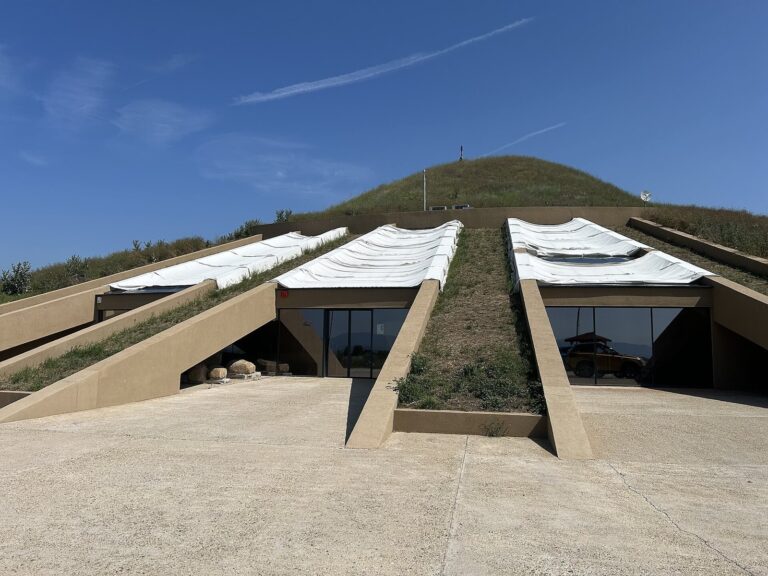
The Tomb of Seuthes III is a Thracian royal burial monument at the Golyama Kosmatka mound near Kazanlak, Bulgaria. Objects from the burial date to the late fourth or early third century BC, while the interment itself is generally placed around 300 BC.
Royal burial and possible earlier use
The tomb is considered most likely to be that of Seuthes III, ruler of the Odrysian Kingdom of Thrace from about 330 to 300 BC. The Odrysians were a Thracian people, and their kingdom was a major regional power. Seuthes founded nearby Seuthopolis. His death date is not known; proposed dates range from the late fourth century to the 280s BC. As of 2025, the tomb was the only known Thracian royal burial attributed to a king identified by name. It is also among the most elaborate tombs in the Valley of the Thracian Rulers and among the small number of Thracian tombs preserved without looting.
A proposed earlier phase places a monumental temple at the site in the second half of the fifth century BC. Archaeologist Georgi Kitov suggested that the structure served as a temple for more than a century and hosted Orphic Mysteries, ancient religious rites associated with the legendary poet and musician Orpheus. Archaeological evidence does not establish this interpretation.
Burial closure and modern investigation
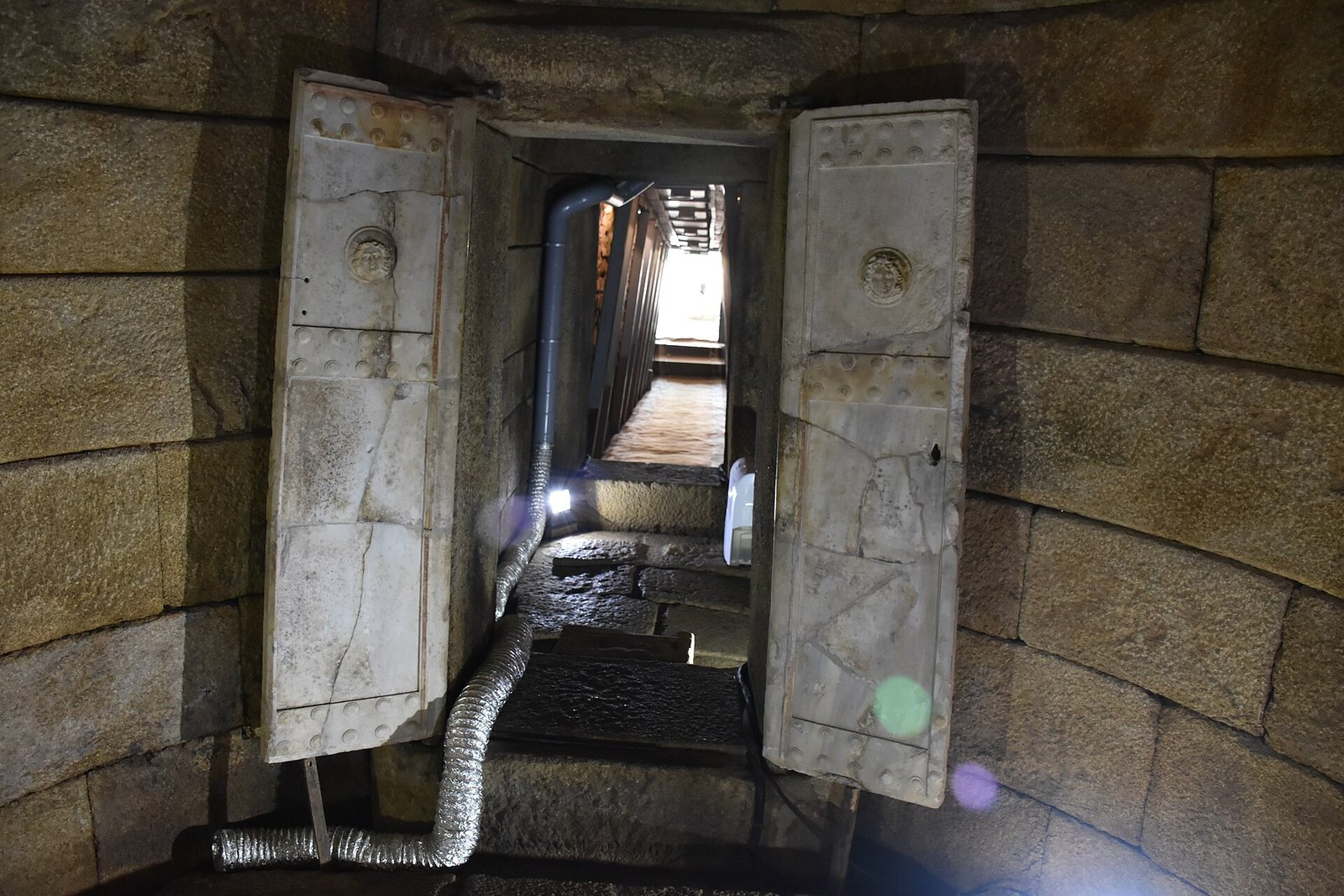
After the burial, the marble door to the second chamber was broken. Its fragments, along with other stones and blocks, were used to seal entrances to the first two chambers. The corridor was burned and packed with stones and earth, and the façade was covered over.
Georgi Kitov’s team excavated the mound in September and October 2004. A survey led by Yavor Shopov in 2007 led him to propose that a larger, unexcavated building lay within the mound. In early 2015, rain and intensified landslides caused the mound to subside, with earth entering the corridor to the domed chamber. Structural and restoration work followed in 2016.
Remains
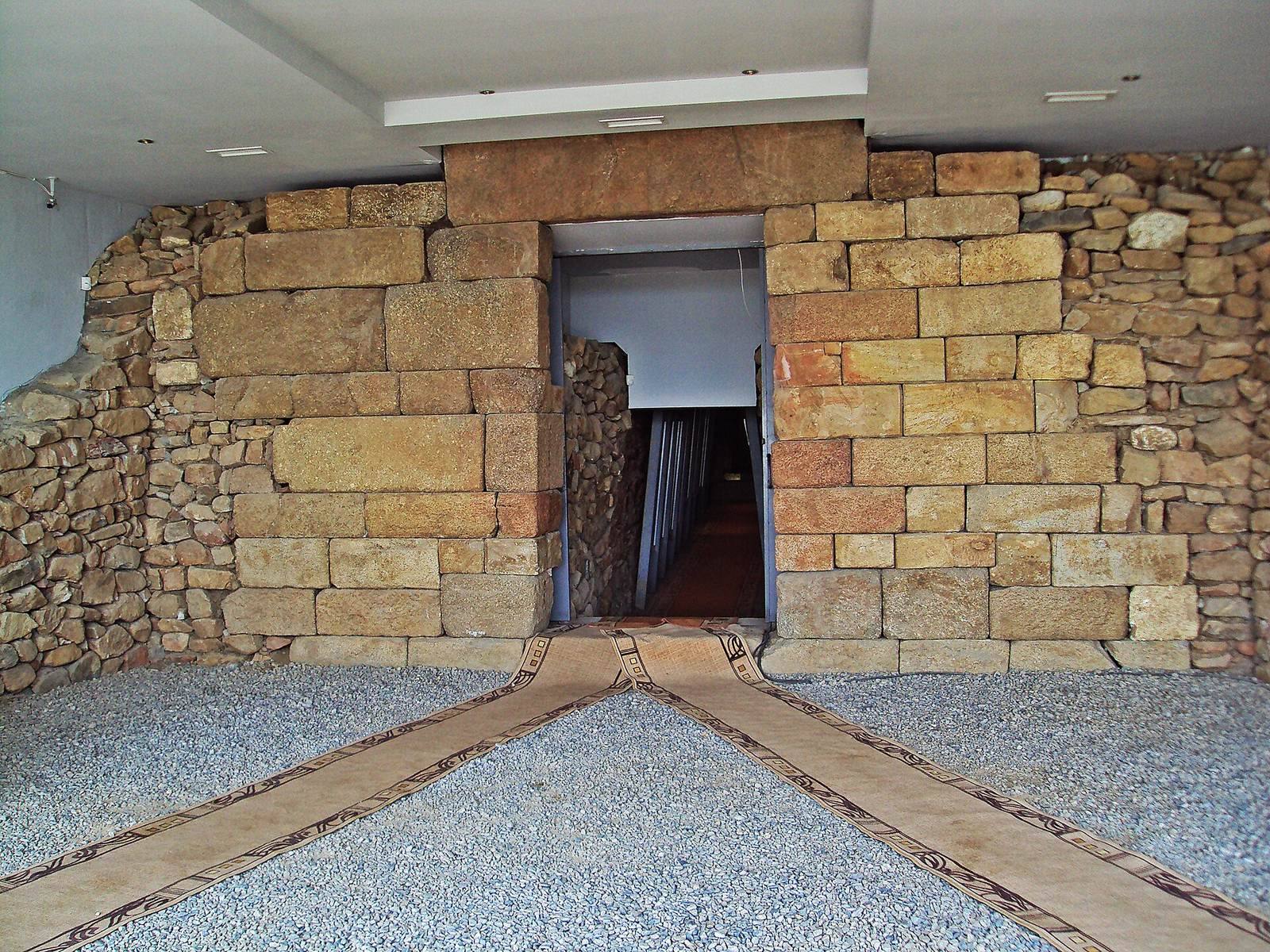
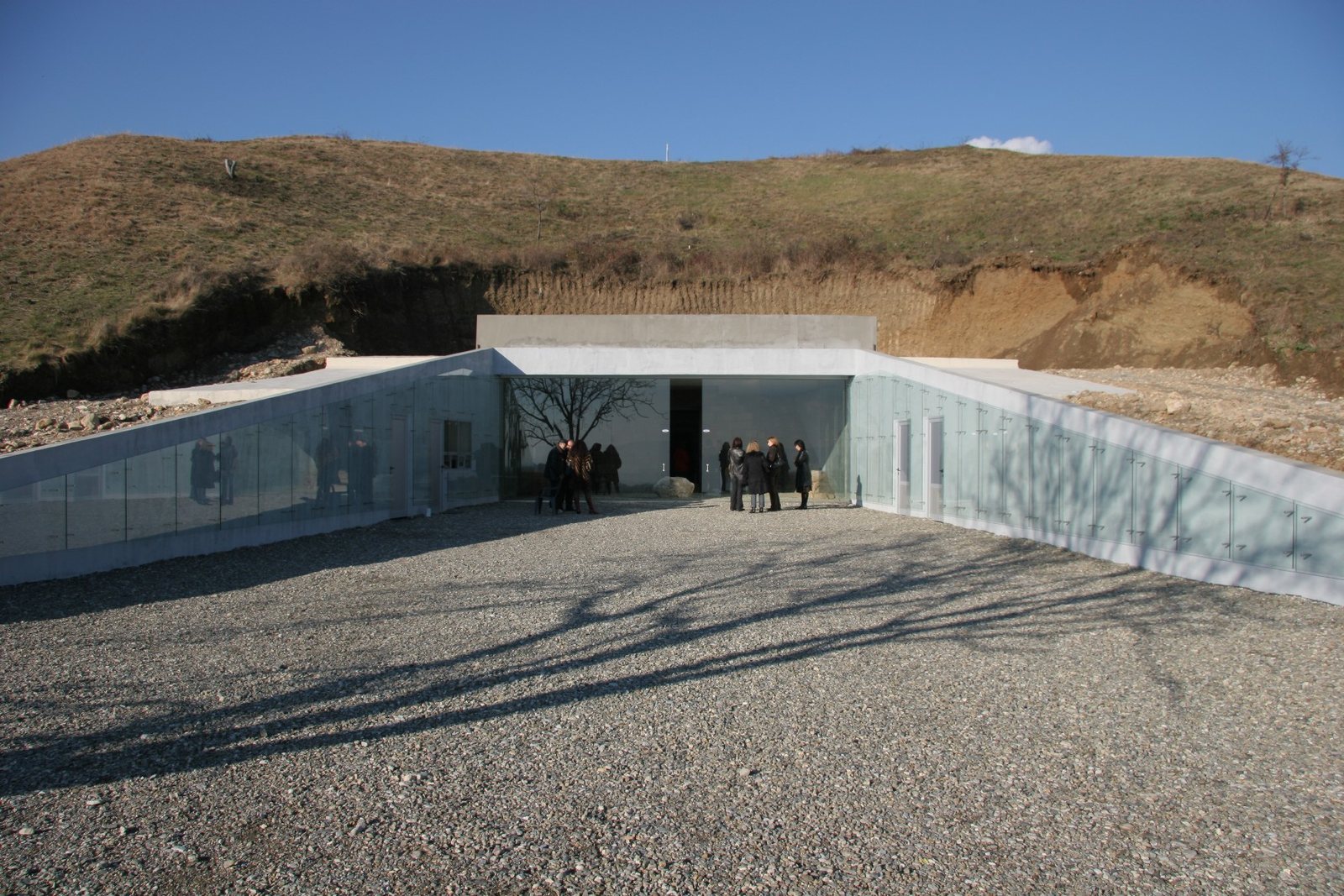
The mound, one of the largest in Thrace, rises to about 23 metres and measures roughly 130 metres across. A broad avenue approaches the façade of the tomb, which was constructed within an embankment prepared in advance. The tomb extends about 25 metres and comprises an entrance corridor followed by three chambers.
Tomb plan and chambers
Entrance corridor and first chamber
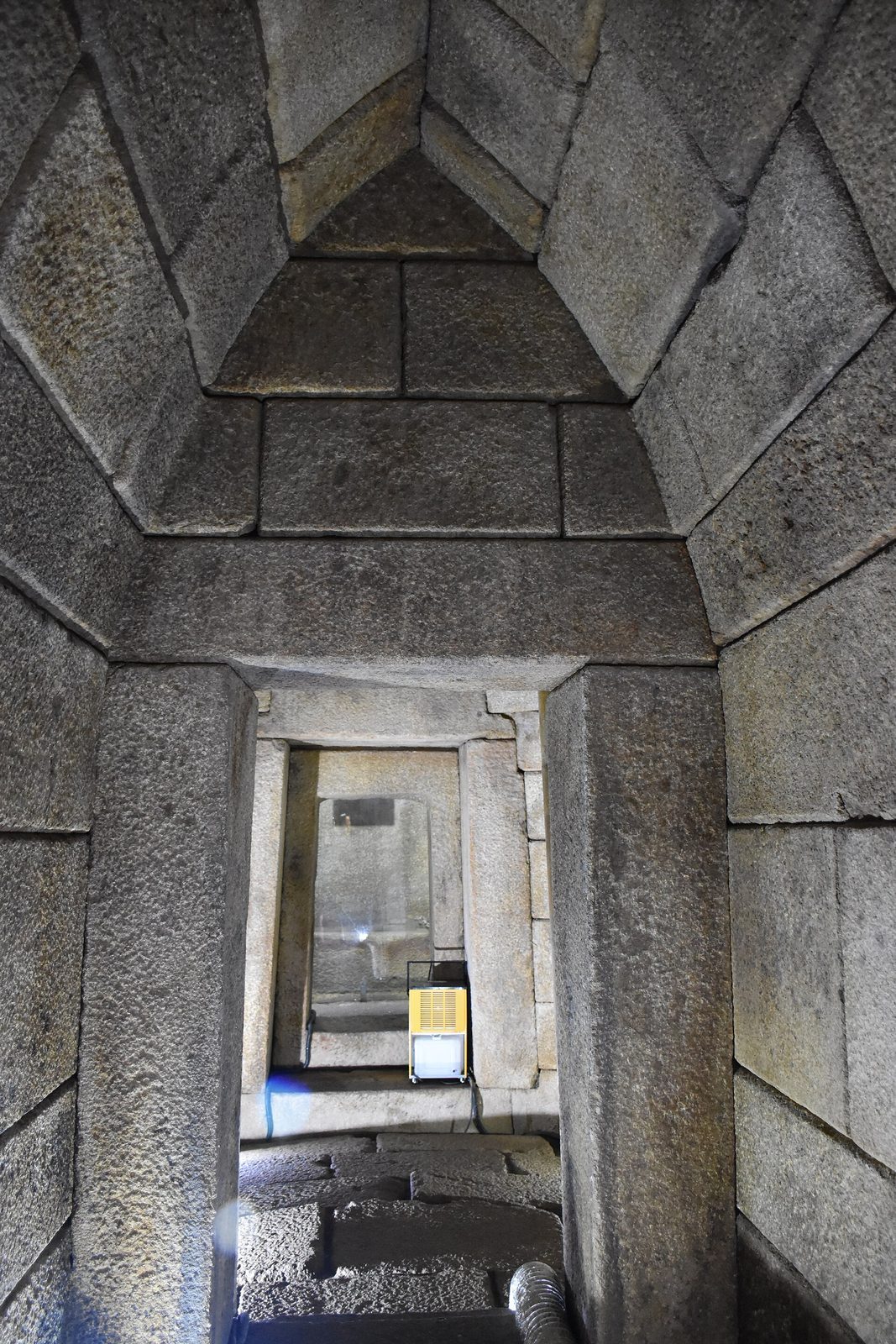
The entrance corridor is about 13 metres long. Beyond it, the first chamber is rectangular, with a ceiling formed from overlapping masonry courses rather than a true arch. Its profile slopes on two sides. A horse was sacrificed there after the grave goods were placed, and its skeleton was found in the chamber.
Circular chamber
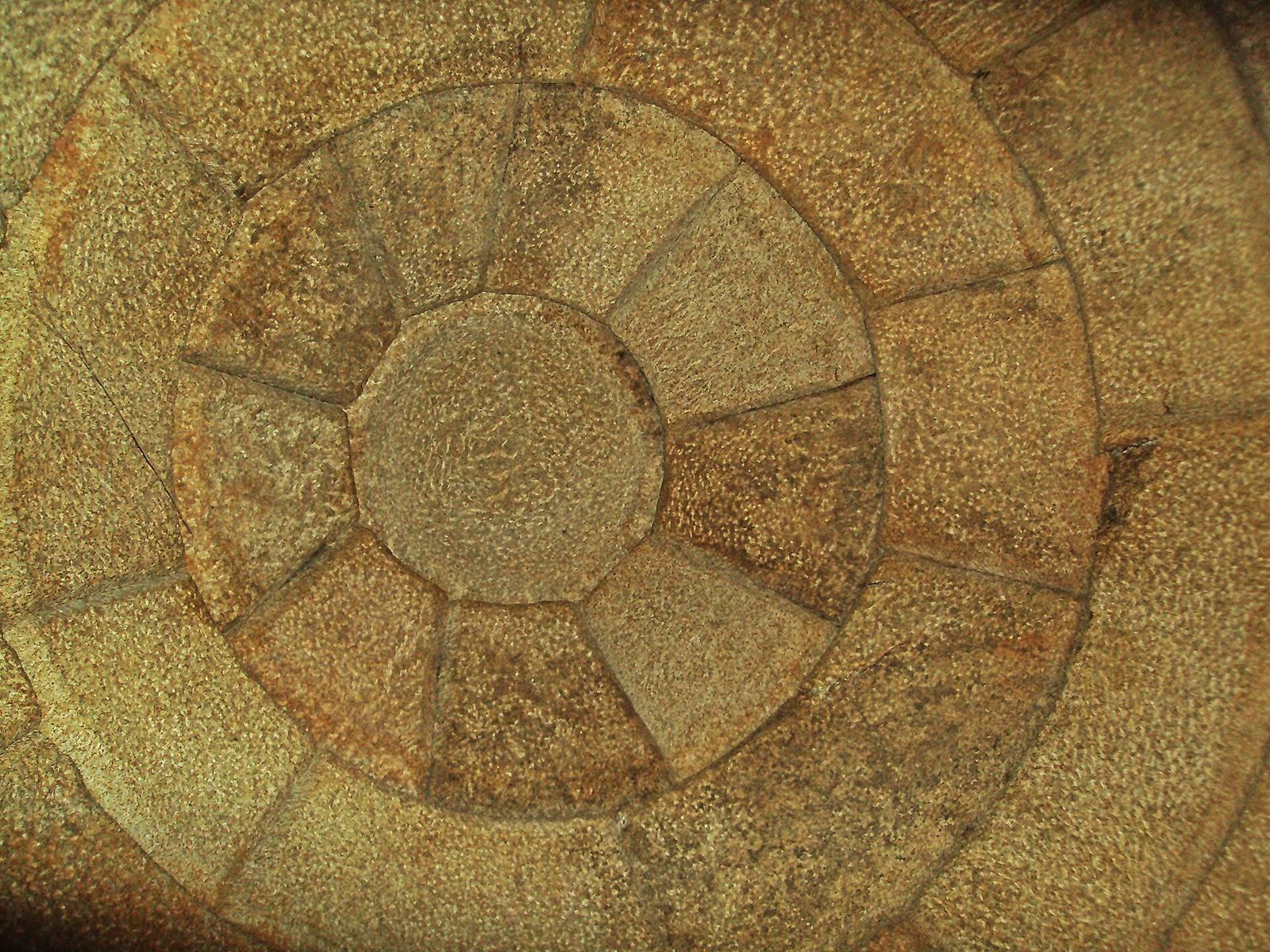
The second chamber is round and has a domed roof about 4.5 metres high. A marble door leads into it, with carved recessed panels and details representing nails. Two raised round panels show Helios, the Greek sun god, on the eastern door leaf and Medusa, a Gorgon from Greek mythology commonly shown with snakes for hair, on the western leaf.
Granite burial chamber
The third chamber was cut into a single granite block weighing about 60 tonnes. Its cover has two sloping sides and resembles a stone coffin. Inside, a burial space includes a bed shaped from the stone.
Burial finds
Vessels and royal inscriptions
Most of the grave goods came from the third chamber. They include a gold wreath of oak leaves and acorns, three ceramic wine jars, a bronze pouring vessel and shallow bowl, a silver jug and shallow offering dish, and a gold drinking cup. The jars contained thick Thracian wine, and the gold among the objects weighed more than one kilogram. A stamp on one jar is dated to about 310–275 BC. Because metal objects could remain in use for a long time, they do not establish the burial’s exact date.
The helmet and two silver vessels bear the name Seuthes, supporting the identification of the burial. Inscriptions on the silver vessels also give weights in tetradrachms, ancient Greek silver coins valued at four drachmas. These weight marks may have been added when the vessels entered Seuthes’ treasury or during a later inventory.
Weapons and horse equipment
The weapons and armour include a bronze helmet with a gilded silver fitting, lower-leg guards, armour with a collar and gold-thread decoration, an iron sword in a sheath decorated with gold, and spearheads. Thirteen gold fittings from horse harnesses depict people, animals, and plants; such fittings are rare in Thracian archaeology. Other gold pieces include two rectangular sword-sheath decorations showing standing warriors, a large round armour fitting with a roaring lion’s head and detailed plant ornament, and a rod handle. Glass counters were also found.
Toiletry objects, textiles, and human remains
Two alabaster perfume containers and a gilded silver container shaped like a shell were among the personal items. The shell-shaped piece measures 16 centimetres long, 17.8 centimetres wide, and 4 centimetres high, and weighs 381.46 grams. Bulgarian archaeologist Emil Nankov proposed that it belonged to Berenice, Seuthes’ wife, and was placed in the tomb as a farewell gift. He compared it with similar objects from wealthy women’s graves in southern Italy and ancient Macedonia.
A carpet woven with gold thread covered the floor and the ritual bed. Three unburnt teeth, attributed to an individual aged 10 to 12, lay scattered in the circular chamber.
Bronze head
A bronze head found about seven metres in front of the façade is considered a portrait of Seuthes III. It depicts a middle-aged man with a moustache and beard; alabaster and glass paste form the eyes, while copper strips shape the eyelashes and eyebrows. Analysis of the clay core traced its clay to the Kazanlak area, suggesting that the sculptor or sculptors worked locally. Its style and casting technique have prompted a tentative attribution to Silanion, a prominent sculptor of ancient Athens. The head may have belonged to a life-size statue. It is now in Sofia’s National Archaeological Museum, while the other grave goods are held by the Iskra History Museum in Kazanlak.