Ostrusha Thracian Tomb: A Fourth-Century BCE Tomb-Cult Complex in Bulgaria
Site at a Glance
- Popularity
- Medium
- Country
- Bulgaria
- Primary era
- Classical
- Eras represented
- Classical
- Civilizations
- Thracian
- Site type
- Religious
- Remains
- Tomb
On this page15 sections
History
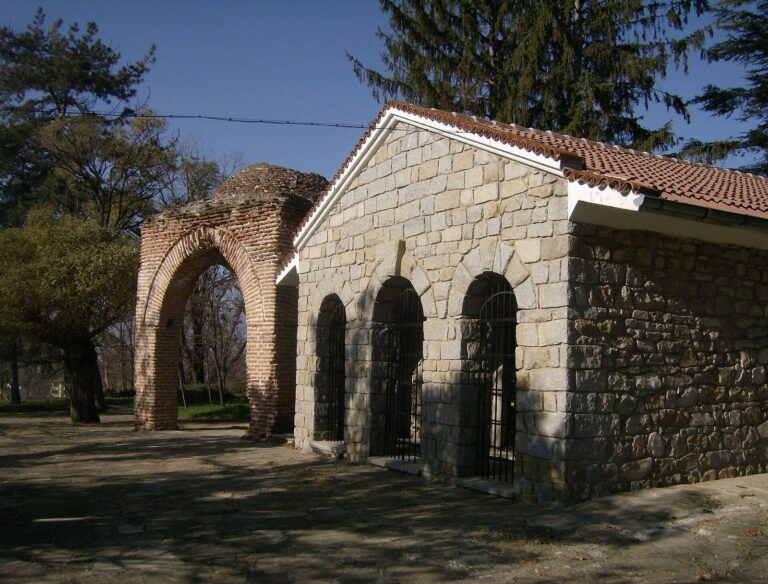
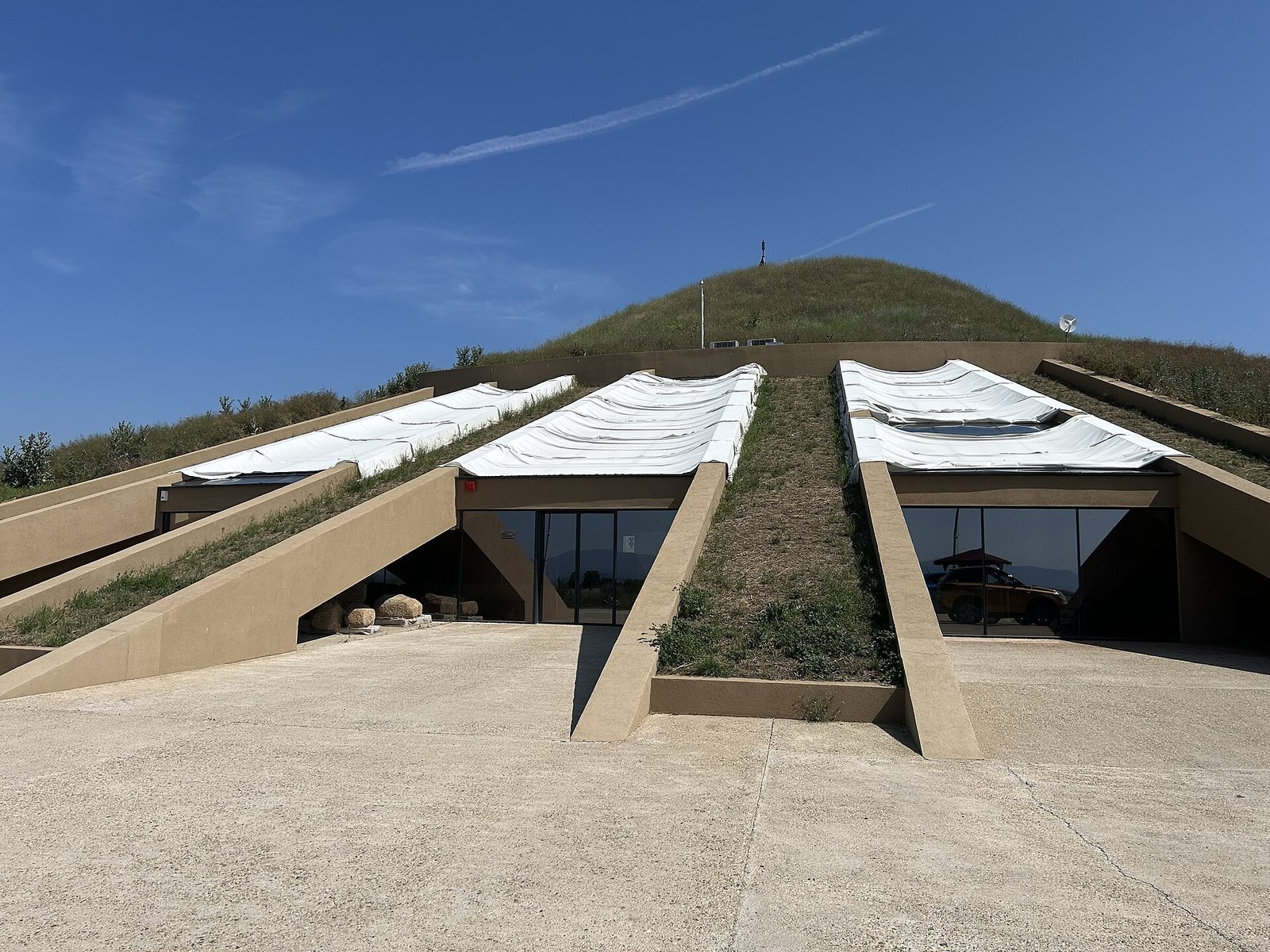
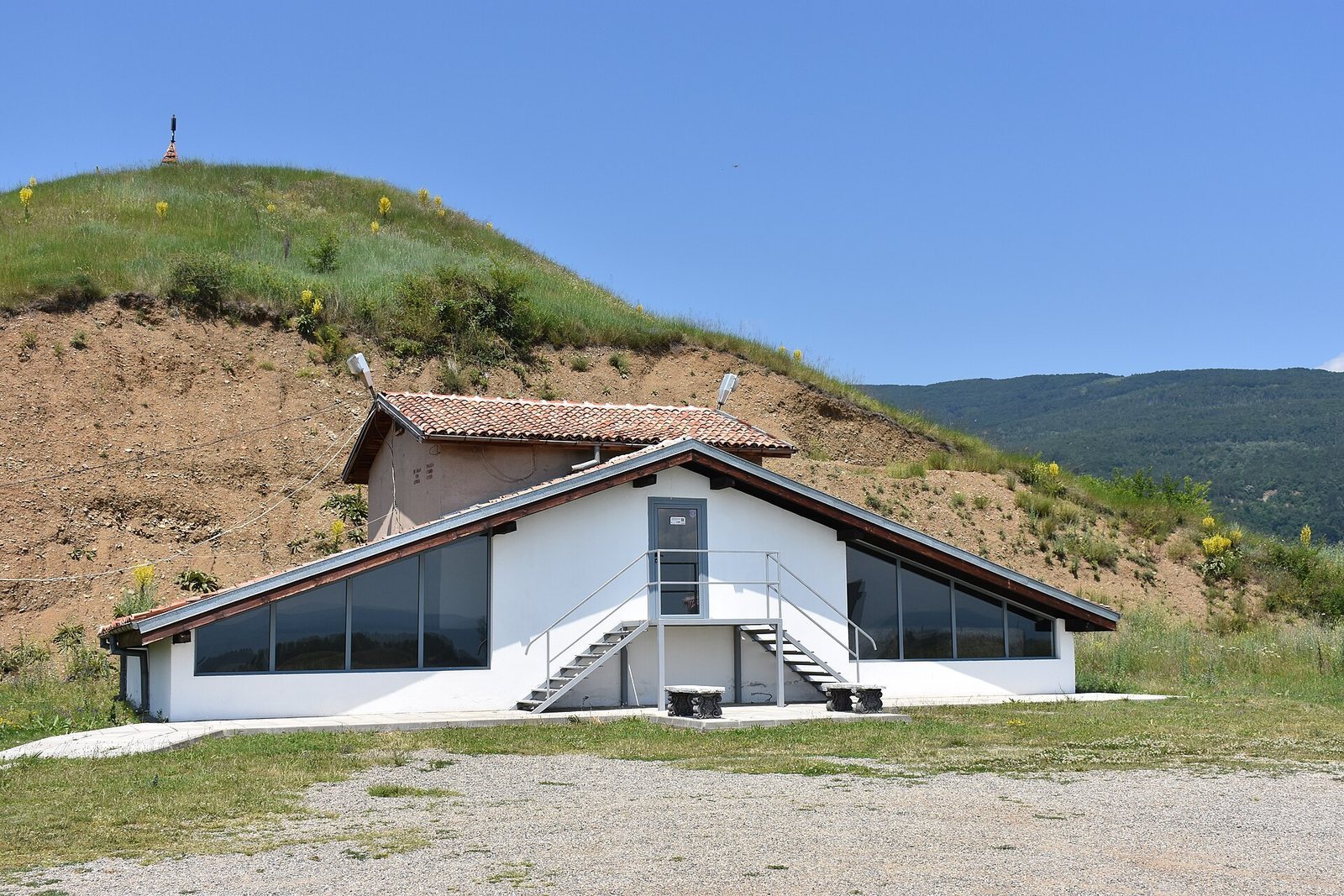
The Ostrusha Thracian tomb is a fourth-century BCE tomb-cult complex beneath the Ostrusha Mound near Shipka, Bulgaria, built by the ancient Thracians. It formed part of a larger necropolis associated with Thracian aristocracy in the Valley of the Thracian Kings, a region known for elite Thracian tombs. The complex is regarded as a particularly notable achievement of Thracian architecture and has been described as the only known architectural complex of its type in Thrace.
Construction and ritual use
Construction took place in stages. After the central chamber was carved and installed, work stopped and the structure was covered. Burials and ritual activity continued at the complex for another two or three decades.
The complex served as a temple dedicated to Sabazios, a Thracian deity associated with immortality. It has also been interpreted as a heroon, a sanctuary for a deceased person regarded as divine or heroic. The person commemorated may have been a Thracian ruler or a high-ranking aristocrat.
Looting and later use
Most of the chambers were plundered in antiquity. In the early Byzantine period, the first centuries of the Eastern Roman Empire, the mound was reused as a Christian cemetery. Bulgarian archaeologist Georgi Kitov proposed that people searching for a crypt beneath the burial chamber dug a tunnel into the central chamber. He suggested that they may have damaged much of its imagery, perhaps out of hostility to representations of people.
During the 1877–78 Russo-Turkish War between Russia and the Ottoman Empire, Russian troops used the mound as a headquarters. Kitov and his archaeological team uncovered the complex on 13 April 1993. Conservation work in 2012 included reconstruction of the complex and renewal of its protective structure.
Remains
Plan and stone construction
Overall layout
The complex covers about 100 square metres beneath an earthen mound approximately 20 metres high. It occupies the mound’s southern edge, with its entrance facing south, and contains six chambers: five rectangular rooms and one circular room. A room at the complex served as a distribution point for chambers to the east, west and north. The arrangement of the rooms around the central chamber’s platform indicates that the platform and chamber may originally have stood on their own.
Central chamber
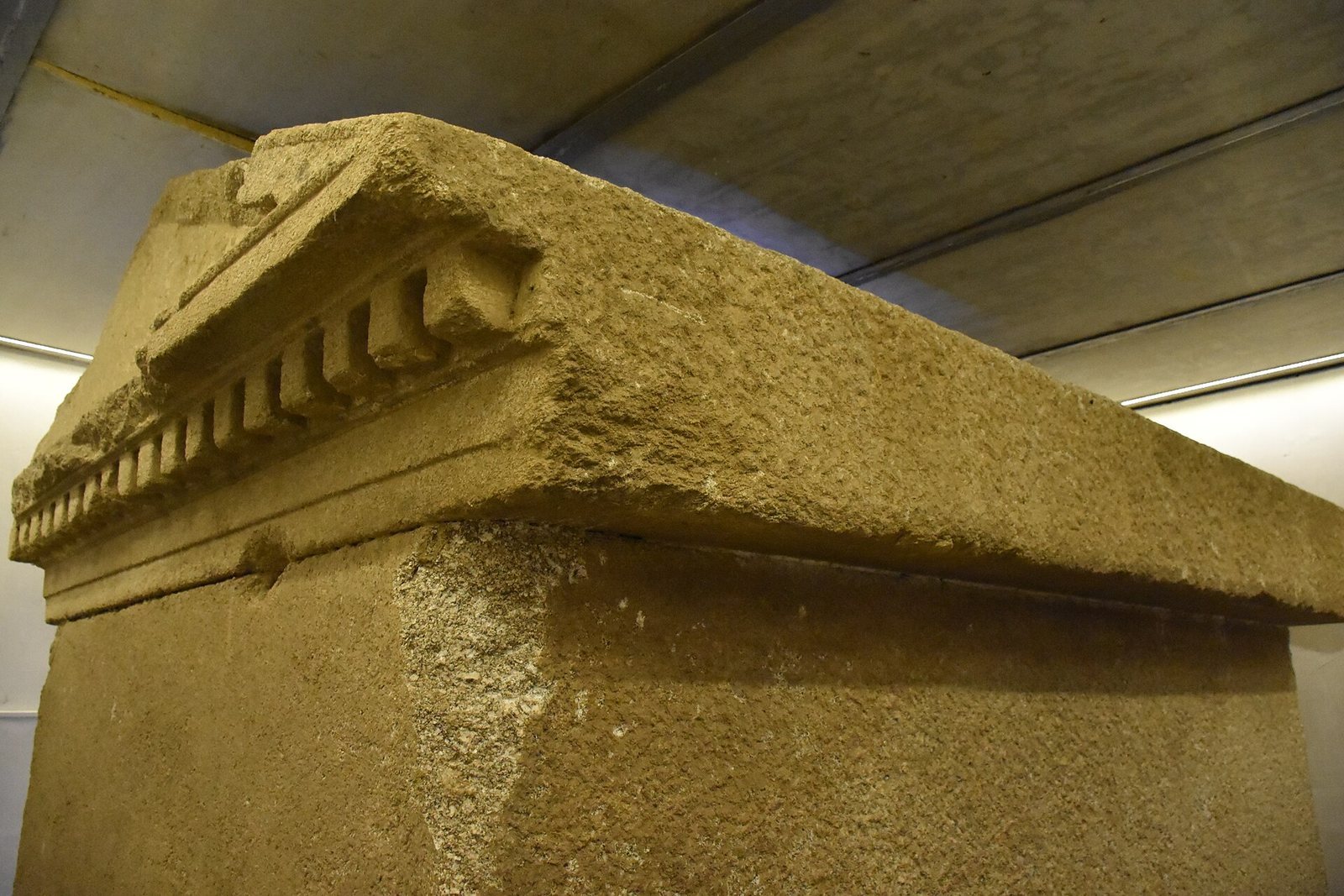
The central chamber was cut from a single stone block and capped by a second block, together weighing about 60 tonnes. It measures 2.45 by 3.54 by 2.36 metres and rests on a base of three steps. Lead secured the chamber to the base and the roof block to the chamber; carefully worked stone blocks were also joined with iron clamps set in lead. The chamber has a gabled roof and a pediment, the triangular feature above a building’s front. Tooth-like projections beneath them imitate wooden beams.
Interior decoration
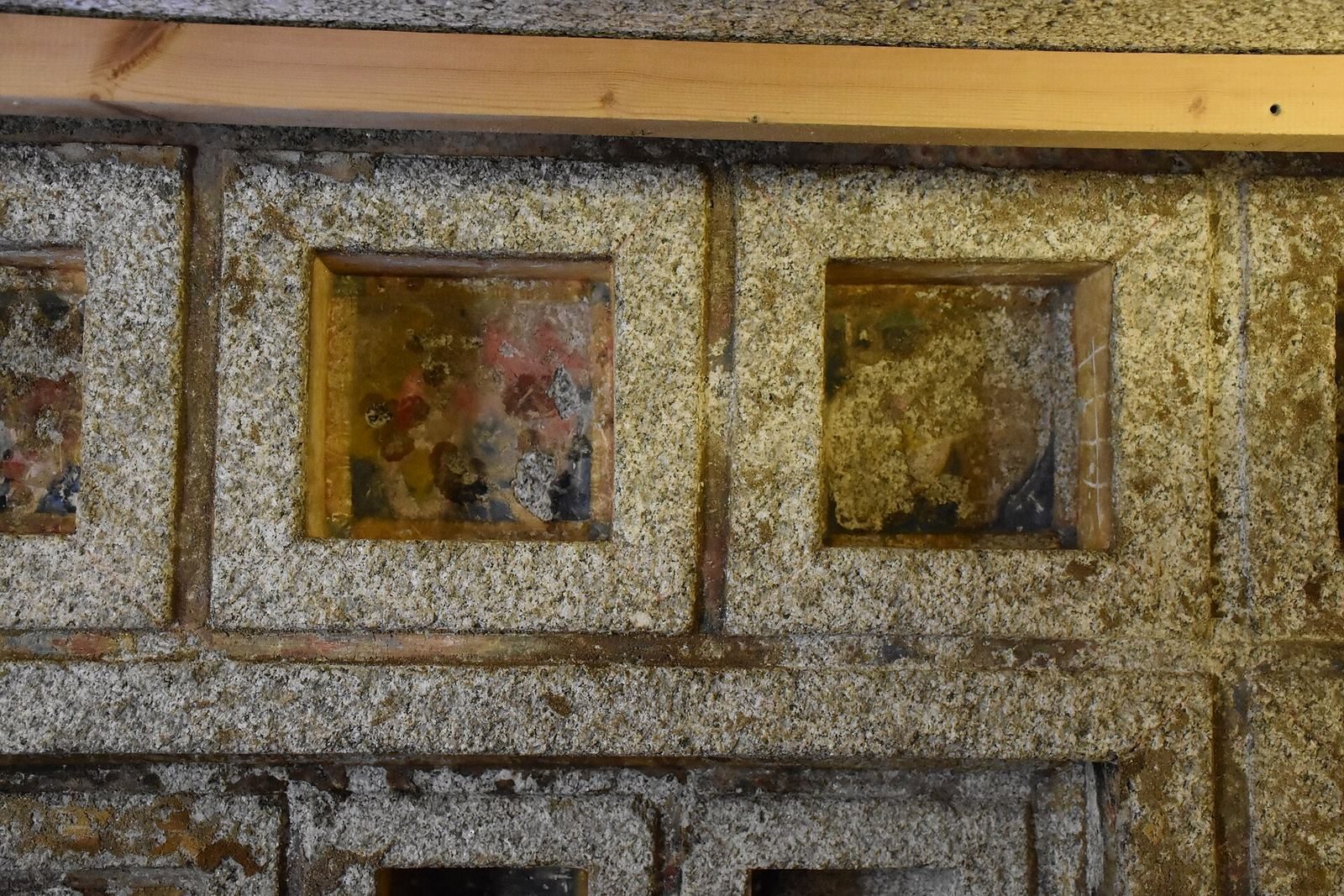
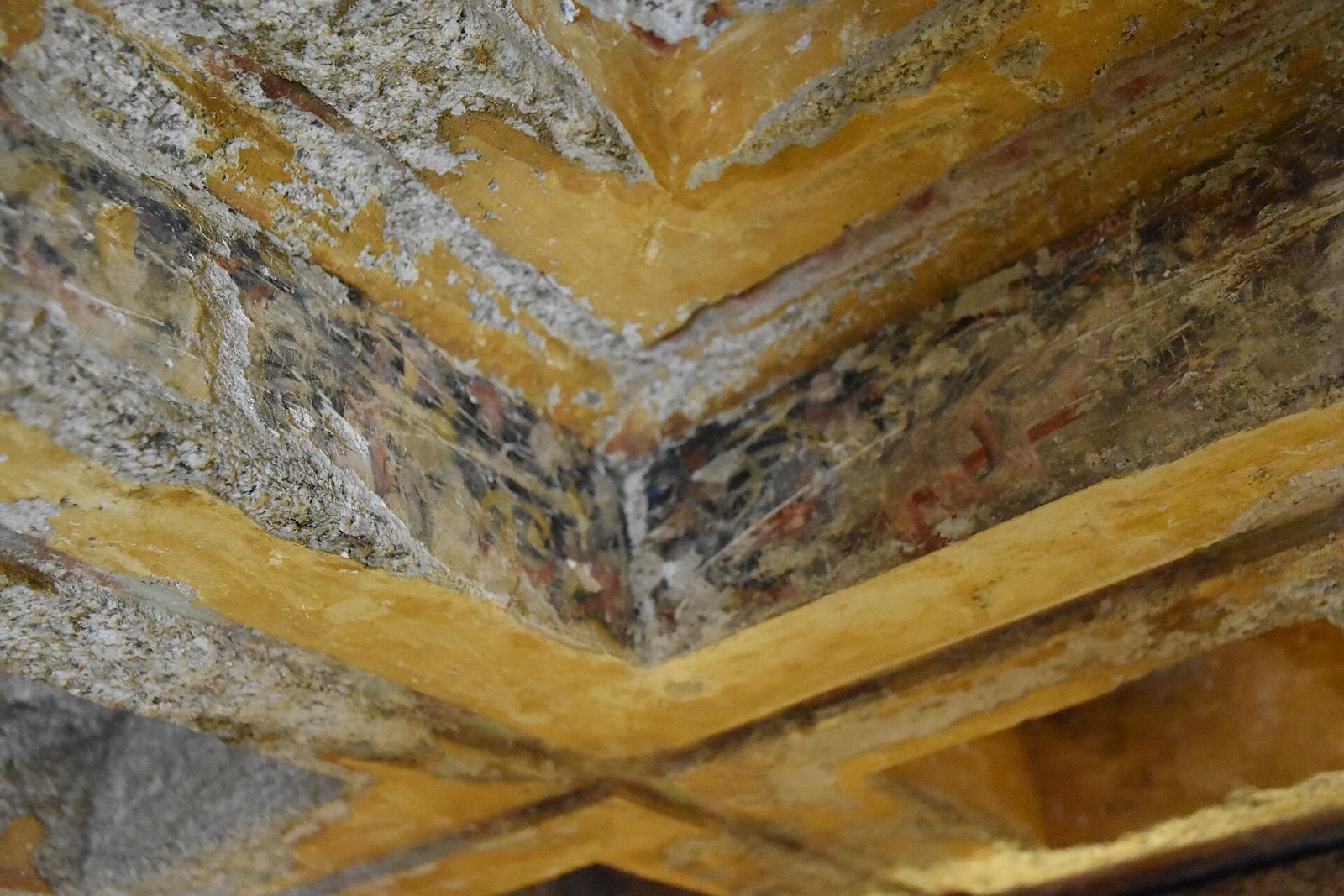
Opposite the central chamber’s entrance stands a carved stone ritual bed with raised decoration and side rails. Its ceiling imitates wooden beams that divide the surface into geometric panels. A central circular panel represents the sun, while surrounding rectangular and triangular panels carry geometric and plant designs, portraits, and scenes of people, animals and plants. Some images relate to the lives of Thracian aristocrats. The paintings used blue, yellow, red and green, with gold inlays. Most are badly damaged, but a portrait of a young noblewoman survives.
Burial chambers and associated finds
Eastern and northern chambers
The eastern chamber had a collapsed domed roof, with horse bones scattered across its floor. The smaller northeastern and northwestern chambers may have been reached by stairs. Kitov suggested that they served as repositories and that their contents were removed during looting.
Southwestern chamber
The southwestern chamber survived intact. At its southern end, a horse skeleton lay in anatomical order; it may have been sacrificed and buried there. A knife blade was lodged in its chest. A bag of cloth or leather in the chamber’s northwest corner contained horse equipment, including an iron bridle, silver rings and silver fittings decorated with animal forms. One forehead ornament is shaped like the numeral eight and has been interpreted as a highly stylized double axe. A three-dimensional neck and griffin’s head project from its centre. Kitov classified it as a Thracian-type ornament. Comparable objects are known from Scythian territory, home to ancient peoples of the Eurasian steppe. The ornament has been interpreted as linking earlier and later Thracian examples and as evidence of Thracian influence on Scythian horse equipment.
Fragments of two silver vessels were also found in this chamber: a shallow bowl used for ritual offerings and a jug of the Derveni type, a form also represented among the vessels of the Rogozen treasure, an ancient hoard of Thracian silver. Other finds from the mound included weapons, pottery, silver objects and coins of Philip II, the fourth-century BCE king of Macedon.
Jewellery and chest ornament
Finds from the mound also included fragments of silver and gold jewellery and a chest ornament of the Mezek type, an archaeological category named after finds from a Thracian tomb at Mezek. Its raised decoration, formed by hammering the metal from the reverse, includes concentric bands of rosettes, palmettes, spirals and plant motifs. Designs on the horse equipment include plants and animals, notably griffins and lion’s paws.
Features south of the complex and cemetery finds
Grave and dismantled elements
In front of the tomb, archaeologists found a symbolic grave shaped like a sarcophagus. Six decorated stone ornaments, called acroteria, lay in a straight line nearby. Some were painted pale blue and pale pink. Kitov considered that they had adorned the building’s pediment. When the complex served as a temple, architectural elements and furnishings appear to have been dismantled and arranged south of the building; the reason for this arrangement remains unclear.
Early Byzantine cemetery
Finds associated with the cemetery included several dozen coins from the reign of Constantine the Great, a Roman emperor of the early fourth century CE. Other objects included fragments of comb-decorated pottery, shoe hobnails and a rare Persian silver coin.