Tiengen Chindlistein: A Neolithic Menhir in Waldshut-Tiengen
Site at a Glance
- Popularity
- Very Low
- Country
- Germany
- Primary era
- Stone Age
- Eras represented
- Stone Age
- Civilizations
- Unclassified
- Site type
- Civic
- Remains
- Megalithic Monument
On this page4 sections
History
Tiengen Chindlistein is a Neolithic menhir, a single upright stone raised as a monument, in Tiengen, Waldshut-Tiengen, Germany. It is associated with customary assembly places and the regional court of the Klettgau, although the connection between the stone and particular early gatherings is uncertain.
Assembly traditions and the Klettgau court
The stone is associated with gathering places used after the Alemanni, an early medieval Germanic people, settled the region. A Thing was an assembly that could also handle judicial matters. The free imperial regional court of the Klettgau, a historical region along the Upper Rhine, is associated with the site. Its status as a free imperial court meant it held imperial legal standing.
A local chronicle gives 1020 as the stone’s first written mention but identifies no supporting document. Another interpretation connects the stone with an 855 reference to Tuoingen, an early name for Tiengen, as a meeting place of the Albgau, a historical district. Later sessions of the Klettgau court are recorded in 1379 and 1425.
Names, folklore, and later uses
The stone is also called Langenstein or Lange Stein, meaning Long Stone, and Chindlistai or Kindlistein. The origin of its child-related name is unknown. Prehistorian and archaeologist Egon Gersbach proposed that the name arose only after popular memory of the stone’s earlier court association had faded. Local folklore links the name to fertility rites and tells of a fairy living inside the stone who helps women wishing to have children.
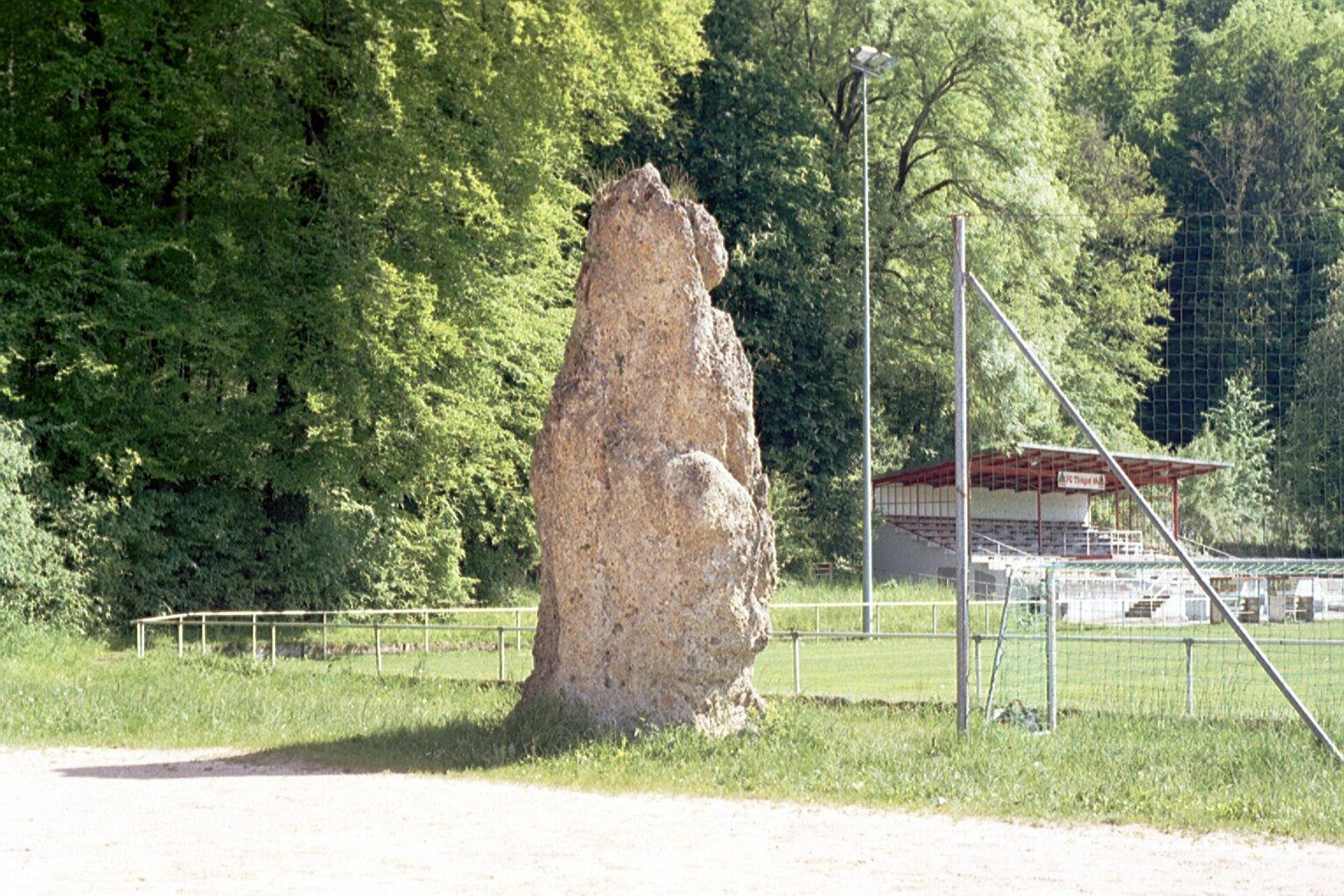
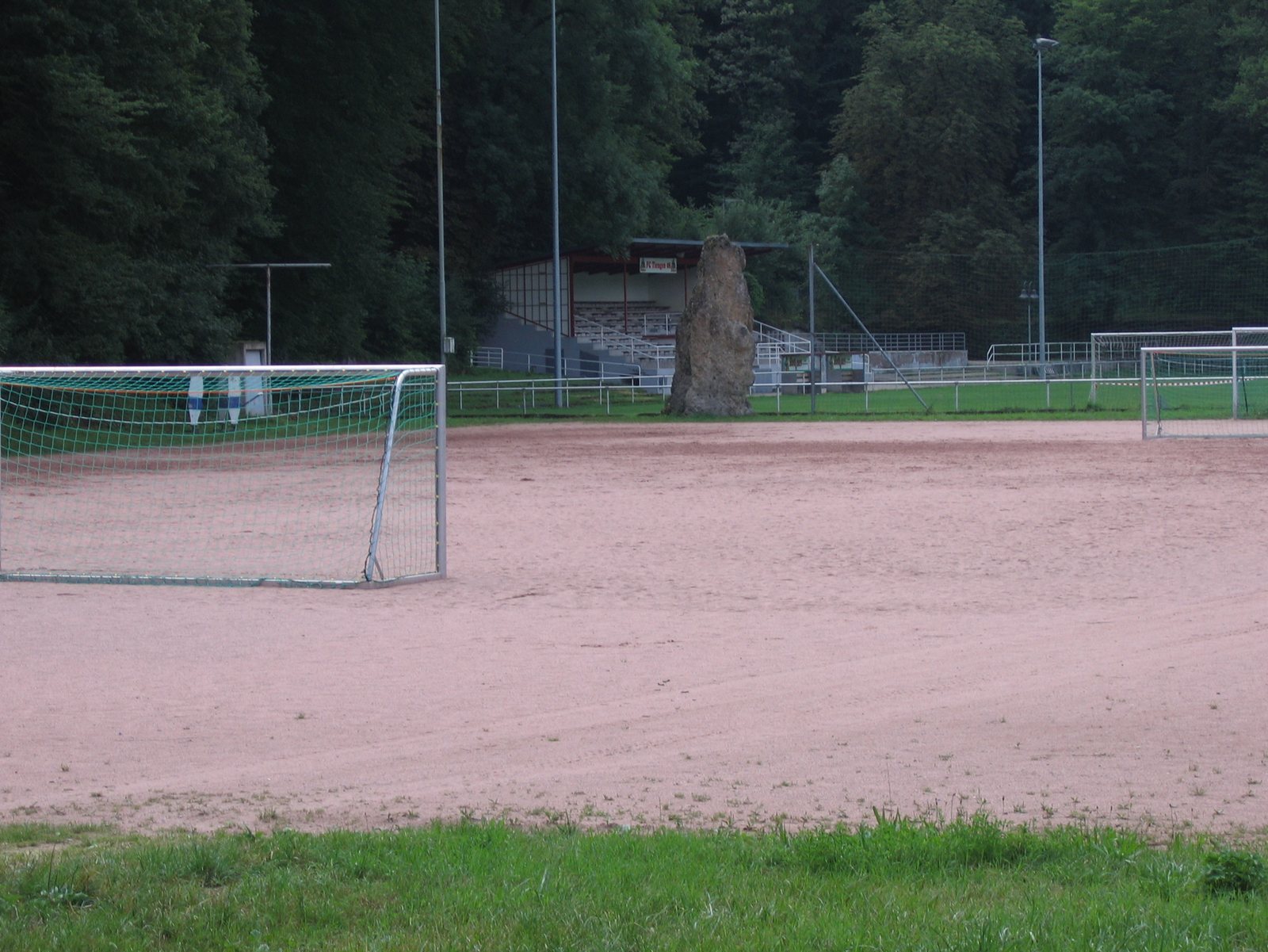
During the Nazi period, the stone was recast ideologically as a Germanic Thing site. In 1908, FC Tiengen 08 established its first football ground on the Langensteinwiese beside the Wutach, and the Langenstein Stadium later took its name from the stone. The stadium grandstand and remaining facilities were demolished in 2019, and the area was returned to a more natural state. In May 2021, plants and shrubs, including a small tree growing in the stone’s cracks and hollows, were removed; sightlines from a walking path were cleared and an information board was installed. The stone is a protected cultural monument.
Remains
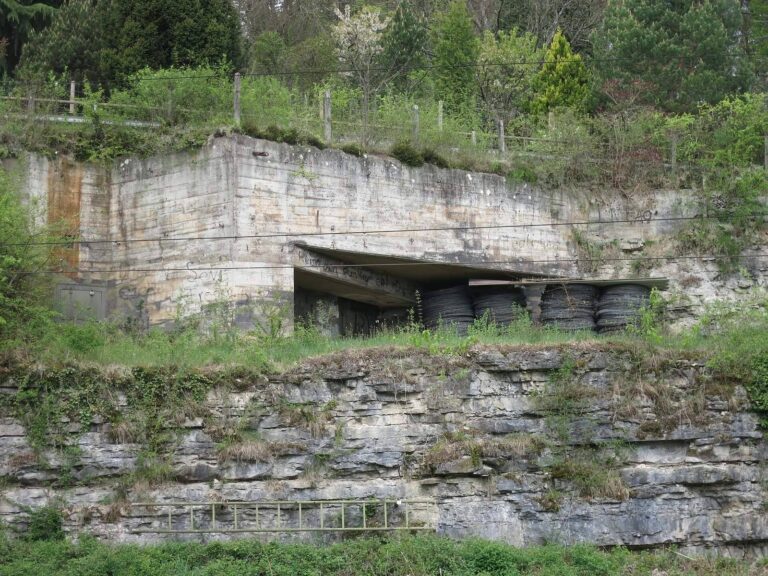
The menhir stands alone in the Wutach lowland, on the river’s left bank in Tiengen, south of Waldshut-Tiengen and about three kilometres from the German-Swiss border. It rises at the foot of a gravel terrace, with the Tiengen West entrance and exit of the Bürgerwald Tunnel above it. An old road linking the High Rhine valley with Tiengen passes at the stone’s foot.
The pillar is deeply fissured and made of conglomerate, a rock formed from rounded stones cemented together. The same rock occurs immediately to the south, and its transport to the site is estimated to have been less than 50 metres. The vertical alignment of the embedded stones indicates that the pillar was set upright. It rises 5.92 metres above ground, has a nearly rectangular base and a circumference of 7.50 metres, and reaches a greatest diameter of 1.70 metres. Its orientation is northwest.