Tibes Indigenous Ceremonial Center: An Indigenous Ceremonial and Sports Complex in Puerto Rico
Site at a Glance
- Popularity
- Medium
- Country
- Puerto Rico
- Primary era
- Medieval
- Eras represented
- Classical, Medieval
- Civilizations
- Unclassified
- Site type
- Religious
- Remains
- Sanctuary
On this page13 sections
History
The Tibes Indigenous Ceremonial Center is an Indigenous ceremonial and sports complex in the Tibes area of Ponce, Puerto Rico. Its early courts and ceremonial structures were built by the Igneri. It is Puerto Rico’s largest ceremonial site and oldest uncovered Indigenous ceremonial and sports complex, and ranks among the Caribbean’s largest and most important Indigenous sites. Occupation may reach back to AD 25, while radiocarbon dating and pottery indicate a continuous occupation phase from about AD 400 to 1000.
Igneri and Taíno occupation
The Igneri, a pre-Taíno Indigenous people of the Caribbean, built ball courts and ceremonial structures at Tibes. They originated among Arawak groups in Venezuela. The Igneri are thought to have left around AD 600, for reasons that remain unknown. Taíno communities occupied the area by about AD 1000. The Taíno were Indigenous people of the Greater Antilles, including Puerto Rico.
The settlement retained an agricultural character until about AD 1000–1100, as its civic and ceremonial roles developed under Taíno culture. The center’s peak period is placed between AD 600 and 1200. It was abandoned around AD 1270, though small groups occupied the region sporadically afterward. The change from Igneri to Taíno occupation is important for understanding cultural shifts and political organization. Whether Taíno communities developed in place from Igneri society or represented a distinct group remains disputed.
Ceremonies and the ball game
The courts were used for batú, a ball game with recreational and ceremonial purposes. Teams played on opposite sides of a court, keeping a flexible ball made of rubber and plant leaves in motion without using their hands. A ball that stopped moving cost a point; players marked scores on the ground, and play ended when the losing side reached a set score. Winners were treated as heroes, while members of the losing side were sacrificed.
Plazas hosted areyto, ceremonies in which singing and dancing, accompanied by music, conveyed oral histories. These gatherings could last for several hours or continue into the next day. Evidence at Tibes also points to possible Mesoamerican influence in Puerto Rico by about AD 700, including in the ball game. Mesoamerica was a historical cultural region encompassing parts of Mexico and Central America.
Discovery and preservation
Hurricane Eloise and heavy rains exposed remains at Tibes in 1975 after displacing soil. A farmer searching for firewood encountered the area, and the Guaynia Society of Archaeology and History and members of the Archaeological Society of the Southwest announced the discovery. After dense brush was cleared, the Guaynia Society surveyed the site with support from the Puerto Rico Institute of Culture, revealing shell middens and stone alignments.
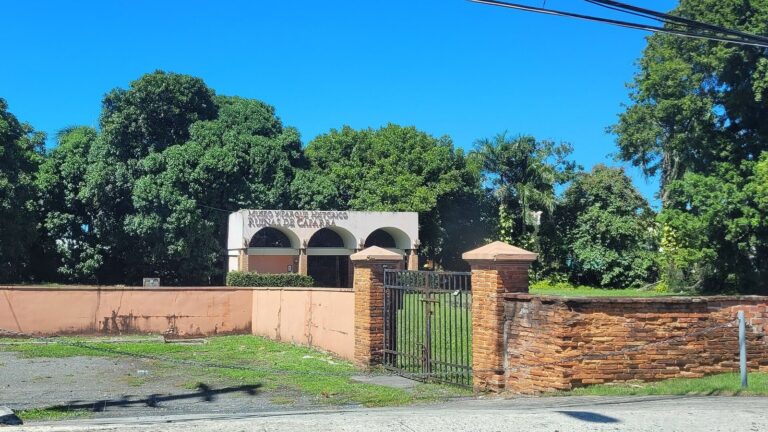
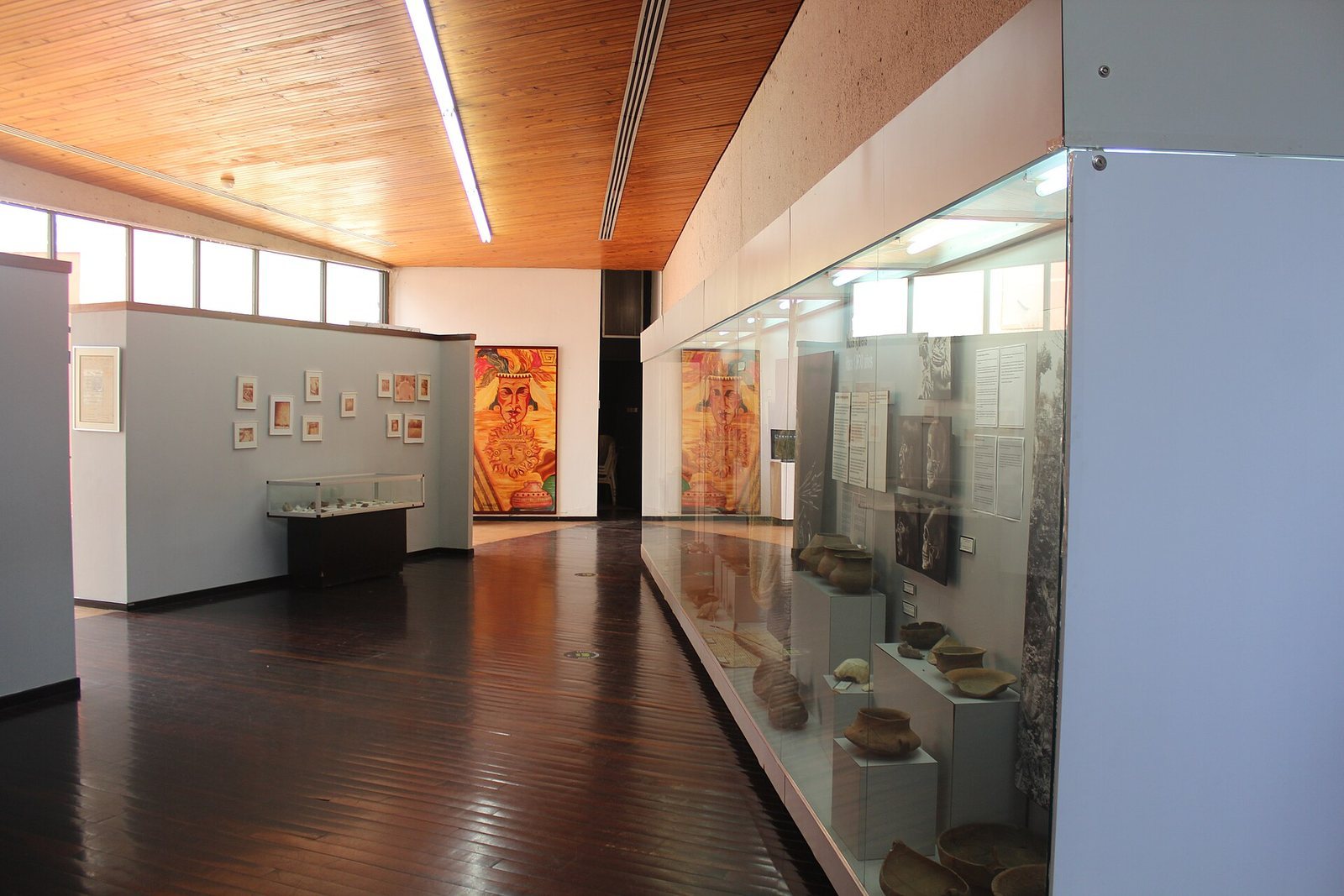
Initial excavations began between the late 1970s and early 1980s. Test pits helped establish relative and absolute chronology, while work outside the burial area focused largely on the ball courts. Archaeological work and restoration have continued, and stone alignments are also known beyond the maintained area. Ponce’s municipal government purchased the land and created an archaeological park. An on-site museum was established in 1982 and restored in 1991. The center was added to the U.S. National Register of Historic Places in 1978 and the Puerto Rico Register of Historic Sites and Zones in 2001.
Remains
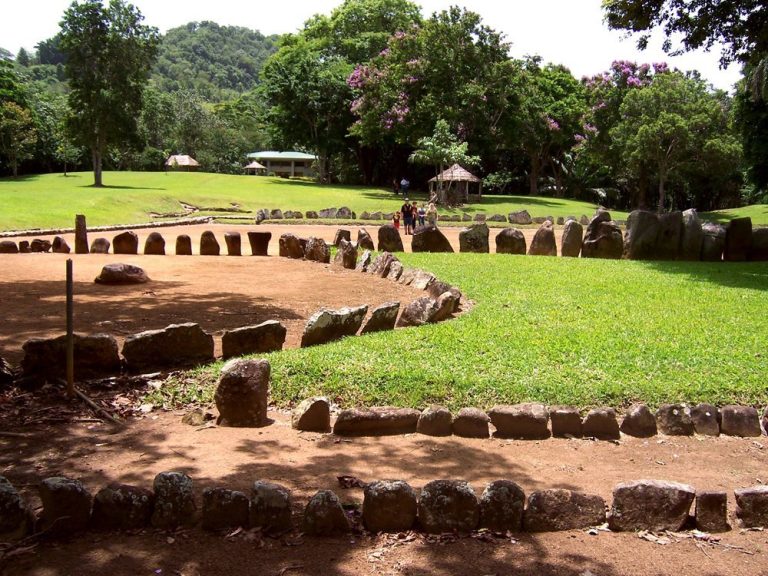
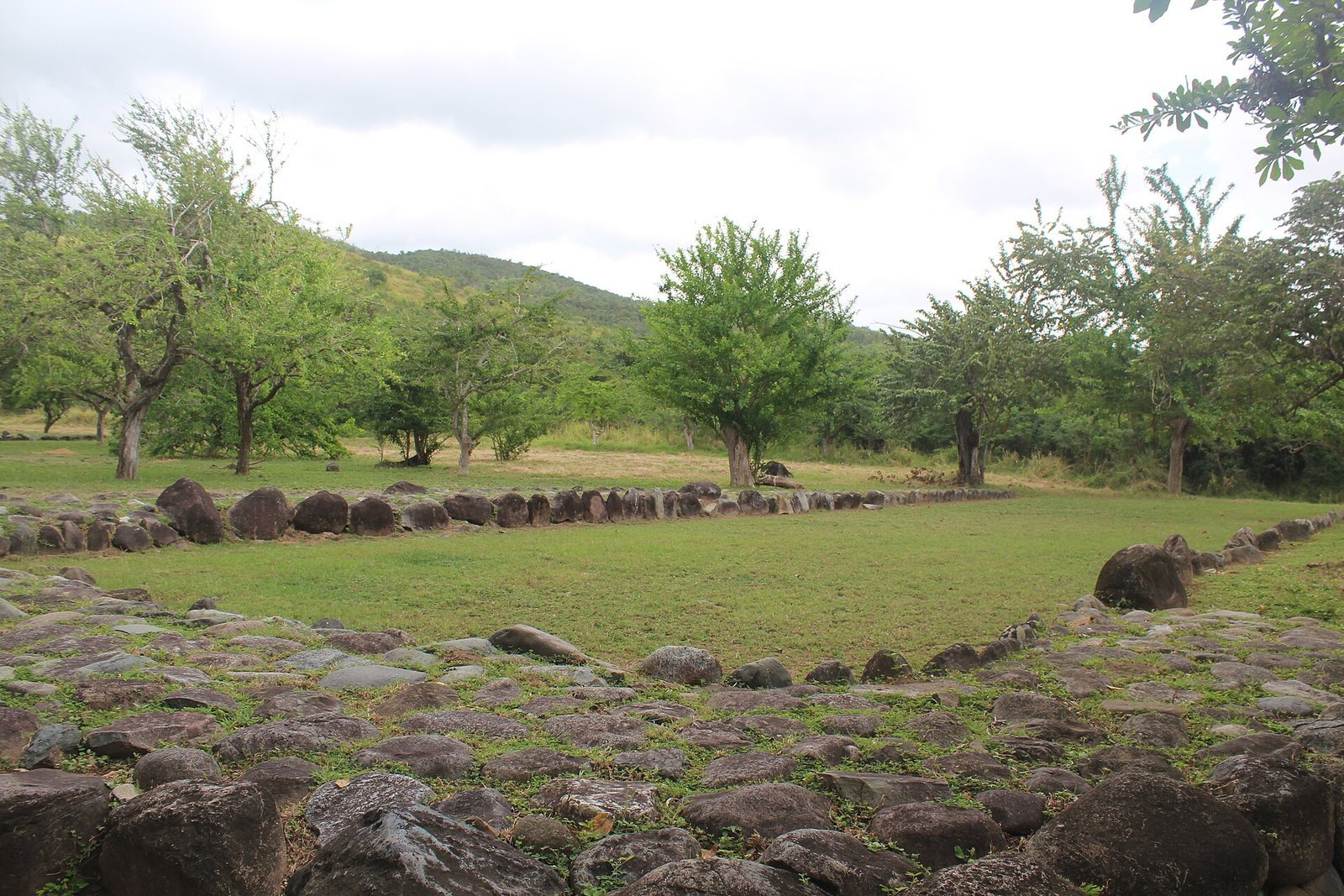
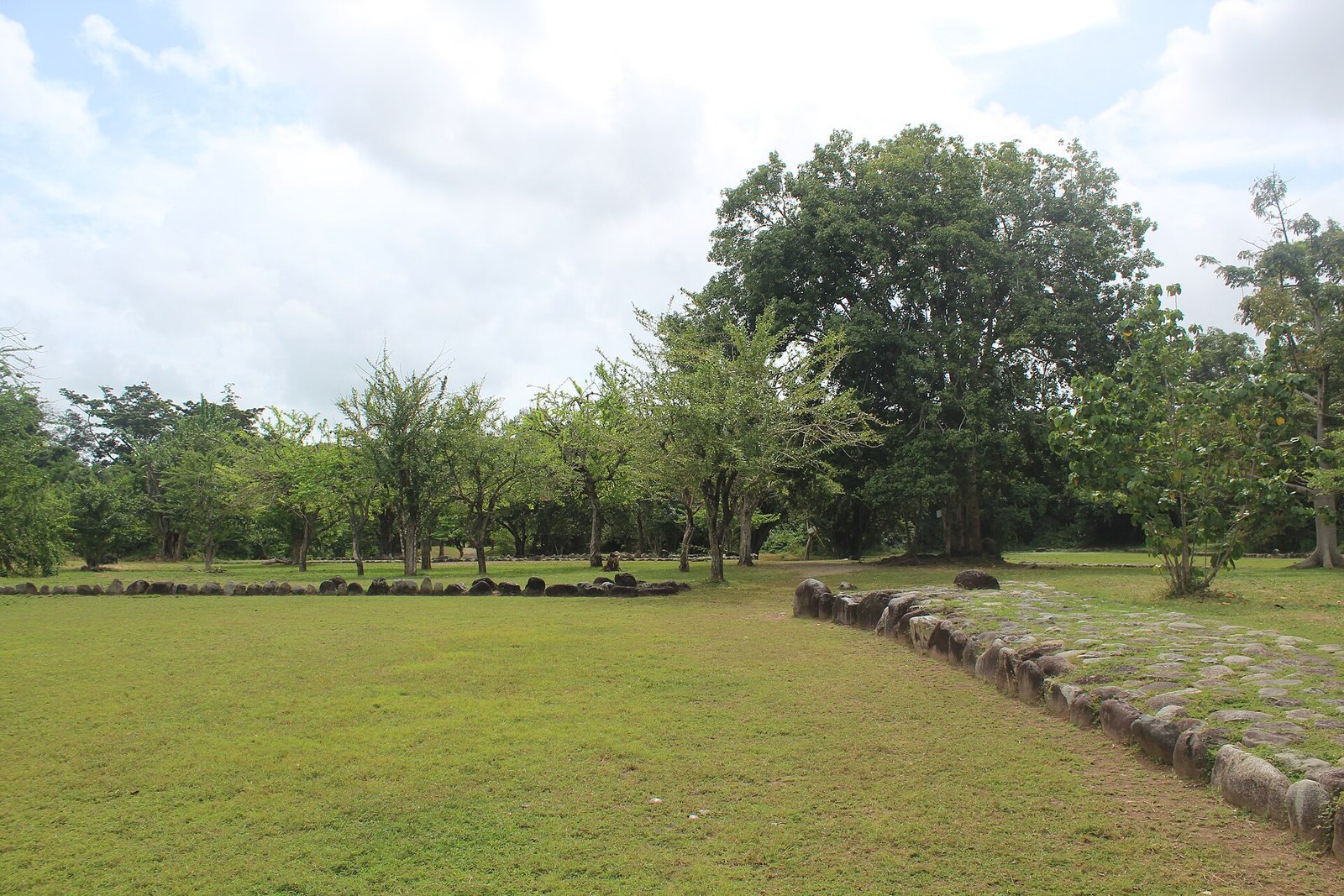
The archaeological site covers about 13 hectares and contains 12 structures, nine of them restored. Its arrangement includes courts, a large plaza, smaller stone features, burial areas, and shell middens. The ground inside the courts and plaza was artificially modified, and some courts extend into midden deposits.
Courts and ceremonial spaces
Ball courts
Nine ball fields were found among the remains uncovered in 1975; the site description identifies seven courts. Five of those seven are rectangular, each formed by two parallel lines of flat stones and open at both ends. The other two are U-shaped, with paved walks of flat river cobbles and boulders along their sides, and are also open at both ends. The discovered fields range in size from 12.8 by 10.9 metres to 35.1 by 9.3 metres.
Main plaza
The main plaza is a nearly quadrangular enclosure measuring 1,480 square metres. Flat-stone walks mark two of its sides, while flat slabs define the other two. Many of the surrounding stones bear petroglyphs. The plaza’s orientation, along with that of some other plazas, has been associated with the equinoxes and solstices.
Smaller stone features
Batey de una Hilera, a smaller ceremonial structure, covers 134 square metres. Elsewhere, triangular arrangements of stones surround a flat, excavated area. Shell middens are scattered irregularly across the site, with some court structures intruding into them.
Burials and archaeological finds
Burials
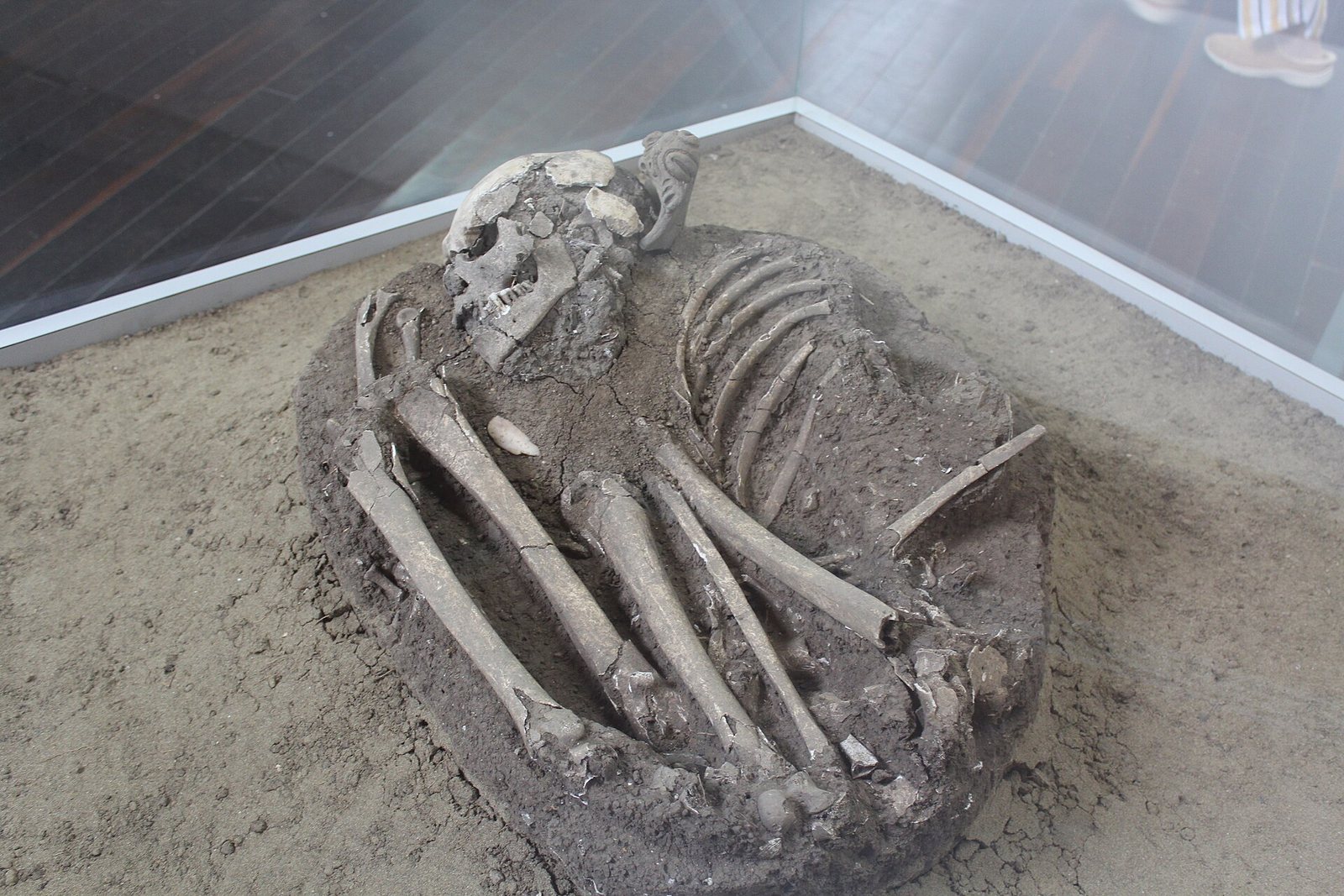
About 186 human skeletons have been found in the Indigenous cemetery. Most are associated with the Igneri, and the rest with pre-Taíno cultures. Burial groups in the Main Plaza and the structure called Batey del Cemí date to before AD 900 and predate the structures themselves. Other burials occur in domestic areas, consistent with burial beneath house floors or nearby. DNA samples were taken from the human remains for further study.
Pottery
Pottery from the site includes early simple composite vessels and white-on-red painted ceramics. Other pieces have several colors and hatched designs, or take the form of effigy vessels with naturalistic decoration. Later ceramics tend to feature geometric designs and were rarely painted. Handles and ornaments bearing animal or human figures appear in both periods.
Animal remains and collections
Marine fish remains are abundant, though their quantities vary across periods. Identified species include carcharhinid sharks, spotted eagle rays, snook, mullet, bigmouth sleepers, parrotfish, grunts, black durgons, jacks, groupers, and snappers. Terrestrial animal remains include the non-native species Isolobodon and the guinea pig. Artifacts recovered at Tibes are displayed in the on-site museum and at the Ponce Museum of Art; a recreation of a Taíno village is also located at the ceremonial center.