Thisted Church: A Late Gothic Parish Church in Denmark
Site at a Glance
- Popularity
- Very Low
- Country
- Denmark
- Primary era
- Medieval
- Eras represented
- Medieval, Early Modern
- Civilizations
- Danish
- Site type
- Religious
- Remains
- Church
On this page17 sections
History
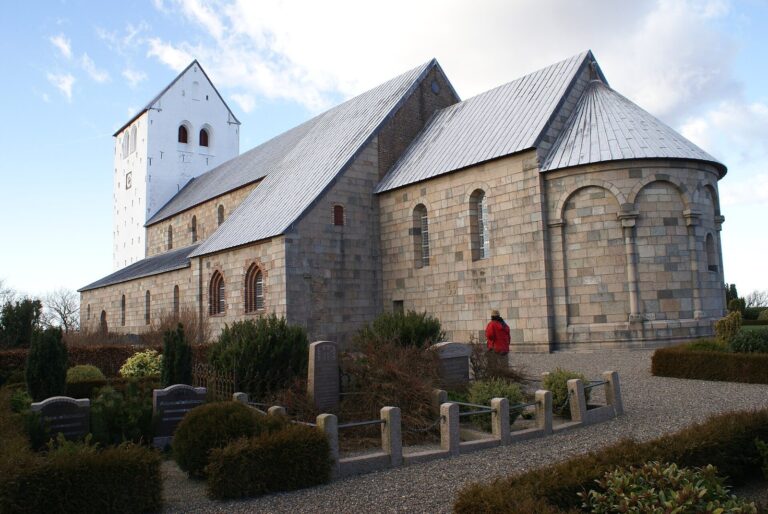
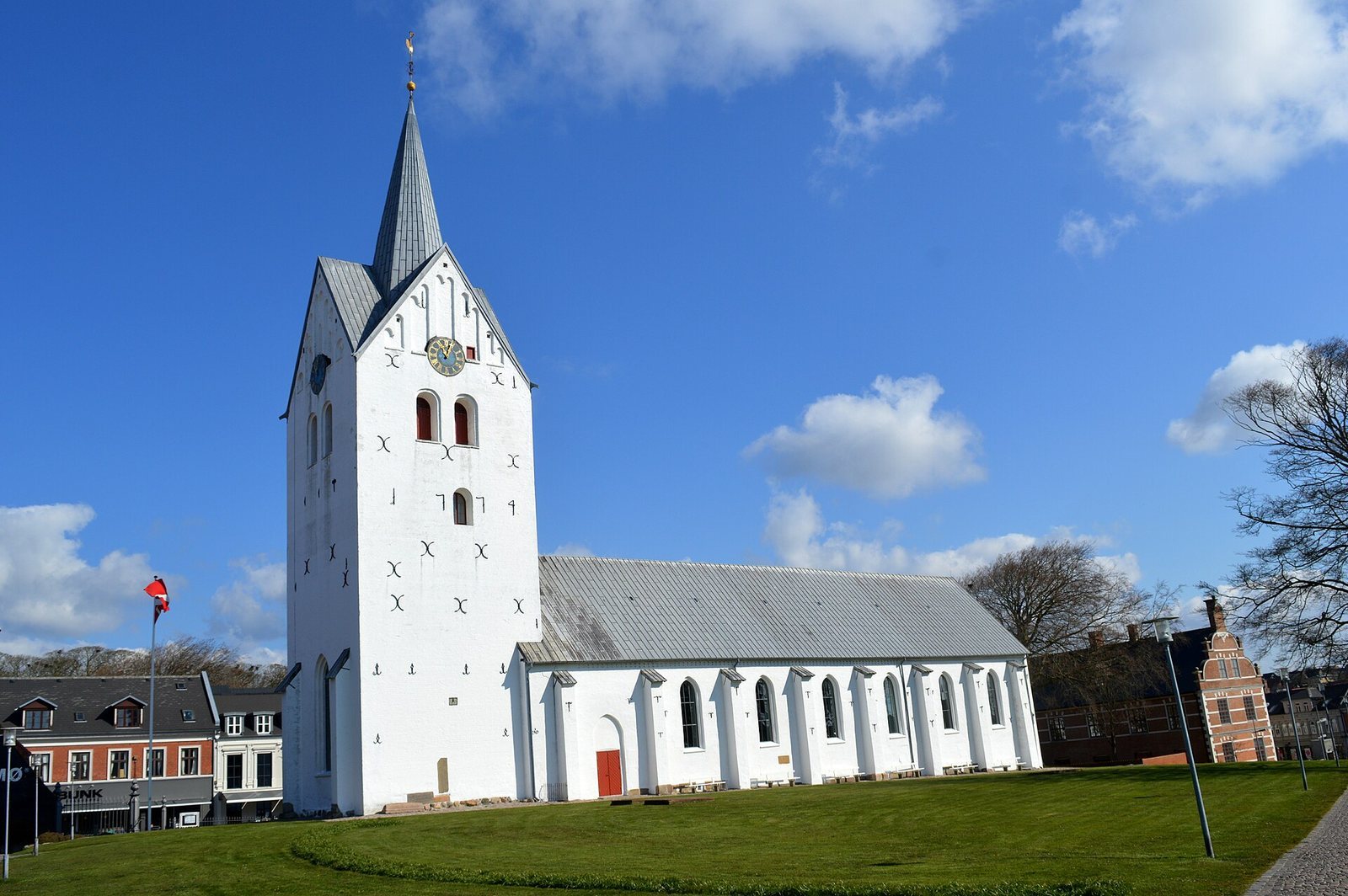
Thisted Church is a late Gothic church in Thisted, Denmark, built around 1500 in the final phase of medieval Gothic architecture. It was probably dedicated during the Middle Ages to the Virgin Mary, also known as Our Lady.
The church belongs to Aalborg Diocese, a church district led by a bishop, and Thisted Deanery, a subdivision of the diocese. Locally, it is part of Thisted Parish and the Thisted-Skinnerup pastorate, which groups parishes served together. A major restoration took place in 1863.
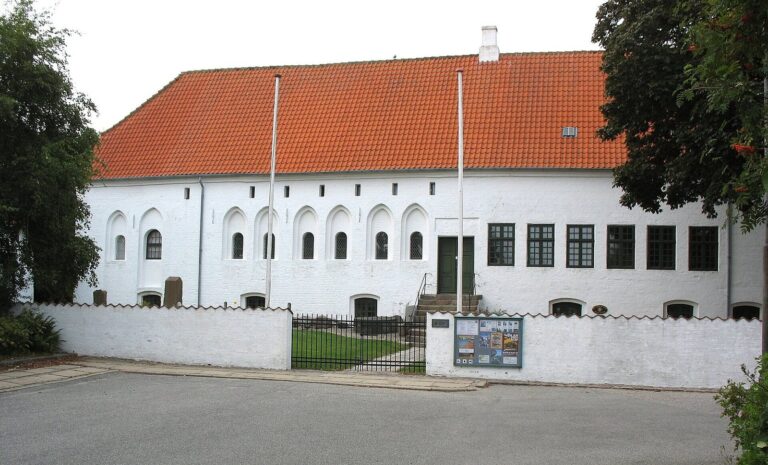
The churchyard is no longer used for burials. Danish writer J. P. Jacobsen is buried there, and a nearby museum has memorial rooms devoted to him.
Remains
The church’s plan centers on a longhouse, the main lengthwise body, and a tower. A sacristy and porch stand on the north side. The walls combine large yellow bricks with granite ashlar, or carefully cut stone, and chalk. The church has seating for 400.
Architectural fabric and carved stone
Interior construction
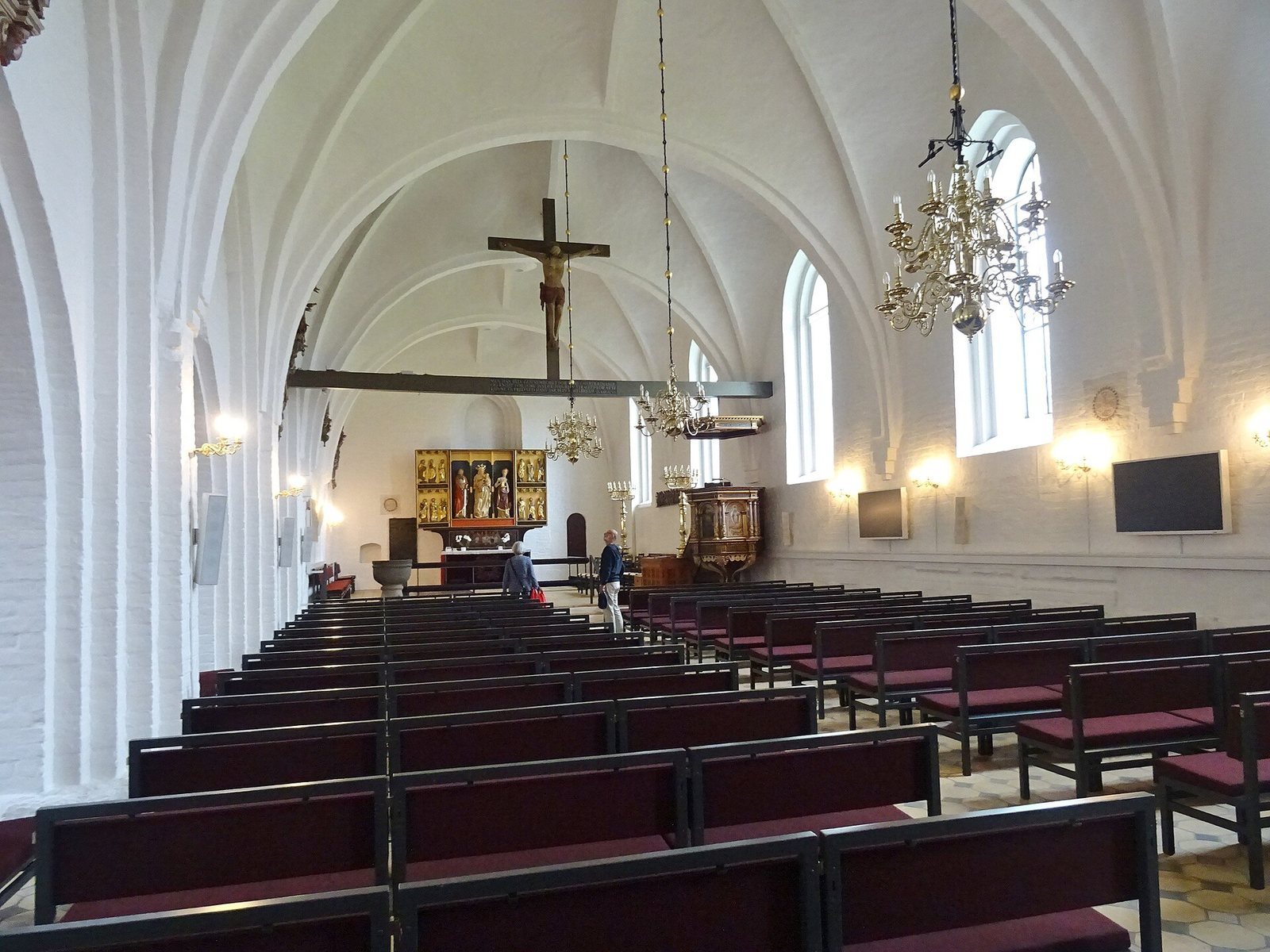
Flat cross vaults, formed by intersecting vaulted sections, cover the longhouse. Pointed arches connect the nave, or central space, with the north aisle, a side passage.
Evidence of an earlier church
Curved stones at the building’s base may indicate that an earlier church had a rounded end, or apse. Granite ashlar blocks and a double-profiled base stone in the present church are also attributed to a possible predecessor. A granite-ashlar church may have stood on the site before the current building.
Relief carvings
A carved head is set into the east wall, where four other ashlar blocks also bear reliefs. The head may resemble carving at Tømmerby Church. A separate block depicting a lion is built into the south wall; its style differs somewhat from the other relief work.
Tower gravestones
Several Romanesque gravestones, from an earlier medieval architectural period, are built into the tower’s south wall. One carries a runic inscription, written in historical Germanic characters, commemorating Thord Amdissen.
Berregaard burial chapel
A burial chapel for the Berregaard family occupies the east end of the north aisle. A wrought-iron screen dated 1698 encloses it.
Furnishings, sculpture, and memorials
The 1520 altarpiece
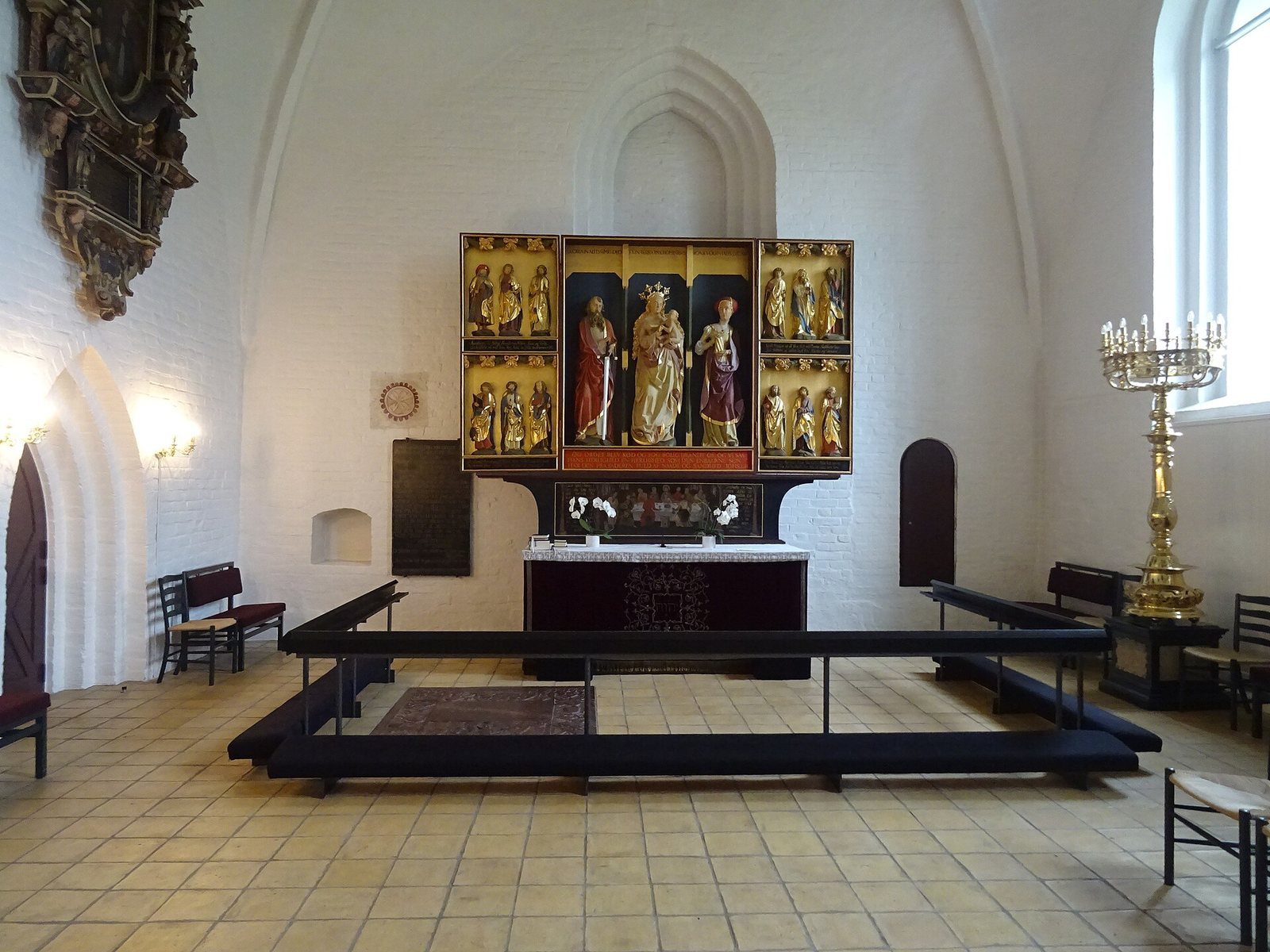
The oak altarpiece, made in 1520, is a three-panel work. Its central panel shows the Madonna of the Apocalypse, a depiction of Mary associated with the Book of Revelation, with Paul and Mary Magdalene at her sides. The two wings portray the twelve apostles, six on each. The central panel measures 230 by 192 by 24 cm, and each wing measures 230 by 96 by 13 cm; the figures of the apostles are about 69 cm high. The carving reflects the influence of Claus Berg’s workshop and may also show the hand of the unidentified artist known as the Master of the Crucifixion Altarpieces.
Other altar paintings
A 1717 Last Supper painting by Danish painter J. J. Thrane, formerly an altarpiece, hangs in the tower room. Its two triangular gables bear the names of King Frederik IV and Queen Louise. The church also has an altarpiece painting dated 1890 by Anton Dorph.
Pulpit and crucifix
The pulpit was made in 1594 by woodcarver Mikkel van Groningen in Hornslet. Its columns are plain, and its painted panels have been restored; only the image of Christ trampling the devil is original. A crucifix above the choir arch, the opening between the nave and chancel, dates to about 1475.
Choir screen and apostle figures
In front of the blocked south doorway stands the central section of a choir screen made in 1631 by the artist conventionally called the Aalborg epitaph master. Twelve apostle figures from the screen now hang on the south wall of the chancel.
Organ
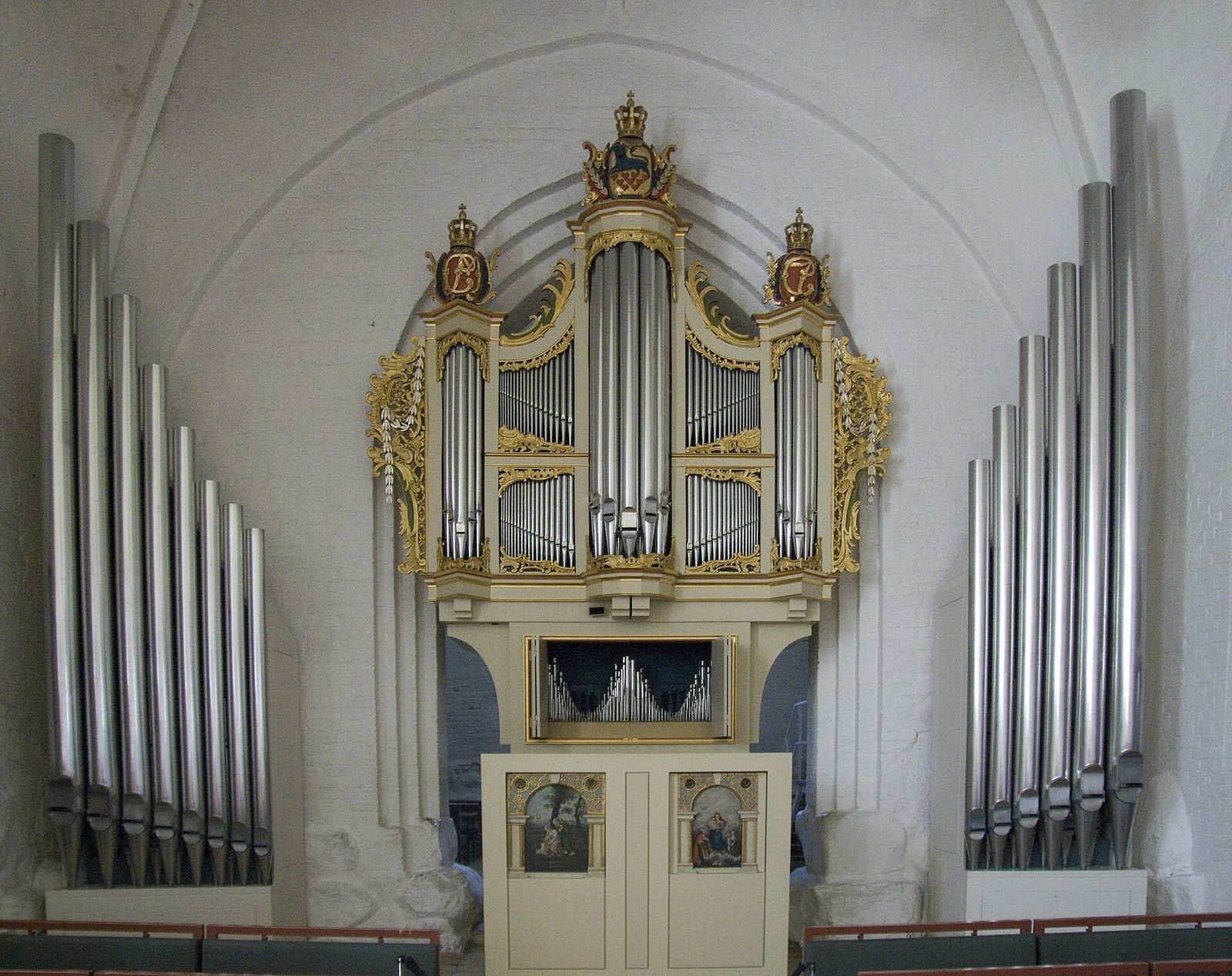
The church’s first organ was installed in 1616. Its present façade dates from 1768 and may have come from Kongsberg. The façade bears the coats of arms of Christian VII and Caroline Mathilde, with the Norwegian lion on its central shield.
Figures at the north entrance
Four Gothic figures stand by the north entrance. Two represent Mary and John, while the two larger figures may depict two of the Three Magi, the visitors from the East in the Gospel accounts of Jesus’s birth.
Epitaphs
One epitaph commemorates Enevold Berregaard, who died in 1731, and Anne Søe, who died in 1736. Another depicts Enevold Berregaard with Anna Søe and her first husband, Søren Jacobsen Lugge. Other memorials include Mayor Anders Morsing, who died in 1597 and is shown kneeling before the cross; priest Sveder Povlsen Kitting, who died in 1633, his wife Barbara Nicolai Rosenberg, and her second husband, Peder Madsen; and councilman Peder Nielsen Griis, who died in 1635, and Buold Jensdatter.
Baptismal font and dish
The Romanesque granite font has chalice-leaf decoration on its bowl and corner knobs on its square base. The baptismal dish bears drawings by Danish painter and illustrator Lorentz Frølich.