Saint Michael Church in Príkra, Slovakia: A Wooden Greek Catholic Church
Site at a Glance
- Popularity
- Very Low
- Country
- Slovakia
- Primary era
- Early Modern
- Eras represented
- Early Modern
- Civilizations
- Habsburg, Hungarian
- Site type
- Religious
- Remains
- Church
On this page6 sections
History
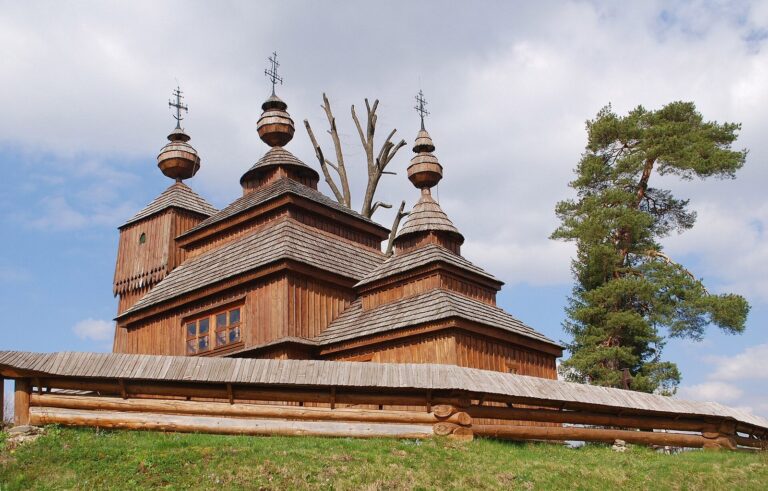
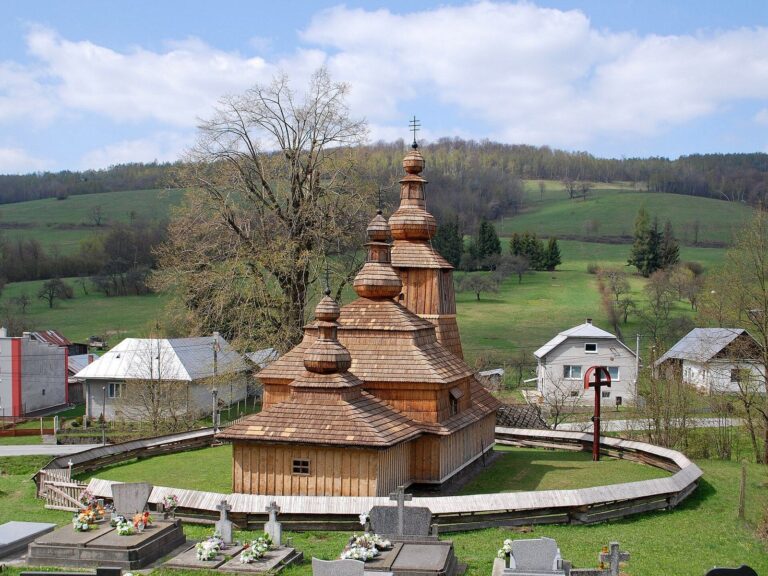
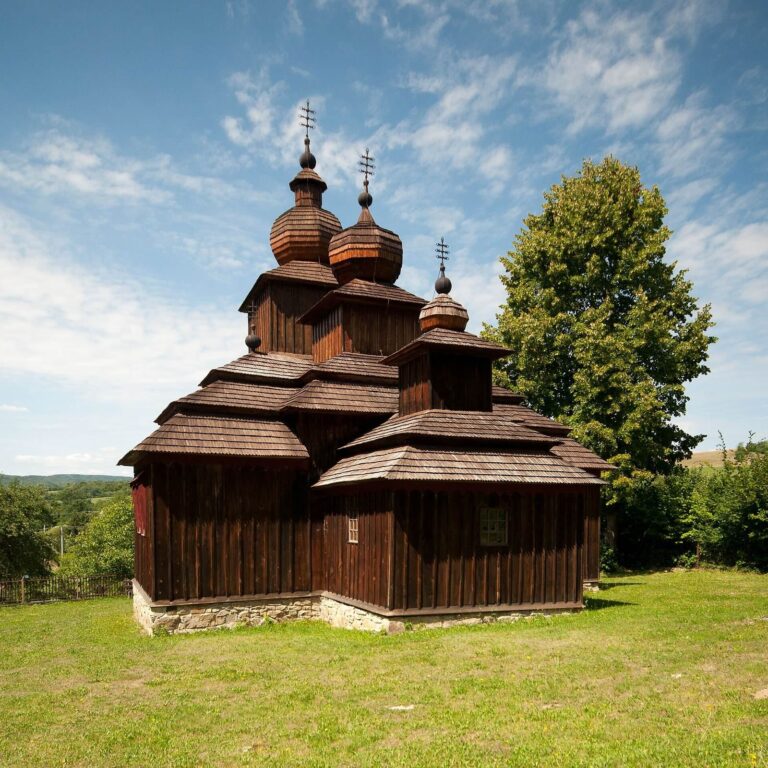
Saint Michael Church in Príkra, Slovakia, is a wooden Greek Catholic church dedicated to St Michael the Archangel. The Greek Catholic Church follows an Eastern Christian rite while remaining in communion with the Roman Catholic Church. The building was constructed and consecrated in 1777.
The church belongs to Hunkovce parish, within the Svidník deanery, a district grouping parishes, and the Prešov Archeparchy, an Eastern Catholic jurisdiction comparable to an archdiocese. It originally had three bells, including one weighing 200 kilograms. In 1915, Hungarian state authorities ordered the smallest and largest bells removed for military use. Villagers raised funds for two replacement bells, installed in the 1920s.
Reconstruction took place in 1902 and again in 1946–1947. Work in 2001–2002 gave the church its present appearance. Its monument register entry is dated 7 March 1963, and it has been designated a National Cultural Monument since 1968.
Remains
Plan and exterior
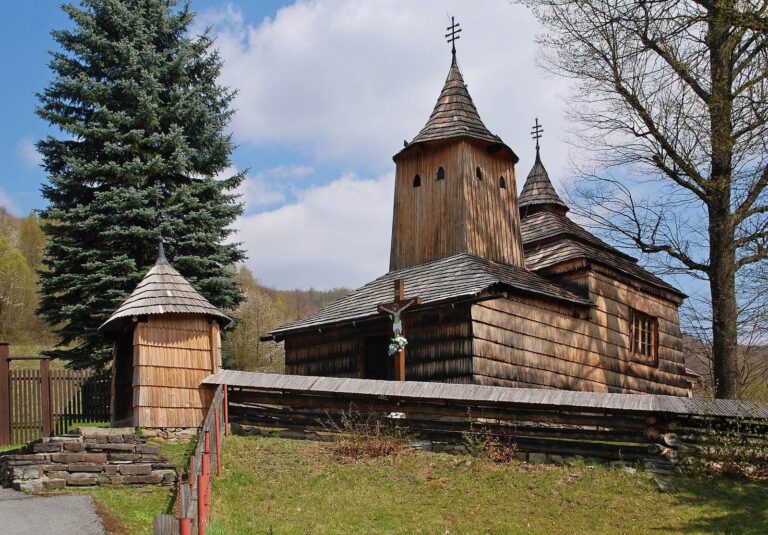
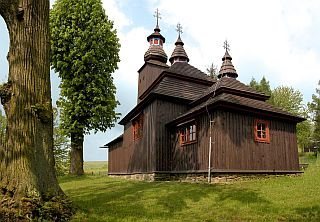
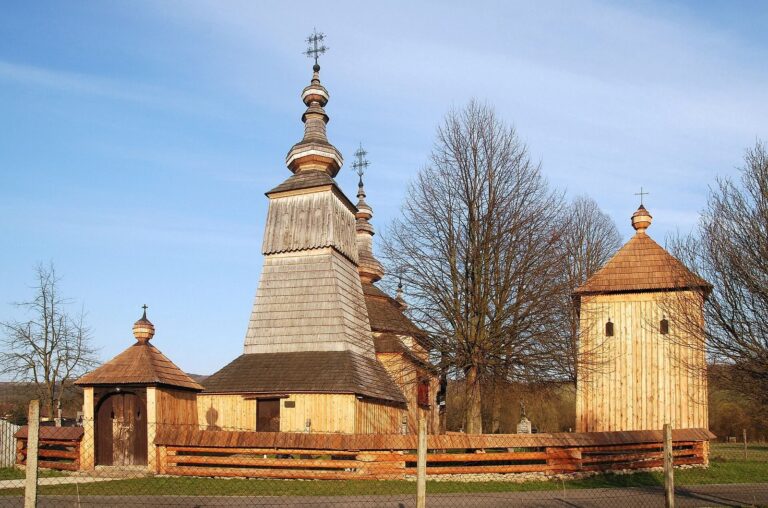
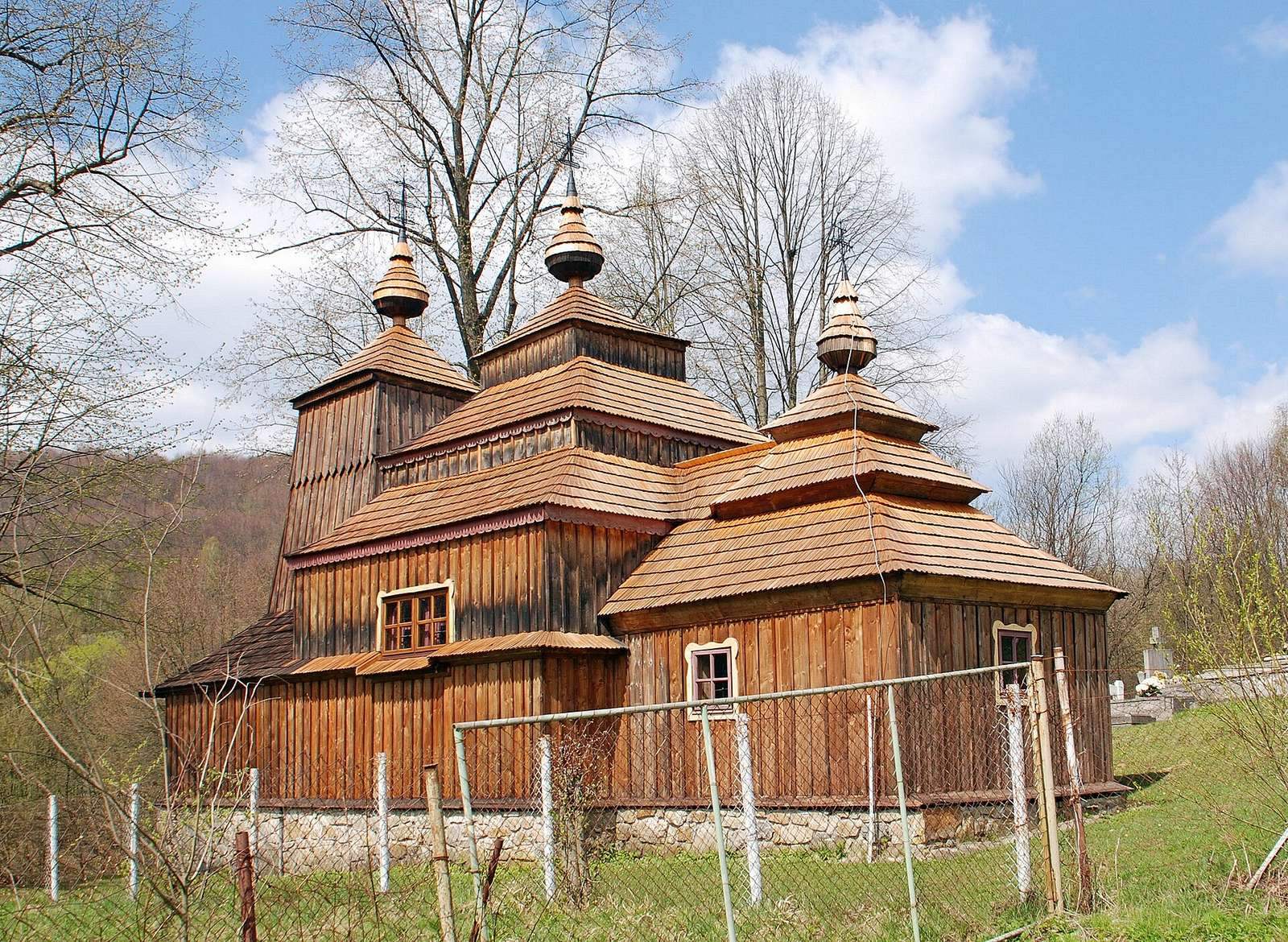
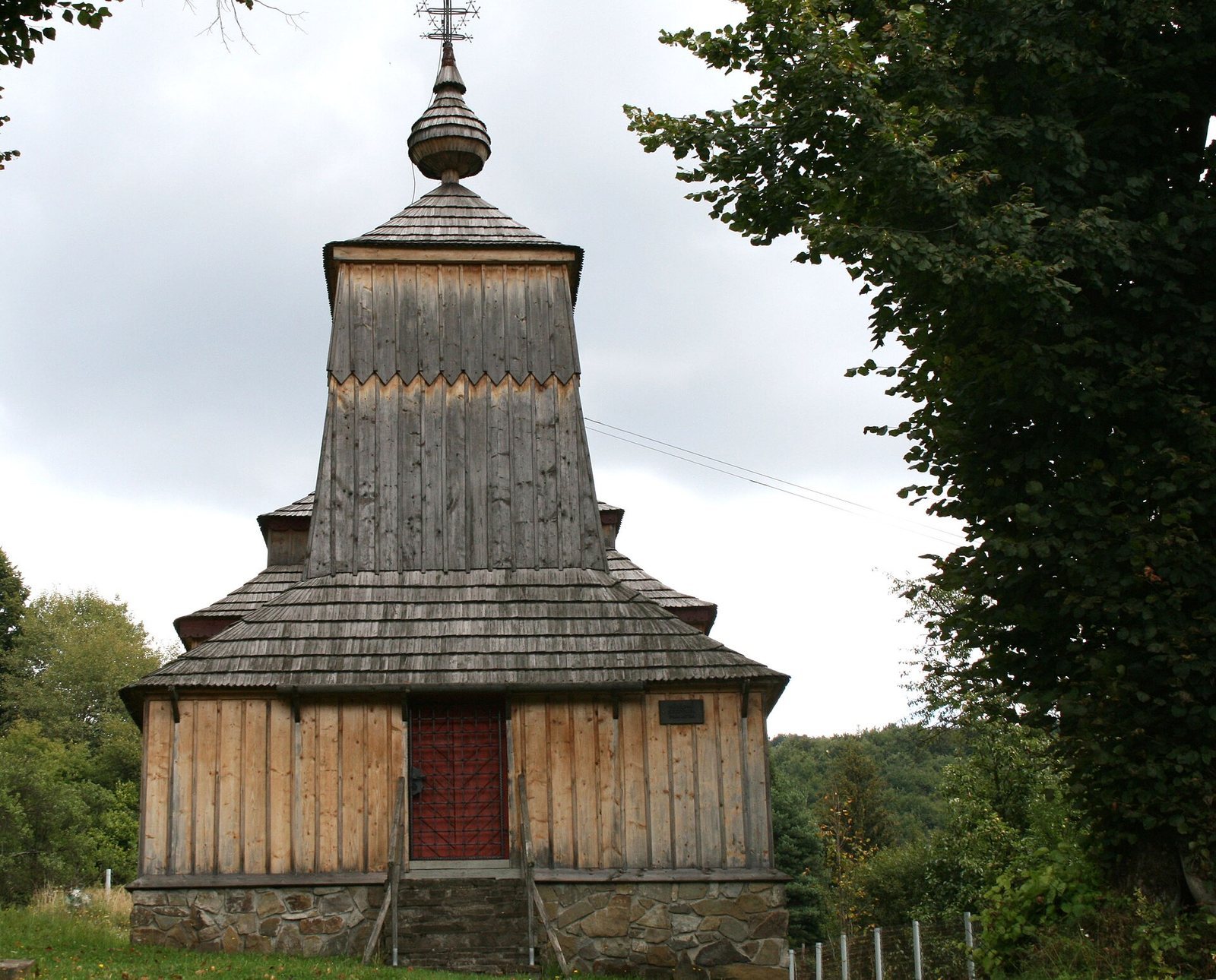
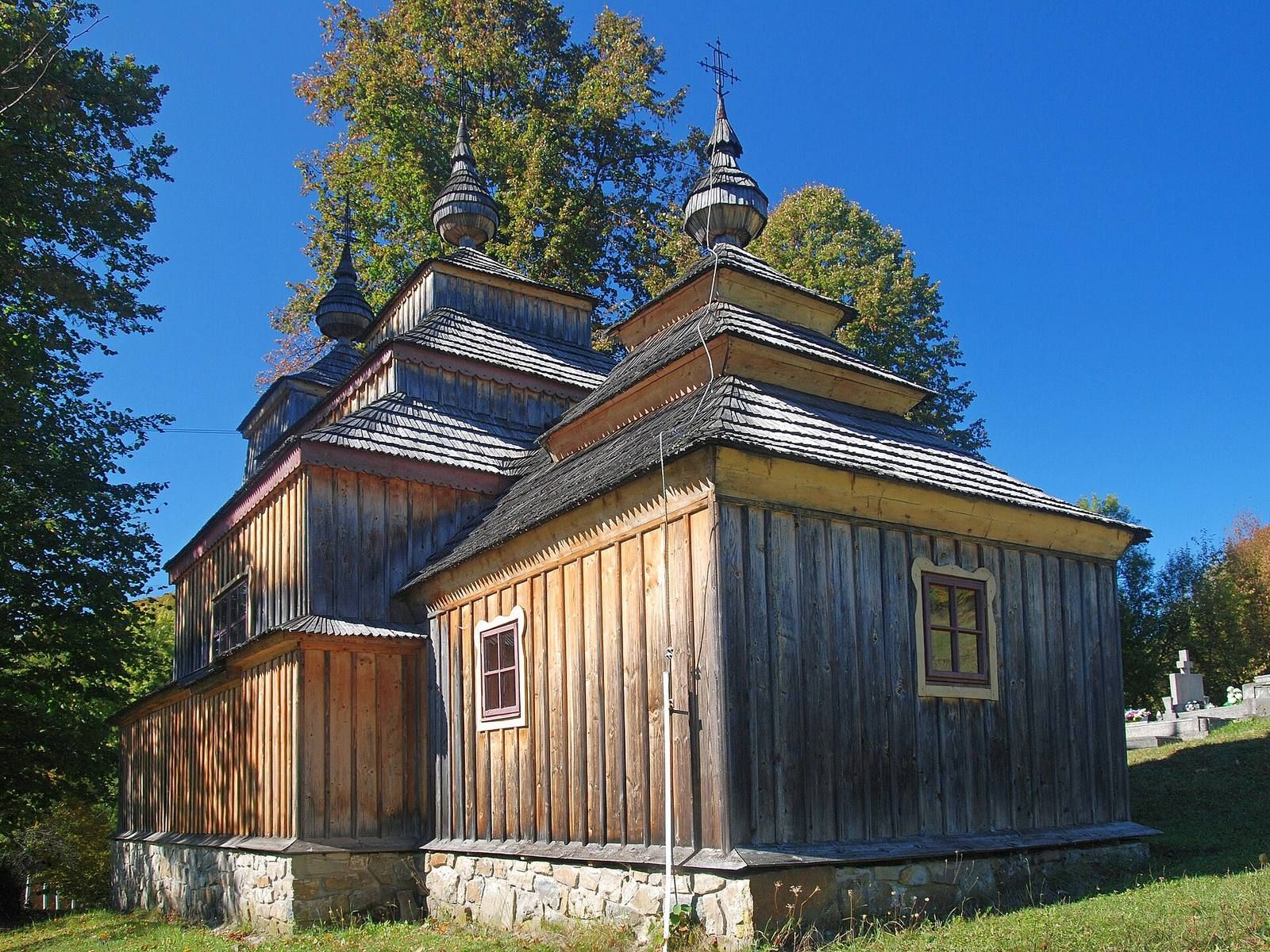
The church is a three-part log building, with its walls covered externally by vertical boards. A raised stone foundation levels the site across ground that slopes westward. The west entrance leads into a vestibule, the entrance space beneath the self-supporting tower; beyond it are the nave, or main body of the church, and the sanctuary, the area around the altar. A distinctive roof treatment covers the junctions between the tower and nave and between the nave and sanctuary. The nave and sanctuary each have a three-stage, four-sided roof form that narrows upward in a truncated pyramid, topped by a small Baroque onion dome and an iron cross. Shingles cover the pyramidal roofs and tower, while boards and battens clad the log walls and the tower’s two upper stories.
Iconostasis
The wooden iconostasis, an icon-bearing screen separating the sanctuary from the main body of the church, dates to the second half of the 18th century. Its four rows of icons include some works from the 17th century. The main row shows St Nicholas, the Hodegetria, an image of Mary showing the way, Christ the Teacher, and St Michael the Archangel. Mary is shown standing with the child Jesus on her left arm. The double-leaved royal doors, the screen’s central opening, have carved and painted decoration and six medallions depicting the four Evangelists and the Annunciation. The second row presents major feast days, with the Last Supper at its center. The apostles appear in the third row around Christ Pantocrator, meaning “ruler of all”; he is shown with a halo, blessing people of goodwill with his right hand. Ten medallions of prophets form the fourth row. Above them, an icon of the Crucifixion is flanked by the Virgin Mary and St John the Evangelist, traditionally identified as one of the four Gospel writers. The screen also includes a 16th-century icon of St Nicholas.
Altar and other furnishings
The altar has folk-style Rococo ornament, a cabinet tabernacle, and an icon of the Crucifixion. The church also contains a Veraikon, an image associated with the tradition that Christ’s face was impressed on linen cloth, as well as images of St Michael and St Nicholas. The St Nicholas image dates to the 17th century. Four Rococo candlesticks from the second half of the 18th century are also preserved in the church.
Bells
Three bells hang in the tower. One dates to 1759; the other two were added in the 1920s.