The Stone of Million: Constantinople’s Imperial Milestone
Site at a Glance
- Popularity
- High
- Country
- Turkey
- Primary era
- Classical
- Eras represented
- Classical
- Civilizations
- Roman
- Site type
- Civic
- Remains
- Monument
On this page10 sections
History
The Stone of Million, also called the Milion, was a fourth-century monument built under Roman emperor Constantine I in the Fatih district of present-day Istanbul, Türkiye. As Constantine refounded Byzantium as Constantinople, the city’s new imperial capital, the monument became the empire’s zero-mile point. By the city’s refoundation in AD 330, distances along roads to its principal cities were measured from it.
Imperial foundation and ceremonial role
From the beginning of the sixth century, the Milion became an important stop in imperial processions. The Blues and Whites, rival groups associated with chariot racing, paid their respects to the emperor there. Its central position also made it a useful base during unrest, including the Nika revolt of AD 532, a major uprising in Constantinople.
Political conflict and changing control
During the Komnenian period, when the Komnenos dynasty ruled the Byzantine Empire in the eleventh and twelfth centuries, fighting in the monument’s vicinity included conflict between emperors Nikephoros III and Alexios I. Imperial forces under Andronikos I also clashed with Empress Maria of Antioch, who used the monument’s position to control the Augustaeum, a major square near Hagia Sophia and the imperial palace.
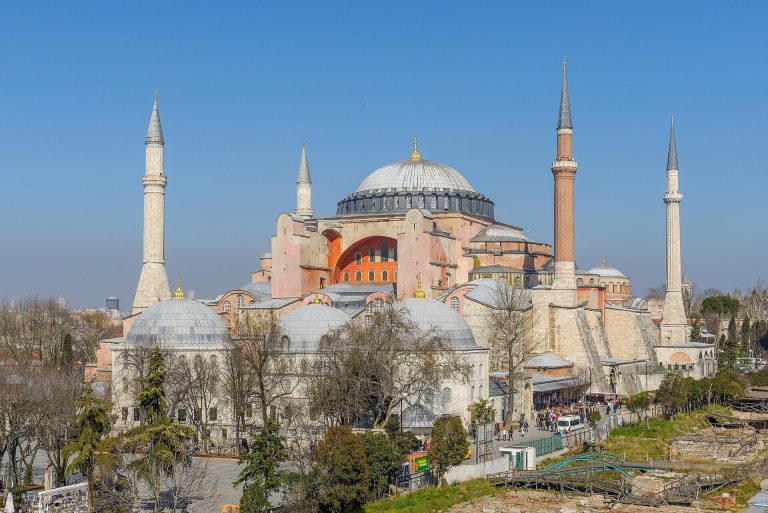
When Crusaders captured and sacked Constantinople in 1204, they removed a gilded angel from the monument and melted it down to make coins. From 1268 to 1271, after the end of the Latin Empire, the monument and the Augustaeum became property of Hagia Sophia, Constantinople’s principal cathedral.
Ottoman-era fate
After the Ottoman conquest of Constantinople in 1453, the monument remained largely intact into the late fifteenth century. It was probably demolished in the early sixteenth century as the nearby water system was expanded and a water tower was subsequently built.
Traditions about the monument
A medieval collection of Constantinople traditions known as the Patria described a chain linking the city’s Tyche, its protective goddess, to a cross at the monument. People believed the arrangement safeguarded the state and helped secure victories over outside enemies; the chain’s key was said to lie beneath the column bases. Other traditions placed Constantine’s victory over an unnamed opponent at the site and said the city’s founder had been acclaimed there. The cross itself was identified in tradition with the True Cross, the cross on which Jesus was believed to have been crucified, said to have been brought from Jerusalem by Helena shortly before the monument was built.
Remains
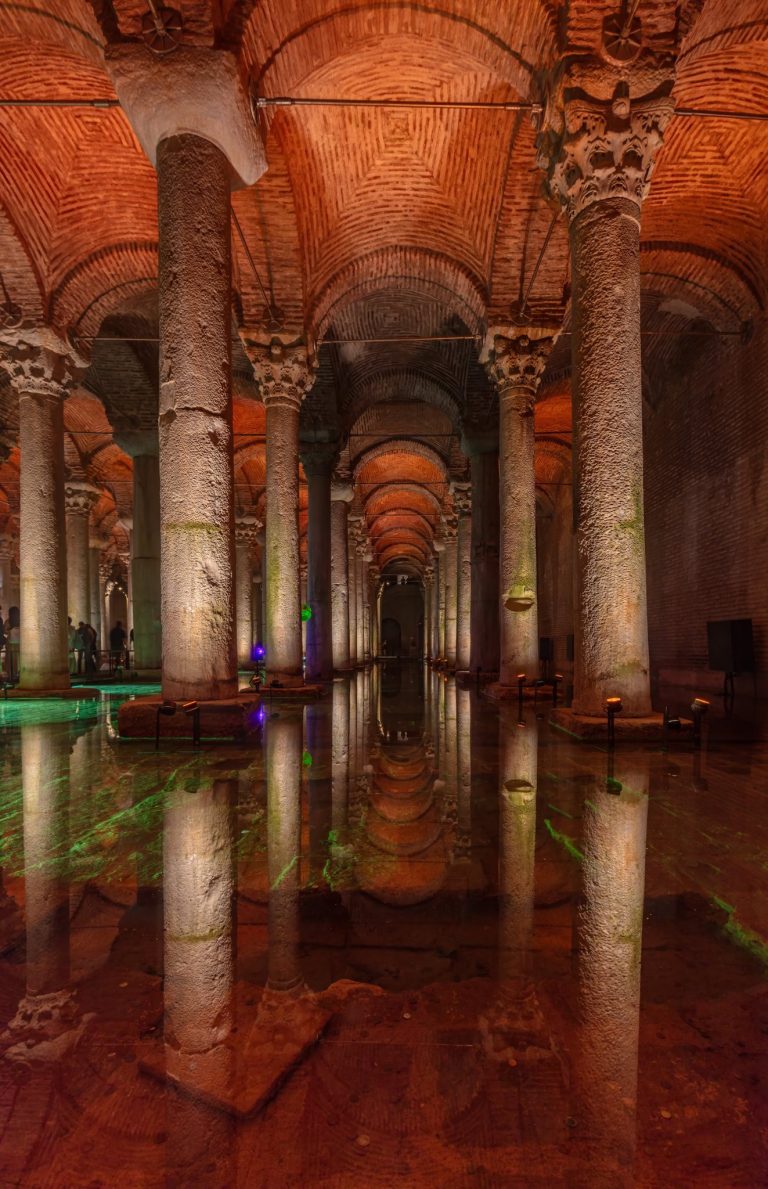
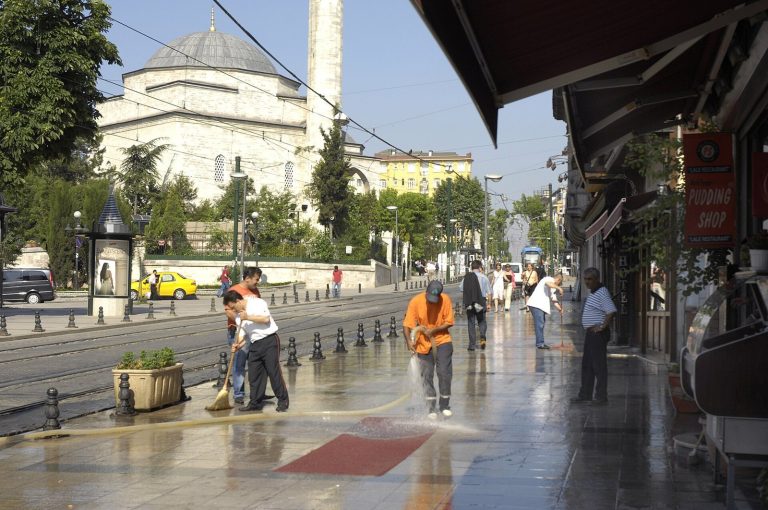
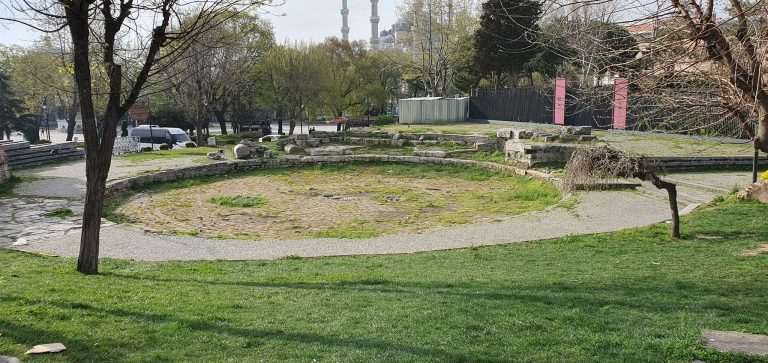
The Milion stood at a bend at the beginning of the Mese, Constantinople’s principal thoroughfare, immediately west of the Augustaeum. It was near the walls of ancient Byzantium and may have occupied the site of an earlier gate. In present-day Istanbul, its location is associated with the bend at the start of Divan Yolu, opposite the northwest corner of Sultanahmet Square and southeast of the Basilica Cistern. The monument was a square structure formed by two triumphal arches and crowned by a dome supported on four arches.
The central monument
Column and sculpture
A marble column stood at the centre, and the monument’s base carried inscriptions giving distances to the empire’s major cities. Statues of Constantine I and his mother Helena faced east, with a cross between them and a statue of the city’s Tyche behind them. Justin II added images of his wife Sophia, his daughter Arabia, and his niece Helena to the building’s lower part. Other decoration included mounted statues of the emperors Trajan, Hadrian, and Theodosius II, as well as a bronze chariot drawn by four horses and carrying Helios, the Greek sun god.
Sundial and painted ceilings
Justinian I added a sundial with a gilded, angel-shaped pointer that seemed to float and sounded a trumpet. In the first half of the eighth century, paintings of the Ecumenical Councils, gatherings of Christian bishops convened to resolve questions of doctrine, decorated the building’s arched ceilings. These images were later replaced by scenes of the Hippodrome, Constantinople’s venue for chariot races and public spectacles.
Excavated remains
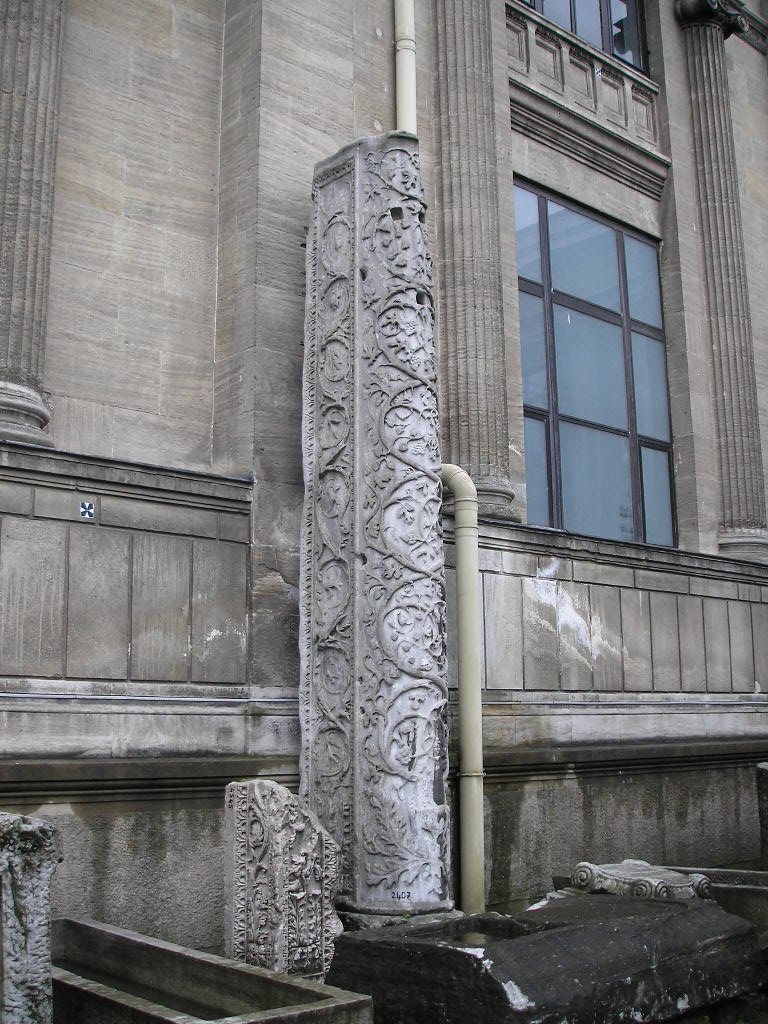
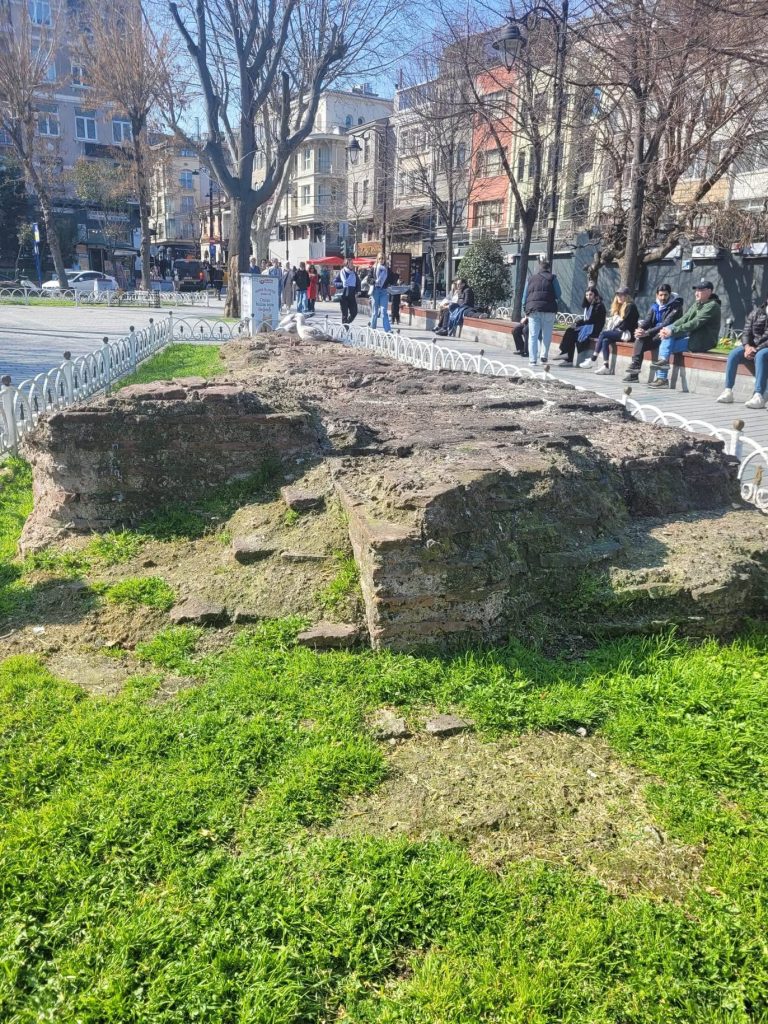
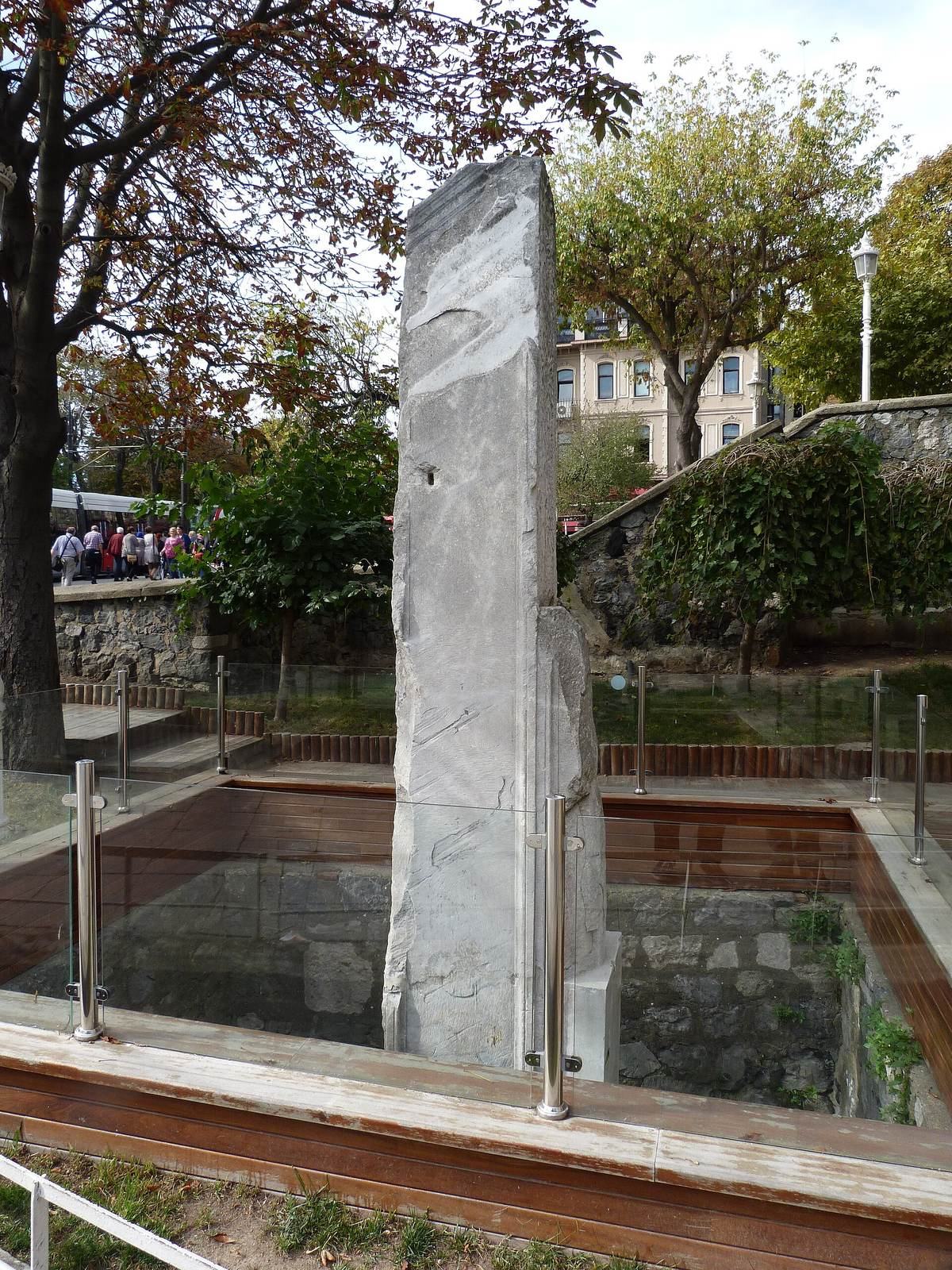
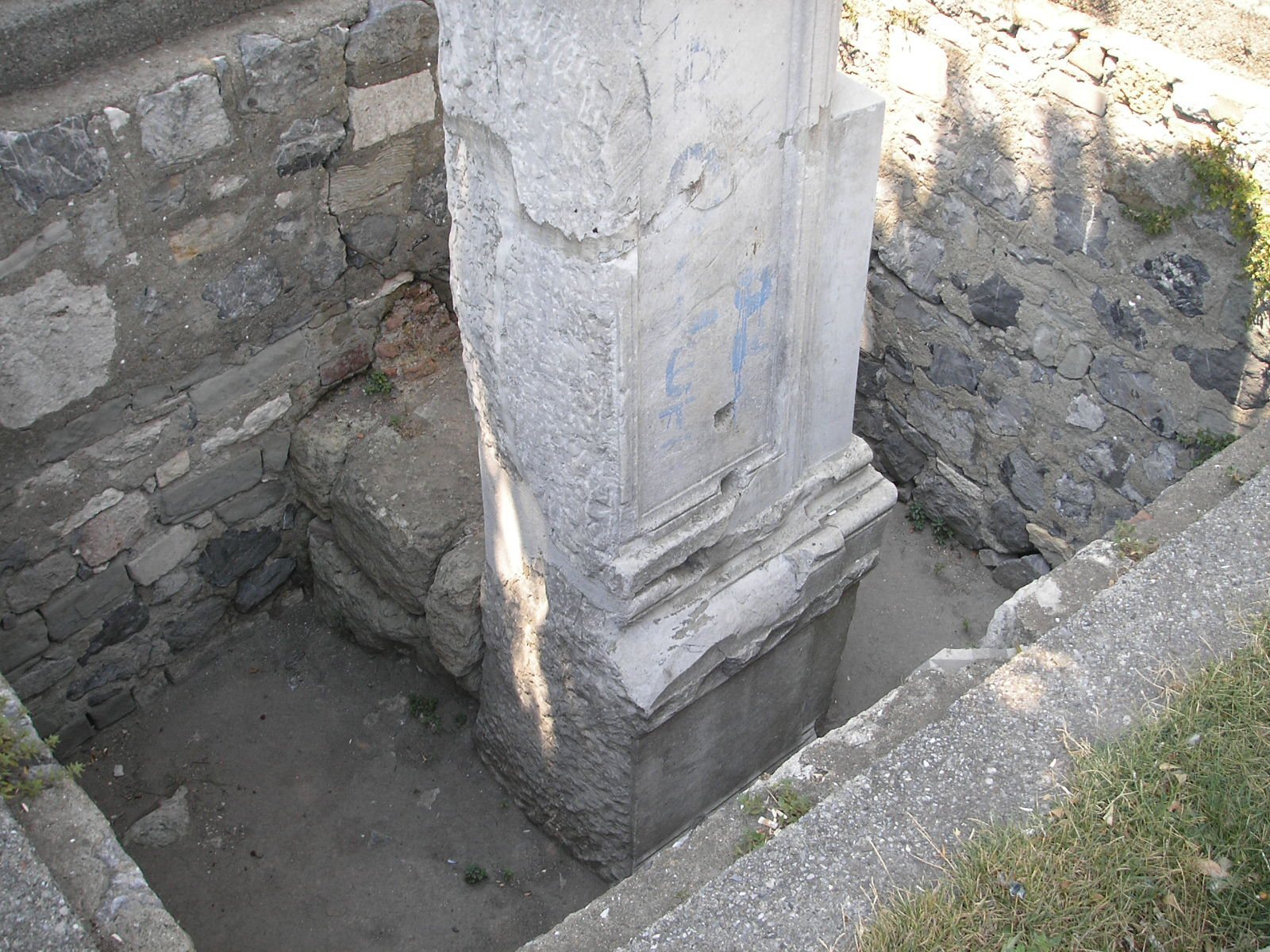
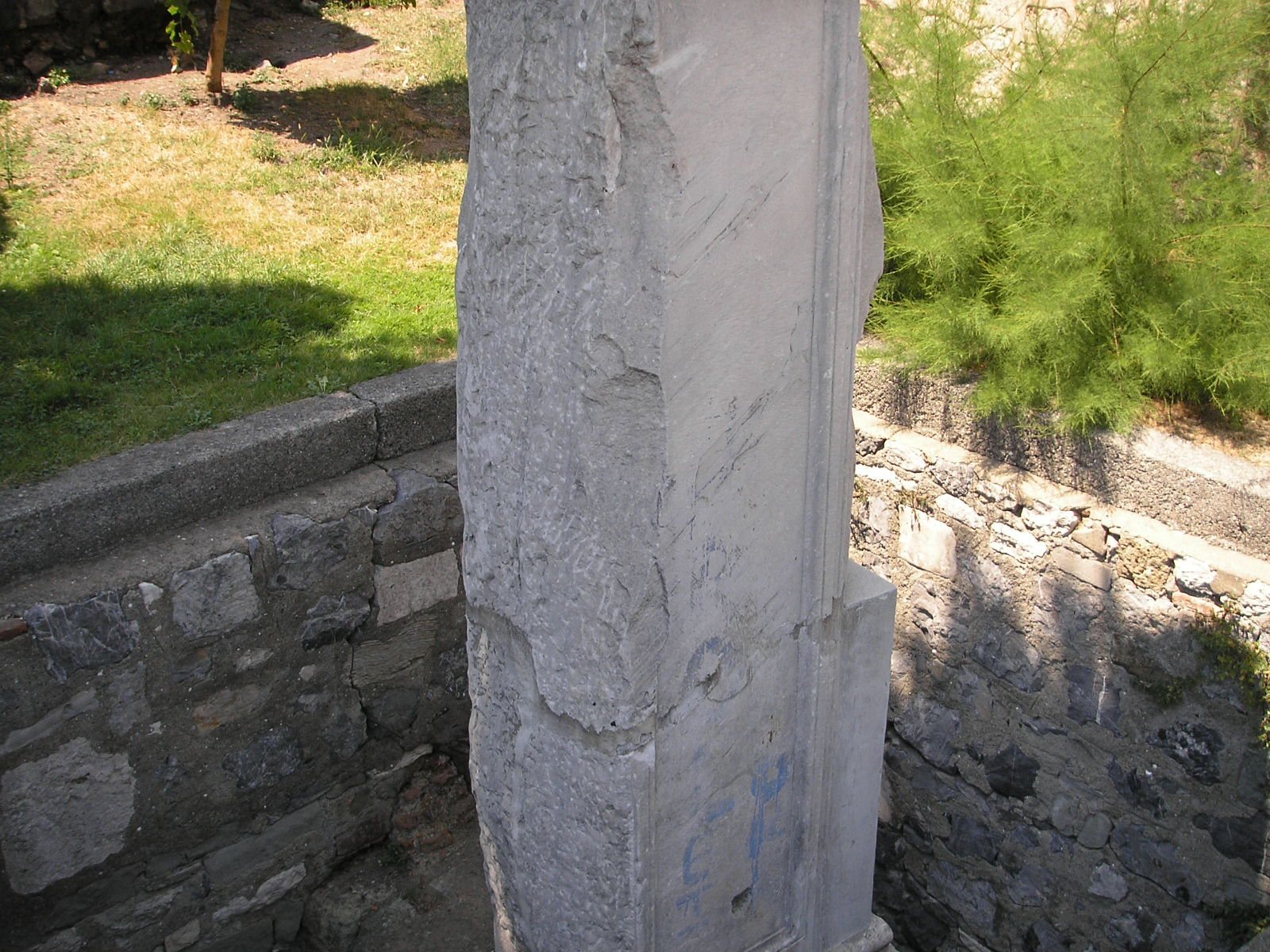
After studies clarified the monument’s location and houses built over it were removed, excavations in 1967–1968 exposed parts of its foundations and a fragment of one supporting structure. Its proximity to Byzantine-era drainage helped associate the fragment with the Milion. The fragment was re-erected as a pillar and is displayed in a courtyard of Hagia Sophia near the Basilica Cistern.