The Great Mosque of Salé: A Historic Almohad Mosque in Morocco


Site at a Glance
- Rating
- 4.6
- Popularity
- Low
- Country
- Morocco
- Primary era
- Early Modern
- External website
- Open
- Eras represented
- Medieval, Early Modern
- Civilizations
- Alaouite, Almohad
- Site type
- Religious
- Remains
- Mosque
On this page6 sections
History
The Great Mosque of Salé is an active Islamic mosque in Salé, Morocco, developed and repeatedly rebuilt under Moroccan ruling dynasties. Its major reconstruction began in 1196 under the Almohad ruler Abu Yusuf Yaqub al-Mansur, and its architecture combines Almoravid and Almohad traditions. The mosque is the main place of worship in Salé’s old city and is identified as the third-largest mosque in Morocco, after the Hassan II Mosque in Casablanca and the Qarawiyyin Mosque in Fez.
Early mosque and Almohad rebuilding
A first mosque may have been built on the site between 1028 and 1030, traditionally on the orders of Temim Ibn Ziri, leader of the Banu Ifran, a Berber tribal group active in early medieval Morocco. The building was destroyed and rebuilt repeatedly from the early history of the city. After its original roof collapsed, Abu Yusuf Yaqub al-Mansur ordered a larger reconstruction and expansion in 1196. The architect was known as al-Gharnati, a name that suggests an origin in Granada in al-Andalus. Tradition also holds that 700 French slaves took part in the work.
The Almohad rebuilding added a madrasa, an institution for Islamic religious and scholarly education, and supplied water from the spring of In Barka at Mamora. In 1342, the Marinid sultan Abu al-Hasan built the Madrasa of Abu al-Hasan beside the mosque. This addition reinforced the area’s role as a religious and intellectual centre during the Marinid period.
Occupation, restoration, and political use
Castilian forces occupied and sacked Salé in 1260. About 3,000 women, children, and elderly residents were gathered in the mosque and taken to Seville as slaves. The Marinid sultan Abu Yusuf Yaqub later reconquered the city.
The mosque was substantially rebuilt and altered under the Alawi dynasty, Morocco’s ruling house, and much of its present appearance dates from the eighteenth century. It suffered severe damage during the French bombardment of Salé in 1851, when six cannonballs struck the building. The attack is associated with forces sent by Napoleon III and commanded by Admiral Louis Dubourdieu.
During the French protectorate in Morocco, the mosque hosted nationalist meetings in the 1930s. Participants included Said Hajji, Ahmed Maaninou, Boubker el-Kadiri, and Abu Bakr Zniber. French authorities later closed the mosque temporarily to prevent its use for nationalist mobilisation, and it subsequently reopened. The building remains a historic religious monument of Salé and an active mosque.
Remains
Plan and entrances
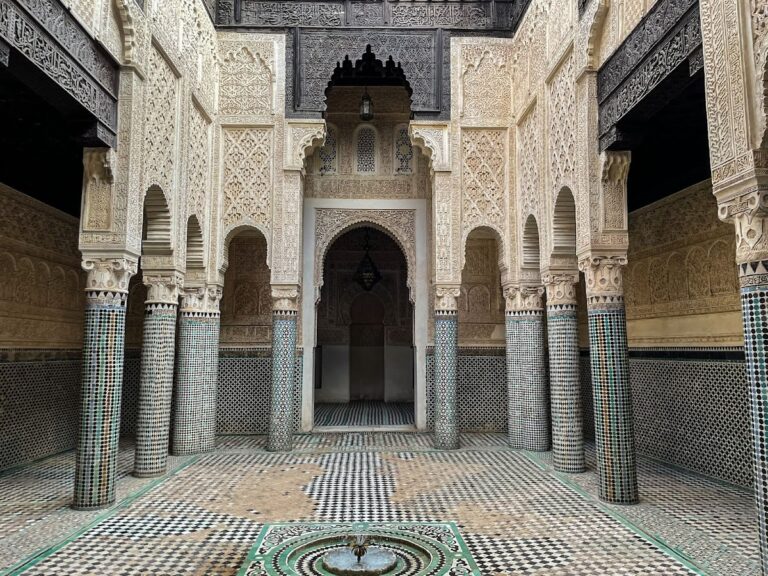
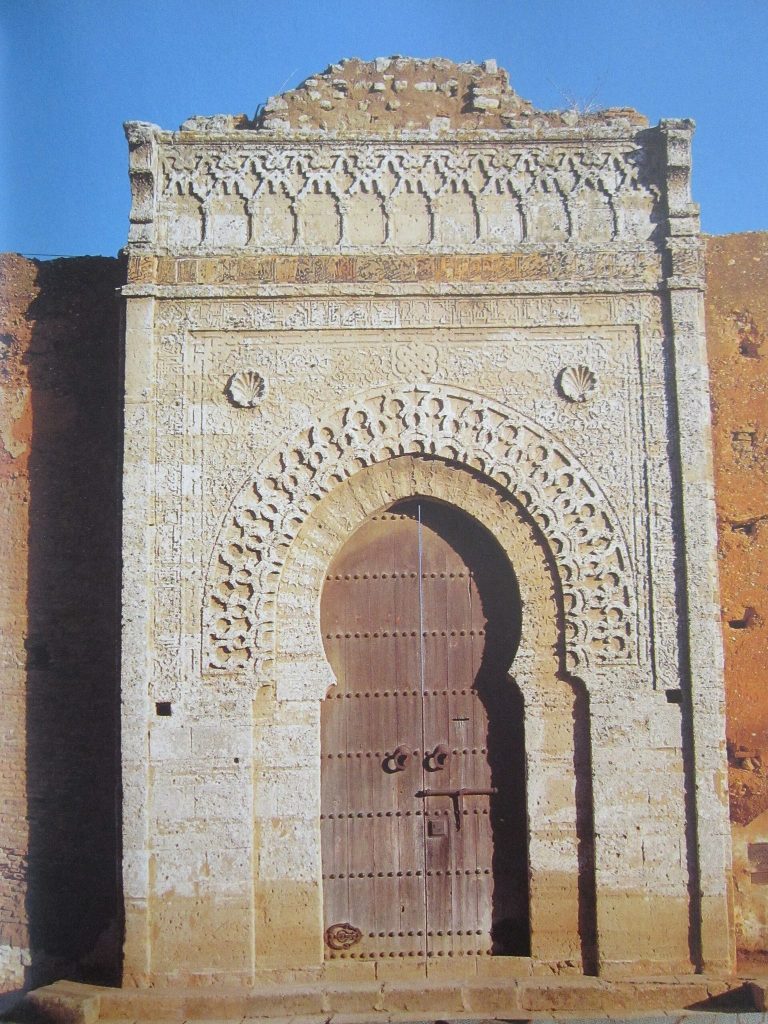
The mosque occupies approximately 5,070 square metres and has a trapezoidal plan associated with classical Almohad mosque layouts. Its architecture brings together Almoravid and Almohad elements. The building contains nine arches and nine doors. The principal door is set in the qibla wall, the wall oriented toward the direction of prayer and traditionally toward the Kaaba in Mecca. A monumental entrance is decorated with polylobed arches made from Salé stone.
Minaret
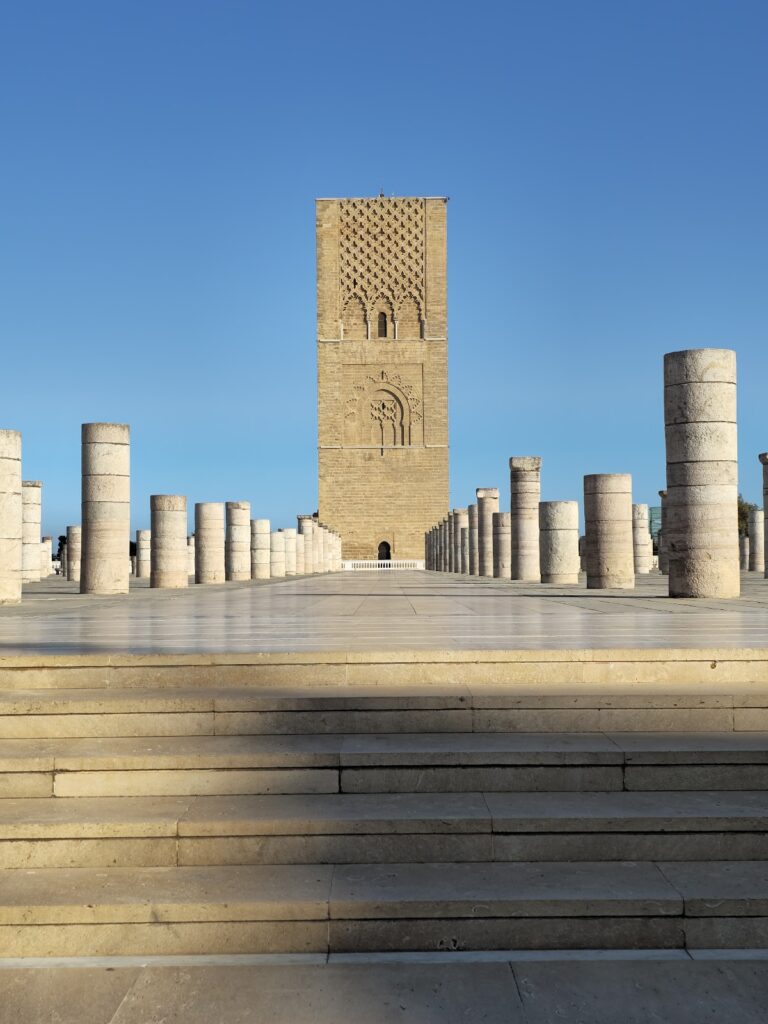
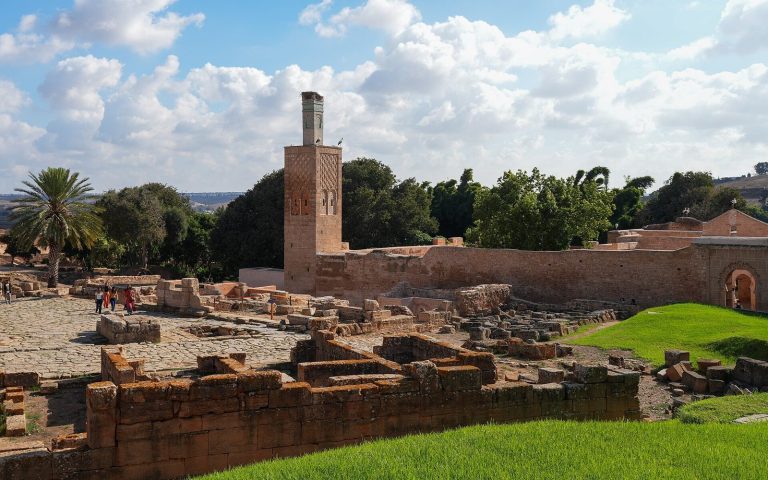
The present minaret dates from the Alawi period. After several attacks, it was rebuilt in 1840 under Sultan Moulay Abd al-Rahman ibn Hisham. Its reconstruction followed the architecture and design of the original minaret. The mosque also bears the physical consequences of the 1851 bombardment, when six cannonballs caused severe damage.