Dar al-Makhzen: Morocco’s Principal Royal Palace in Rabat
Site at a Glance
- Rating
- 4.2
- Popularity
- Medium
- Country
- Morocco
- Primary era
- Modern
- Eras represented
- Modern
- Civilizations
- Alaouite
- Site type
- Civic
- Remains
- Palace
On this page9 sections
History
Dar al-Makhzen, also known as the El Mechouar Essaid Palace, is Morocco’s principal and official royal palace in Rabat. Built by the Alaouite dynasty, Morocco’s ruling royal house, the present palace dates to 1864 and belongs to the Islamic and classical architectural traditions. It has served as a royal residence, administrative centre, and setting for major events in the country’s modern history.
Palaces before 1864
The site had already been used for royal construction during the Alaouite period. An earlier palace was built in Rabat in 1785 under Sidi Mohammed ben Abdallah, later known as Mohammed III. A second palace followed at the same location in 1854 during the reign of Moulay Abderrahmane. The present complex replaced that earlier building in 1864, under Mohammed IV.
Colonial rule and independence
After most of Morocco came under French control in 1912, the colonial administration sought to keep the sultan close to its own administrative headquarters. The arrangement also helped present the sultan as accepting the new political order. When Morocco became independent in 1955, Dar al-Makhzen remained the monarch’s principal palace, official residence, and administrative seat.
Mohammed V preferred the smaller and more isolated Dar es-Salaam Palace outside Rabat’s centre, but continued to use Dar al-Makhzen as his official and administrative residence. The palace became especially associated with his return from exile in 1955. He first settled there, while the adjoining mechouar, a large ceremonial and parade space used for official gatherings, hosted public assemblies.
Royal and administrative role
Dar al-Makhzen has hosted important events involving the Moroccan royal family, including the birth of Hassan II in 1929 and the marriage ceremony of Mohammed VI and Salma Bennani in 2002. It remains Morocco’s principal official royal residence and primarily functions as an administrative building, with the seat of government located there. Mohammed VI does not reside in the palace. Dar al-Makhzen is recognized as Moroccan cultural heritage and is owned by Mohammed VI.
Remains
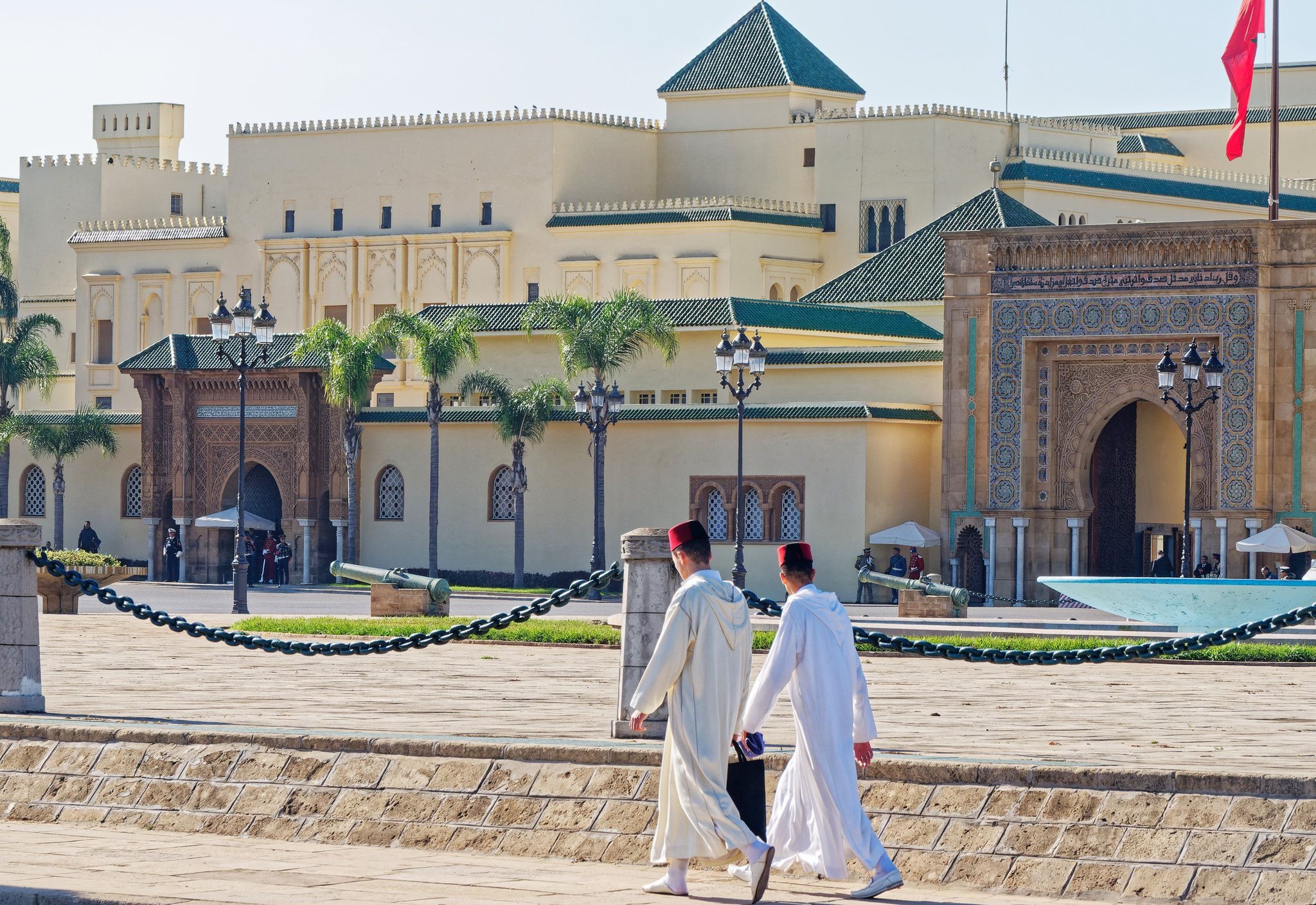
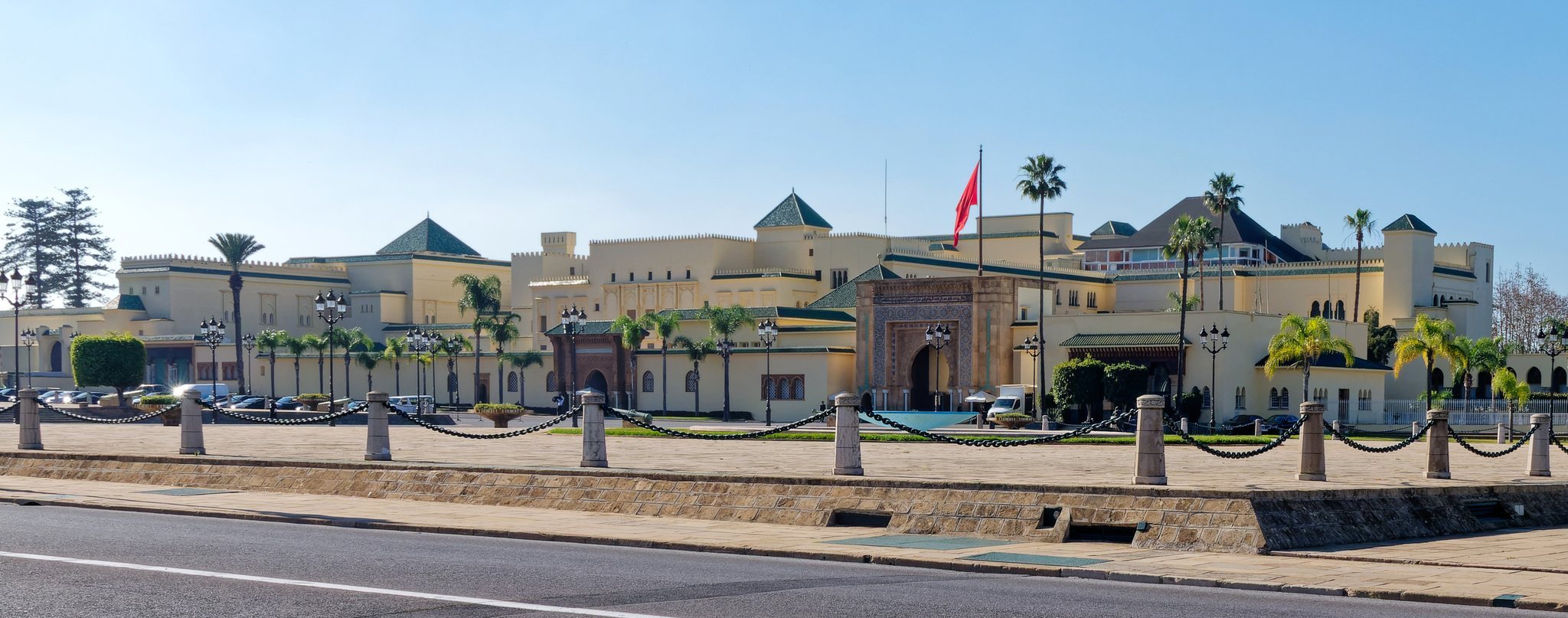
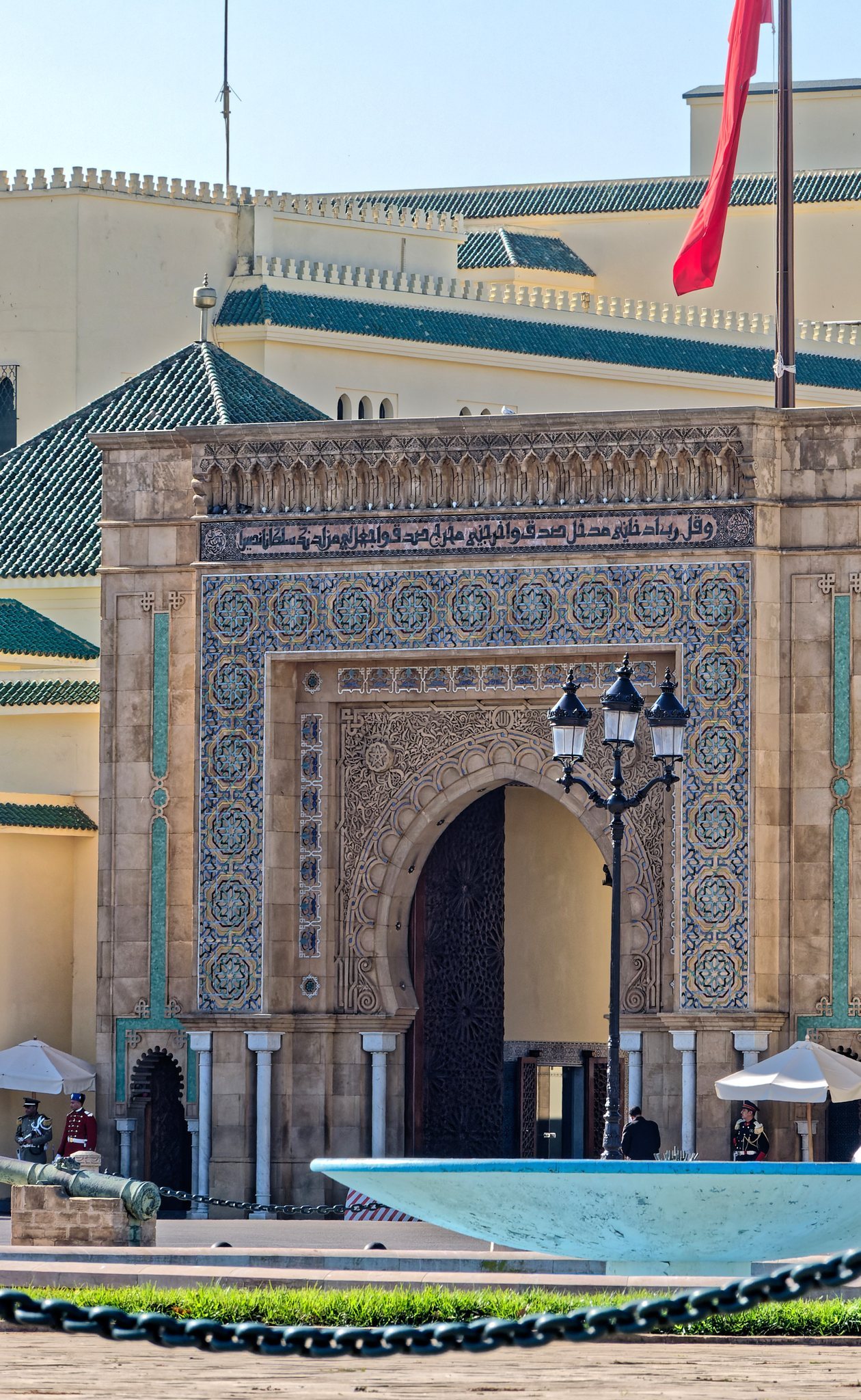
Dar al-Makhzen stands in the Touarga district near central Rabat, at the end of a mechouar. Its main entrance opens onto this broad ceremonial esplanade, which also contains a small mosque. The enclosed complex combines palace buildings, institutional facilities, guard accommodation, and extensive gardens.
Palace complex
Main buildings
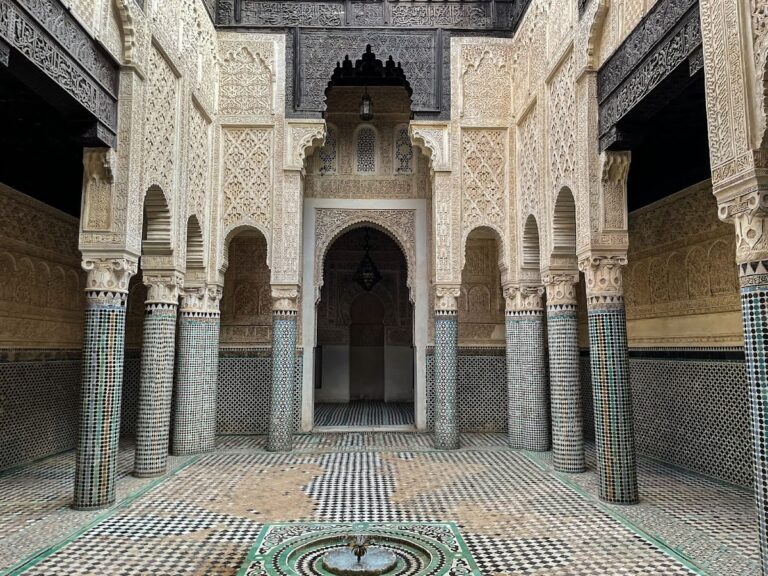
The buildings follow the model of a traditional urban house. They have pitched roofs covered with green tiles and are oriented toward extensive gardens and ornamented interior courtyards. The complex is enclosed, giving its buildings and open spaces a unified arrangement around these courtyards and grounds.
Royal and service facilities
The compound includes the Royal Cabinet, the administrative office supporting the monarch in royal and state affairs, as well as the Collège Royal and accommodation for the Moroccan Royal Guard. A cooking school forms part of the complex, while a ground-floor library was built to house Hassan II’s manuscript collection.
Gardens and grounds
Extensive gardens surround the palace. Their design brings together French formal landscaping, traditional Arabic and Islamic geometric motifs, and local gardening traditions. These grounds form an important part of the complex’s physical setting alongside the ornamented interior courtyards and the ceremonial esplanade.