The Alyscamps: Arles’ Roman and Medieval Cemetery
Site at a Glance
- Popularity
- High
- Country
- France
- Primary era
- Classical
- Eras represented
- Classical, Medieval
- Civilizations
- Holy Roman Empire, Roman
- Site type
- Burial
- Remains
- Necropolis
On this page9 sections
History
The Alyscamps is a Roman-period cemetery in Arles, France. It became the city’s principal burial ground for close to fifteen centuries, serving first pagan communities and later Christians, with use continuing into the Middle Ages. Its name derives from the Elysian Fields, the classical idea of a blessed resting place after death, through the Provençal Occitan form Aliscamps.
Roman and Early Christian Burials
By the fourth century, the cemetery held thousands of tombs, and burial there was much sought after. Its reputation was linked to Saint Genesius, a Roman official remembered as a Christian martyr, who was beheaded in 303. Many people hoped to be buried at the Alyscamps, including successive bishops of Arles. Saint Trophimus, possibly the city’s first bishop, was also laid to rest there.
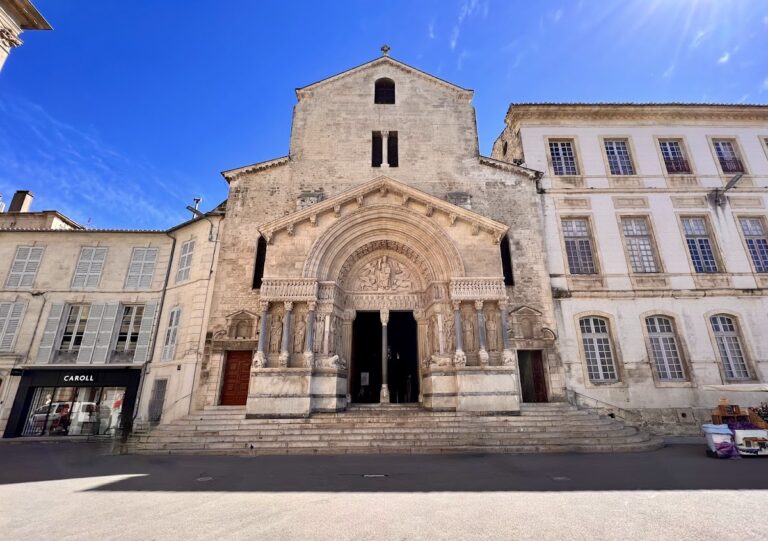
Some bodies travelled down the Rhône in small boats, which could carry money for those who buried the dead. Transporting coffins from distant parts of Europe also became a source of income for Rhône boatmen. In 1152, Trophimus’s relics were moved to the cathedral of Saint-Étienne in central Arles, later known as Saint-Trophime. The transfer weakened the cemetery’s prestige.
Medieval Churches and Pilgrimage
Churches were established around the cemetery from the eleventh to the thirteenth centuries. A collegiate church, served by a community of clergy called canons, was founded there in the eleventh century. After the institution came under lay control, Archbishop Raimbaud of Arles granted the old Church of Saint-Genès and its dependencies to the monks of Saint-Victor of Marseille around 1035. In exchange, the monks owed an annual pound of incense on Saint Trophimus’s feast day.
The Alyscamps became a required stop for Provençal pilgrims travelling to Santiago de Compostela, a major Christian pilgrimage destination in northwestern Spain. Its churches and cemetery were known across medieval Christendom. A legend written down by Gervase of Tilbury in Otia Imperialia credited Trophimus with bringing Christianity to Arles and founding the cemetery. It described him as an associate of the apostle Paul in Spain and portrayed the burial ground as a resting place for Christian believers and prominent people, including lords killed fighting pagans.
The cemetery also entered medieval literature. The French heroic poem Aliscans placed Guillaume d’Orange’s battle against pagans there. Wolfram von Eschenbach’s German poem Willehalm, based on that story, referred several times to the cemetery’s sarcophagi. Later literary references include Dante’s Inferno, Ariosto’s Orlando Furioso, and a poem by Paul-Jean Toulet.
Changing Use and Modern Recognition
During the Renaissance, religious prelates, lords, and kings took some finely carved sarcophagi for their collections. City councillors presented others to distinguished visitors, while local people reused funerary stones as building material. Toward the end of the sixteenth century, a boat carrying sarcophagi sank in the Rhône near Pont-Saint-Esprit.
Work on the Canal de Craponne in the sixteenth century altered the surrounding area. The canal supplied water to the Crau, between the Durance and Rhône rivers. Further extensive change followed in 1848, when the Paris–Lyon–Mediterranean railway and its associated workshops were built. The area eventually became a district of Arles and was later partly restored as an open-air museum.
Saint-Honorat was classified as a historic monument in 1840; in 1862, the classification also covered the Porcelet Chapel and the cemetery around the church. In 1981, the Alyscamps became part of the UNESCO World Heritage property “Arles, Roman and Romanesque Monuments.” Artists also made the site a subject: Vincent van Gogh and Paul Gauguin painted there in autumn 1888 and worked side by side in late October. Van Gogh’s paintings of the Alyscamps include works dated October and November, while Gauguin’s include one dated October. Félix Vallotton and Léopold Lelée also painted the site.
Remains
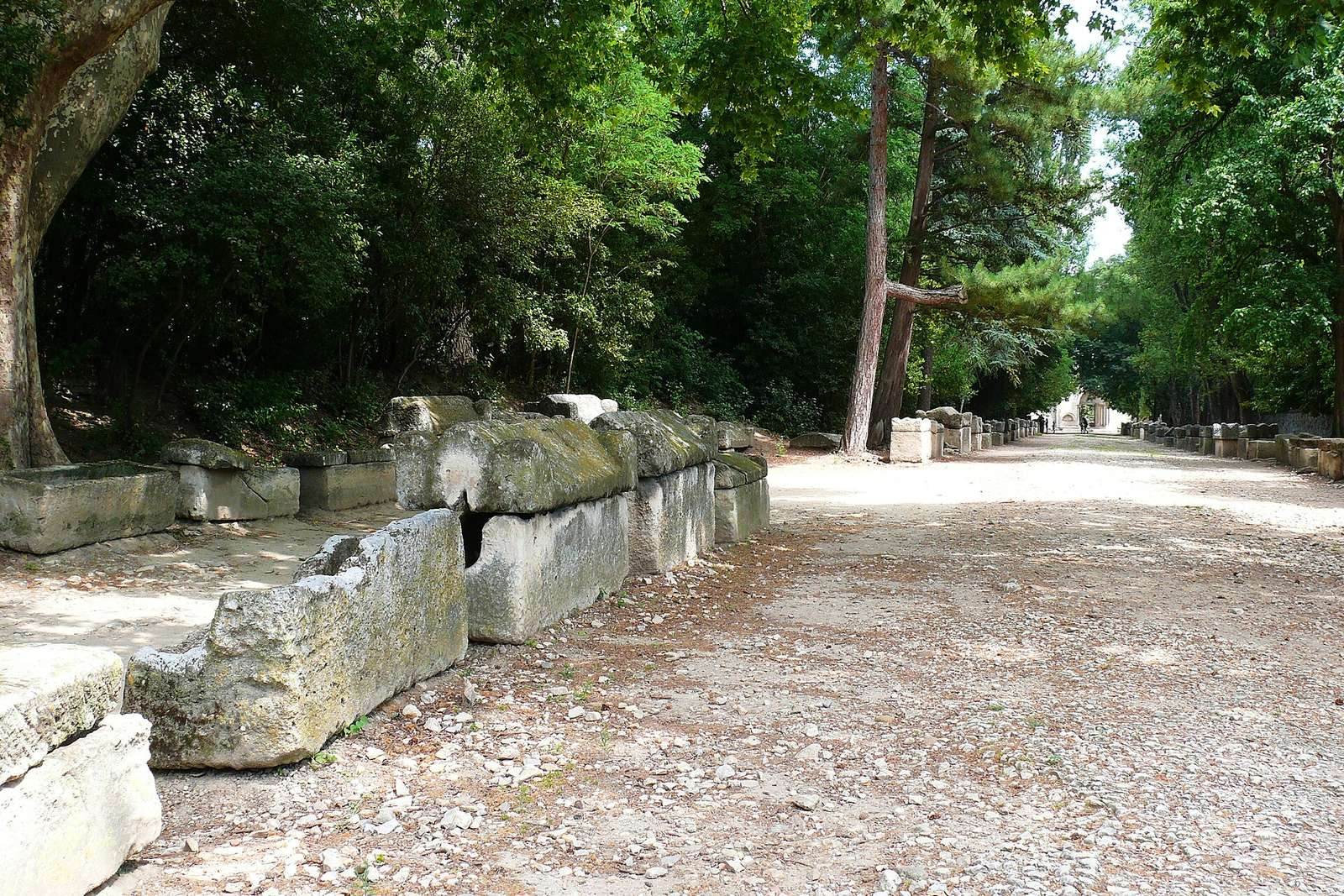
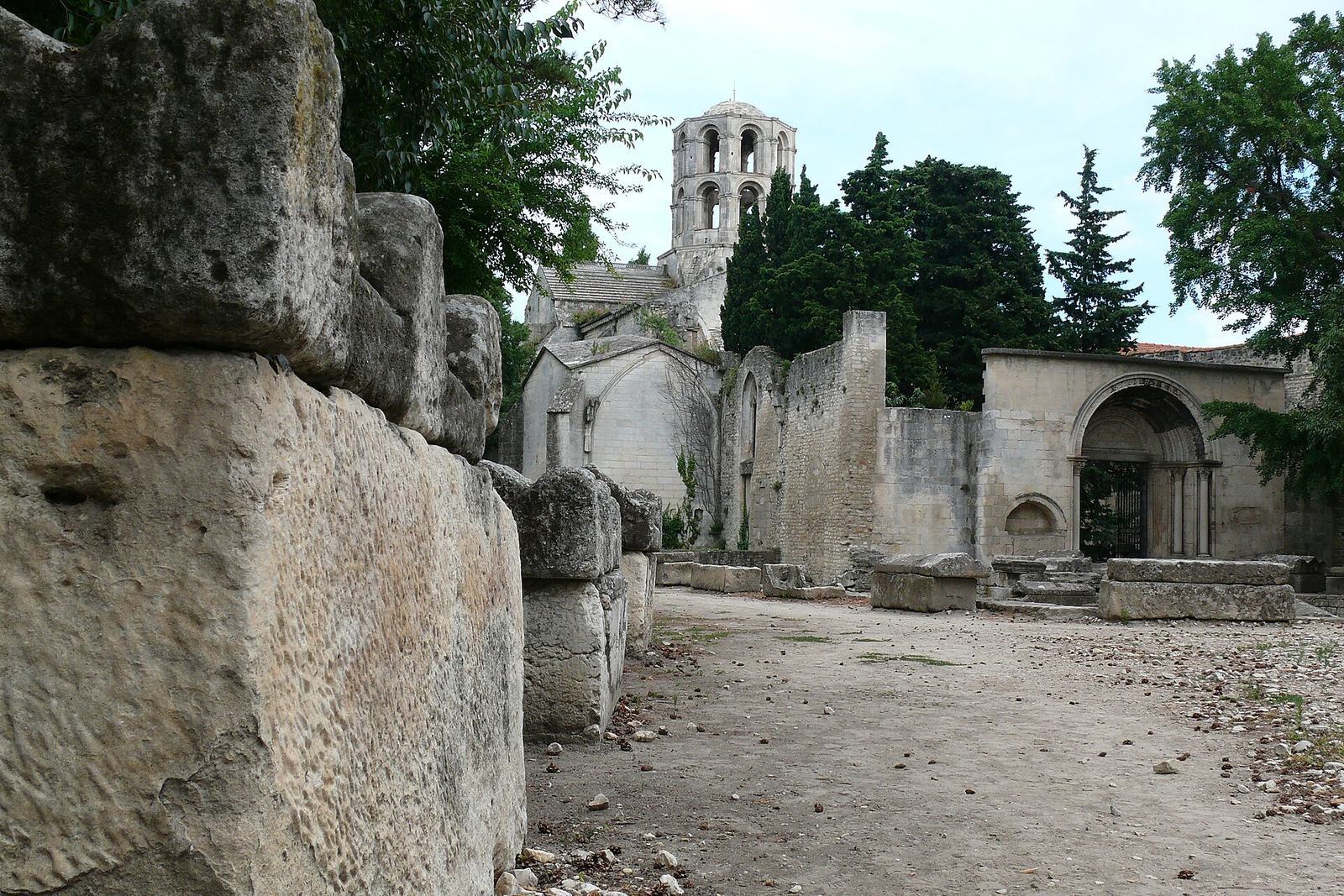
The cemetery’s layout joined burial areas beside the Via Aurelia, outside ancient Arles, with a promenade and a concentration of sarcophagi in front of Saint-Honorat. The tombs ranged from simple stone coffins to elaborately carved monuments. By the fourth century, sarcophagi had been stacked as many as three levels high. Some of the finest surviving examples are displayed at the Musée de l’Arles et de la Provence antiques.
Churches and Chapels
Saint-Honorat
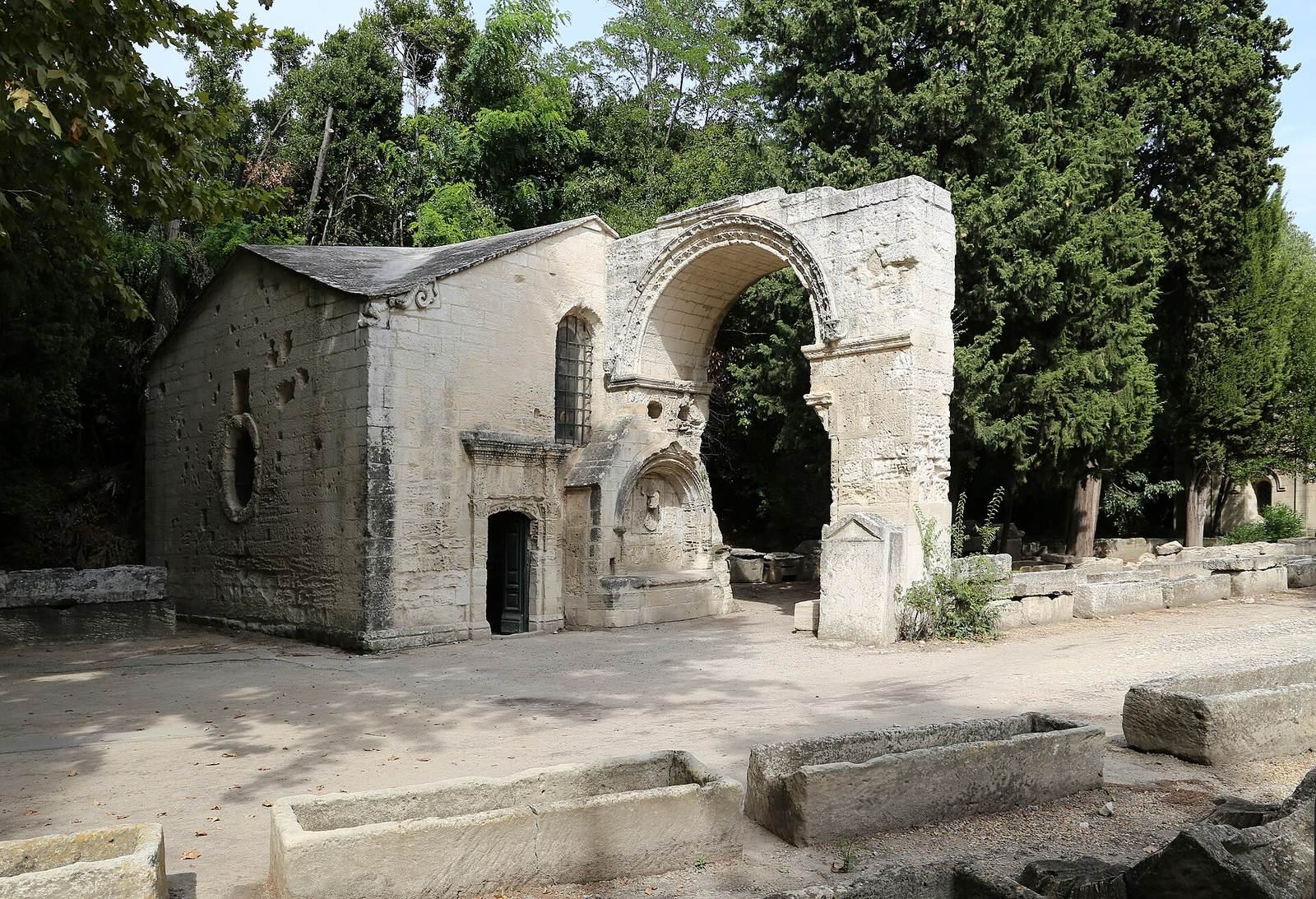
The church of Saint-Honorat survives as a ruin. Its associated features include a lantern, a raised structure with openings that admit light. The cemetery surrounding the church forms part of the site, as does the promenade and field of sarcophagi in front of it.
Porcelet Chapel
The Porcelet Chapel is another identified part of the Alyscamps complex, alongside the cemetery around Saint-Honorat.
Chapel of Saint-Accurse
The Chapel of Saint-Accurse first served as a place for an act of atonement and later became a funerary chapel.