Terborgh Castle: A Historic Castle and Farm Complex in Limburg
Site at a Glance
- Popularity
- Medium
- Country
- Netherlands
- Primary era
- Early Modern
- Eras represented
- Medieval, Early Modern
- Civilizations
- Dutch, Holy Roman Empire, Spanish
- Site type
- Domestic
- Remains
- Castle
On this page13 sections
History
Terborgh Castle, also known as Huis Schinnen, is a seventeenth-century enclosed farm complex near Heisterbrug in the municipality of Beekdaelen, Netherlands. It is probably among the oldest castle sites in present-day Limburg. A small Roman fortified outpost, or burgus, may once have stood here as a watchtower and may have influenced the castle’s name. From the eleventh century onward, Terborgh may have developed as one of a new group of power centers established by emerging warriors, linking parts of the countryside to them through landholdings bound by obligations.
Medieval lordship
Terborgh first appears in a record in 1285, when it belonged to Hendrik van Wijlre, lord of Schinnen. He had inherited the castle and the rights attached to the lordship from his parents, Alexander van Wijlre and Gerberga van Schinnen. The castle was a fief, land held under feudal obligations, of the prince-bishop of Liège, a bishop who also governed a territory. The lordship of Schinnen, the area under its lord’s authority, was held as a fief from the lords of Valkenburg.
The estate had its own feudal court, which administered such landholding relationships, and included eighty fiefs. Most lay in Schinnen, while others included the large tenant farms Ten Eijsden, Beekhoven, and De Biesen in Geleen, as well as Grijzegrubben and Reijmersbeek Castle at Nuth.
By 1294, Terborgh and the lordship belonged to Floris Berthout van Berlaer, lord of Mechelen. He may have acquired them through a purchase connected with bankruptcy. During his tenure, probably under Brabantian influence, Terborgh was transferred from Liège’s feudal jurisdiction to the feudal court of Valkenburg. Sophie Berthout and her husband, Reinoud II van Gelre, later inherited the castle and lordship. The counts of Guelders held them until 1403, when the Schellart van Obbendorf family succeeded them.
The Schellart van Obbendorf family
The Schellart van Obbendorfs owned Terborgh and the lordship of Schinnen until 1795. Under Walraaf Schellart van Obbendorf, the forecourt was converted into a manor house. A new chapel was consecrated in 1625 by the bishop of Roermond. During this period Terborgh also served as a judicial venue and a prison for people associated with the Bokkenrijders, a name given to bands accused of robbery in eighteenth-century Limburg.
Count Adam Alexander Schellart van Obbendorf, lord of Schinnen, Geijsteren, and Oostrum, was the last member of his family at Schinnen. In 1804, Maria, imperial countess von und zu Hoensbroeck, inherited the estates at Schinnen and Geysteren. She married Baron Caspar Carel de Weichs de Wenne, and they made their home at Geysteren. Their son, Baron Clemens de Weichs de Wenne, married Baroness Emma Maria Francisca De Loë d’Imstenraedt in 1844 and initially lived at Terborgh, moving to Geysteren in 1850.
Nineteenth-century ownership
In 1853, Terborgh and the Borgermolen were assigned to Baroness Theresia de Weichs de Wenne, wife of Baron Clemens De Loë, who lived at Troisdorff in Austria. Their son, Clemens De Loë Jr., settled at Terborgh in 1872 with his wife, Countess Eugenia von Golstein de Breihl. After her death, he returned to Austria in 1888. Terborgh then stood unoccupied until 1918, although the castle farm continued to be leased to members of the Pijls family.
Restoration and later use
In 1918, George August Kesting, director of Handelsvereiniging Reiss & Co. in Amsterdam, bought half of Terborgh; the other half belonged to Geert van Kooten Kok of The Hague. The two owners sold their shares in 1938 to Gerardus Smits, a civil engineer and former director of the Deli Railway Company in the Dutch East Indies. In 1943, Smits restored the deteriorated castle and Borgermolen.
Schinnen municipality bought Terborgh in 1968 and used it for official receptions and wedding ceremonies. Some buildings and stables served as a youth center and municipal storage. The municipality sold Terborgh and the mill in 1989 to antique dealer Stassen. After his death, his five sons sold their inheritance to Stichting Het Eeuwige Leven, a charitable foundation established by Wynne Minkes and Rieuwert van Bodegraven. The castle farm came to be used for accommodation and as an inn. Terborgh and the adjacent watermill are designated national monuments.
Remains
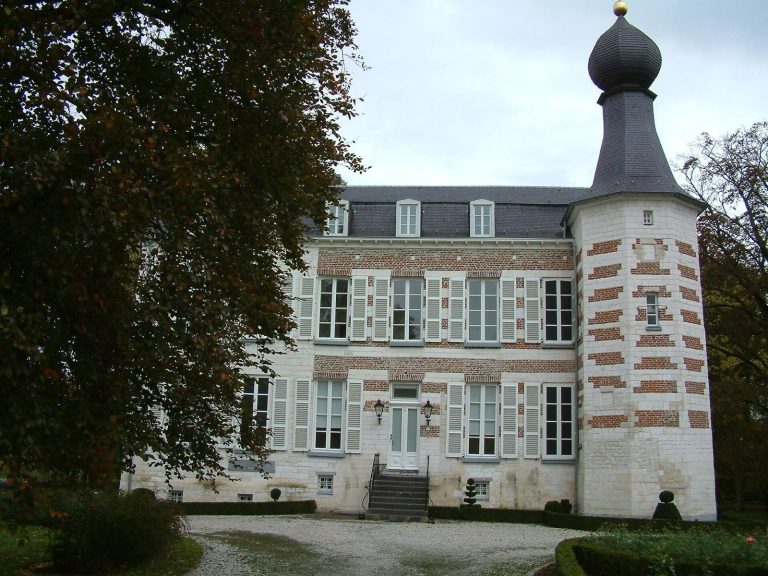
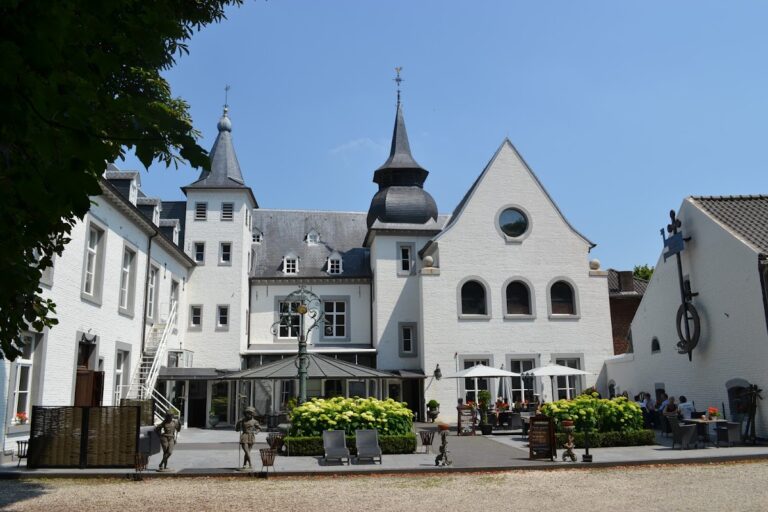
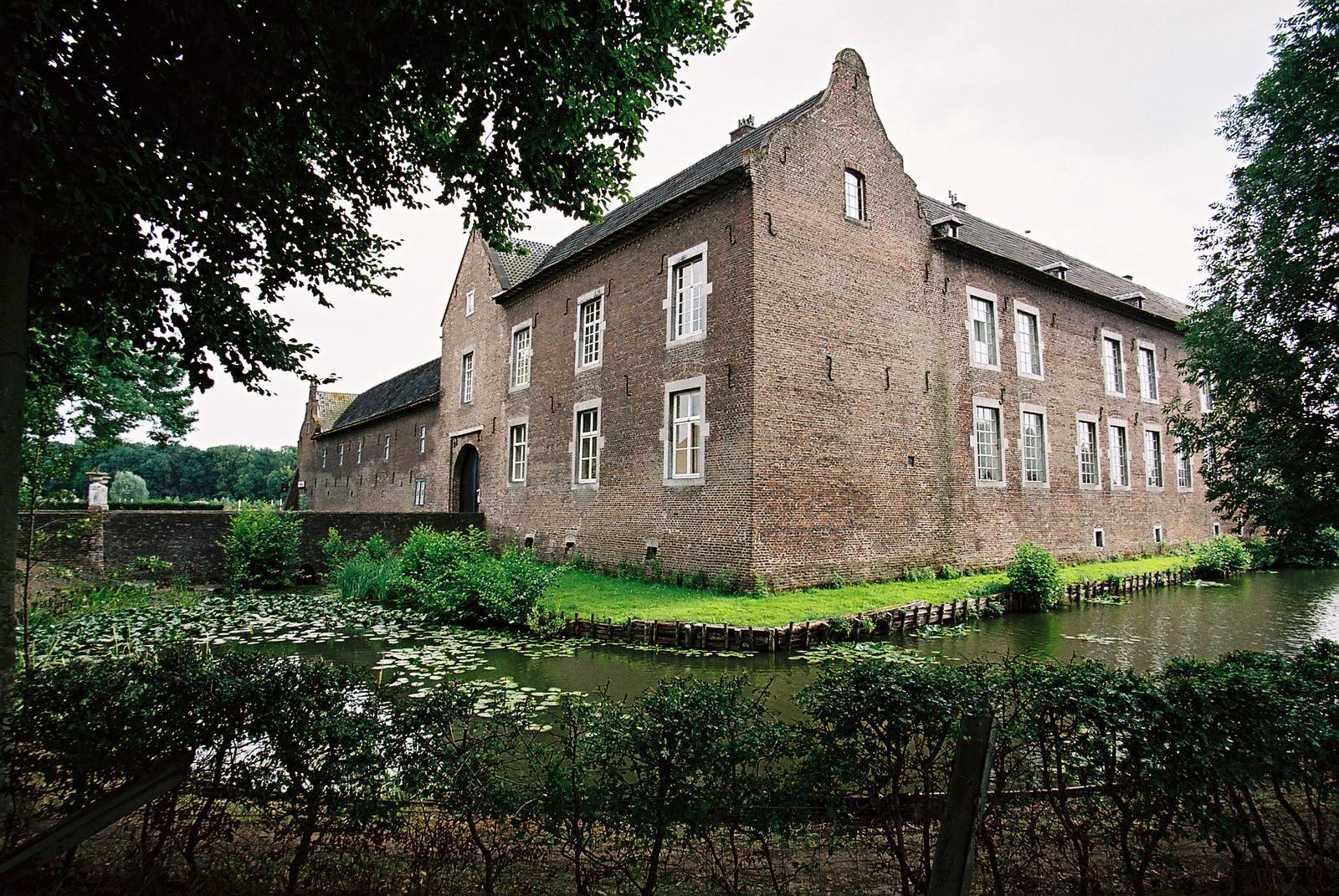
The castle stands in the Geleenbeek valley, near the hamlet of Heisterbrug and within De Graven Landscape Park. Its present form is an enclosed complex of four brick wings, with a moat supplied by the Geleenbeek. The arrangement includes a central courtyard, a manor house and chapel, the castle farm, a mound behind the buildings, and the Borgermolen watermill on a stream branch in front of the castle.
Castle complex
Wings and courtyard
The four wings form an enclosed farm complex dating to the seventeenth century. Two have regional Gelderland-style brick gables, finished with courses of bricks set on edge and scroll-shaped brickwork. The courtyard is reached across the former drawbridge and through a gabled gatehouse. Large fishponds formerly surrounded the complex.
Manor house and chapel
The north wing contains the manor house and a domestic chapel with a hexagonal plan. In the residential rooms, a monumental staircase includes an oak landing, and several ceilings have stucco decoration.
Castle farm
The south wing contains the castle farm, which forms part of the enclosed complex.
Mound and tower foundations
Behind the castle is a motte, an artificial mound that provided a raised base for a fortified structure. Rubble stone several metres thick survives there as the foundation remains of an earlier residential tower.
Entrance crucifix
A monumental stone crucifix stands at the entrance. Maria Ernestina Schellart van Obbendorf erected it in 1758. Its inscription asks the Lord to protect the inhabitants of Schinnen.
Borgermolen watermill
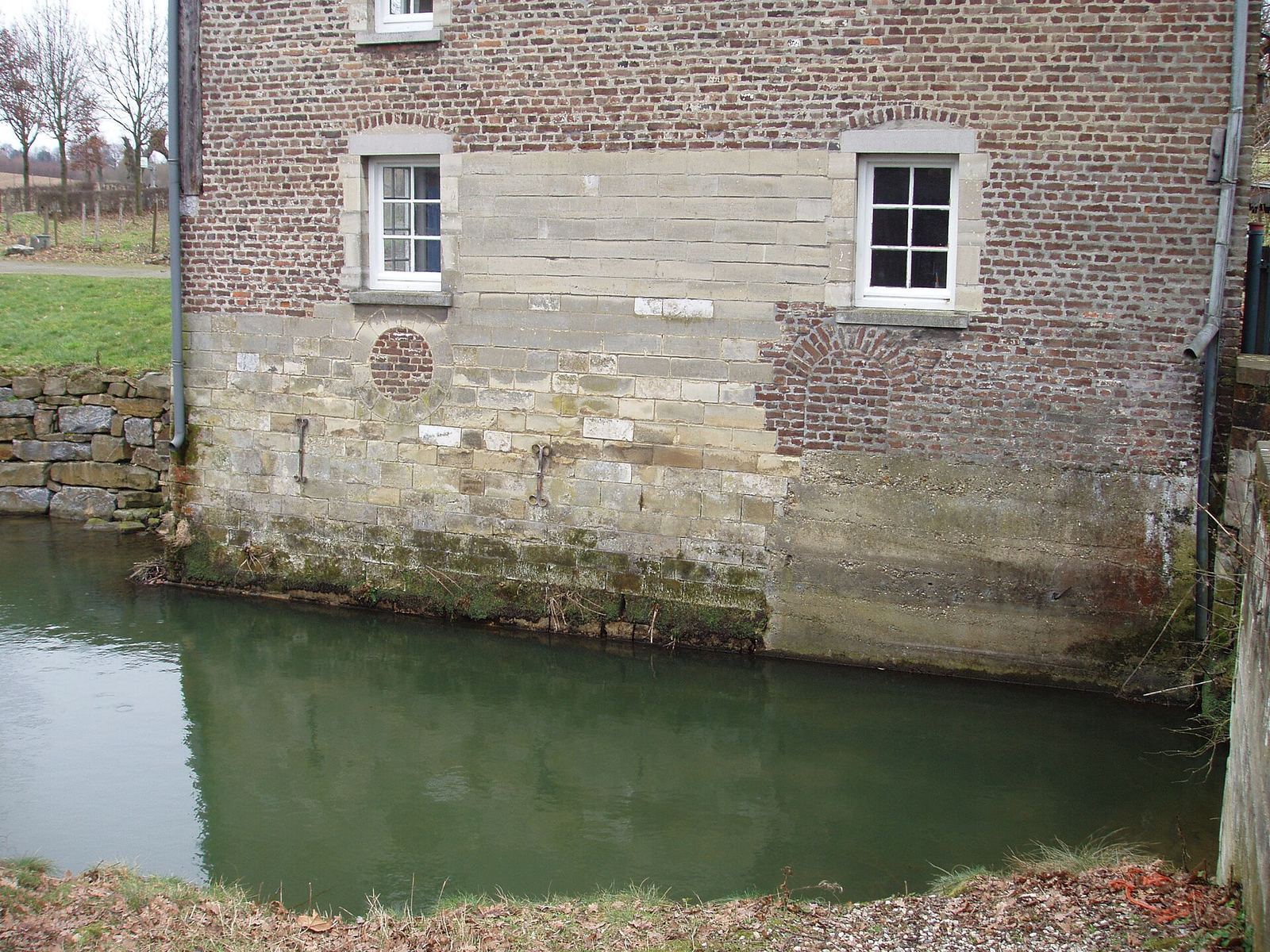
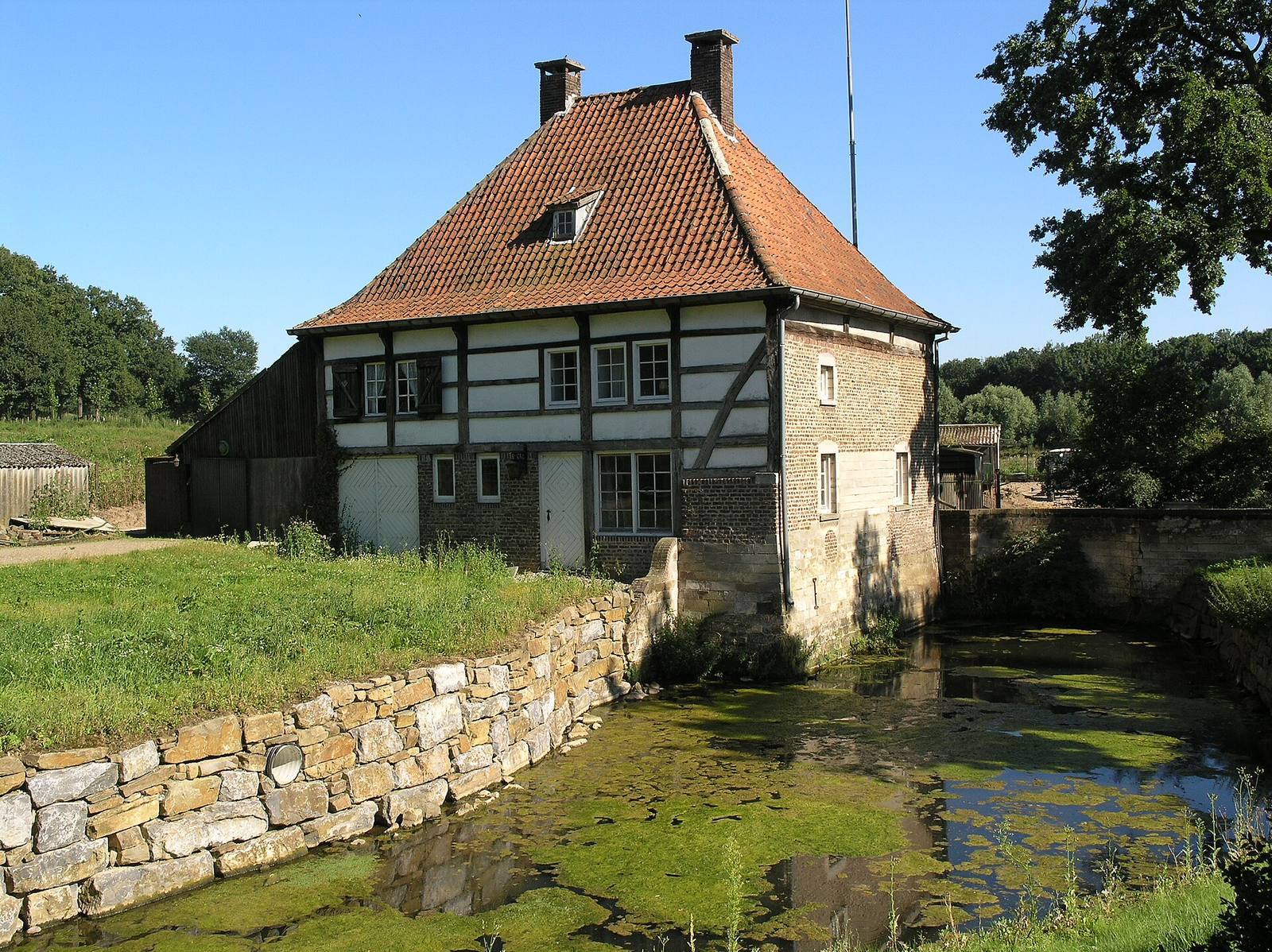
The watermill in front of the castle is also called the Borgermolen. It served as the required mill for residents of the lordship of Schinnen. The present mill house dates to the eighteenth century and has a half-timbered upper storey beneath a tiled hipped roof. Until the twentieth century, an undershot waterwheel, turned by water flowing beneath it, was powered by a mill sluice. At the end of the nineteenth century the mill house had two waterwheels; one was removed in 1888. The mill house became a residence in 1943, and the mill was restored in 1987.