Doenrade Castle: A Historic Noble Residence and Hotel in the Netherlands


Site at a Glance
- Rating
- 4
- Popularity
- Medium
- Country
- Netherlands
- Primary era
- Early Modern
- External website
- Open
- Eras represented
- Early Modern, Modern
- Civilizations
- Dutch, Habsburg, Holy Roman Empire
- Site type
- Domestic
- Remains
- Castle
On this page8 sections
History
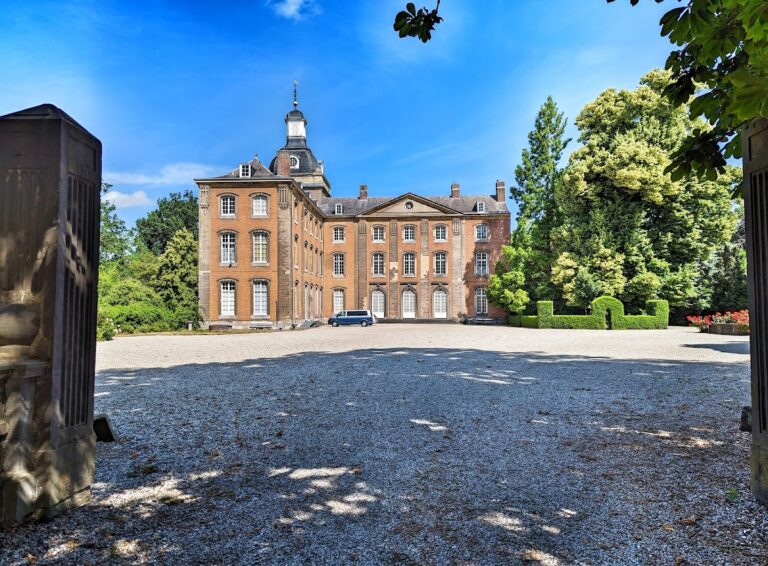
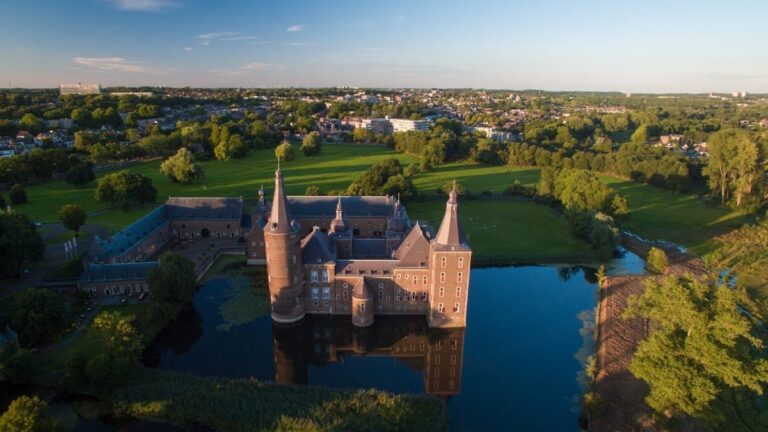
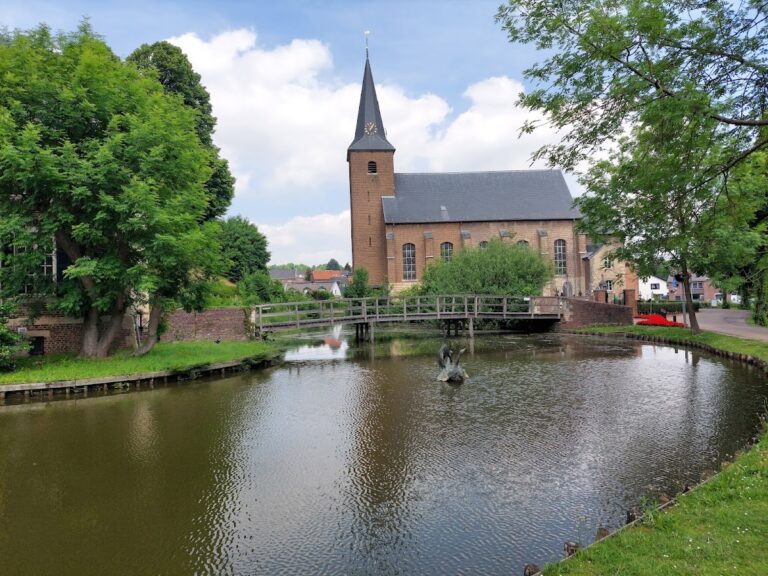
Doenrade Castle is a historic castle in the Netherlands, at the edge of the village of Doenrade, whose present form developed from an older house beginning in the sixteenth century. First mentioned in 1170, it is regarded as one of Limburg’s oldest castles. In earlier centuries, it was a moated residence for prominent noble families.
Medieval noble families
The Brempt family was associated with Doenrade by 1196, while the Dobbelstein family was connected with the castle by 1224. Both families were regarded as ancient nobility. Around 1300, the castle was occupied by the Dobbelstein family of Doenraedt.
During the first half of the fifteenth century, Godart van Dobbelstein van Doenrade owned the castle. He served as an official of Millen in 1433 and became stadtholder of the Electoral Cologne Manorial Court in Heerlen in 1444. A stadtholder was an appointed administrative and judicial representative.
Godart’s daughter Bela married Johan van Brempt, called Lieck, in 1429. Johan was bailiff of Heinsberg, and the couple continued to live on the first floor of the Unterlieck knight’s house, a noble residential manor associated with a knight’s household. Bela inherited Doenrade Castle in 1462, bringing it into the possession of the noble Brempt family of Doenraedt, also known as Van Lieck.
Steven van Brempt, also called Oude Lieck, was Bela Dobbelstein’s grandson and the first member of the family to use the designation “van Brempt tot Doenrade.” Krein van Lieck tot Doenrade is recorded in 1523 and 1539. The Van Brempt family retained the castle until approximately 1700.
The Van Brempt family and the Land of Valkenburg
As members of the knighthood, the Van Brempts held seats in the assembly of the Land of Valkenburg, a historical territory in the southeastern Netherlands. The assembly was the territory’s political body, in which noble representatives participated. For generations, members of the family also served as substitute stadtholders of the Land of Valkenburg for the knightly family of free lords of Steithagen at Welten. A free lord was a noble landholder with a degree of jurisdictional and political independence.
The castle was also known as “Doonderhuuske.” The name refers to the former role of small regional castles as subordinate courts. Since the Middle Ages, justice had been administered there under the higher jurisdiction of the lords of Brunssum. The former municipal name Onderbanken likewise referred to these lower courts.
The De Limpens family and charitable foundation
In 1856, Johan Lodewijk Christiaan de Limpens, district judge and mayor of Oirsbeek, moved from Sittard to the castle. Born in Doenrade in 1793, he probably belonged to a family that already owned the property. He was married to Baroness Catharina Josephina Sophia van Guaita.
In 1886, Johan left all his possessions to the charitable Jan de Limpens Foundation, which still exists. The foundation assisted poor people, helped farmers affected by livestock disease, and awarded study grants, except to students preparing for careers as doctors or lawyers.
Johan’s brother Carel Cornelius de Limpens had a mental disorder. Johan left him the castle, its inventory, and sufficient money for his care. Carel later transferred these possessions to the Jan de Limpens Foundation. The De Limpens family line ended on 4 September 1893, and the two brothers were the foundation’s founders.
Changing uses since 1925
From 1925, Doenrade Castle served as a convent caring for elderly men. It became a police school in 1960 and remained in that use until 1969. From 1978 to 1985, it belonged to Motké, which operated a furniture business there under the name Elite Meubel. The castle then functioned as a restaurant for two years.
After standing empty from 1987 to 1991, the building underwent conversion and renovation beginning in 1991. It opened as Hotel and Restaurant Doenrade Castle on 1 May 1993 and continues to function as a hotel and restaurant. The castle is listed as a Rijksmonument, a building or site protected through the Netherlands’ national heritage system for its cultural, architectural, or historical value.
Remains
Present building
The present castle is a white-plastered building that developed from an older house beginning in the sixteenth century. A wing and a tower were added in the early 1930s, creating the form seen today. The building’s current appearance therefore combines the earlier house with later additions.
Earlier defensive setting
The earlier castle was surrounded by moats, reflecting its character as a fortified noble residence. A plaque above the entrance incorporates the Van Brempt family coat of arms, which consists of three horizontal bars.
Nearby sites