Wijnandsrade Castle: A Historic Three-Winged Castle Complex in the Netherlands


Site at a Glance
- Rating
- 4.5
- Popularity
- Low
- Country
- Netherlands
- Primary era
- Early Modern
- External website
- Open
- Eras represented
- Medieval, Early Modern
- Civilizations
- Habsburg, Holy Roman Empire
- Site type
- Domestic
- Remains
- Castle
On this page15 sections
History
Wijnandsrade Castle is a historic castle complex in Wijnandsrade, Netherlands, whose present form was developed by the lords of Rode-Wijnandsrade between the sixteenth and eighteenth centuries. First mentioned in the twelfth century, the site began as a medieval defensive residence and later became the seat of a lordship, a noble household, a Jesuit seminary, and educational and agricultural institutions.
Medieval origins and the Rode-Wijnandsrade lordship
The earliest predecessor was probably a donjon, the principal fortified tower of a medieval castle, built on a motte, an artificial defensive mound. Its establishment is associated with Godfried II, son of Godfried I, lord of Schinnen and the first lord of Rode-Wijnandsrade. The name “Rode” refers to cleared and cultivated land. The loess soils around the site have remained connected with agriculture.
The lordship initially belonged to the Maschereel van Rode family. In 1516, Maria, heiress of Winand IV Maschereel, married Willem van den Bongart. Winand transferred the lordship to Willem in 1531 in return for an annual pension. Wijnandsrade Castle and the lordship then passed to the Von dem Bongart family, which also owned De Bongard Castle at Bocholtz.
The sixteenth-century castle
After the Von dem Bongart brothers divided their inheritance, Werner I became lord of Wijnandsrade. He abandoned the motte as his residence and commissioned a new castle at its foot. Construction began in 1554 and continued until 1563, creating the oldest surviving part of the present complex.
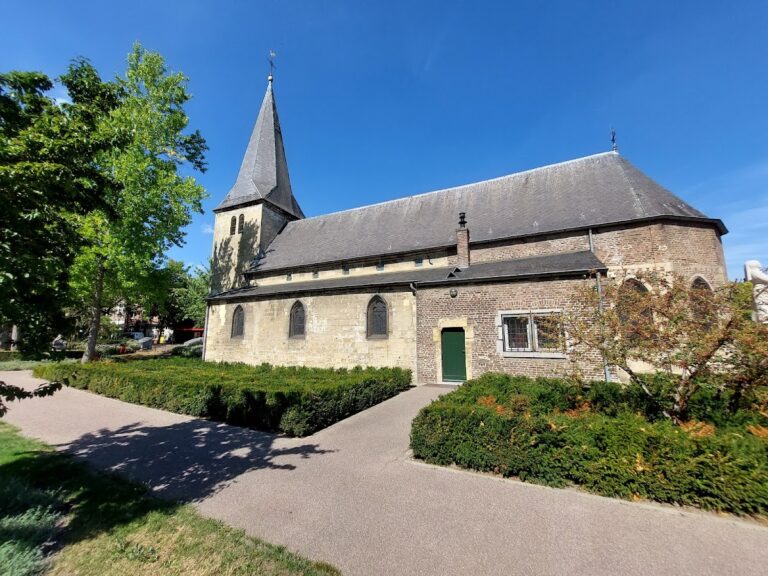
Werner II von dem Bongart later received the title Freiherr, a German noble rank conventionally translated as baron. His son Wilhelm II von dem Bongart died in military service on 17 September 1631 at the Battle of Leipzig during the Thirty Years’ War, the European conflict fought from 1618 to 1648 amid religious, dynastic, and political struggles. His grave monument was placed in the choir of the adjacent parish church, and a statue was later installed in the castle courtyard.
Eighteenth-century expansion and embellishment
Baron Joseph Clemens von dem Bongart ordered the south and east wings between 1717 and 1719. Around 1726, the entrance gateway was raised and given a small domed tower with a lantern. A Von dem Bongart coat of arms was placed above the gateway at the centre of the south facade.
A further transformation took place around 1775. The castle received Louis XV-style work, an eighteenth-century French decorative style associated with curved forms and ornamental interior design. The changes included an exterior door and paintings in the staircase. French-style gardens and a long lime-tree avenue were laid out so that the arrangement represented the Von Bongart baronial arms in the landscape.
French administration and the end of the lordship
French rule ended the Lordship of Wijnandsrade in 1794. The Von dem Bongart family retained the castle and its tenant farms, but territorial administration passed to French authorities, who established the Commune of Wijnandsraede. Tensions in the village included threats to burn the castle.
After the French period, the former lordship became part of the municipality of Wijnandsrade. The Von dem Bongart family generally lived at Paffendorf and managed local affairs through a steward. Ludwig von dem Bongart later died without children and left his possessions to his wife Melanie’s nephew, Pius Wilderich Graf von Walderdorf. With permission from Emperor Franz Joseph I of Austria, Pius adopted the title Freiherr von Bongart.
Jesuit seminary and twentieth-century ownership
In 1872, Baron Ludwig and Baroness Melanie made the castle available to the German Jesuits, a Catholic religious order known for education, scholarship, and missionary work. The order had been expelled from Prussia during the Kulturkampf, the nineteenth-century conflict between the German state and the Roman Catholic Church. At Wijnandsrade, the Jesuits established a seminary that became a centre of faith and science. Its community grew from a small group to more than 80 priests and brothers before leaving in 1910.
A tradition from the Jesuit period tells of a seriously ill and paralyzed brother who recovered his ability to walk and speak after being washed with and drinking water brought from Lourdes. The event was regarded as a miracle, and the superior proposed constructing a Lourdes grotto at Wijnandsrade in thanksgiving to Mary.
In 1916, Pius sold the castle and Wijnandsrade properties to Hubert Jozef Dupont, a banker from Heerlen. Dupont soon sold the castle to Theodor Joseph Hubert Opfergelt, tenant of the castle farm and mayor of Wijnandsrade from 1905 to 1929. This transaction ended the Von dem Bongart family’s period of ownership.
The Conventual Franciscan Friars acquired the castle in 1928 and established College “Christus Koning” for the education of seminarians. Royal Haskoning owned and occupied the castle from 1967. Parts of the building remained vacant, and deterioration followed. The Foundation for the Preservation of Wijnandsrade Castle became owner in 1990 and began major restoration in 1992.
A protected historic complex
Wijnandsrade Castle has been a Dutch national monument since 1965. Under the Dutch national monument system, a Rijksmonument is a protected building, archaeological site, or other heritage asset. The castle’s left and right wings are registered as separate national monuments, while the motte is also protected. Since 2006, the foundation has owned the castle farm as well, reunifying ownership of the historic complex.
Remains
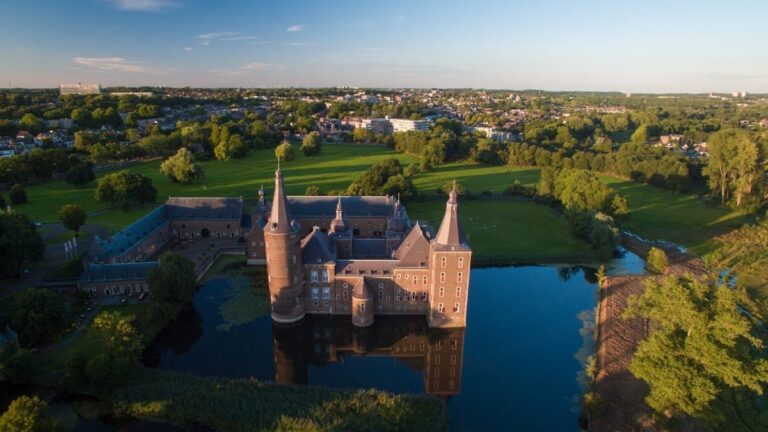
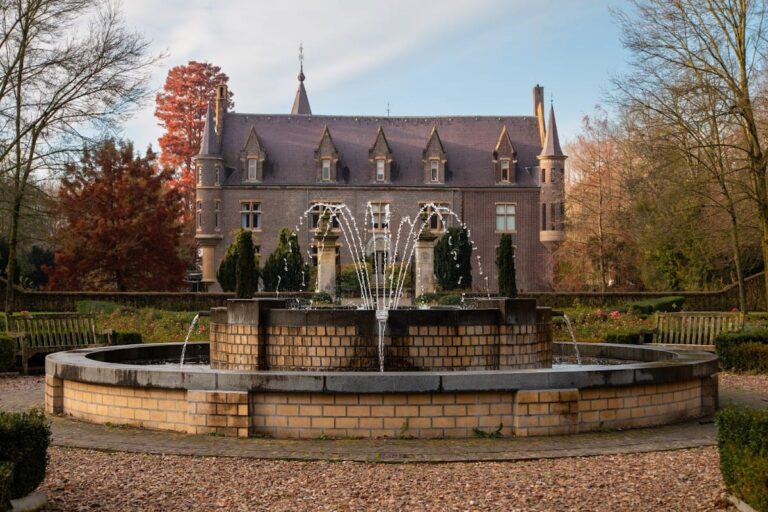
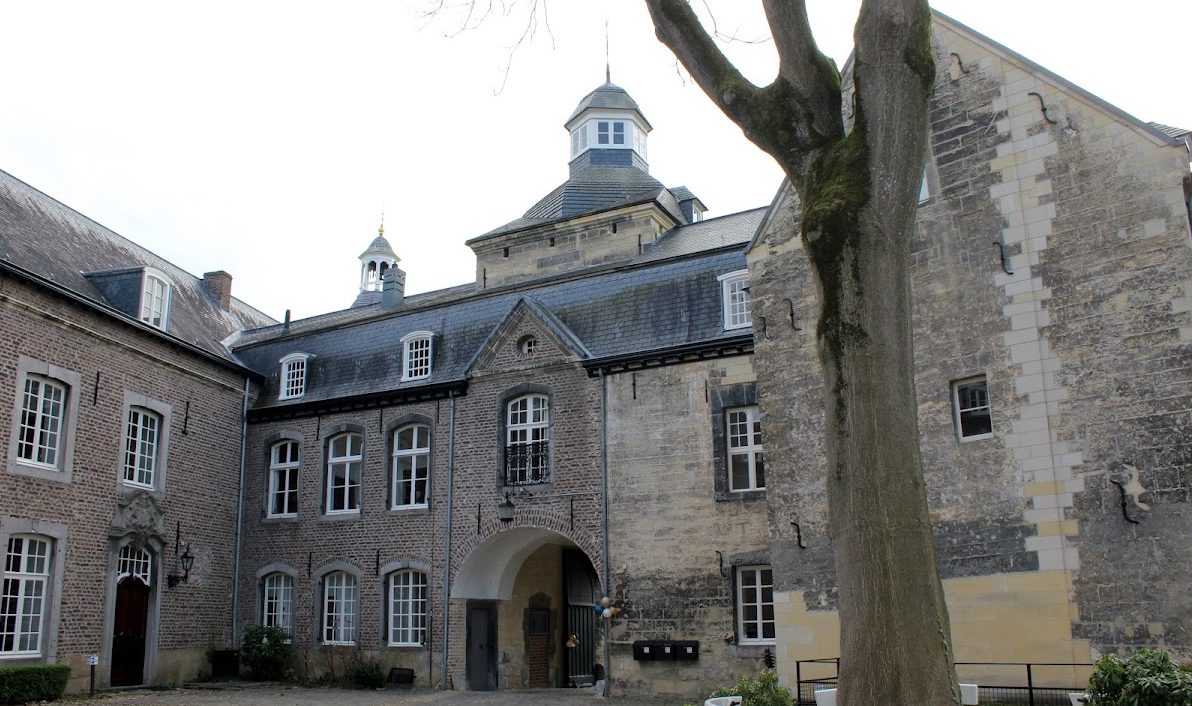
Wijnandsrade Castle is a partially moated complex of three wings arranged around a courtyard. It contains two courtyards and two gateway buildings, with one gateway leading outward and the other opening toward the second courtyard. A short stretch of moat lies in front of the second gateway building. Behind the castle stands the motte, surrounded by the castle moat and marking the position of the earlier defensive residence.
The castle wings and courtyard
West wing
The west wing is the oldest surviving section. Built between 1554 and 1563, it is a defensible house that replaced the earlier residence on the motte. Its original knights’ hall contains a sixteenth-century fireplace. The hall is now used partly as a wedding hall, while other areas of the castle contain private apartments, offices, and a meeting room.
South and east wings
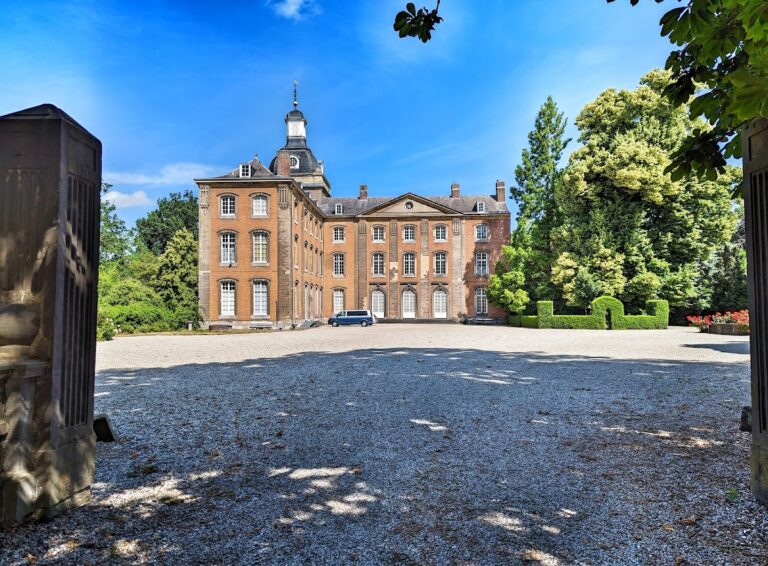
The south and east wings were constructed between 1717 and 1719. Their entrance gateway was raised around 1726 and crowned by a small domed tower with a lantern. The Von dem Bongart baronial coat of arms above the gateway forms part of the south facade. Around 1775, an exterior door in Louis XV style and paintings in the staircase added to the castle’s eighteenth-century appearance.
Castle farm
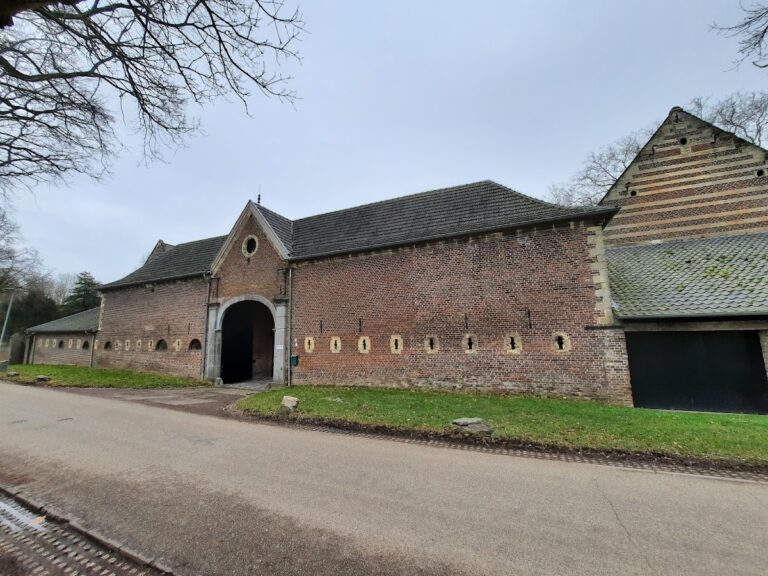
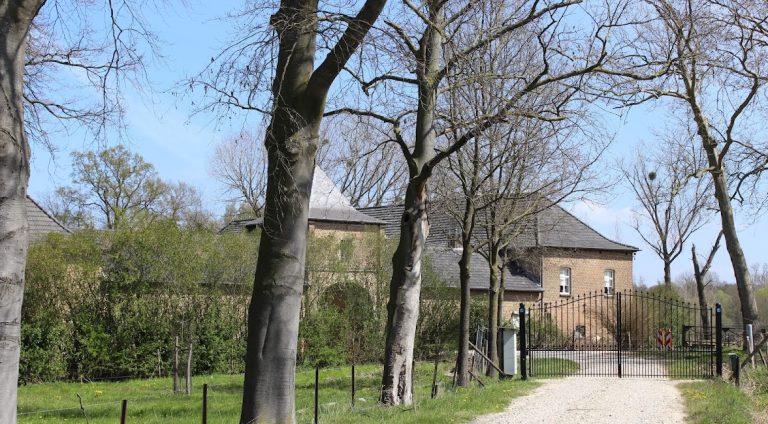
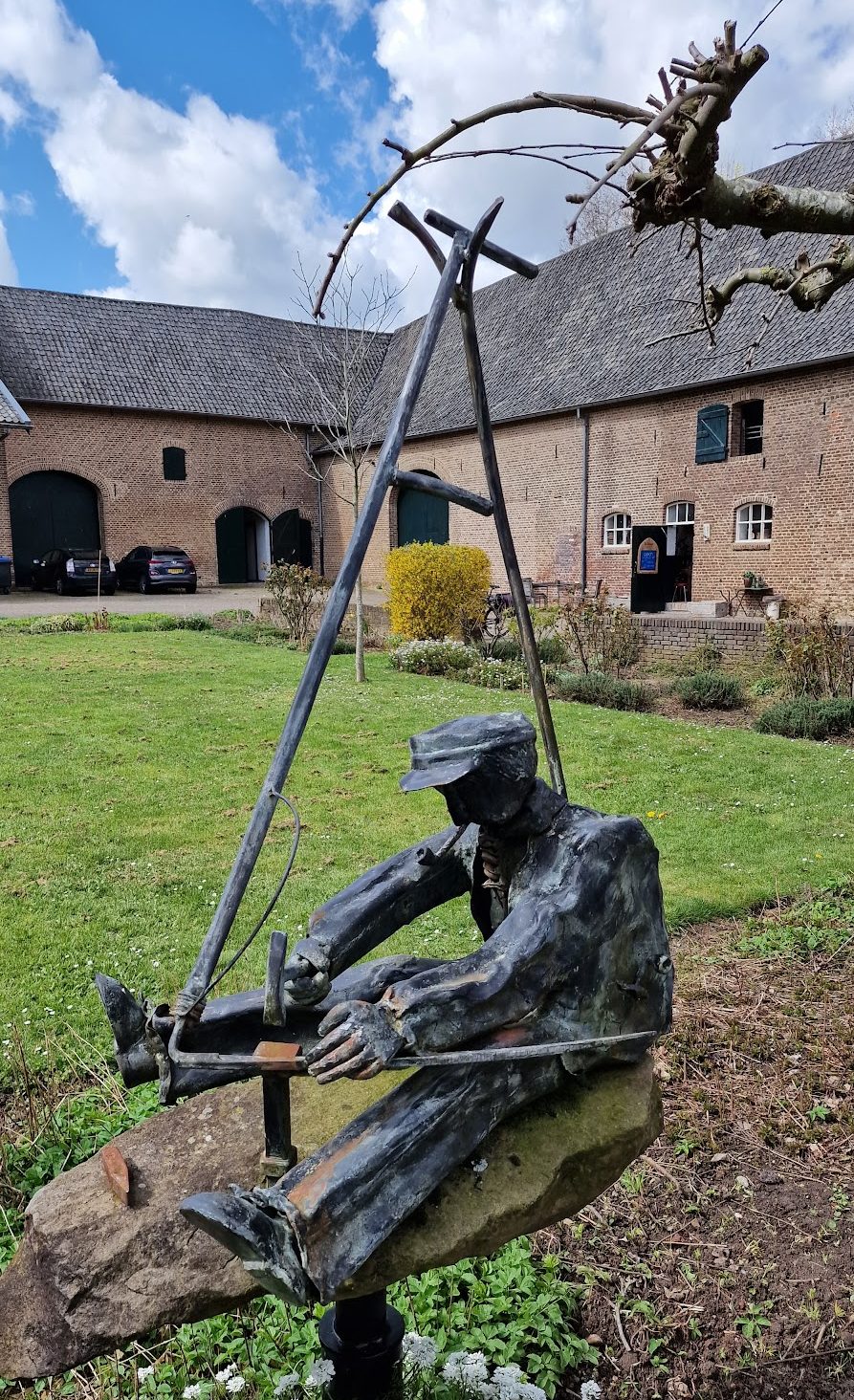
The castle farm beside the residence is the former borchhof, a castle farm or agricultural court associated with a castle estate. It consists of three wings around a large courtyard. The farm and 58 hectares of agricultural land were leased in 1959 to the Wijnandsrade Experimental Farm Foundation, which later became the owner. Extensive restoration in the early 1980s adapted the farm as a representative centre for arable farming on the local loess soils.
Since 2006, the castle farm has belonged to the Foundation for the Preservation of Wijnandsrade Castle. Since 2008, one wing has been used for the promotion, production, and wholesale sale of Limburg wines, with a tasting room and terrace. Other parts of the farm have been rented to various businesses.
Motte and commemorative features
Wijnandsrade motte
The Wijnandsrade motte is an artificial mound behind the castle and is enclosed by the castle moat. The original castle probably stood here as a defensive tower before Werner I established the later residence at the mound’s foot. The mound survives as a protected archaeological feature.
Wilhelm II von dem Bongart statue
A statue of Wilhelm II von dem Bongart stands in the castle courtyard beside the ascent to the motte. It commemorates the nobleman who died at the Battle of Leipzig on 17 September 1631. His grave monument is in the choir of the adjacent parish church, linking the courtyard memorial with the neighbouring ecclesiastical building.
Nearby sites