Terazije Fountain: A Memorial and Public Water Fountain in Belgrade
Site at a Glance
- Popularity
- Medium
- Country
- Serbia
- Primary era
- Modern
- Eras represented
- Modern
- Civilizations
- Ottoman, Serbian
- Site type
- Civic
- Remains
- Fountain
On this page9 sections
History
Terazije Fountain is a memorial and public water fountain in Belgrade, Serbia, commissioned by Prince Miloš Obrenović in 1860 and associated with Serbian Romantic architecture.
Commission and changing names
A request for a new fountain was made to Miloš in 1838 in response to water shortages. His removal from power and departure from Serbia delayed the project. After returning to the throne in 1860, he commissioned and paid for the fountain as a memorial to his restoration. It also served a practical and decorative purpose.
The name Terazije derives from an earlier wooden water tower at the site. The term was in use by the second half of the nineteenth century, although official names for the square changed over time. It was called Prince Milan Street from 1872, King Milan Street from 1886, and Crown Prince Square from 1913. Terazije became its official name in 1940.
Water supply and public use
In 1892, Belgrade’s water supply was ceremonially consecrated and opened in front of the fountain. Writer and humanitarian Delfa Ivanić recalled the earlier shortage of piped water in the city. Her stepfather and stepmother regularly hosted one or two students from theological or teacher-training schools in Old Serbia and Macedonia, who brought drinking water from the fountain. Old Serbia was a historical term for Serbian-populated lands under Ottoman rule.
Relocation and return
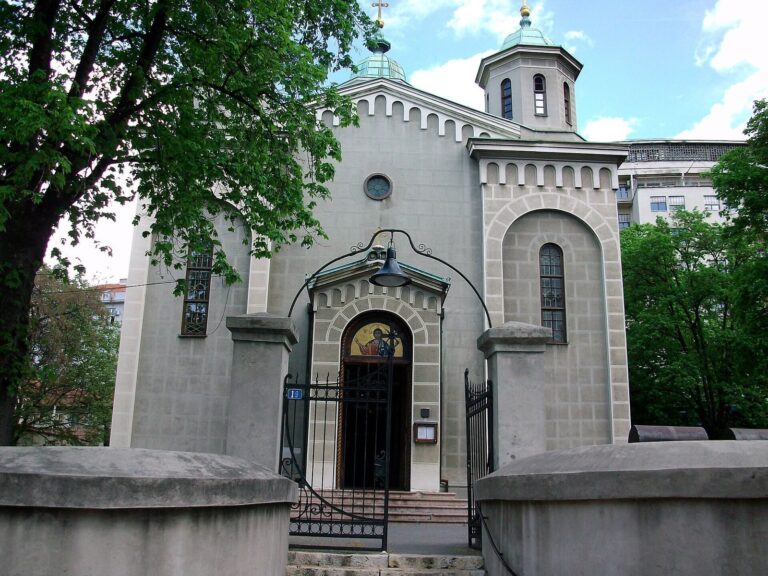
In 1911, reconstruction of Terazije as a square led to the fountain’s removal to the churchyard of Saints Peter and Paul in Topčider. It remained there as a monument until 1975, but did not operate because it was not connected to the water system. The fountain was designated a cultural monument in 1965. Following an initiative by Belgrade’s cultural-heritage authority and city administration, supported by citizens and public and cultural figures, it returned to Terazije in 1975. Its reopening ceremony took place on 12 December.
The area around the returned fountain was laid out with benches as a place for public gathering and rest. A team led by architect Zoran Jakovljević supervised its return, and a further repair and restoration project took place in 2002–2003 under Professor Ljubinko Dragićević.
Remains
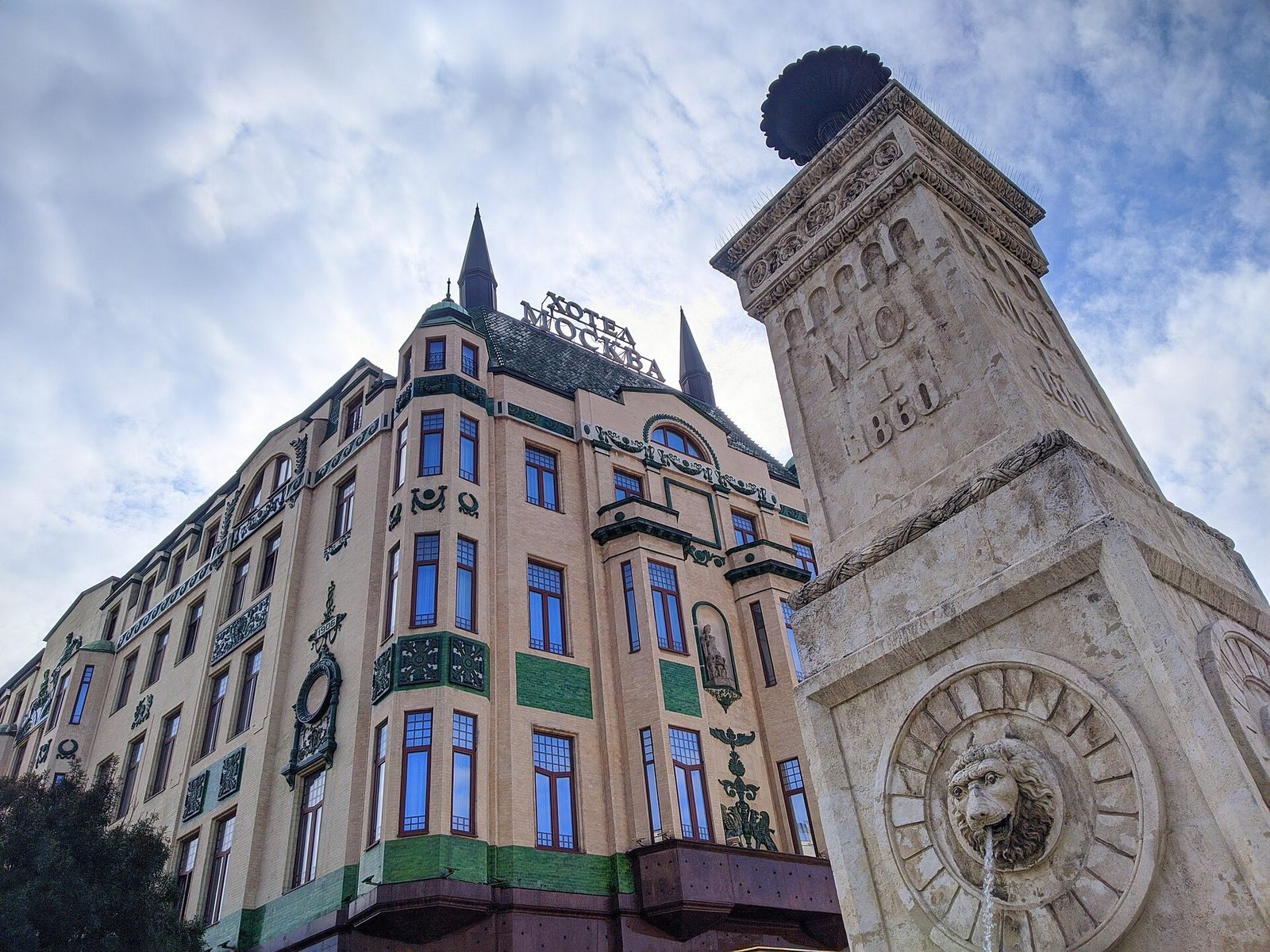
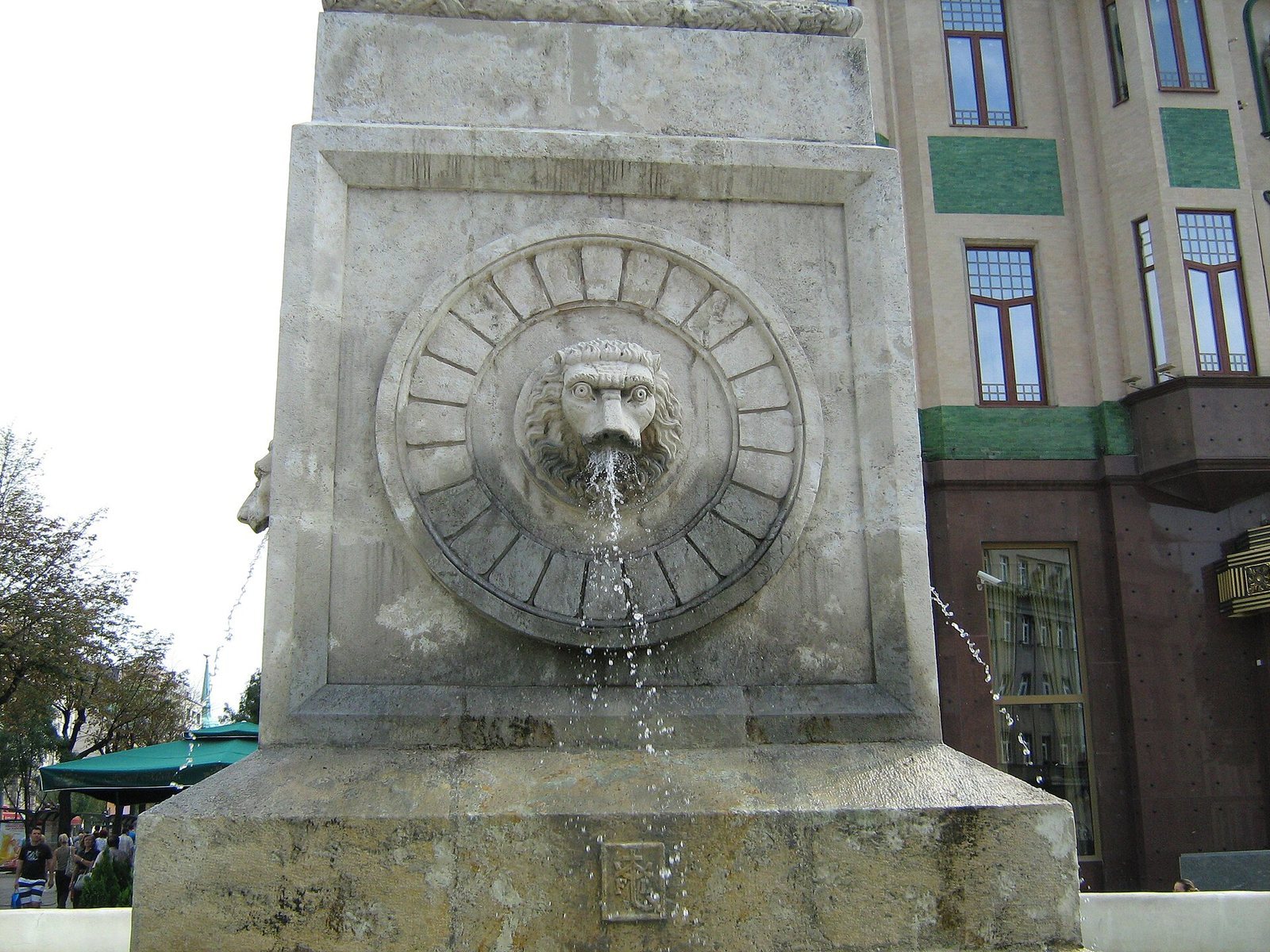
The fountain stands on the Terazije plateau in front of the Moskva Hotel, near its former position. This light-colored limestone monument is arranged around a four-sided pillar and an octagonal basin. Its carved decoration combines classical and medieval-inspired forms associated with Serbian Romantic architecture.
Pillar and basin
Structure and water jets
The central pillar has three sections and takes the form of a truncated obelisk, a tall, four-sided monument whose tapering form ends before a point. A metal vase crowns it. The fountain is about 8 metres high and stands in a basin 10 metres across, with water flowing into the basin from a height of 1.5 metres.
Carved decoration and marks
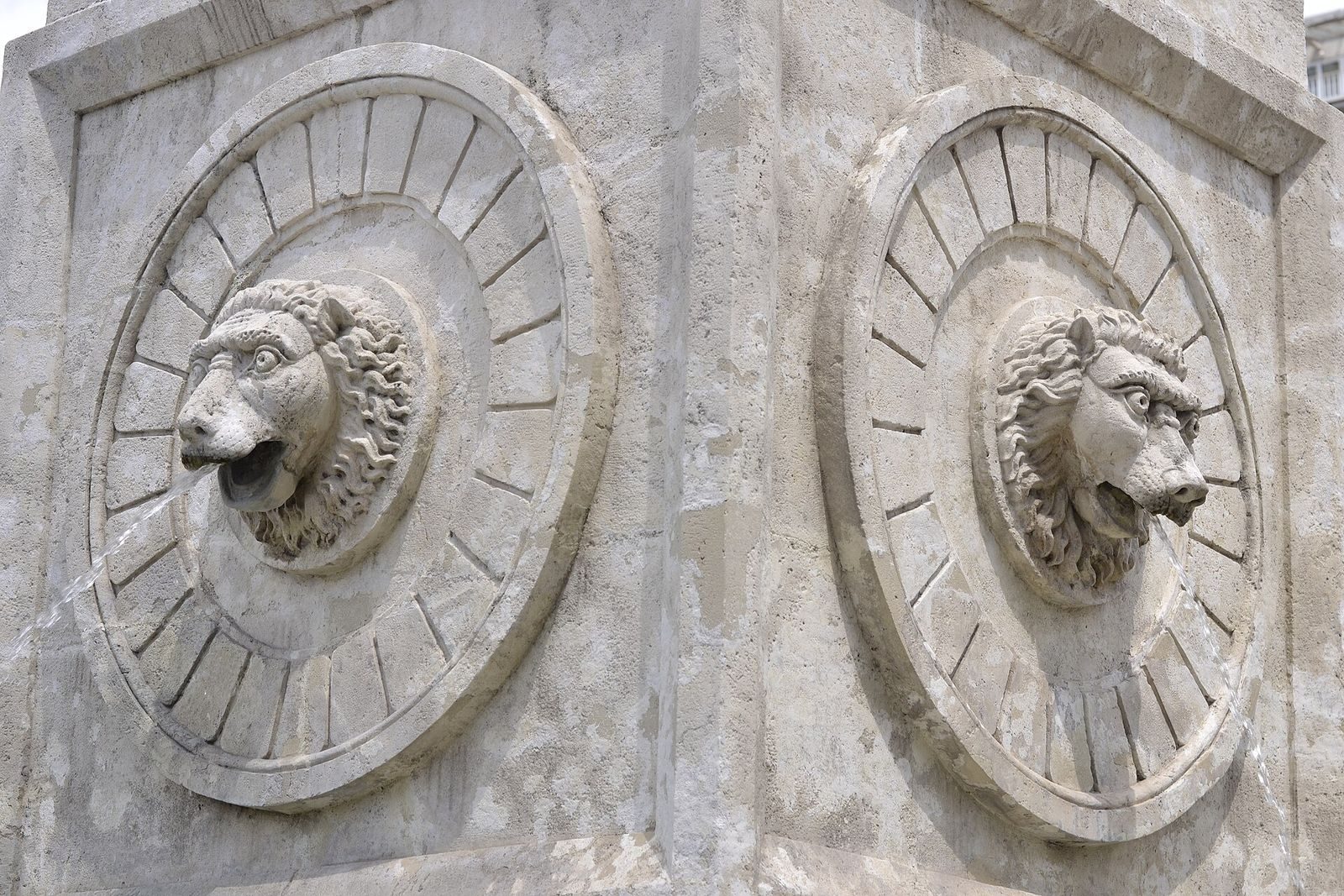
Each face of the pillar’s middle, cubical section has a circular medallion enclosing a carved lion’s head, with a pipe for the water jet. The pillar also bears Prince Miloš’s initials, “M.O. I,” and the year 1860. Its reliefs combine stylized plant motifs with Romanesque and Gothic forms, two medieval European architectural styles. The decoration includes blind arcades, rows of arches attached to a surface rather than opening through it, and pointed arches on the basin railing. A relief on the pillar’s west face identifies the workshop of Italian stonemason Franc Loran, who also made an obelisk in Topčider Park near Miloš’s residence.
Earlier water infrastructure
The fountain was built above a larger reservoir between the present-day Moskva and Balkan hotels, on the site of an earlier Ottoman-period fountain and wooden water tower. The tower was a large cylindrical cistern connected to a system that distributed water evenly among Belgrade’s fountains.