Sheikh Mustafa’s Turbe: An 18th-Century Mausoleum in Belgrade
Site at a Glance
- Popularity
- Medium
- Country
- Serbia
- Primary era
- Early Modern
- Eras represented
- Early Modern
- Civilizations
- Ottoman
- Site type
- Religious
- Remains
- Tomb
On this page6 sections
History
Foundation and religious use
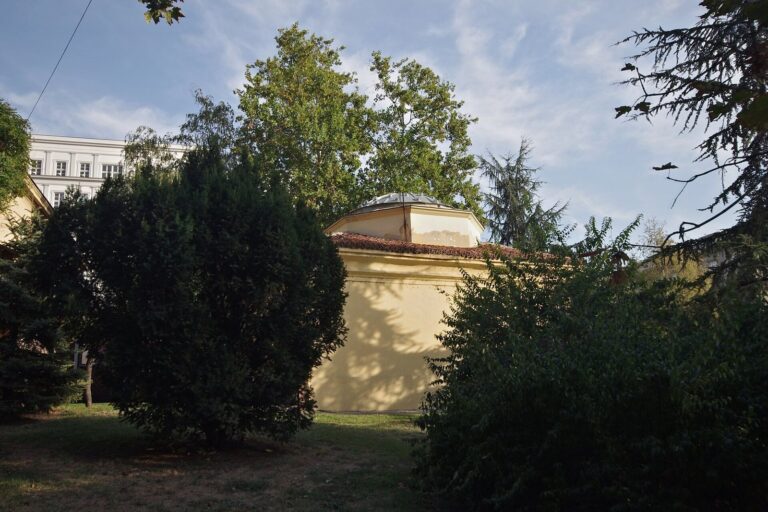
Sheikh Mustafa’s turbe, a mausoleum built in 1783, stands in Belgrade, Serbia. It was erected for Mustafa Bagdađanin, a dervish, or member of a Sufi religious order. Sufism is a mystical tradition within Islam. Mustafa had previously led Haji Sheikh Muhammad’s tekke, a Sufi lodge where dervishes gathered, lived, and performed religious rites.
Hasni Efendi, deputy to the vizier, a senior government minister in Belgrade, commissioned the mausoleum. Its entrance inscription credits the Ottoman financial official Husni Jusuf with building it and gives 1783 as the erection date. The lodge’s dervishes belonged to the Qadiri order, while the inscription identifies Mustafa with the Saadi order. Leaders of such orders were customarily buried in lodge courtyards, and the turbe also served as a place for dervish ceremonies. Two other dervishes, Orsanli Mehmed-baba and Hatenćeli Hadži Omerbaba, were buried there.
The First Serbian Uprising and preservation
During the First Serbian Uprising of 1804–1813, a revolt against Ottoman rule, the tekke temporarily housed the Governing Council, the highest executive authority of the newly established Serbian state. The Serbian Enlightenment writer and educator Dositej Obradović died at the lodge in 1811.
The turbe was restored in 2013. It is listed as a cultural monument of great importance in Serbia and as cultural property of Belgrade.
Remains
The mausoleum
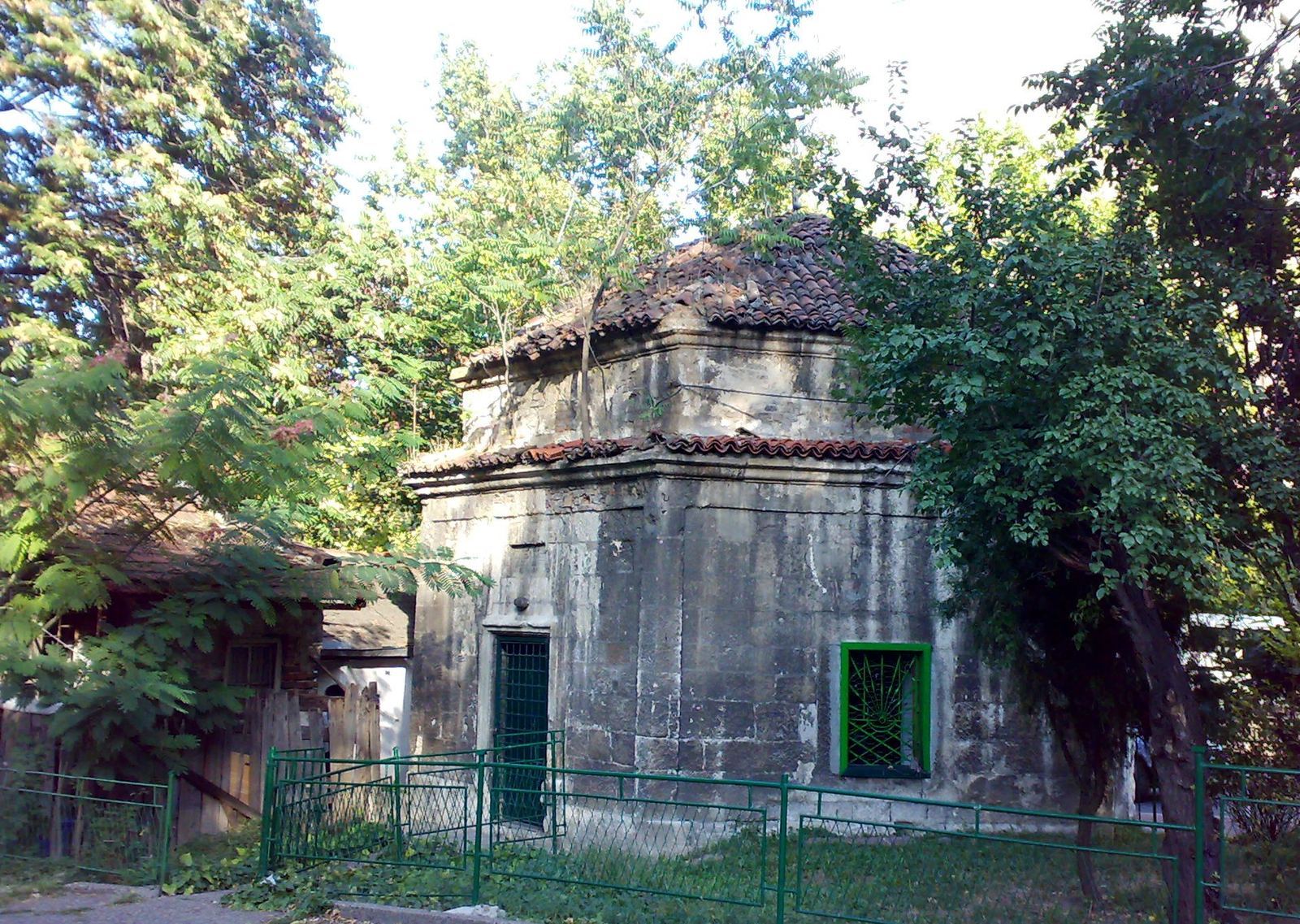
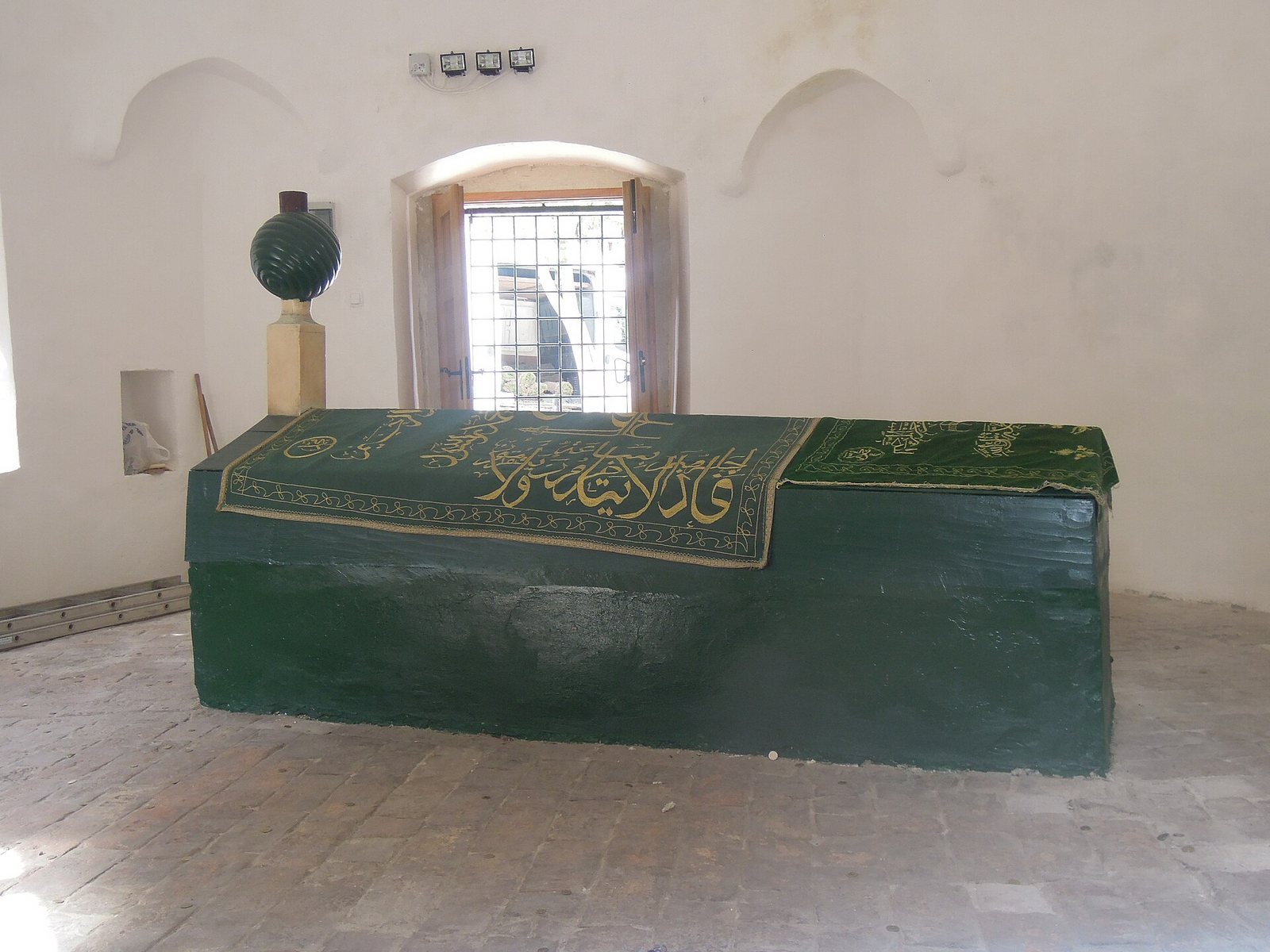
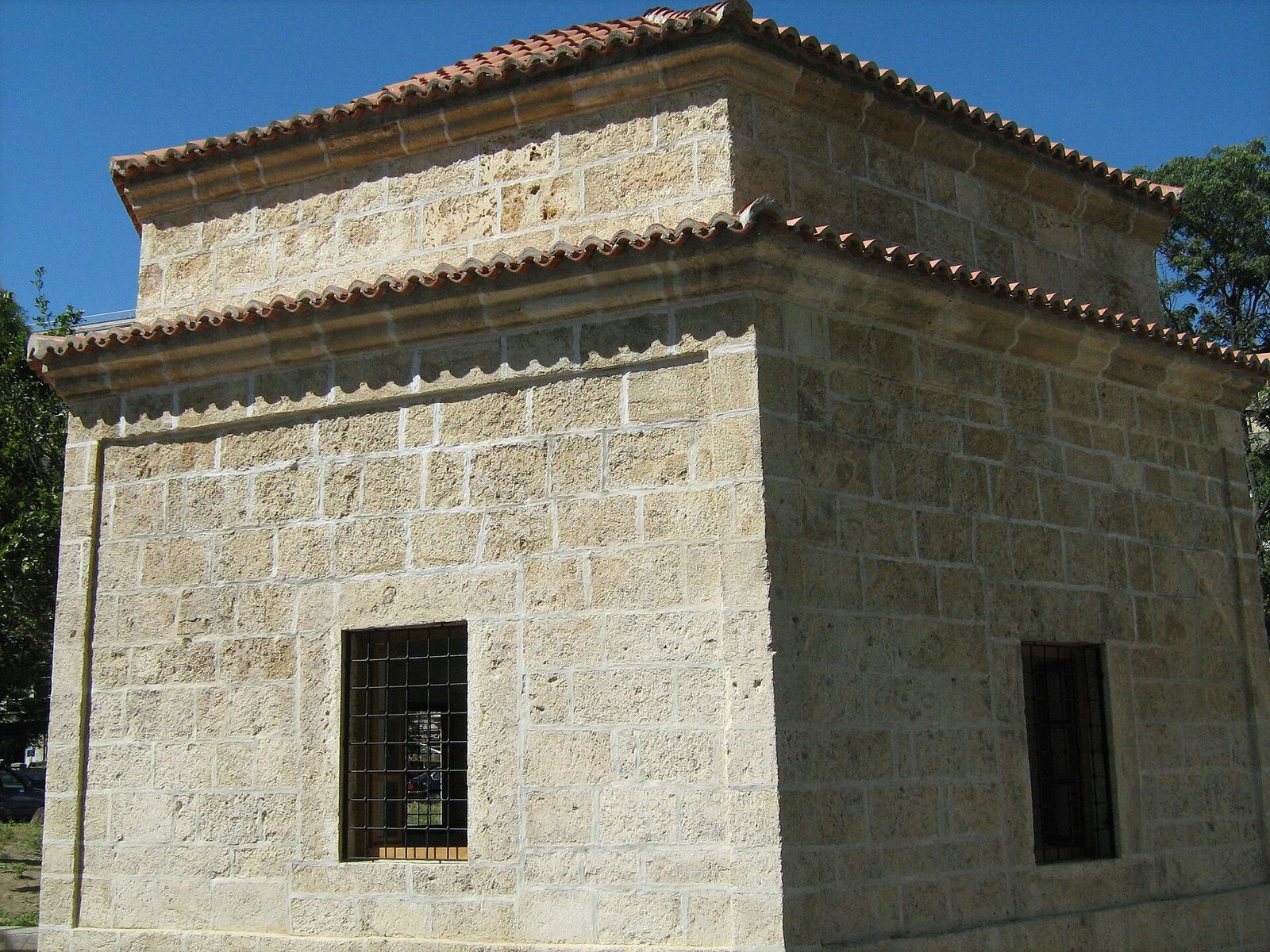
The stone building has a hexagonal plan, with each side measuring 4.9 metres. A six-sided upper section supports a dome with a circular base. The entrance is framed by profiled stonework, and projecting cornices divide the exterior. A carved Turkish inscription on a stone slab above the entrance names the person who established the mausoleum, explains his motives, and gives its date. Quranic inscriptions decorate the interior. At the centre of the room, a covered sarcophagus marks the grave or graves. The building’s form recalls a tent from pre-Islamic times.
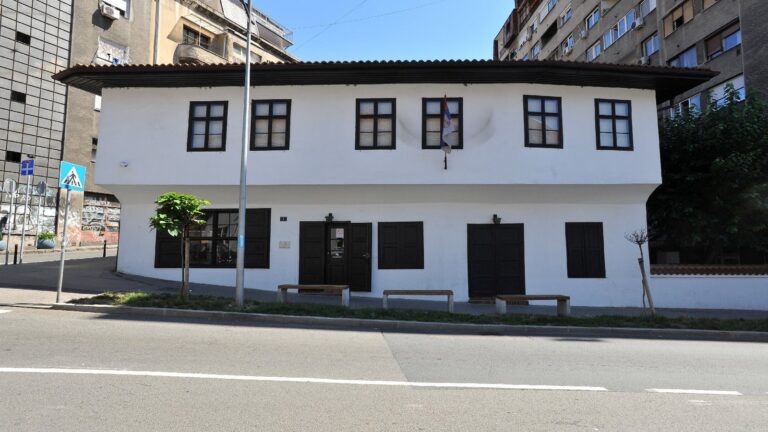
The former lodge
The former tekke complex comprised a main building and the turbe. The main building stood at the corner of present-day Studentski trg and Višnjićeva Street; its position appears on a plan drawn by an Austrian officer, and a photograph of the building survives. It had a rectangular plan, with its longer side facing the square. Because the ground sloped, the building appeared to have a ground floor from the square and an upper storey from the courtyard.