Terayama-minamiyama Kofun: A Fifth-Century Tomb Mound in Japan
Site at a Glance
- Rating
- 2.7
- Popularity
- Very Low
- Country
- Japan
- Primary era
- Classical
- Eras represented
- Classical
- Civilizations
- Yamato
- Site type
- Burial
- Remains
- Burial Mound
On this page6 sections
History
Construction and relationship to Misanzai Kofun
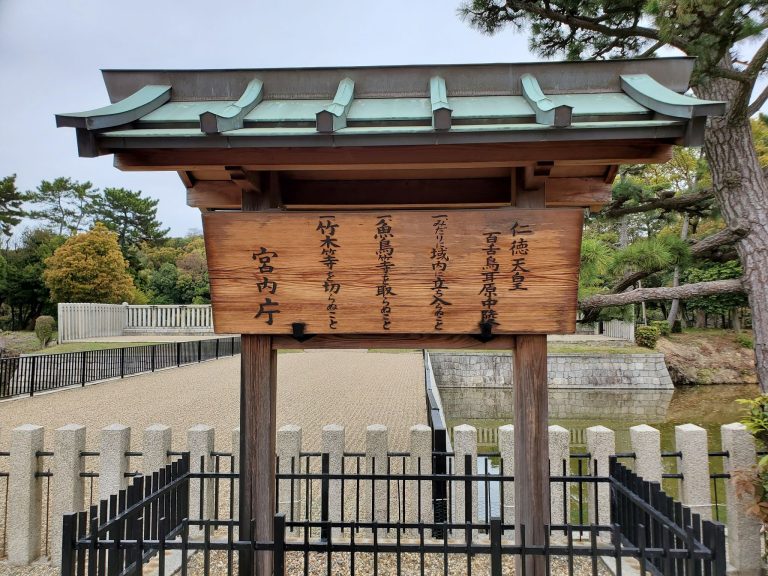
Terayama-minamiyama Kofun is a monumental tomb mound in Sakai, Osaka, Japan. It is estimated to have been built around the beginning of the fifth century, during the middle Kofun period, an era named for this class of tomb mound. It is one of the relatively few square-type tombs in the Mozu Kofun Group. Because part of its moat is shared with Misanzai Kofun, it is understood as a subsidiary tomb connected with that larger burial mound. Misanzai Kofun is traditionally identified as the tomb of Emperor Richū, one of Japan’s early emperors.
Survey, excavation, and protection
A survey drawing from 1926 identified the mound as square. Housing was built on it in 1961, altering its form. Archaeological investigations began in fiscal year 1999, followed by excavations in fiscal years 2000, 2008, 2010, and 2017. Ground-penetrating radar was also used in 2010.
On March 18, 2014, Terayama-minamiyama Kofun became part of the Mozu Kofun Group’s National Historic Site designation, a form of protection under Japan’s cultural-property system. The designation brought together seven previously protected tombs and added ten, including this one. On July 6, 2019, the mound became part of the Mozu-Furuichi Kofun Group, which was inscribed as a UNESCO World Heritage Site.
Remains
Mound and moat
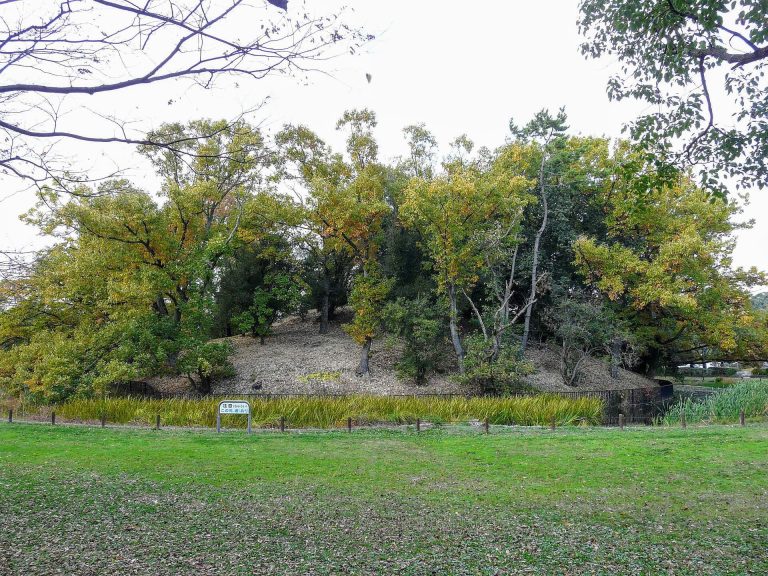
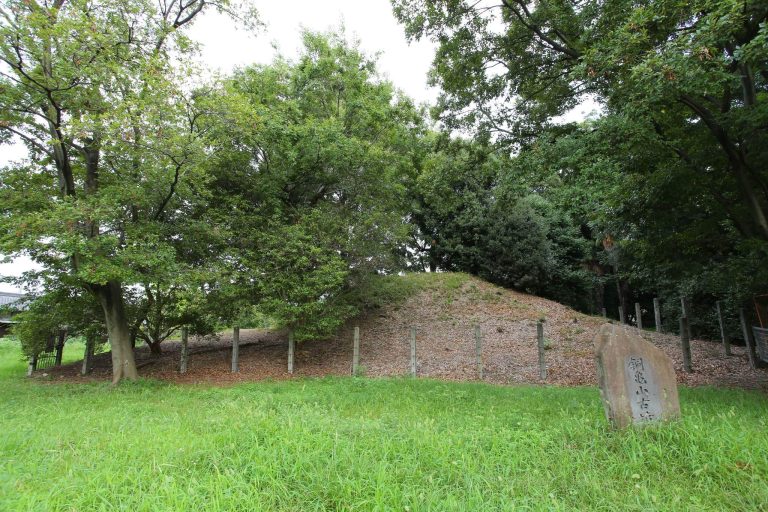
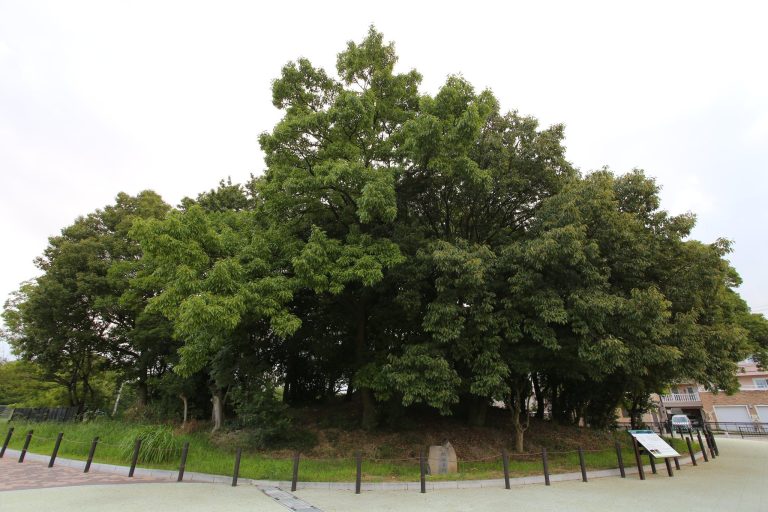
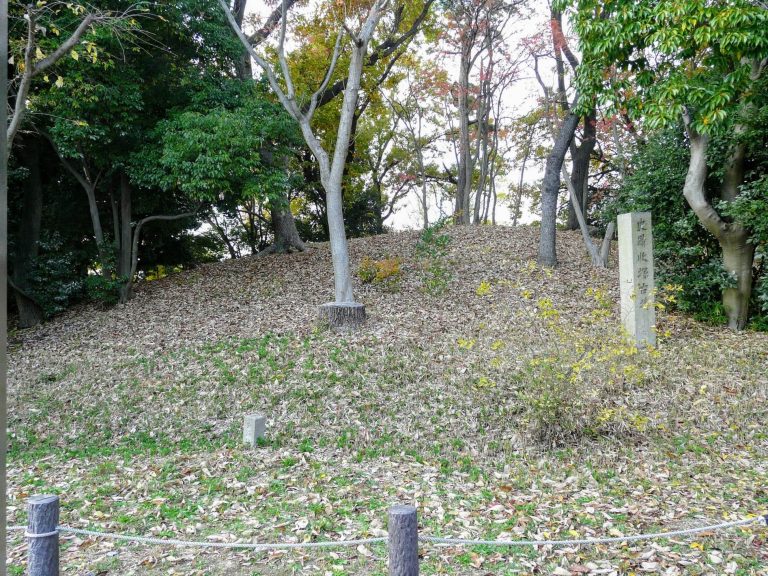
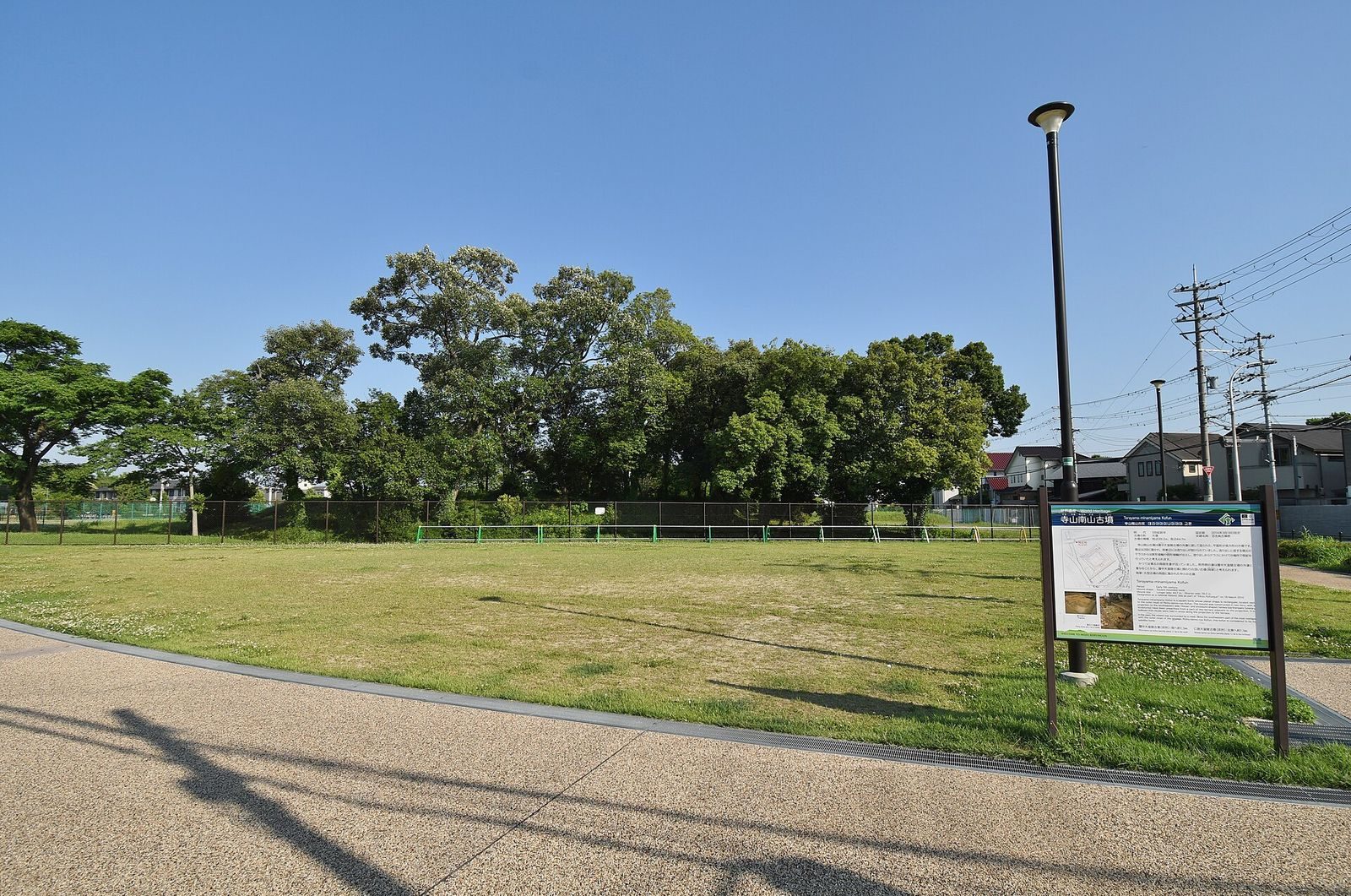
The two-tiered mound has a rectangular plan, measuring 44.7 metres along its longer side and 39.2 metres along its shorter side, and stands 4.7 metres high. It lies beside the outer moat on the northeast side of the rear circular part of Misanzai Kofun. The surrounding moat is 6 to 8.5 metres wide, with part of it shared by the two tombs.
Exterior features and finds
Stone surfacing and rows of cylindrical haniwa, clay objects placed on or around tomb mounds, are recorded on the mound’s exterior. A projecting platform on the southeast side measures 9.9 by 3.4 metres. Excavations nearby uncovered rows of haniwa, including models shaped like houses and enclosures. Finds from the site include some of the earliest Sue ware, a type of high-fired pottery made in ancient Japan. Sue ware and haniwa from the site are kept and displayed at the Sakai City Museum.