Mozu Tombs: A Kofun Burial-Mound Cluster in Japan


Site at a Glance
- Rating
- 4.2
- Popularity
- Low
- Country
- Japan
- Primary era
- Medieval
- External website
- Open
- Eras represented
- Medieval
- Civilizations
- Yamato
- Site type
- Burial
- Remains
- Necropolis
On this page11 sections
History
The Mozu Tombs are a cluster of ancient Japanese kofun in Sakai, Japan, generally dated to the fifth and sixth centuries. A kofun is a monumental earthen burial mound associated mainly with members of the ruling class. The Mozu cluster is known for its exceptionally large keyhole-shaped tombs and, together with the nearby Furuichi Tombs, is regarded as one of Japan’s largest kofun groups.
Development of the cluster
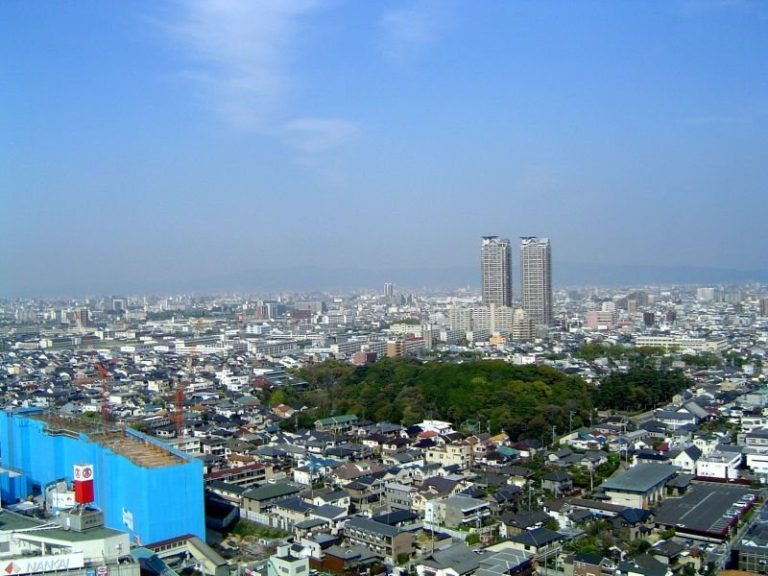
More than 100 burial mounds originally formed the Mozu cluster. Forty-four survive today, including examples that have been partly destroyed. Rapid residential development after the Second World War removed more than half of the original mounds. The surviving group extends across a plateau near the ancient coastline and the former Osaka Bay, over an area roughly 4 kilometers from east to west and 4 kilometers from north to south.
The cluster’s development is interpreted as beginning with Kamishichizu Misanzai Kofun on the western side of the plateau. Construction then extended northward through the Daisen and Tadeiyama mounds and eastward across the Kudara River valley. Mozu Otsukayama and Itasuke formed part of this expansion, followed by Mozu Gobyoyama. Haji Nisanzai and Tadeiyama are considered approximately contemporary later developments.
The mounds reflect the political and social organization of the Kofun period, conventionally dated from the later third through the sixth century. Their construction required advanced civil engineering and the coordination of large labor forces. The immense tombs and beliefs associated with the afterlife are also interpreted in relation to ideas that spread through East Asia from ancient China and were adapted into a distinctively Wa form in ancient Japan.
Imperial associations and heritage status
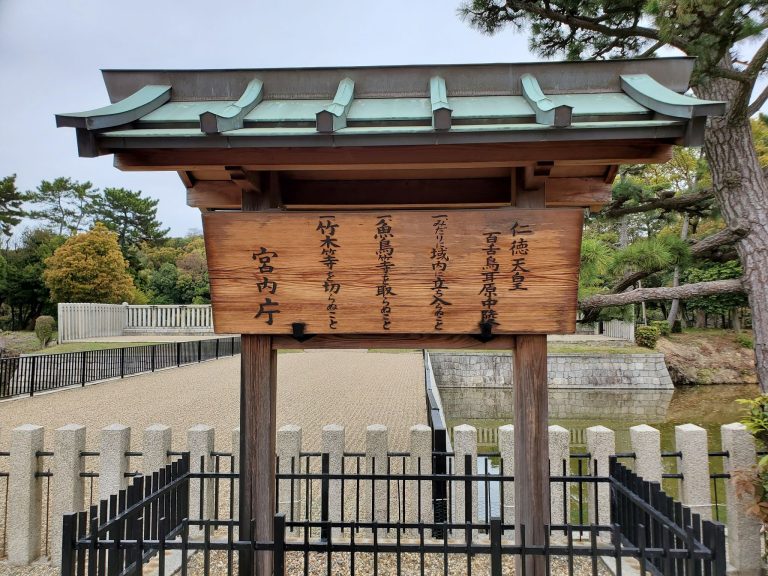
Daisenryō Kofun, also called Daisen Kofun, is traditionally identified as the mausoleum of Emperor Nintoku. That identification cannot be confirmed with certainty, although the Imperial Household Agency, the Japanese government institution responsible for the imperial family and officially designated imperial mausolea, treats the mound as his mausoleum. Emperor Richū is also traditionally associated with a prominent imperial mausoleum in the cluster. The agency classifies three mounds as imperial mausolea, two as reference burial sites, and 18 as subsidiary mounds associated with imperial mausolea. A reference burial site is treated as a possible imperial burial place, while a subsidiary mound is a smaller burial mound linked to a principal mausoleum.
Nineteen mounds in the cluster have national Historic Site designation. In 2008, the Mozu and Furuichi clusters, including mounds managed by the Imperial Household Agency, were placed on Japan’s tentative World Heritage list. Japan formally recommended them for inscription in 2017. On 6 July 2019, twenty-three mounds belonging to the Mozu cluster were inscribed as part of the Mozu-Furuichi Kofungun on the UNESCO World Heritage List under criteria (iii) and (iv). These criteria recognize testimony to a cultural tradition and an outstanding architectural or technological ensemble illustrating a significant historical stage.
The World Heritage interpretation presents the two clusters as centers of exchange within kofun culture. Mound forms influenced burial mounds elsewhere in Japan, while grave goods and haniwa, clay funerary objects placed on or around many mounds, indicate cultural connections. The group therefore provides evidence for political authority, large-scale labor organization, civil engineering, and the process of state formation in ancient Japan.
Archaeological reassessment and conservation
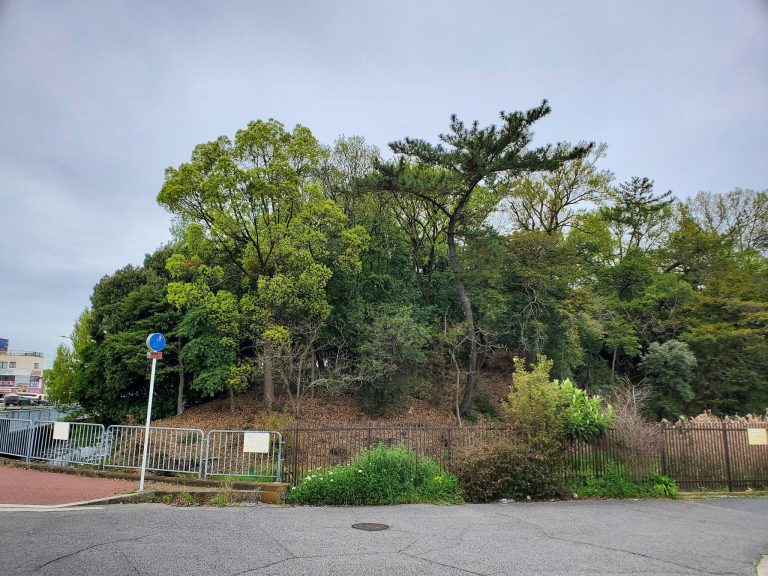
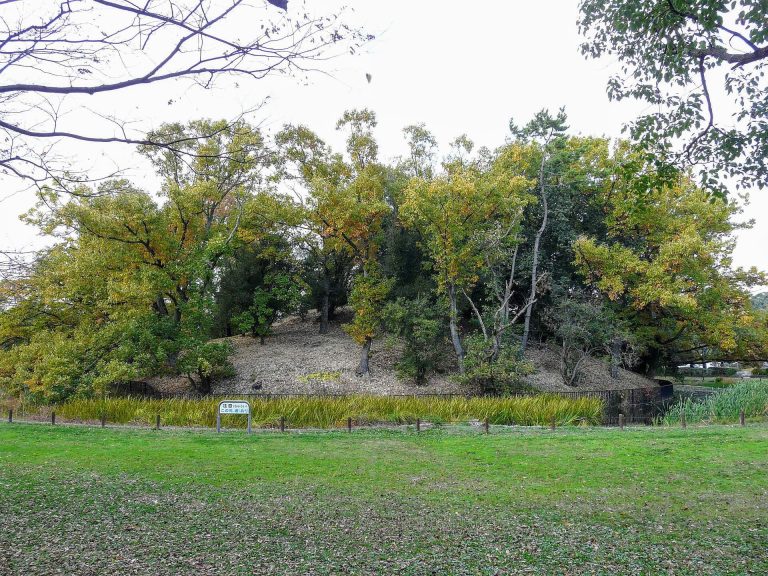
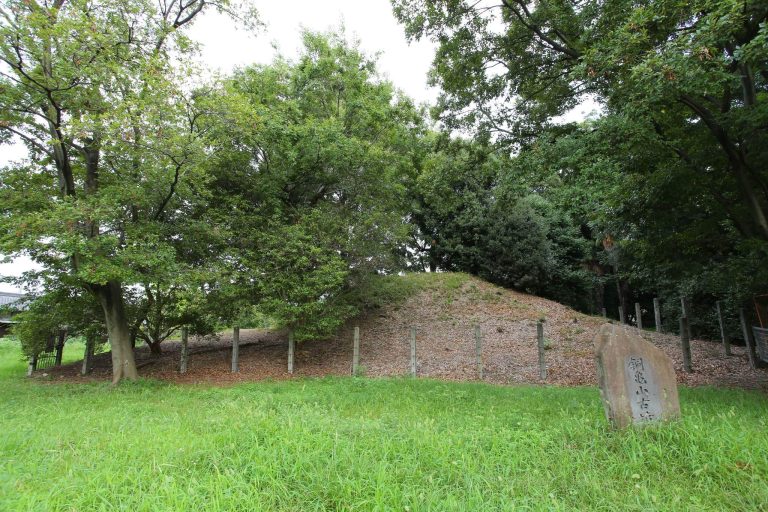
Archaeological work connected with the World Heritage nomination changed the interpretation of two features previously regarded as kofun. Seizuka and Butaizuka were identified as later earthen mounds. Pottery from around the thirteenth century was found at Butaizuka, while the lowest layer of the supposed mound at Seizuka contained Edo-period porcelain, indicating construction from the eighteenth century onward. The World Heritage component was also revised to exclude Kagamizuka, Gwashobo, Suzuyama, Koyama, and Hino-tani mounds. At Shuzuka Kofun, partial tree pruning and attempts to reproduce the mound’s original form were planned to make its scallop-shell shape more perceptible.
Protection of the cluster relies principally on Japan’s Landscape Act, a law providing a framework for preserving and managing landscapes through local planning. Many mounds under Imperial Household Agency control have a different legal status as imperial property. This distinction has made designation under the Cultural Properties Protection Law difficult and has contributed to concerns about restricted access and archaeological investigation.
Conservation also involves the surrounding moats and the vegetation covering the mounds. Waves in the moats have caused erosion of mound slopes, while industrial waste has been dumped into some waterways. Large quantities of algae have produced foul odors as they decayed. Vegetation management is difficult because the greenery is treated both as municipal green heritage and as natural habitat and a carbon-absorption resource. The moats may also have had practical connections with wet-rice agriculture and irrigation, as well as symbolic associations with kingship, although these functions remain interpretive possibilities.
Remains
Mound forms and landscape
Cluster layout
The surviving 44 mounds occupy a plateau near the former Osaka Bay, on terrain continuing toward the Uemachi Plateau. They form two principal geographic groupings. South-facing mounds include Kamishichizu Misanzai, Daisen, and Tadeiyama, while another group lies along both sides of the Kudara River valley and includes Haji Nisanzai, Itasuke, and Mozu Gobyoyama.
The cluster contains keyhole-shaped, scallop-shell-shaped, circular, square, and unidentified mounds. One commonly used inventory counts 13 keyhole-shaped mounds, 9 scallop-shell-shaped mounds, 17 circular mounds, and 5 square mounds. Another classification counts 22 keyhole-shaped, 16 circular, 5 square, and 1 unidentified mound. The difference reflects the classification system used for the surviving group. Individual mounds range from about 20 meters to more than 400 meters in length, and four keyhole-shaped examples exceed 200 meters.
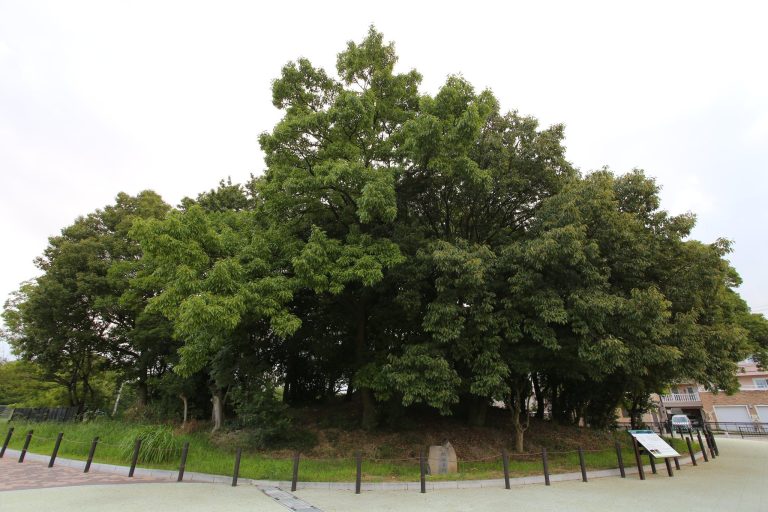
A keyhole-shaped kofun combines a rounded rear mound with a projecting rectangular front section. This form is commonly associated with the highest-ranking burials of the Kofun period. The largest examples are surrounded by one or more moats and accompanied by smaller subsidiary mounds. The moats are a distinctive physical feature of the cluster. Their maintained waters provide refuge for fish and waterfowl, while their possible agricultural, irrigation, and symbolic functions add to the interpretation of the mound landscape.
Daisenryō Kofun
Daisenryō Kofun is approximately 486 meters long and about 300 meters wide at its maximum. Its complete funerary precinct extends for roughly 840 meters and is enclosed by three moats, with the inner moat about 60 meters wide. The mound rises about 35 meters above the surrounding ground, while its highest point reaches approximately 47 meters. The mound itself occupies about 100,000 square meters, and the entire tomb precinct covers approximately 460,000 square meters.
The mound is completely covered with vegetation. Its scale and elevation made it visible to sailors in the adjacent Osaka Bay. The tomb and its moats remain within central Sakai, with the waters maintained as part of the surviving landscape. The southern side of the precinct includes a viewing area beside the middle moat, while the mound and its interior are protected as the mausoleum traditionally associated with Emperor Nintoku.
Grave goods and funerary evidence
Objects recovered from the Mozu cluster include iron weapons and tools, among them arrowheads, swords, hoe blades, and shovel blades. Gilt-bronze antiquities include horse fittings and buckles. Together with haniwa placed on or around the burial mounds, these materials provide evidence for funerary practice, social organization, military equipment, craft production, and connections within kofun culture.
Later earthen mounds
Butaizuka and Seizuka
Butaizuka and Seizuka illustrate the importance of distinguishing later earthworks from burial mounds within the wider landscape. Pottery from around the thirteenth century came from Butaizuka. At Seizuka, Edo-period porcelain was found in the lowest layer of the supposed mound, pointing to construction from the eighteenth century onward. These findings altered the interpretation of both features during archaeological investigation associated with the World Heritage nomination.