Magodayūyama Kofun: A Fifth-Century Subsidiary Burial Mound in Japan
Site at a Glance
- Rating
- 3.5
- Popularity
- Very Low
- Country
- Japan
- Primary era
- Classical
- External website
- Open
- Eras represented
- Classical
- Civilizations
- Yamato
- Site type
- Burial
- Remains
- Burial Mound
On this page7 sections
History
Magodayūyama Kofun is a fifth-century keyhole-shaped burial mound in Sakai, Japan, built within the Mozu Kofun Group near the southern outer moat of Daisenryō Kofun. Its position, orientation, and alignment with that great tomb indicate that it was probably constructed as a subsidiary mound, meaning a smaller burial mound associated with a principal tomb.
Construction and association with Daisenryō Kofun
The mound was built during the fifth century, while its fired-clay haniwa, objects placed around burial mounds for funerary and commemorative purposes, are generally dated to the middle of that century. Their forms and characteristics resemble those of the haniwa from Daisenryō Kofun. This correspondence, together with the two mounds’ alignment, supports the interpretation that Magodayūyama Kofun was one of Daisenryō Kofun’s subsidiary mounds.
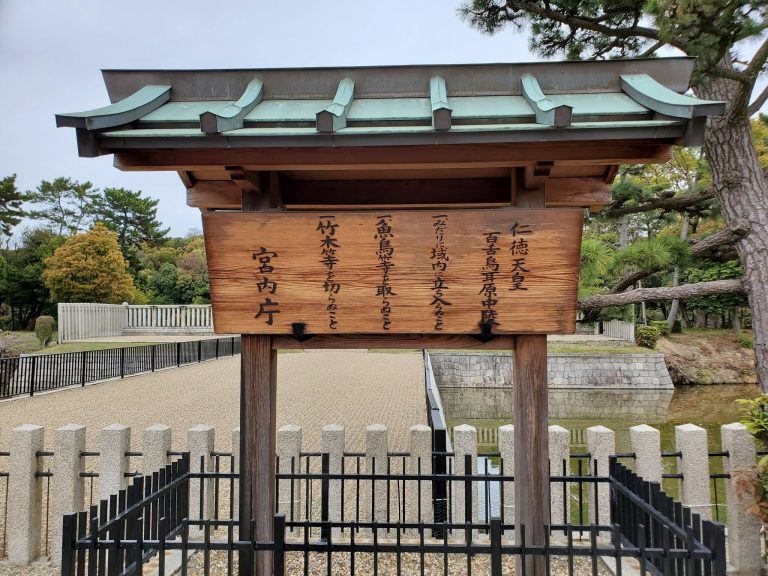
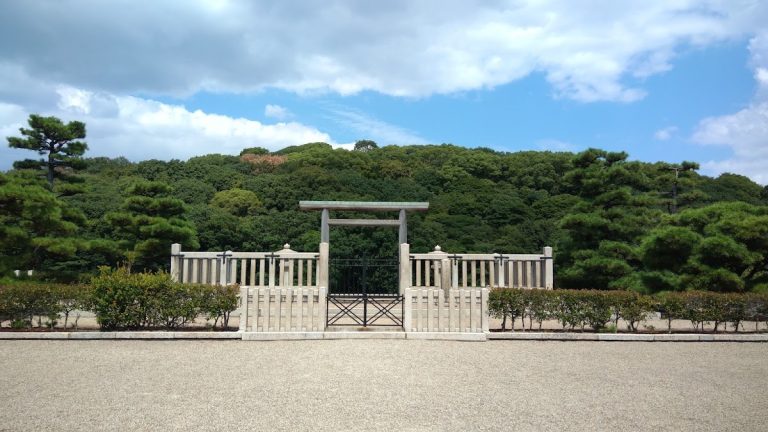
Daisenryō Kofun is traditionally identified as the mausoleum of Emperor Nintoku. Magodayūyama Kofun’s rear circular section was later managed by the Imperial Household Agency as the detached parcel called “I-gō,” one of the subsidiary mounds associated with the emperor’s tomb.
Changes to the mound and its surroundings
The front section had already been levelled by 1926, when the Imperial Household Agency surveyed the site. An Edo-period map from the Kyōhō era shows that the surrounding moat had already been filled. Later drawings portrayed the area as rice fields, although the former moat outline remained recognizable in the boundaries between fields.
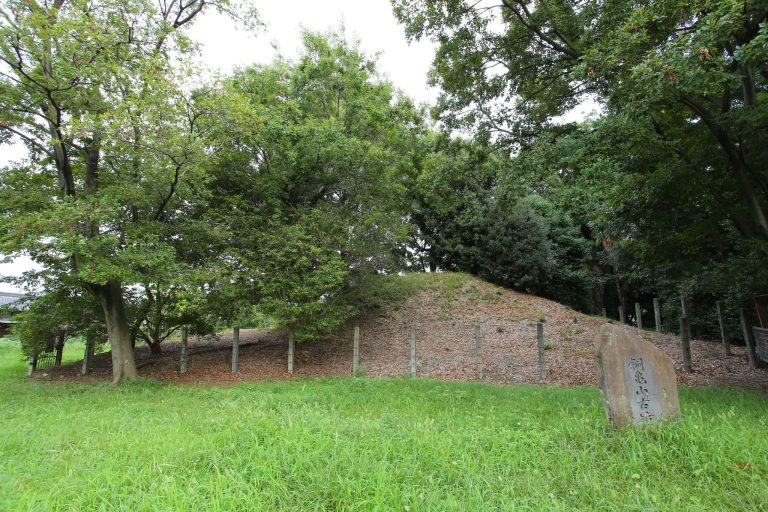
A stone monument on the western side of the front section links the mound with Minami Magodayū, the headman of Nakasuji Village in Ōtori District during the Edo period. This association gave rise to the modern name Magodayūyama Kofun.
Most of the rear section was reportedly donated to the state by the Minami family in the early Meiji period. The remaining portion was transferred to the Imperial Household Agency, while the front section and moat passed to Sakai City by 1968. Investigations connected with the creation and improvement of Daisen Park followed. A preliminary excavation in 1978 examined deposits that filled the moat and the geological layer forming the mound terrace, although no drawings or photographs from that work survive. A monitoring investigation accompanied restoration of the front section in the same year, and another followed sewer construction beneath the northern path in 1996.
Archaeological investigations and protection
In 2007, three trenches outside the moat were excavated while the boundaries of the site were being examined in preparation for the proposed designation of the Mozu Kofun Group. A ditch-like feature found to the south contained no artefacts and was considered unlikely to belong to the mound. Ground-penetrating-radar surveys carried out from January to March 2008 indicated that the western and southern moat edges lay inside the reconstructed edges, while construction debris in the northern fill pointed to poor preservation there.
Further excavations from November 2011 to March 2012 investigated the mound, moat, and site limits. The work confirmed the original form of the southwestern moat and helped establish the mound’s dimensions and the horseshoe-shaped plan of the original water-filled boundary. The front section and surrounding moat became a Sakai City Historic Site on 6 February 2017. On 6 July 2019, Magodayūyama Kofun was included in the Mozu component of the UNESCO World Heritage property “Mozu-Furuichi Kofungun: Ancient Japanese Mounded Tombs.”
Remains
Mound and moat
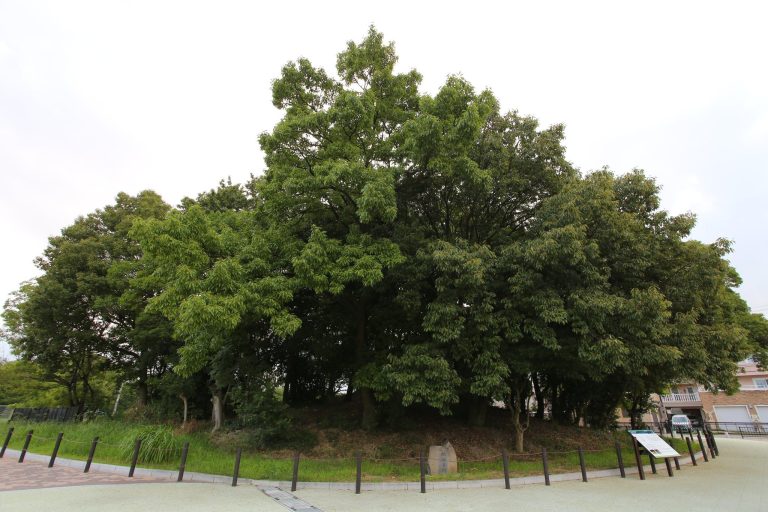
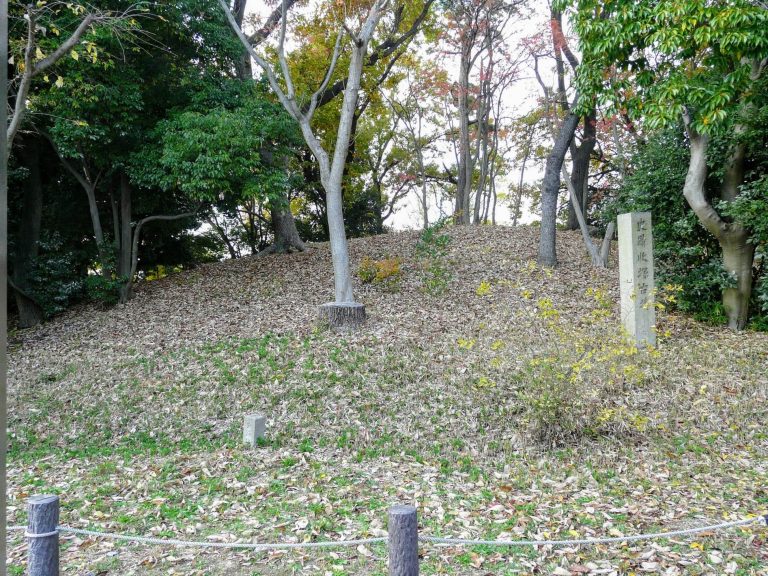
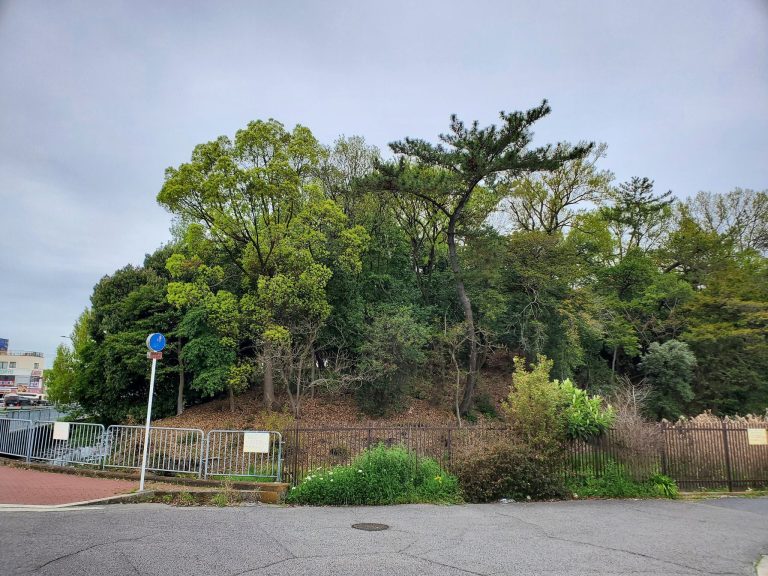
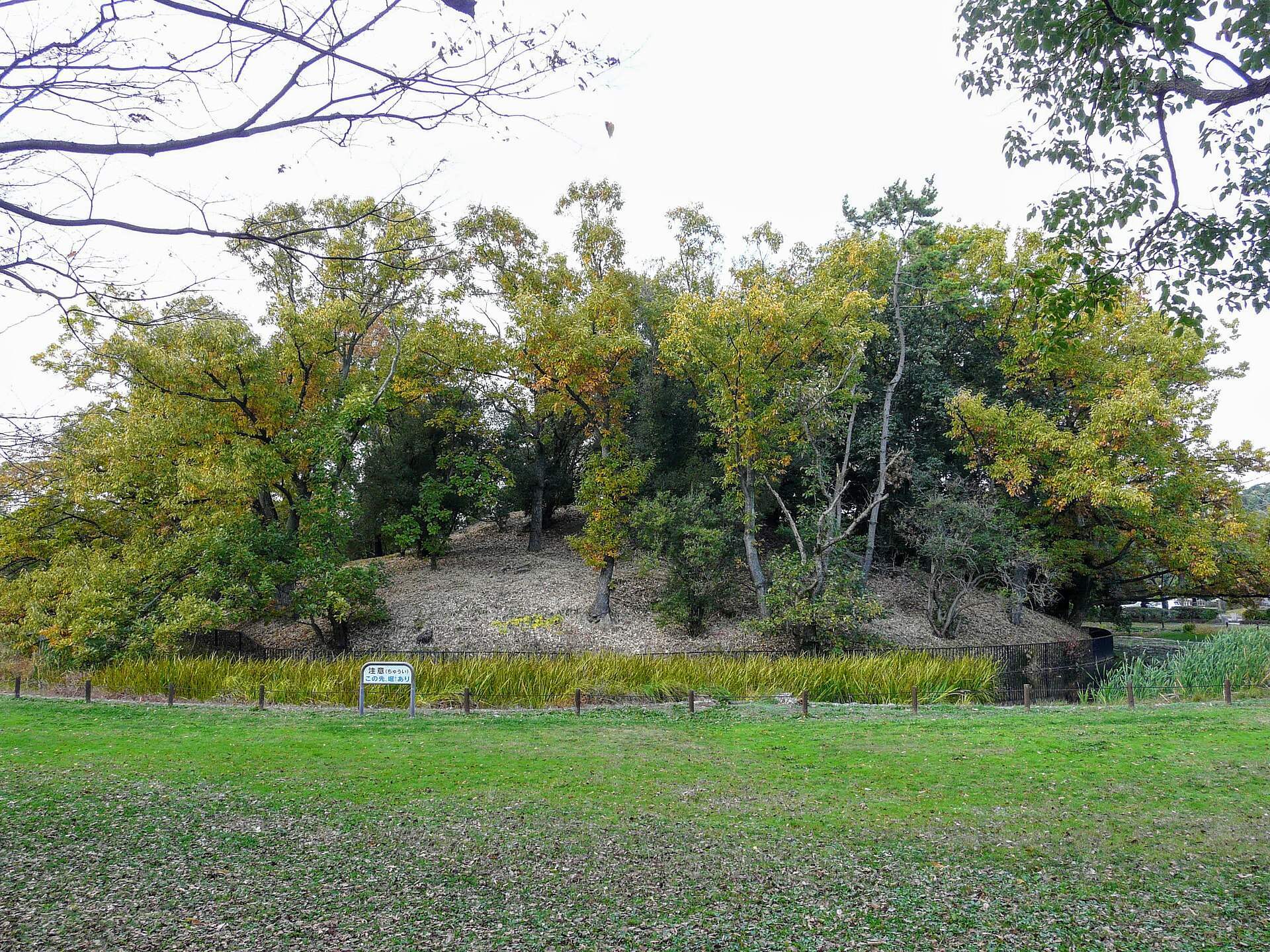
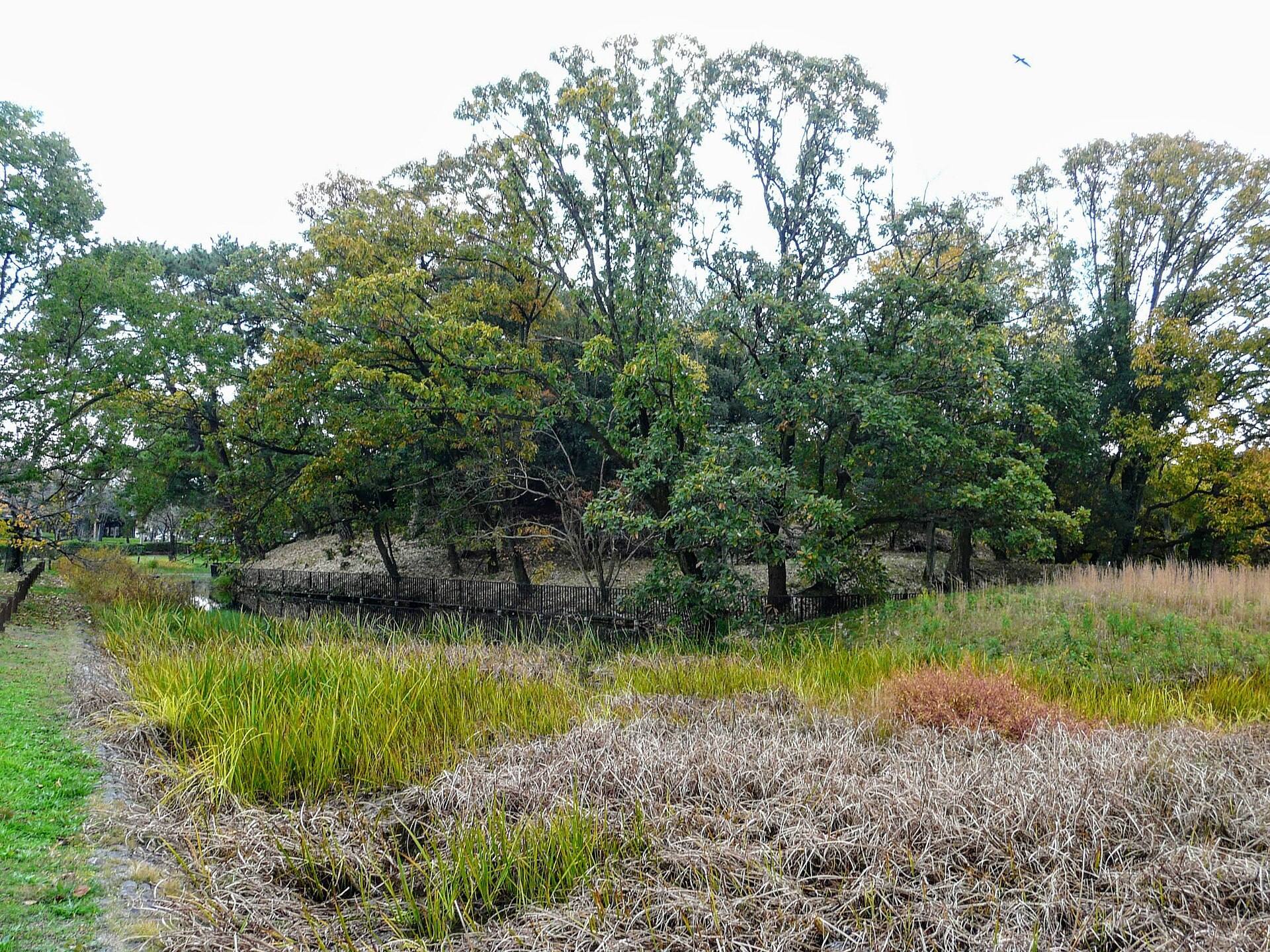
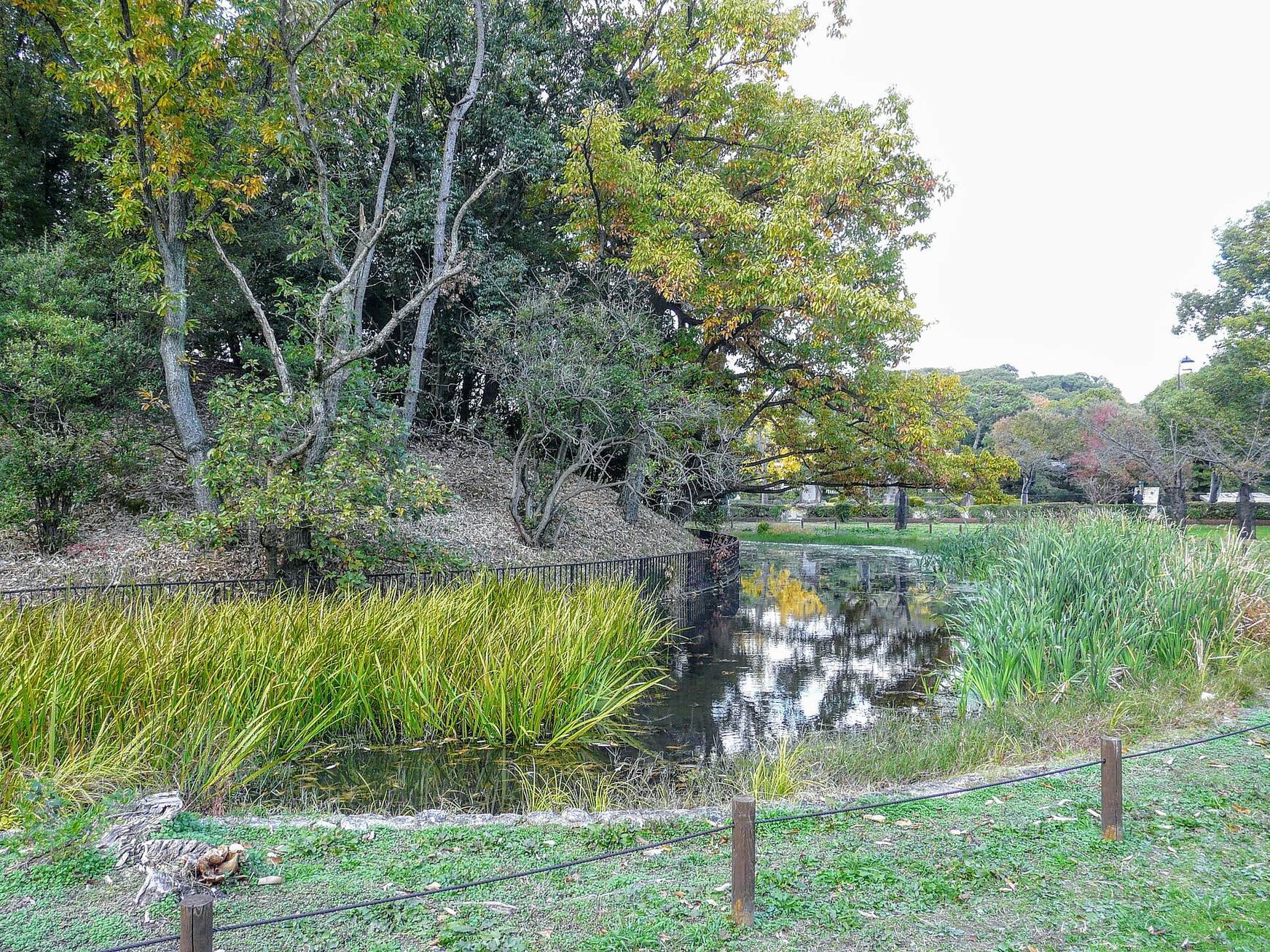
Magodayūyama Kofun is a short-fronted keyhole mound, also described as scallop-shaped, with its projecting front section facing west. The mound is approximately 65 metres long. Its rear circular section measures about 48 metres across and rises 7.7 metres from the bottom of the moat to the summit. Built in two tiers, it stands east of another burial mound and close to the southern outer moat of Daisenryō Kofun. Its principal axis runs parallel to Daisenryō Kofun’s outer moat and lies on the extension of that tomb’s principal axis.
The original moat was horseshoe-shaped and measured approximately 7.6 metres across beside the front section. Its southwestern part retains the original form. Along the central western face of the front section, fallen revetment stones survive at the mound edge and on the outer slope of the moat. The front outline and moat are now buried and preserved. The front section was altered before modern investigations, and its present form was reconstructed during the creation of Daisen Park. That reconstruction had limited supporting evidence, and the outer moat slope was reinforced with concrete and rounded stones.
Investigation beneath the northern path in 1996 identified a brownish-gray clay layer containing Sue ware, a hard, high-fired gray pottery tradition, about 1.2 metres below the road base. The layer became thicker toward the moat, where the terrace-forming geological layer subsided. This evidence indicates that the northern edge of the original moat may have extended farther north than the earlier reconstructed boundary.
Burial evidence and objects
The burial facility and grave goods remain unknown. Several earthen magatama, curved beads, are traditionally said to have been collected from the summit.
Excavations recovered stones that once covered the mound and small cylindrical and asagao-shaped haniwa from deposits within the moat. Later work also produced umbrella-shaped, house-shaped, and animal-shaped haniwa, as well as Iwami-type shield-shaped examples. Sue ware, tile fragments, Bizen pottery, and Hizen porcelain were also recovered. Most of these objects were fragmentary. The haniwa are considered contemporary with the mound and generally date to the middle of the fifth century, with characteristics resembling those from Daisenryō Kofun.