Tateyama Castle: A Mountain Castle Built to Guard Edo Bay
Site at a Glance
- Country
- Japan
- Primary era
- Early Modern
- Eras represented
- Early Modern, Modern
- Civilizations
- Japanese
- Site type
- Military
- Remains
- Castle
On this page8 sections
History
Tateyama Castle is a mountain castle in Japan, built in 1580 by Satomi Yoshiyori during the Sengoku period, an era of political fragmentation and conflict. Also known as Nekoya Castle, it was intended to guard the entrance to Edo Bay and the southern part of Yoshiyori’s domain.
Construction and Satomi rule
Yoshiyori was a regional lord of the Bōsō Peninsula. Between June and November 1591, his successor, Satomi Yoshiyasu, moved from Okamoto Castle to Tateyama. A harbor is thought to have been associated with the castle.
Abolition and restoration of the domain
In 1614, the Tokugawa shogunate, Japan’s military government under the Tokugawa family, dispossessed the Satomi clan and abolished Tateyama Domain. The castle was abandoned and dismantled.
The domain was re-established in 1781 under Inaba Masaaki, the first lord of the Inaba house. He rebuilt the old fortifications. His successor, Inaba Masatake, established a fortified residence at the foot of the castle as the domain’s new administrative seat. The Inaba clan remained in Tateyama until the Meiji Restoration, the political transition that ended shogunate rule.
Archaeological investigation and reconstruction
In 1982, work to construct a replica keep was accompanied by archaeological investigation of the castle site and research into historical documents concerning the Satomi clan. The replica was intended to serve as an annex to the Tateyama City Museum.
Remains
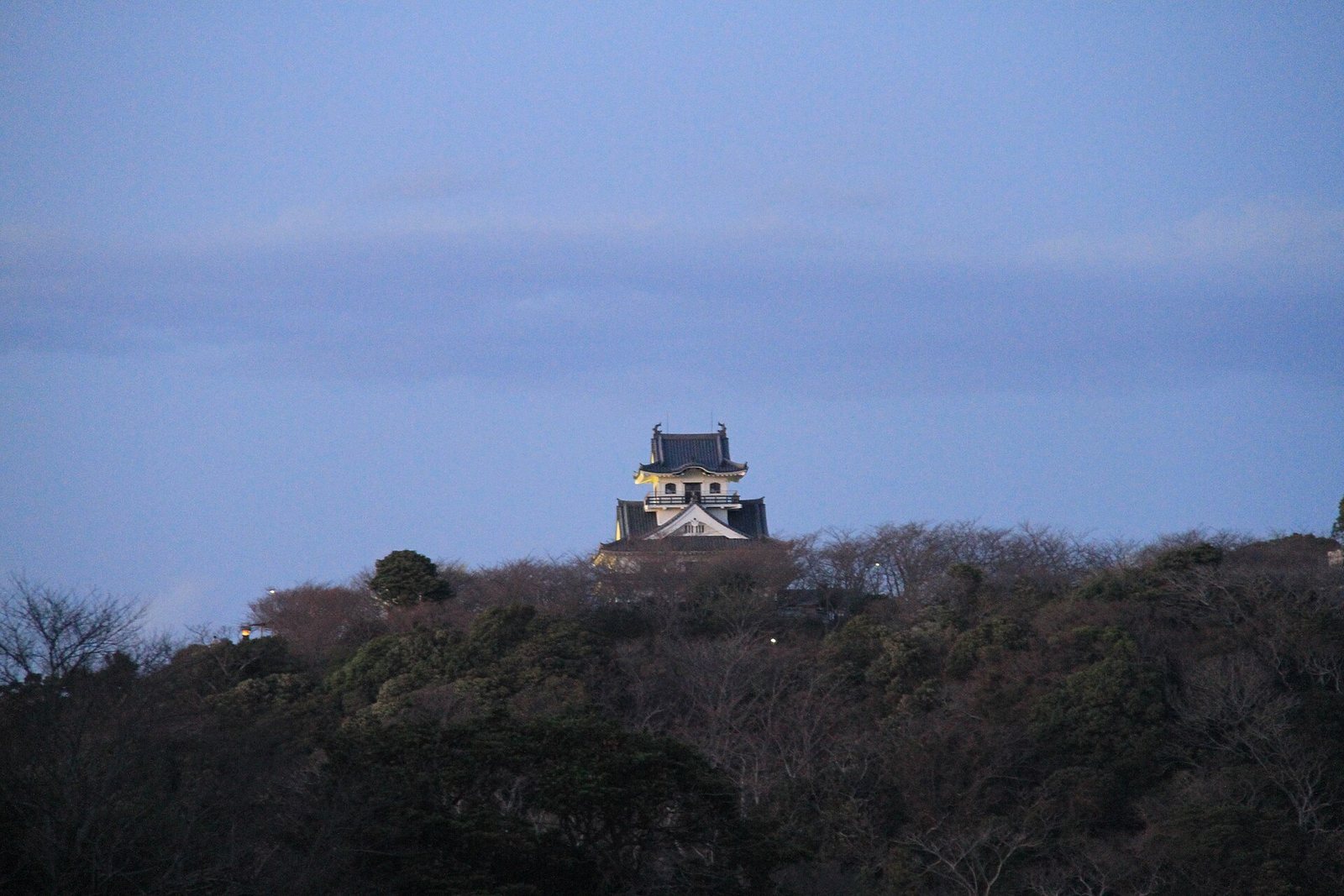
The castle occupies a hill with a summit about 70 meters high, within the green space of Shiroyama Park. Its remains include linked enclosures, ridge-cut moats, which are trenches dug across a ridge as defensive barriers, dry moats, and a water-filled moat.
Keep and museum buildings
Replica keep
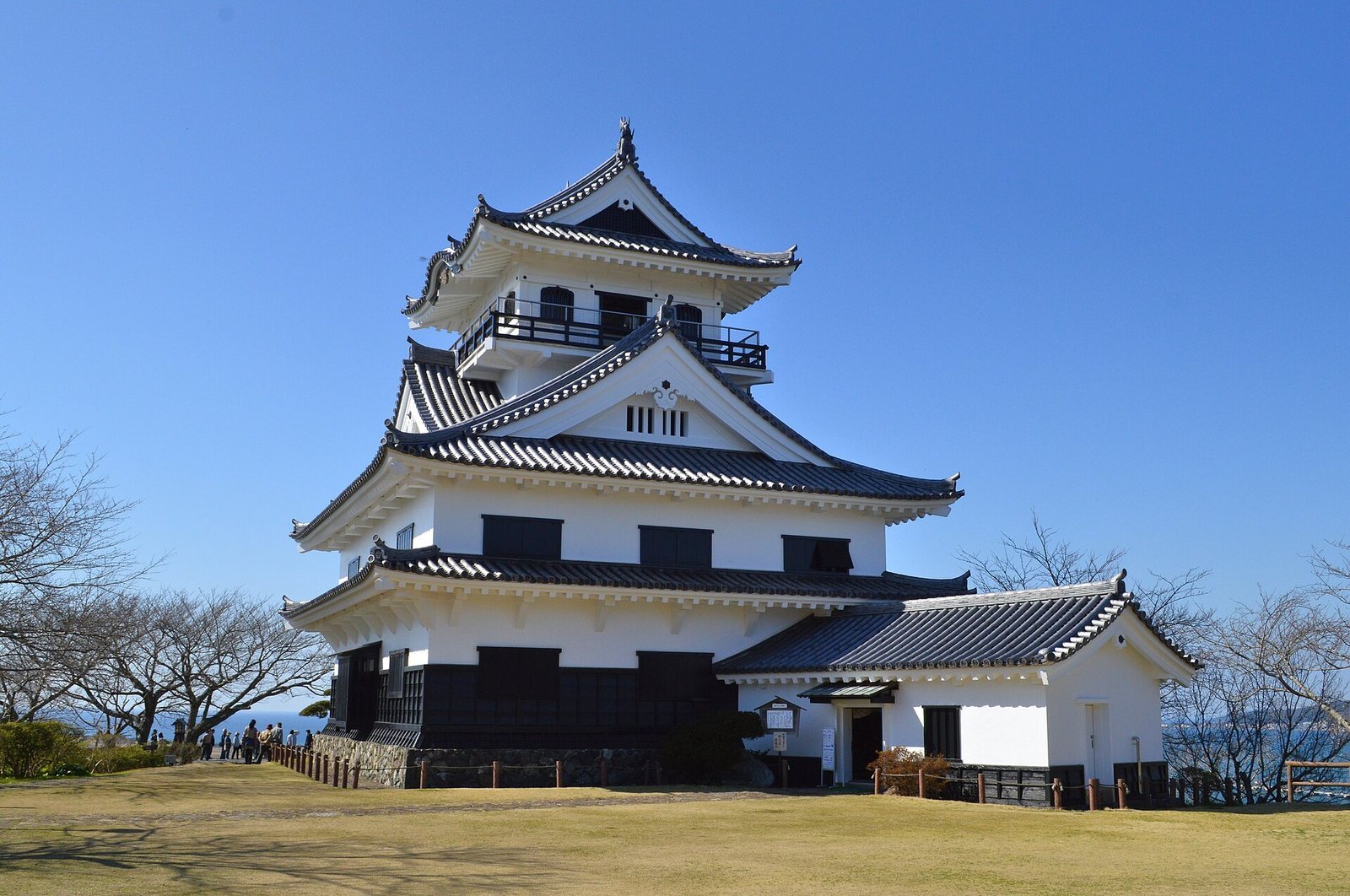
The original keep is described as having three tiers and three stories, although its appearance is unknown. The replica has three tiers and four stories in a composite watchtower design. Its model was Inuyama Castle, a historic castle in central Japan. The replica also houses a branch museum displaying material about Nansō Satomi Hakkenden, an epic novel by the Edo-period writer Takizawa Bakin.
Tateyama City Museum
The museum’s main building stands at the foot of the castle. Its history gallery displays material relating to the Satomi clan and finds excavated from the castle site.