Mano-dera Temple: A Buddhist Temple and Pilgrimage Site in Japan


Site at a Glance
- Rating
- 4.2
- Popularity
- Low
- Country
- Japan
- Primary era
- Unclassified
- External website
- Open
- Eras represented
- Unclassified
- Civilizations
- Unclassified
- Site type
- Religious
- Remains
- Sanctuary
On this page9 sections
History
Mano-dera Temple is a Buddhist temple in Minamiboso, Japan, founded in 725. Its formal name is Takakurayama Jissō-in Mano-dera, while Mano Daikoku and Mano Daikokuten are also used as names for the temple. It belongs to the Chizan branch of Shingon Buddhism, a Japanese form of esoteric Buddhism, and is affiliated with the New Shingon School.
Religious Foundations and Sacred Images
The temple’s principal image is a masked Thousand-Armed Kannon, a form of the bodhisattva Kannon associated with compassion. The many arms represent the ability to respond to beings in need, while the covering of the face forms part of the image’s religious iconography. Tradition attributes the image to Gyōki, an influential Buddhist monk of the Nara period. Its manufacture, however, is considered likely to date from the late Heian period, in the twelfth century.
Mano-dera also venerates a Daikokuten image traditionally said to have been carved by Jikaku Daishi Ennin in 860. Daikokuten is a Buddhist deity associated in Japan with prosperity, good fortune, abundance, and household well-being. The sculpture’s production is estimated to belong to the Kamakura period, which followed the Heian period and conventionally lasted from 1185 to 1333. Known as the Asahi Kaiun Daikokuten, it is among the largest surviving ancient Daikokuten images in the Kanto region.
The temple’s Twenty-Eight Devas are traditionally attributed to the Buddhist sculptor Kazusa Hokkyō and dated to 1335. These protective Buddhist deities are understood as guardians of Buddhist teachings and sacred spaces. More than thirty surviving examples are known, including important groups at Sanjusangendo in Kyoto and at sites in Tokyo, Shiga, and Kumamoto.
Festivals and Pilgrimage Traditions
February 6, corresponding to the sixth day of the first month in the former lunar calendar, is regarded as the day when Ennin encountered the Daikokuten in the morning sunlight. Mano-dera’s principal festival, the Daikokuten Grand Festival, is held on this date. Worshippers seek a sacred mallet believed to contain the power of the Asahi Kaiun Daikokuten, together with a willow talisman associated with gaining strength to withstand difficulties.
Mano-dera is the 57th temple on the Kanto Eighty-Eight Sacred Places pilgrimage and the 25th on the Awa Province Thirty-Four Kannon Sacred Places route. It is also the second Chiba temple in the Hundred Flower Temples of the Eastern Provinces and forms part of the Nanso Nanohana Seven Lucky Gods pilgrimage. These networks are religious temple-list traditions that connect sites through regional pilgrimage practices.
Remains
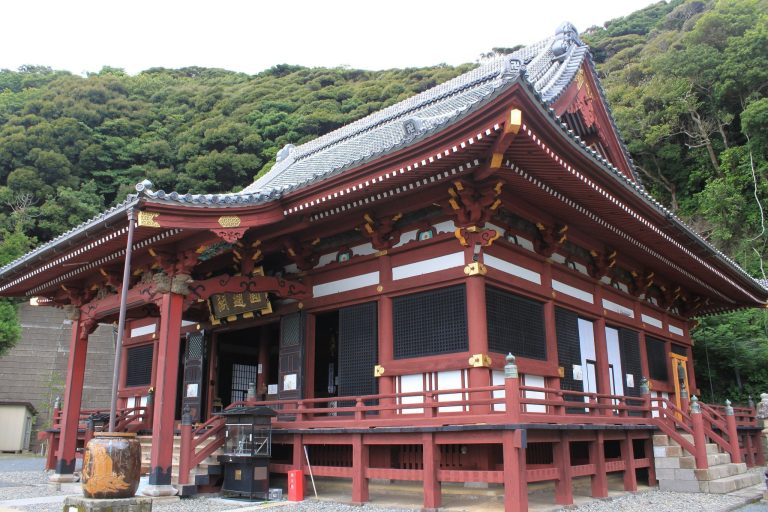
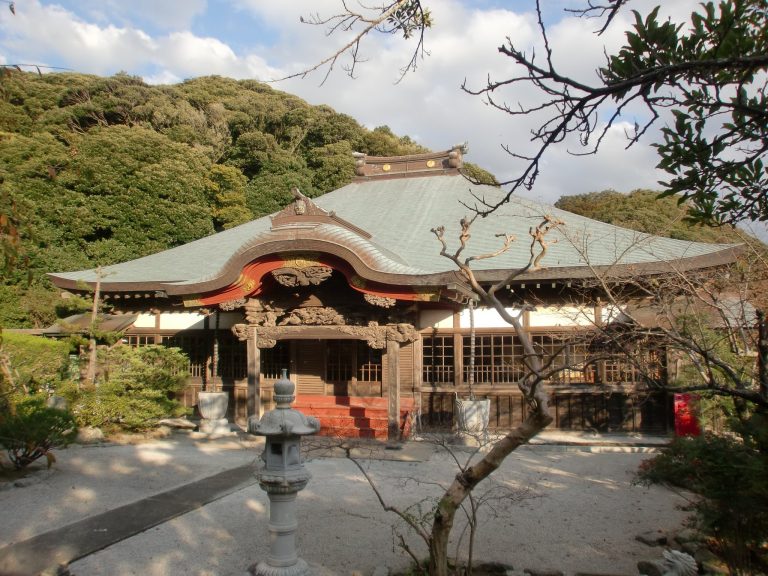
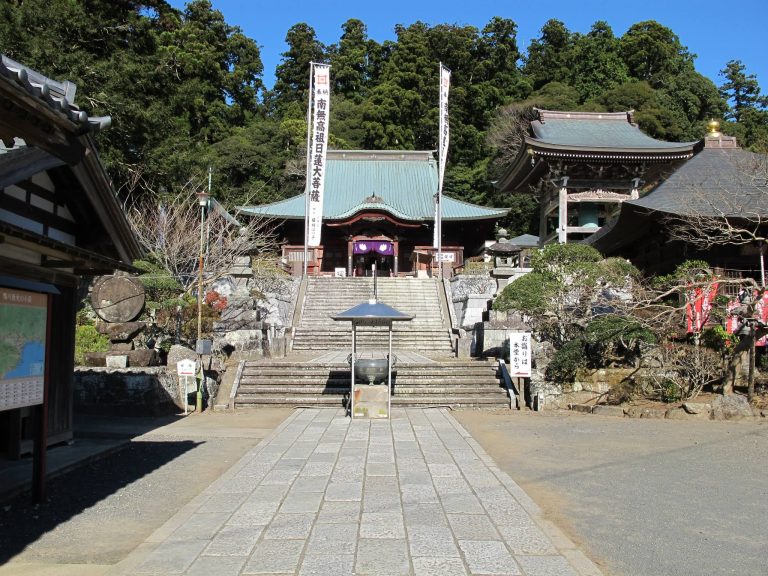
Mano-dera stands in Kubo, in the Manotani area of Minamiboso, Chiba Prefecture, under the mountain name Takakurayama. The main hall is approached by a stairway that includes a route known as the men’s slope, giving the temple’s surviving layout a clearly defined ascent toward its principal worship space.
Buddhist Sculptures
Masked Thousand-Armed Kannon
The principal image is a masked Thousand-Armed Kannon, an exceptionally rare type of this Buddhist image. Its iconography combines Kannon’s association with compassion with the symbolism of multiple arms, expressing the capacity to aid beings in need. The image is traditionally connected with Gyōki and is considered likely to have been made in the late Heian period, during the twelfth century.
Asahi Kaiun Daikokuten
The Asahi Kaiun Daikokuten is preserved among Mano-dera’s Buddhist sculptures. Tradition attributes it to Jikaku Daishi Ennin and places its carving in 860, while its sculptural production is estimated to belong to the Kamakura period. The image is especially renowned as the temple’s Asahi Kaiun Daikokuten and ranks among the largest surviving ancient Daikokuten sculptures in the Kanto region.
Twenty-Eight Devas
A group of Twenty-Eight Devas at the temple is traditionally attributed to Kazusa Hokkyō and dated to 1335. The deities form a protective ensemble associated with Buddhist teachings and sacred spaces. Their place within the temple’s sculptural collection connects Mano-dera with a wider group of surviving Twenty-Eight Deva images found at several Japanese religious sites.
Stairway and Lantern Displays
Lanterns are displayed along the stairs leading to the main hall, including the men’s slope. This arrangement is used from January 1 to 6, February 5 to 6, and November 22 to 23, adding a seasonal religious display to the approach to the hall.