Tashichho Dzong: Bhutan’s Buddhist Monastery, Fortress, and Government Seat
Site at a Glance
- Popularity
- Very High
- Country
- Bhutan
- Primary era
- Modern
- Eras represented
- Early Modern, Modern
- Civilizations
- Bhutanese
- Site type
- Civic
- Remains
- Palace
On this page14 sections
History
The original dzong
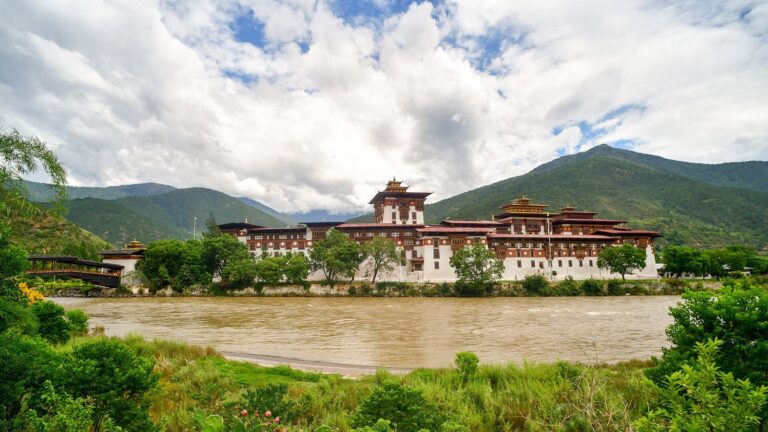
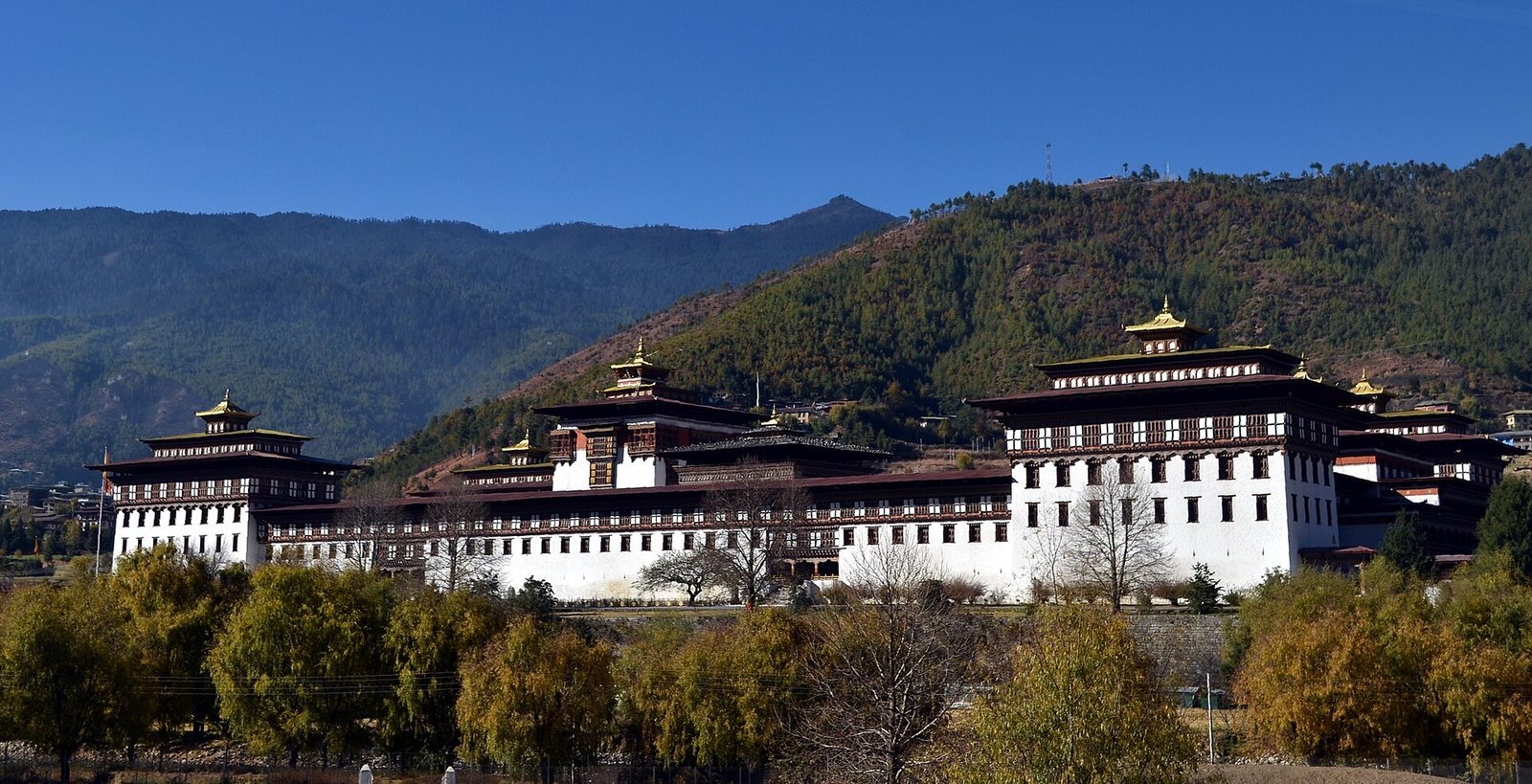
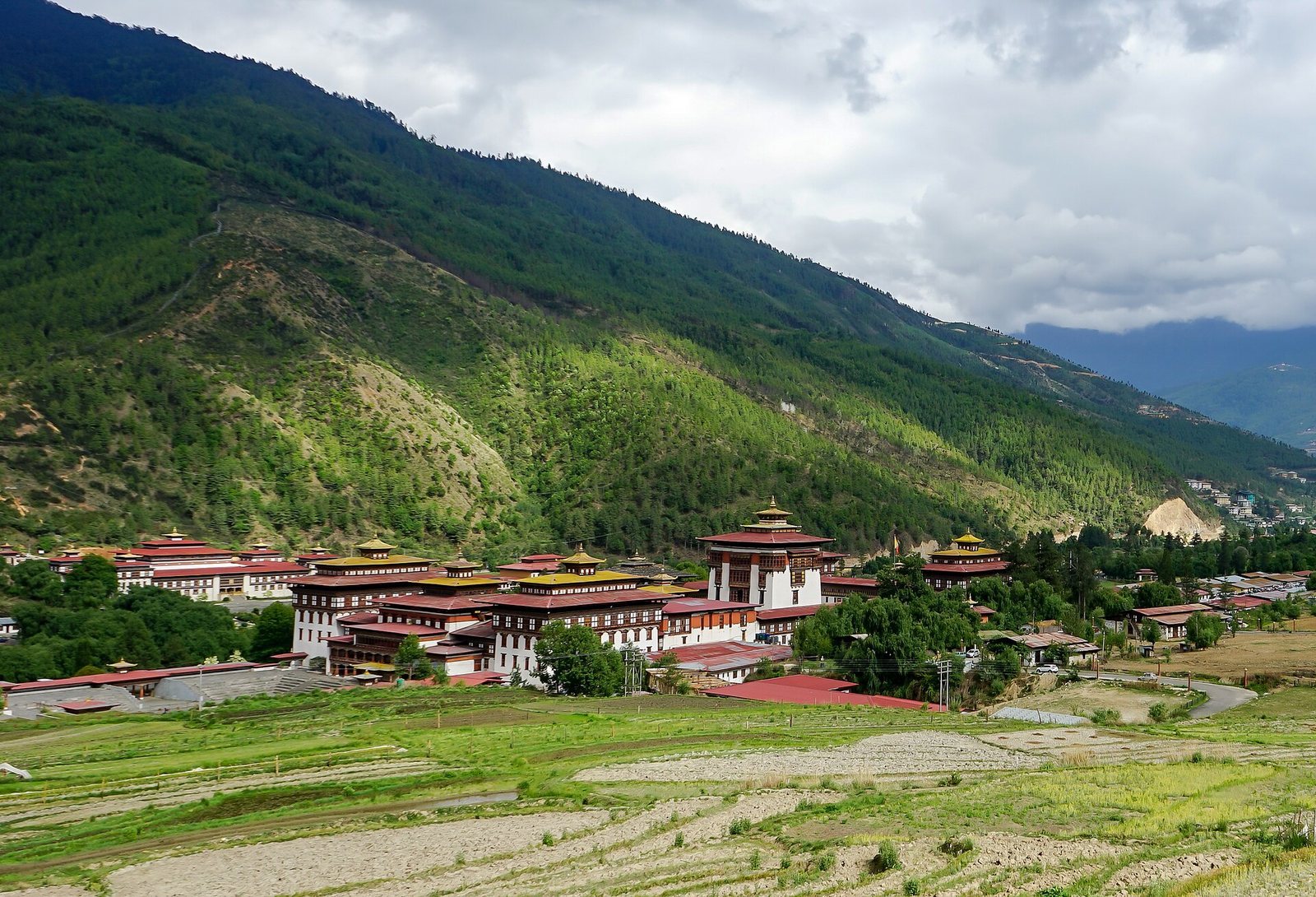
Tashichho Dzong is a Buddhist monastery and fortress on the northern edge of Thimphu, Bhutan, on the west bank of the Wang Chu. A dzong is a Bhutanese fortified complex that can serve religious and government purposes. The original Thimphu dzong, called Do-Ngön Dzong, or Blue Stone Dzong, was built in 1216 by Lama Gyalwa Lhanapa, founder of the Lhapa branch of the Drikung Kagyu school of Tibetan Buddhism. It stood at the site of Dechen Phodrang Monastery, on a ridge above the present complex. The name Tashichho Dzong is rendered as Fortress of the Glorious Religion, or Fortress of Auspicious Doctrine.
Zhabdrung and the 1641 reconsecration
In 1641, Zhabdrung Ngawang Namgyal, Bhutan’s first Dharma Raja, or spiritual ruler, took control of the original dzong from the Lhapa Kagyu, reconsecrated it, and gave it the name Tashichho Dzong. He founded the Lho-drukpa school of Buddhism, a Drukpa Kagyu tradition that became distinctive of Bhutan. The dzong became the main centre of the Southern Drukpa Kagyu and the summer residence of the sangha, or Buddhist monastic community, led by Zhabdrung Rinpoche.
Fire, rebuilding, and changing rule
Fire destroyed most of the original dzong in 1772. The sixteenth Desi, a title for Bhutan’s civil rulers, Sonam Lhudrup, had a new dzong built at the present site. The thirteenth Je Khenpo, Bhutan’s senior monastic authority, Je Yonten Taye, consecrated it and named it Sonamchö Dzong. After Sonam Lhudrup died, the complex took the name Tashichho Dzong. Three later fires destroyed the dzong, and an earthquake seriously damaged it in 1897. On each occasion, the Desi and Je Khenpo then in office oversaw its rebuilding.
Tashichho Dzong traditionally served as the summer capital and the seat of the Druk Desi, head of Bhutan’s civil government. When the monarchy was established in 1907, the Druk Desi’s office was combined with the kingship. In 1953, the royal family moved to the newly built Dechencholing Palace, four kilometres north of the dzong.
Thimphu as the capital
After Bhutan’s capital moved from Punakha to Thimphu in 1962, King Jigme Dorji Wangchuck ordered the dzong rebuilt as the seat of government, following a plan different from its earlier one. Work was completed in 1968. The new complex was consecrated by Je Khenpo Yonten Tarchin, the 66th holder of that office, the 16th Karmapa Rangjung Rigpai Dorje, head of the Karma Kagyu lineage, and Je Kudre Jamyang Yeshe.
Since 1968, Tashichho Dzong has housed Bhutan’s government, including the throne room, the king’s offices, the cabinet secretariat, and the ministries of home affairs and finance. Other government departments are based in buildings south of the dzong or in newer buildings in Thimphu. The northern part of the complex serves as the summer residence of the Je Khenpo and the Central Monastic Body, Bhutan’s national monastic institution.
Remains
Layout and central tower
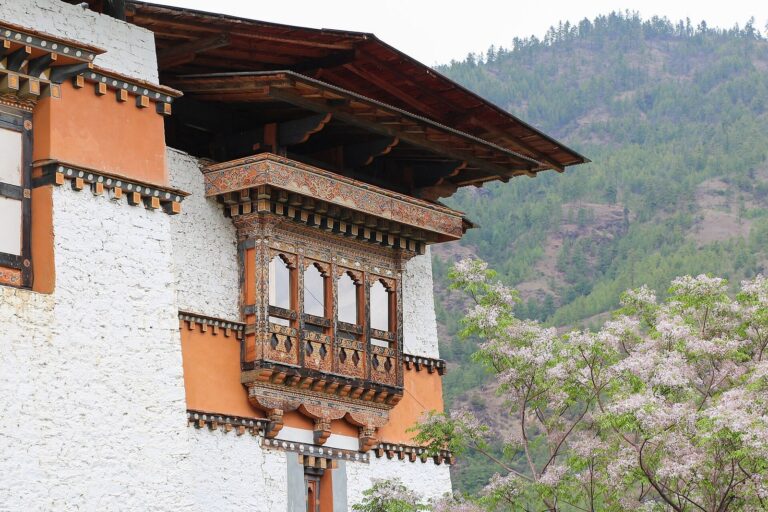
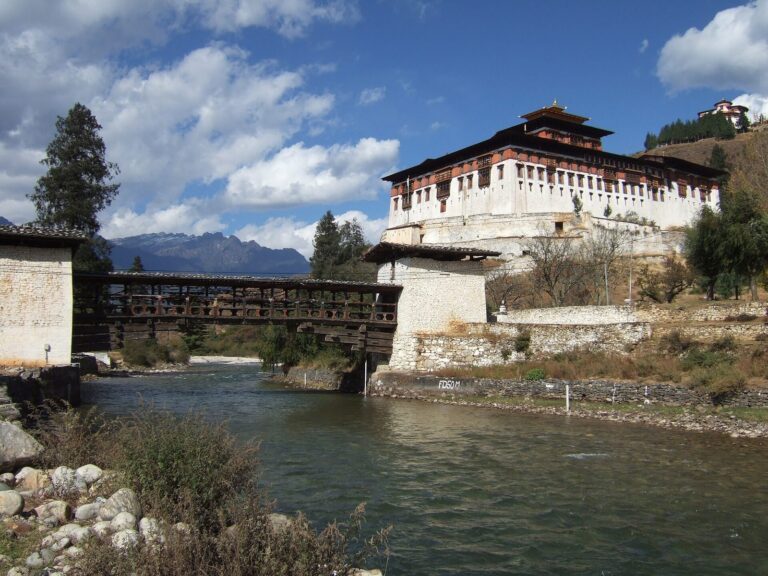
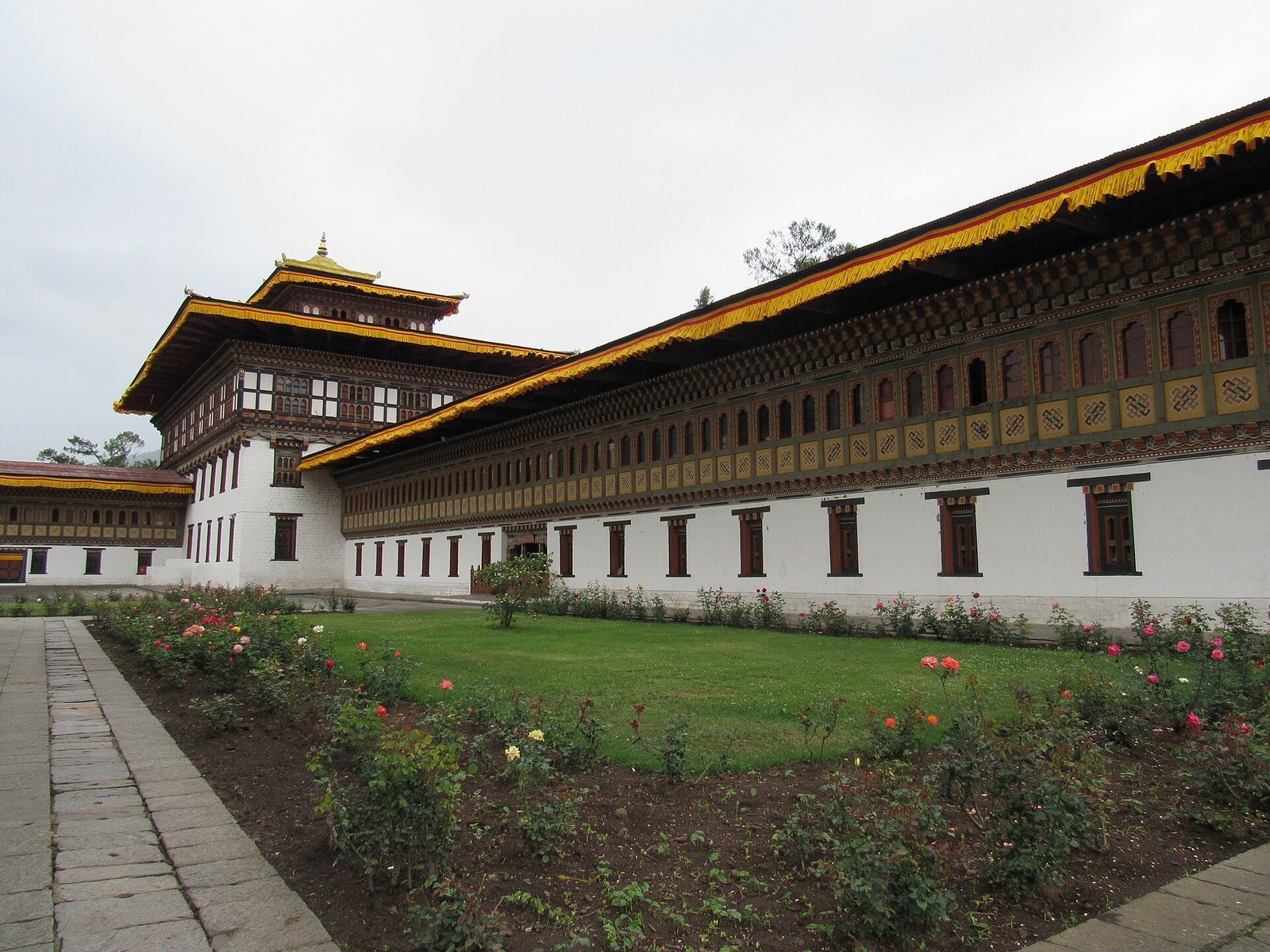
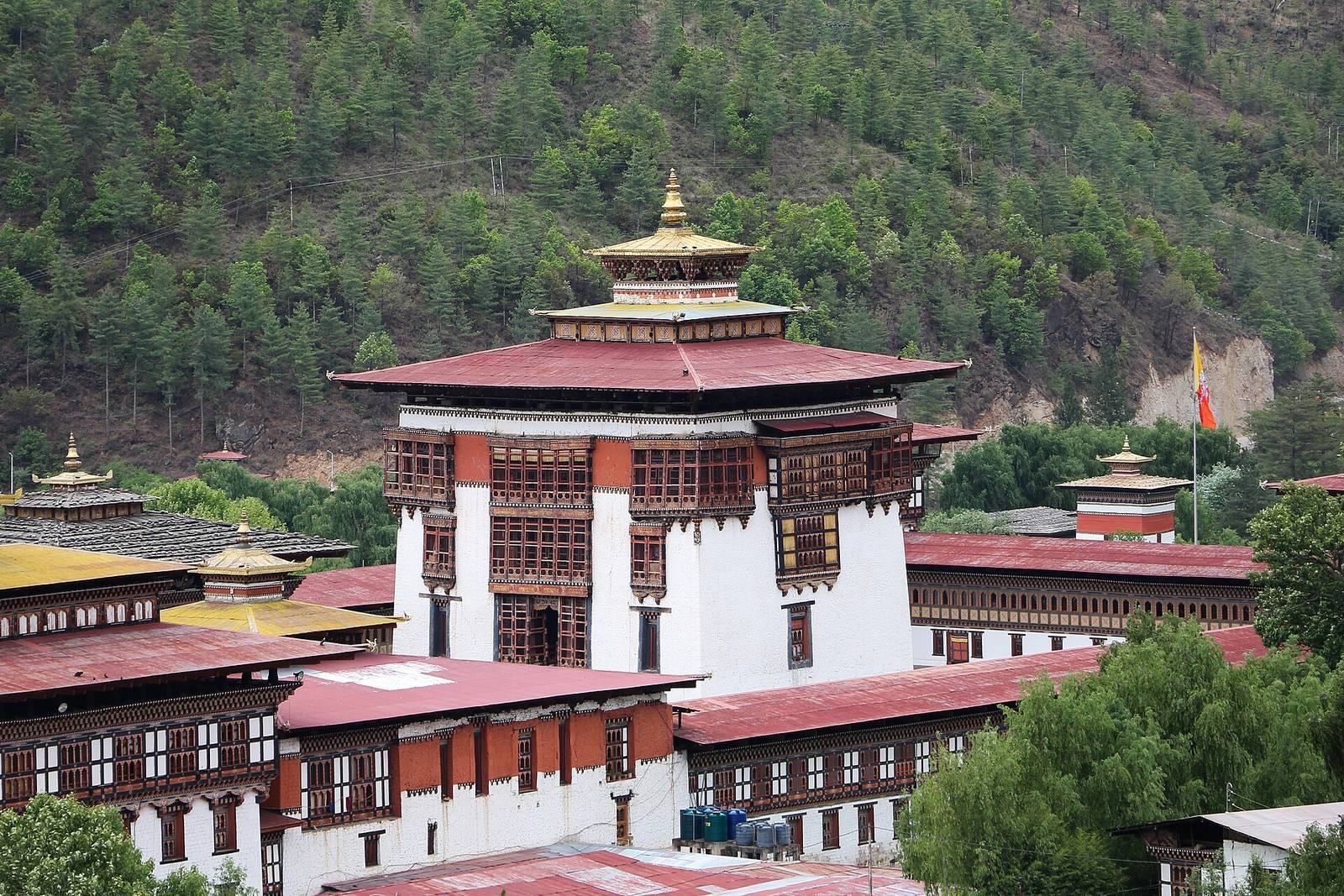
The main buildings are whitewashed and two storeys high. Towers at the four corners rise three storeys and carry three-tiered golden roofs. A large central tower, the utse, stands within the complex. The dzong contains thirty temples, chapels, and shrines, along with meditation rooms.
Structures from the earlier dzong
Elements of the earlier dzong remain within the complex: the central utse, Lhakhang Sarp, meaning New Temple, and the main Gönkhang, or protector temple.
Monastic buildings
Kunrey
The Kunrey, the monks’ assembly hall, was renovated in 1777 by the eighteenth Desi, Jigme Singye, and again in 1807 by the twenty-fifth Desi, Pema Cheda. Before the first renovation, the hall’s interior was completely dark.
Ditsang Lhakhang
The thirty-second Desi, Phurgyal, added the Ditsang Lhakhang in 1826 and installed many new statues there.
Shrines and religious images
Ney Khang Lhakhang
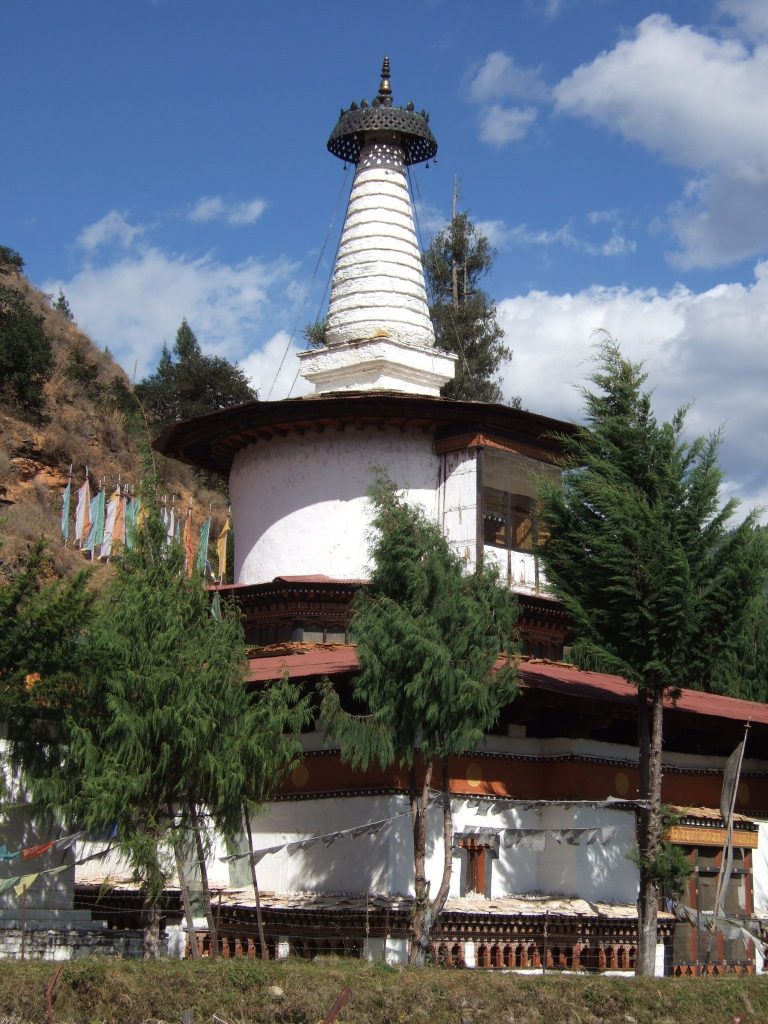
A small tower west of the dzong, the Ney Khang Lhakhang houses a statue of Shakyamuni, the historical Buddha, as well as protective deities.
Images of the sixteen arhats
The dzong’s religious decoration included an image of the sixteen arhats, Buddhist disciples traditionally regarded as having attained liberation, blessed by a Je Khenpo. In 2002, the Je Khenpo consecrated and added a newly made Neten Chudrug Thongdrol representing the same group. A Thongdrol is a large sacred image believed to grant liberation when viewed.