Naumburg Castle: A Former Monastery and Hunting Lodge
Site at a Glance
- Popularity
- Medium
- Country
- Germany
- Primary era
- Early Modern
- Eras represented
- Early Modern
- Civilizations
- Holy Roman Empire
- Site type
- Domestic
- Remains
- Castle
On this page8 sections
History
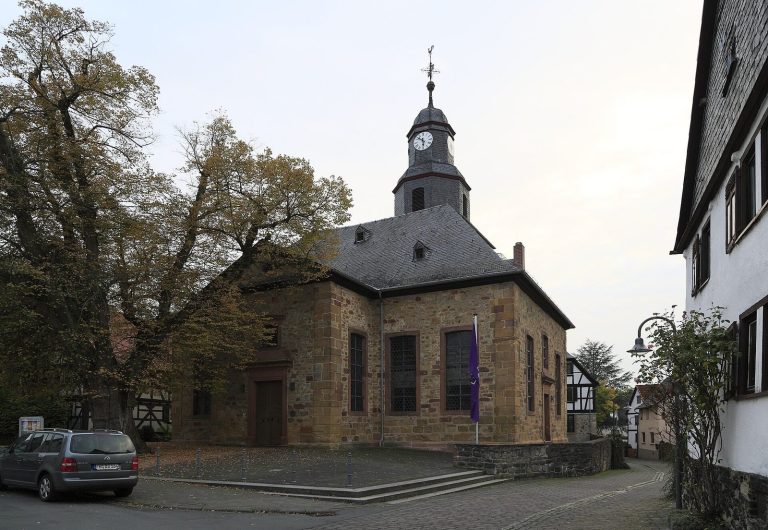
Naumburg Castle, south of Erbstadt in Hesse, Germany, developed from a monastery of Benedictines, a Christian order whose members follow the Rule of Saint Benedict, first mentioned in 1035. The estate changed from a monastic house into a hunting lodge and later served a succession of other institutions.
Medieval monastery
The monastery was initially associated with Saint Cyriacus, a Christian martyr venerated as a saint, and was later dedicated to the Holy Cross. In 1086, Henry IV, ruler of the central European Holy Roman Empire, gave the estate to Rüdiger Huzmann, Bishop of Speyer. In 1149, Rüdiger’s successor, Günther von Henneberg, transferred the established Benedictine house to Limburg Abbey on the Haardt.
Many of the monks came from noble families in the Wetterau, and the monastery held substantial property. It lay within the jurisdiction of Kaichen’s free court. From the thirteenth century, the Lords and Counts of Hanau held a lay protectorate over the monastery, a secular guardianship. From 1354, they were entitled to lodging and meals during stays there. In wartime, the monastery’s archive was sometimes kept safe in a Hanau castle, and a Hanau count mediated disputes with neighbouring communities.
Destruction, rebuilding and decline
The complex was destroyed during the War of the Landshut Succession, an early-sixteenth-century conflict over the Bavarian duchy of Landshut. Seligenstadt Abbey, rather than Limburg Abbey, rebuilt it in 1505 and later asserted spiritual authority over Naumburg. By the early sixteenth century, monastic life had sharply weakened. The monks had stopped holding services and following the daily cycle of prayer. Erasmus Alberus’s fable A Miller and a Donkey, set at Hainmühle below Naumburg, also refers to the decline, though its treatment reflects Protestant polemic.
The County of Hanau-Münzenberg bought the monastery in 1561. The estate soon became the focus of the Naumburg Feud, a conflict between the county and a burgraviate, a territory governed by a burgrave. The Hanau counts then ran the property as a farm. In 1642 it passed as a pledge to Hesse-Kassel to cover the cost of relieving Hanau’s fortress in 1636.
Hunting lodge and changing ownership
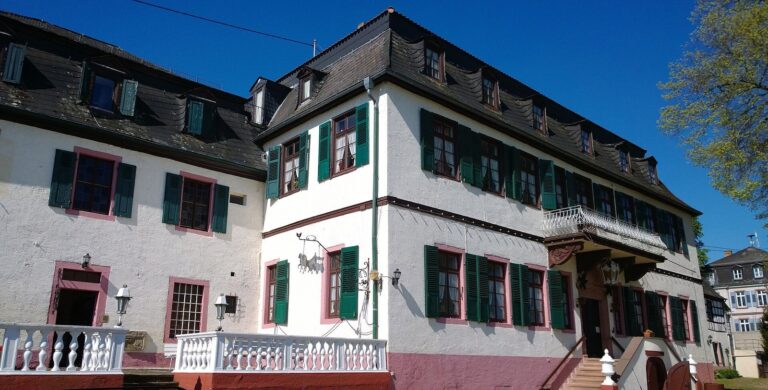
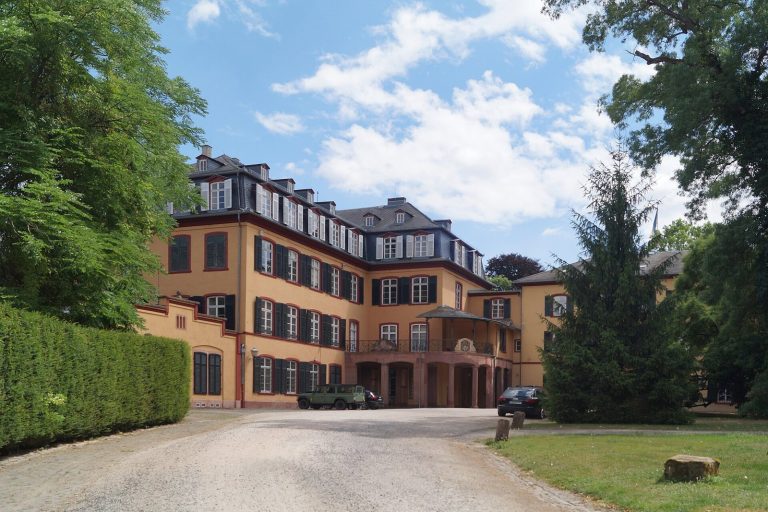
Prince George of Hesse-Kassel acquired the former monastery, had it demolished and built a hunting lodge in its place between 1750 and 1754. After the Electorate of Hesse ended in 1866, following the Austro-Prussian War, Naumburg passed to Prussia. The municipality of Erbstadt later acquired the property and sold it into private ownership in 1882; its owners and uses subsequently changed several times.
Twentieth-century uses
In 1938, the castle served as a rural youth camp under the Nazi regime. From 1949 to 1972 it was used as a nursing home under different management. The Working Group of Christian Congregations in Germany, now the Federation of Free Pentecostal Churches, bought it in 1973 and established a conference and meeting centre. In 1981, the grounds hosted the first National Training Camp of the Christian scouting organisation Royal Rangers, regarded as the start of its activities in Germany. From the late 1980s to the early 1990s, a school for discipleship and missionary church ministries also operated there. Ingrid Schiener made alterations to the property from 1997. It is once again privately owned.
Remains
Setting and surviving fabric
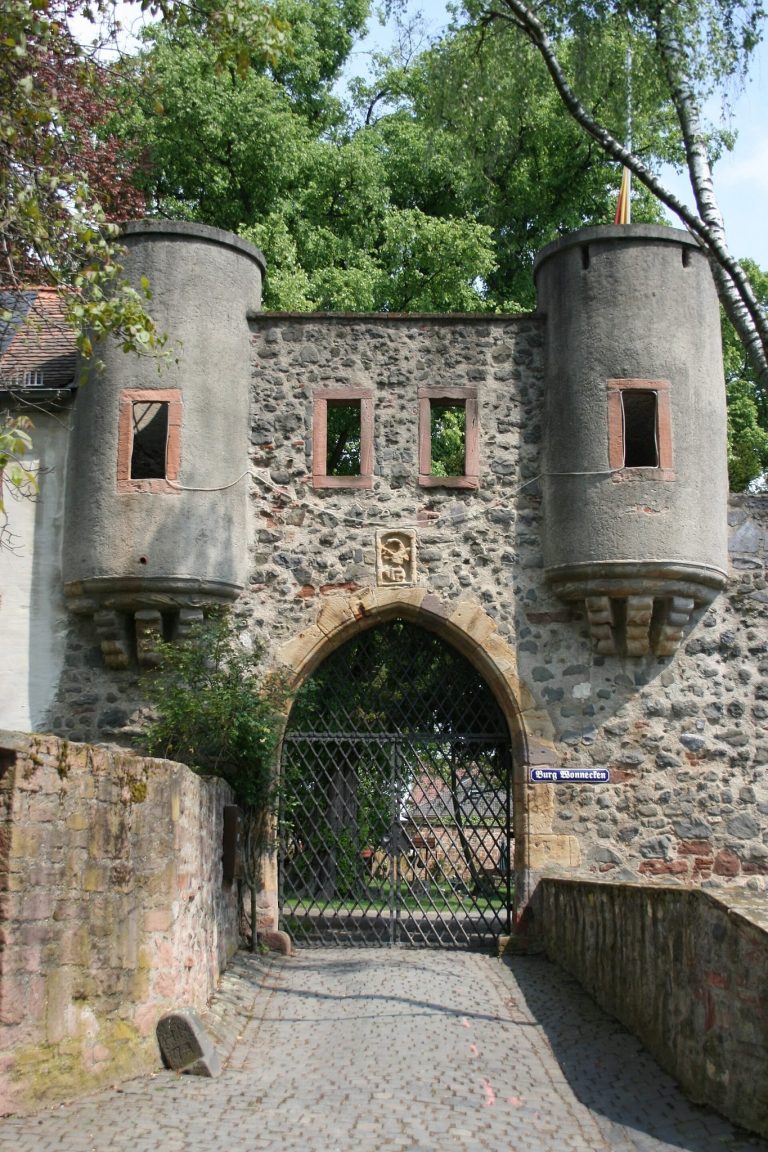
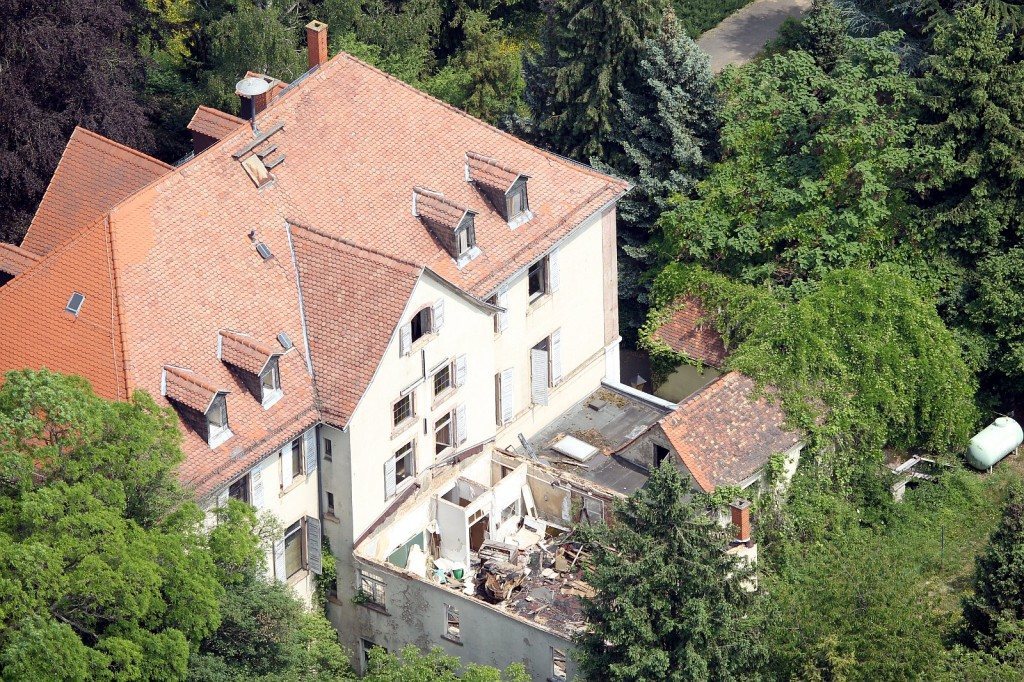
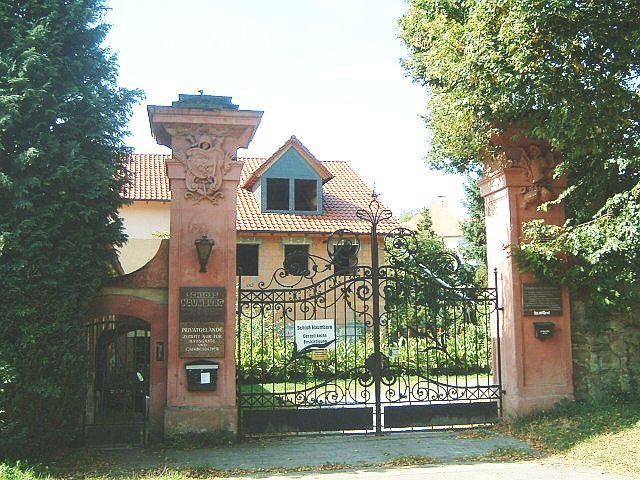
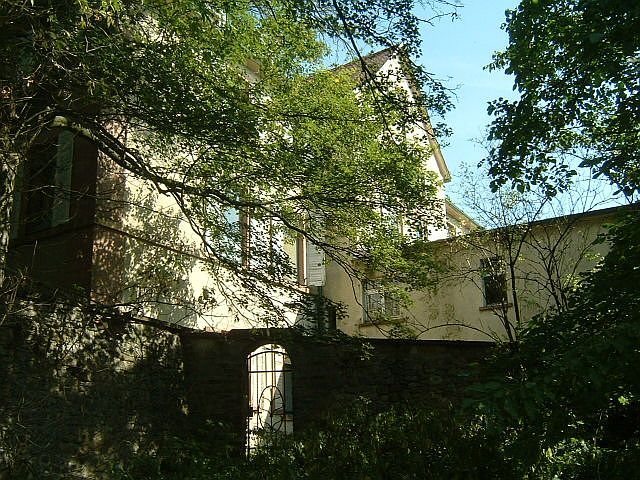
The castle stands on a rise in the Wetterau, south of Erbstadt. The surrounding cultural landscape contains traces of prehistoric and early historic settlement, and a Roman rural estate stood nearby. The richly ornamented entrance portal survives from the hunting-lodge period. The building is described as almost uninhabitable and its fabric at risk. An aerial view from 2011 showed open windows and a collapsed roof structure, with vegetation spreading across the grounds. The surrounding area has also increasingly been used for illegal dumping, and the building has been used to store furniture and other goods from house clearances.
The property register
A richly illustrated register of the monastery’s property, made in 1514 during a survey and marking of its boundaries, is held at the Hessian State Archive in Marburg. It depicts the monastery, the Imperial Castle of Friedberg, saints, and the arms of Friedberg’s burgrave and of castlemen who witnessed the proceedings.