Katahdin Iron Works: A Historic Ironmaking Complex in Maine
Site at a Glance
- Rating
- 4.6
- Popularity
- Low
- Country
- United States
- Primary era
- Modern
- External website
- Open
- Eras represented
- Modern
- Civilizations
- Unclassified
- Site type
- Economic
- Remains
- Production Complex
On this page9 sections
History
Katahdin Iron Works is a historic ironmaking complex in Brownville, Maine, United States, established in 1843 in the architectural style identified as “Bee Hive.” Samuel Smith built a road from Brownville in 1841 and founded a company settlement where the West Branch of the Pleasant River flows out of Silver Lake. The ironworks operated from 1845 to 1890.
Establishment and early production
Ore Mountain was identified in 1843 as a limonite gossan, an oxidized surface zone associated with a sulfide ore deposit. It became the works’ main source of ore in 1845. Workers roasted the ore to remove sulfur dioxide before smelting it. David Pingree later acquired the operation and organized the Katahdin Iron Works. When pig iron, the relatively impure iron produced by a blast furnace, sold slowly, Pingree added a puddling refinery, a furnace that removed impurities to make wrought iron, a more workable form of iron.
Weak demand in Boston forced the works to close from 1857 until 1863. Production resumed when the American Civil War increased demand for iron. After Pingree’s death, the Piscataquis Iron Works Company, formed by businessmen from Bangor, took control in 1876. The company hired a Swedish mining engineer in 1877 to improve the iron by reducing its silicon content.
Railway connection and industrial decline
A 19-mile (31-kilometre) railway linking the settlement with the future Bangor and Aroostook Railroad at Milo was built in 1881 and began operating in 1882. It was leased to the Bangor and Piscataquis Railroad in 1887. A hurricane later drove sparks from the kilns into a fire that badly damaged the plant. By 1885, the rebuilt works were producing high-quality iron for railroad-car wheels and United States Navy cruiser engines.
Production ended in 1890 as declining charcoal supplies made the works less competitive with Pennsylvania producers using abundant coke, a coal-derived ironmaking fuel. Local forests had already been heavily depleted by the conversion of 10,000 cords (36,000 cubic metres) of wood into charcoal each year by 1888. Lower-sulfur iron from Michigan added to the pressure, and most of the smelting equipment was shipped to Nova Scotia in 1890.
Settlement, railway closure, and preservation
The Bangor and Piscataquis Railroad became the Bangor and Aroostook Railroad in 1891. Train service to Katahdin Iron Works ended in 1922. Afterward, postmistress Sara Green operated a flanged-wheel automobile, a road vehicle adapted for railway tracks, over the abandoned line until the rails were removed in 1933.
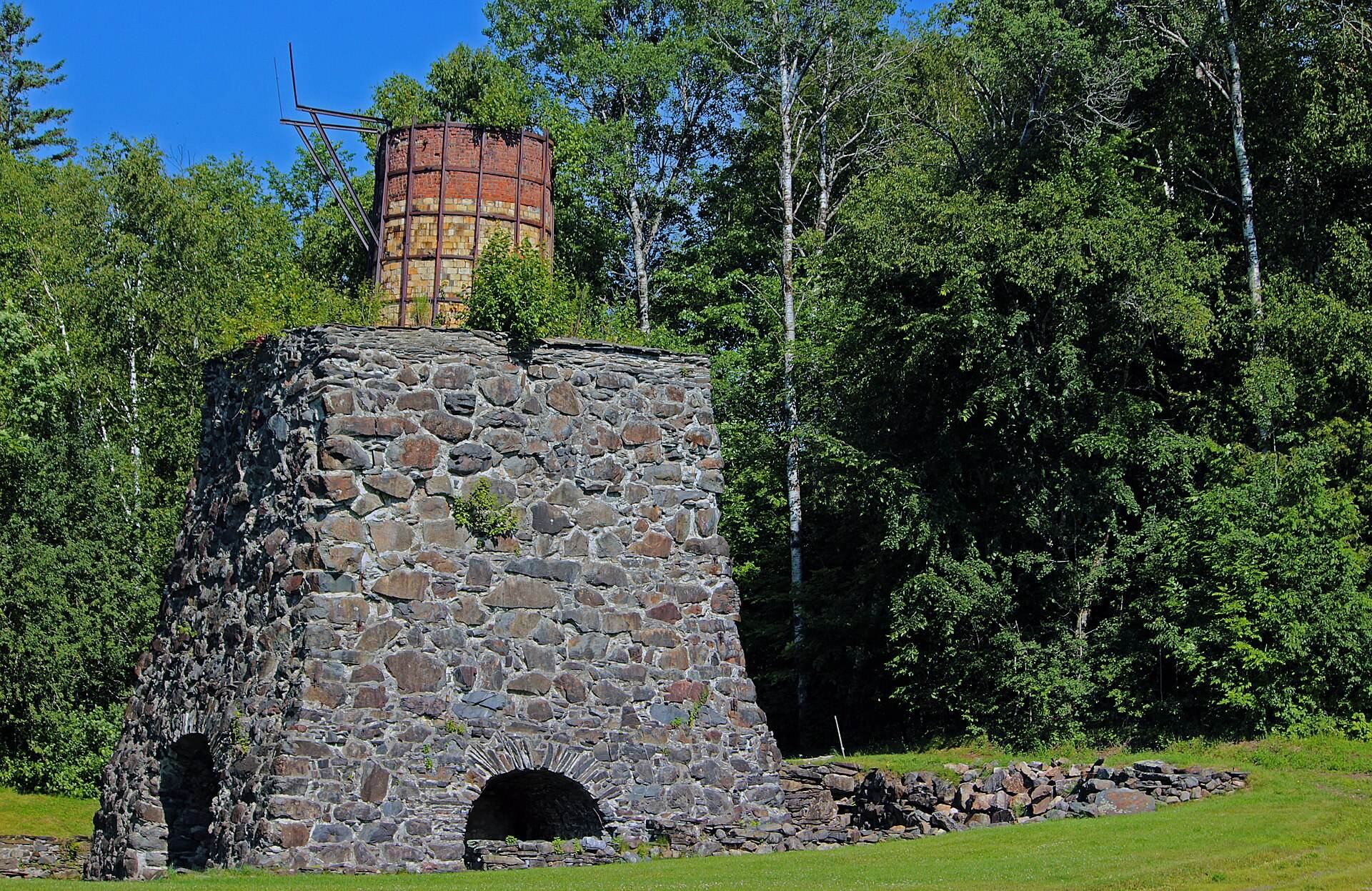
The company settlement included a sawmill operated by the American Lumber Company, a boarding house, cooperative store, town hall, school, post office, stables, and housing for 200 families. The boarding house was later refurbished as the Silver Lake Hotel, which had 100 rooms. The state restored the blast furnace and one charcoal kiln. Katahdin Iron Works was listed on the National Register of Historic Places, the United States register for historically or architecturally worthy sites, in 1969, and it is also a Maine state historic site.
Remains
The historic property covers 17.8 acres (7.2 hectares) at the point where the West Branch of the Pleasant River leaves Silver Lake. Its surviving industrial and settlement features preserve the physical arrangement of a charcoal-based ironworks, while the former railway route connected the complex with Milo over 19 miles (31 kilometres).
Ironmaking complex
Blast furnace and charcoal kiln
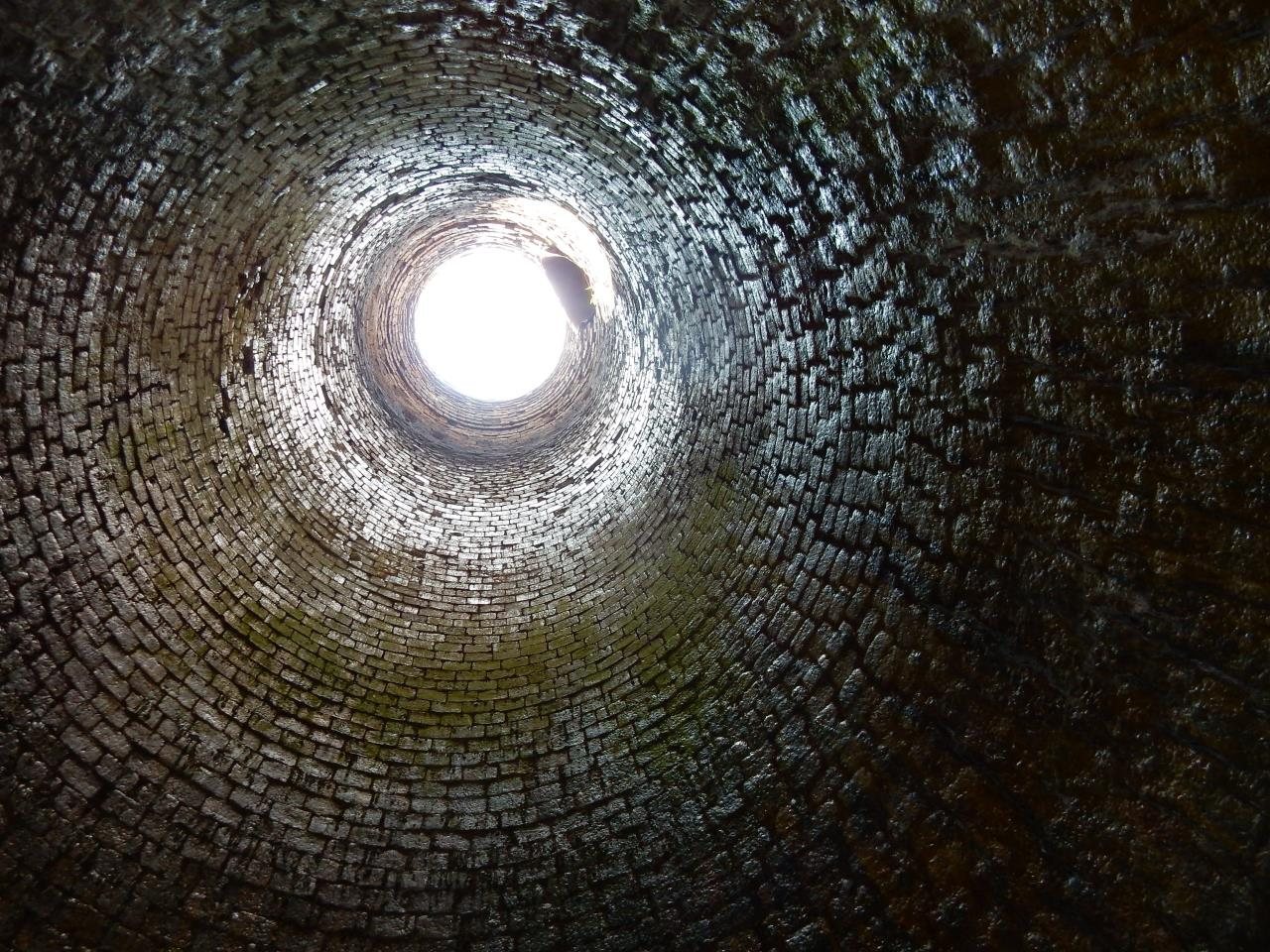
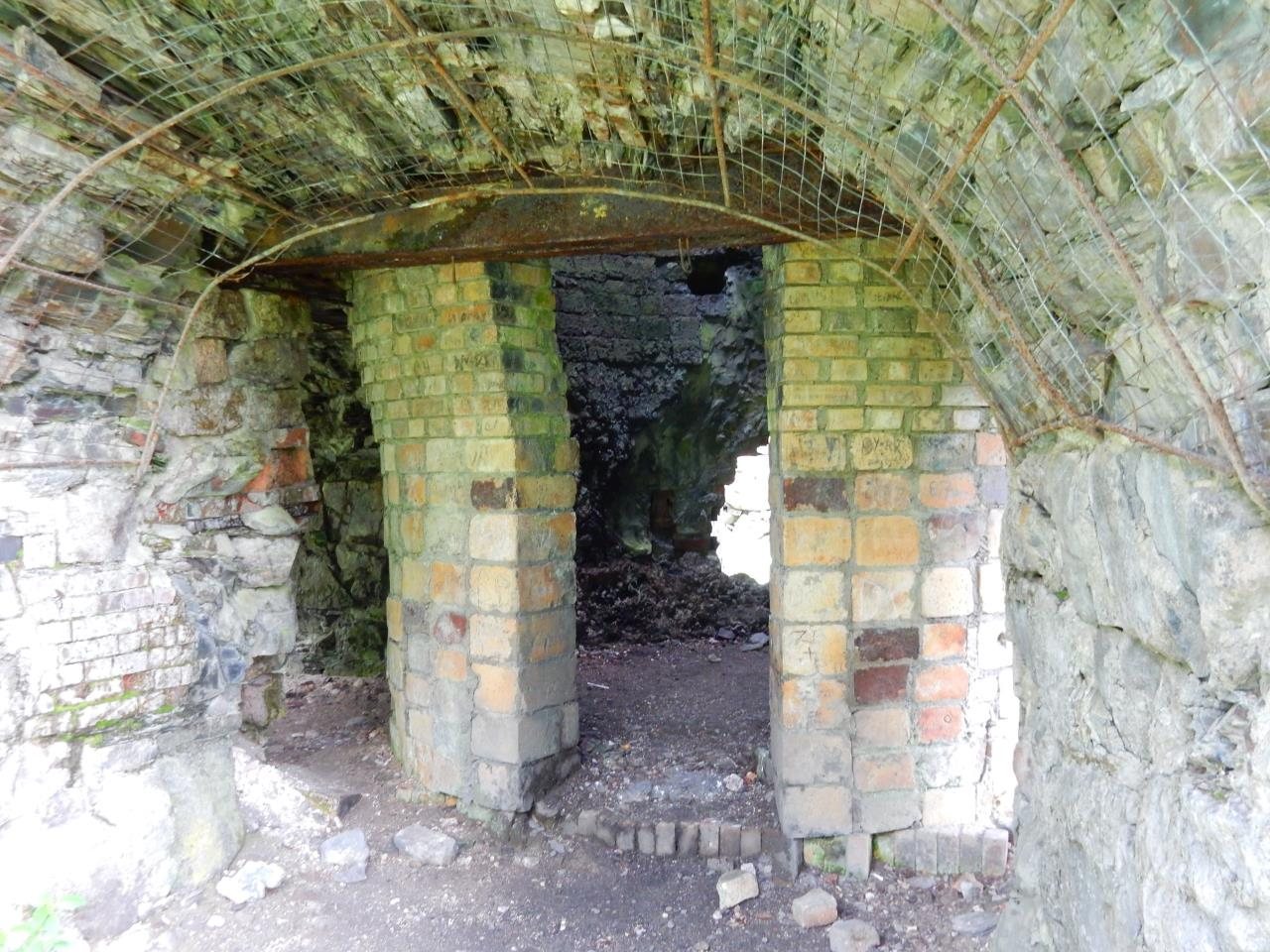
The works centered on a 55-foot-high rock blast furnace, an industrial furnace that forces air through fuel and ore to produce molten iron. Water-powered blowers supplied its air. Eighteen domed masonry beehive kilns heated wood in limited air to produce charcoal, supporting annual production of approximately 2,000 tons of pig iron. One kiln survives and has been restored, as has the blast furnace.
Other industrial buildings
The complex also included an ore kiln, top houses used to charge ore and fuel into the furnace, a casting shed, and a storage barn. Foundations of other mill and village buildings remain around the restored furnace and kiln. The ore deposit consists of a gossan overlying pyrrhotite, an iron sulfide mineral. Its possible scale was described as among the world’s largest sulfide deposits if its depth matched its known surface area, but its rural location and poor-quality ore have left it uneconomic to mine.
Settlement and surrounding landscape
Foundations and surviving features relate to the former company settlement, which included the American Lumber Company sawmill, boarding house, cooperative store, town hall, school, post office, stables, homes, and the Silver Lake Hotel. The boarding house’s later conversion into the 100-room hotel reflects the settlement’s continued use after iron production ended.
The property includes Gulf Hagas, a water-formed canyon on the West Branch of the Pleasant River. The canyon extends about 2.5 miles (4.0 kilometres), drops 500 feet (150 metres), and contains multiple waterfalls. It is designated a National Natural Landmark, a federally recognized natural feature of exceptional ecological or geological importance. About 1.5 miles downriver, The Hermitage preserves an approximately 35-acre (14-hectare) grove of large eastern white pine trees under the care of The Nature Conservancy and is another national landmark in the wider area.