Taishi Nishiyama Kofun: A Late Kofun-Period Burial Mound in Japan
Site at a Glance
- Rating
- 4.1
- Popularity
- Low
- Country
- Japan
- Primary era
- Medieval
- Eras represented
- Medieval
- Civilizations
- Yamato
- Site type
- Religious
- Remains
- Tomb
On this page4 sections
History
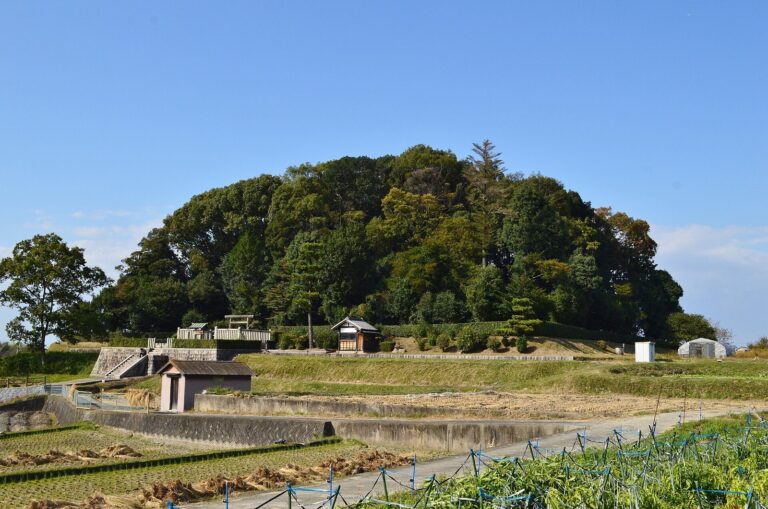
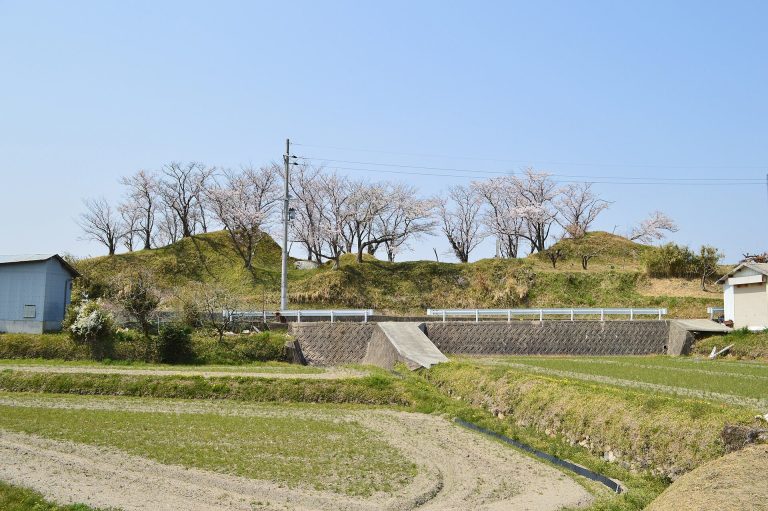
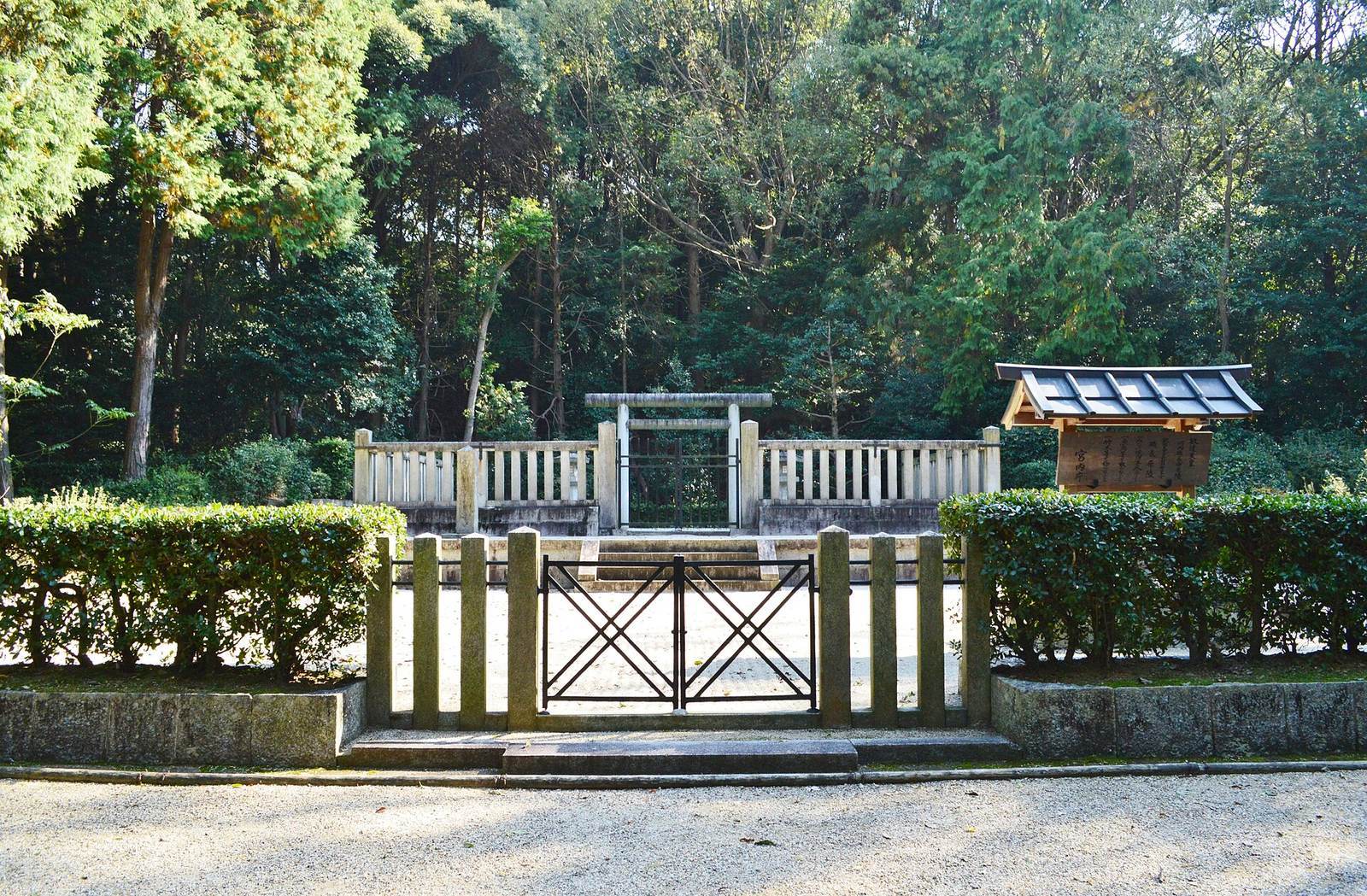
Taishi Nishiyama Kofun is a large Japanese burial mound in the Shionaga Valley, west of Hamuro settlement in Japan. Finds of haniwa, fired-clay objects associated with burial mounds, place its construction in the early part of the Late Kofun period, the later phase of Japan’s era of monumental mound building. The people buried inside are unknown, but the Imperial Household Agency designates the mound as the joint mausoleum of Emperor Bidatsu and his mother Ishihime. It belongs to a valley group that also includes tombs attributed to Emperors Yomei, Suiko, and Kotoku, as well as the grave of Prince Shotoku. Together with Bidatsu’s purported tomb, these are known as the Plum-Crest Mausoleums.
Burial traditions and early records
The Chronicles of Japan, an early Japanese historical chronicle, places Bidatsu’s death around 585. It relates that, after a period of temporary funeral rites, he was buried around 591 in an earlier tomb belonging to Ishihime, called the Shinaga Mausoleum. The Records of Ancient Matters, another early chronicle, locates his mausoleum in Kawachi Shinaga.
The Engishiki (Procedures of the Engi Era), a Japanese administrative code that includes records about imperial tombs, lists Bidatsu’s mausoleum in Ishikawa District, Kawachi. It describes a precinct measuring three chō, a traditional Japanese unit of length, in both the east-west and north-south directions. The code allocated five households each year to guard the mausoleum. It places Ishihime’s grave within Bidatsu’s precinct and assigns three households to guard it.
Imperial identification and later history
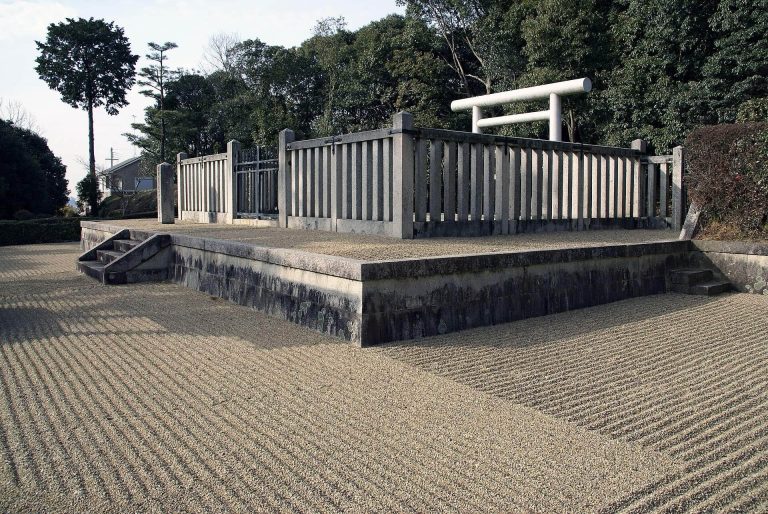
During the Genroku era of Japan’s Edo period, a search for imperial tombs found the site on temple land. A place for worship at the mausoleum was established there in 1864, and the precinct was repaired in 1899. The Imperial Household Agency’s designation and management of the mound as an imperial mausoleum have meant that no full-scale archaeological investigation has taken place.
The identification remains debated. Since historical records treat Bidatsu’s and Ishihime’s burials separately, one interpretation places them in different sections, at the rear and front of the mound. Cylindrical haniwa have also prompted doubts about the identification with Bidatsu; another proposed location for his tomb is a mound at Hamuro. If the identification is correct, Taishi Nishiyama Kofun would be the last keyhole-shaped imperial mausoleum and the latest imperial mausoleum with a row of haniwa.
Remains
The mound is keyhole-shaped and is the only mound of that form in its group. It occupies a low saddle on a ridge running north to south, in the foothills of Mount Nijo. Its front, rectangular section faces northwest. The reported length is 113 metres, with 93 metres also given. Two construction tiers shape the mound, which is encircled by a dry moat.
Haniwa fragments have been collected around the mound, including cylindrical forms. These finds provide the basis for dating its construction to the early part of the Late Kofun period.
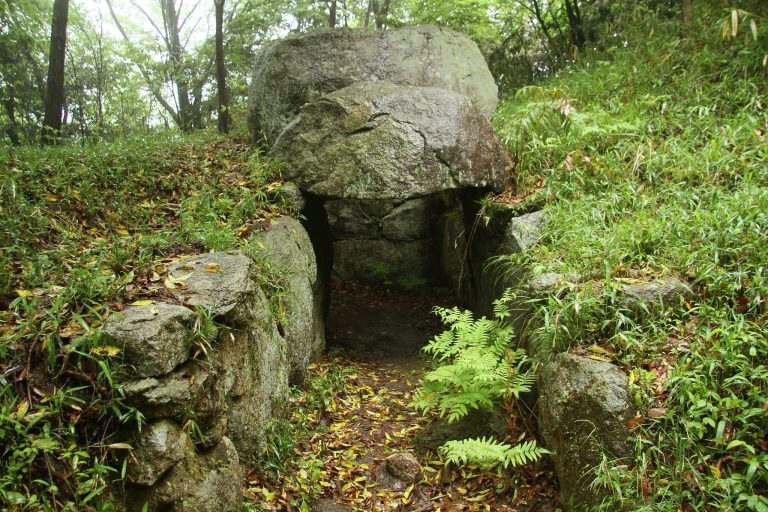
The form of the burial facility is unknown. A horizontal stone chamber has been proposed as a possibility.