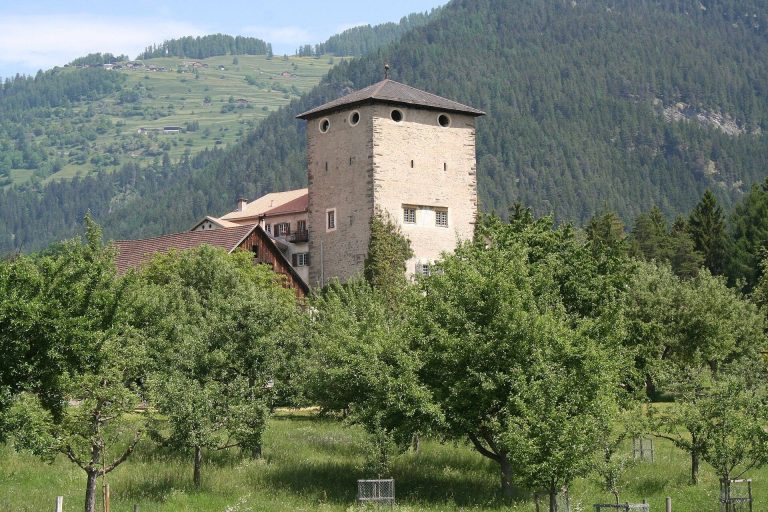
Tagstein Castle: A Medieval Noble Seat and Later Residence
Site at a Glance
- Popularity
- Medium
- Country
- Switzerland
- Primary era
- Modern
- Eras represented
- Medieval, Early Modern, Modern
- Civilizations
- Holy Roman Empire, Swiss
- Site type
- Domestic
- Remains
- Castle
On this page8 sections
History
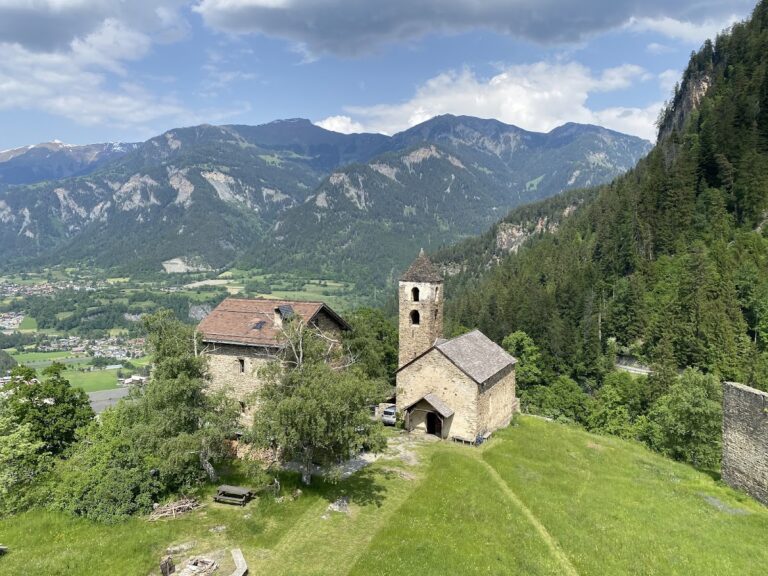
Tagstein Castle, also known as Untertagstein Castle, stands on a spur near Masein, northwest of Thusis in Switzerland. Dated to around 1220, it began as the seat of the nobles of Masein and later controlled access from an Alpine north-south route toward the Viamala and the Schams valley. Its oldest building section dates to the early 13th century, while a document from 1160 may refer to an earlier structure.
Medieval lordship and route control
The Masein family died out during the 13th century. The castle’s medieval name, Taxstaein, is thought more likely to derive from the German word for “badger” than from the word for “day.” In 1316 the castle belonged to the von Rialt family, also known as the Lords of Masein. Around 1322, ministeriales of Bärenburg held it while serving the Barons of Vaz. Ministeriales were members of a service nobility who held land or office under a more powerful lord. A subsidiary tower at Obertagstein stood along the route.
In 1342, Kunigunde von Vaz and her husband, Count Friedrich VII of Toggenburg, granted the castle as a fief to the brothers Hug, Sigfrid, and Johann Thumb. Stewards, or administrators, serving Cazis Monastery were based at Untertagstein. The Schauenstein family later succeeded the Rink family in this office. In 1348 Hug Thumb transferred his lands above the Landquart River to his son-in-law Albrecht von Schauenstein, whose descendants inherited the castle after Albrecht’s death.
Rhäzüns and Ringg holdings
In 1385 Anna Schauenstein, a nun at Lindau, sold the fortress to the Barons of Rhäzüns. Further inherited shares, including Obertagstein, later passed to the Rhäzüns family. A court judgment in 1450 granted Countess Ursula von Hohenberg, born into the von Rhäzüns family, rights associated with the castle. In 1477 Rudolf Ringg, resident at Tachsstain, held the castle as a fief from Emperor Frederick.
The Ringg family remained fiefholders into the 16th century. Tenants also appear to have worked the estate, while disputes over grazing rights repeatedly arose with the community of Masein.
The Capol and Salis families
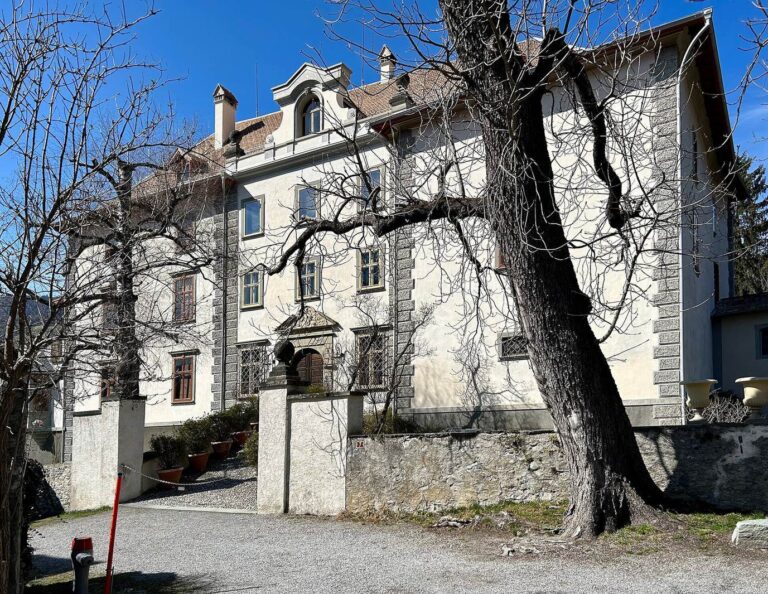
Around 1700 the influential Capol family of Flims owned the estate. Their Reformed religious views helped Masein and other Heinzenberg communities buy out rights held by the bishop, enabling their autonomy from 1709. Between 1703 and 1706, Johann Gaudenz von Capol and his brother, Colonel Herkules von Capol, enlarged the castle into a stately residence. Both brothers received pensions from European princely courts.
Herkules’s daughter Margaretha von Salis-Capol lived at the castle until 1733. Branches of the Salis-Tagstein family inherited the estate afterward, until their male line died out.
Later owners and rebuilding
Johann Jakobus von Rischatsch took over the estate in 1845 and sold it eight years later to Carl Augustin Golther von Ravensburg. In 1898 it belonged to Franz Rudolf von Planta and his wife Esther, before passing to further owners. A fire damaged the castle in 1899, after which the von Planta owners rebuilt it in a style inspired by earlier architecture.
Remains
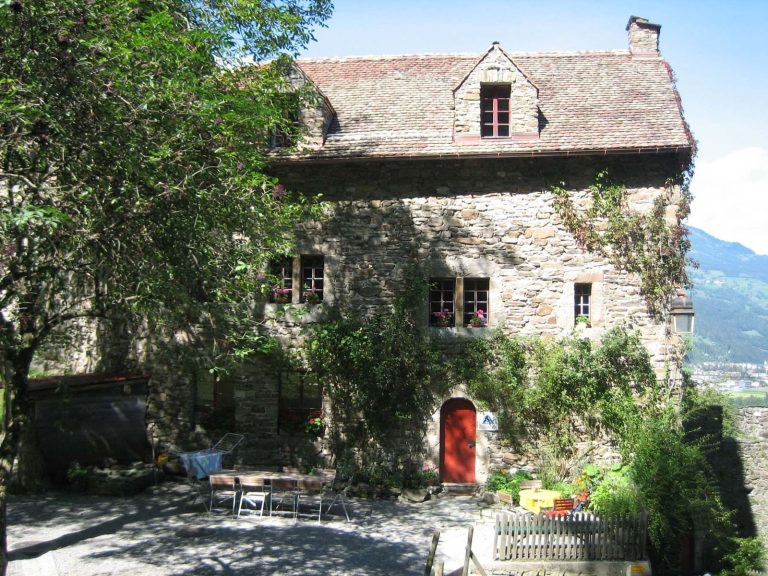
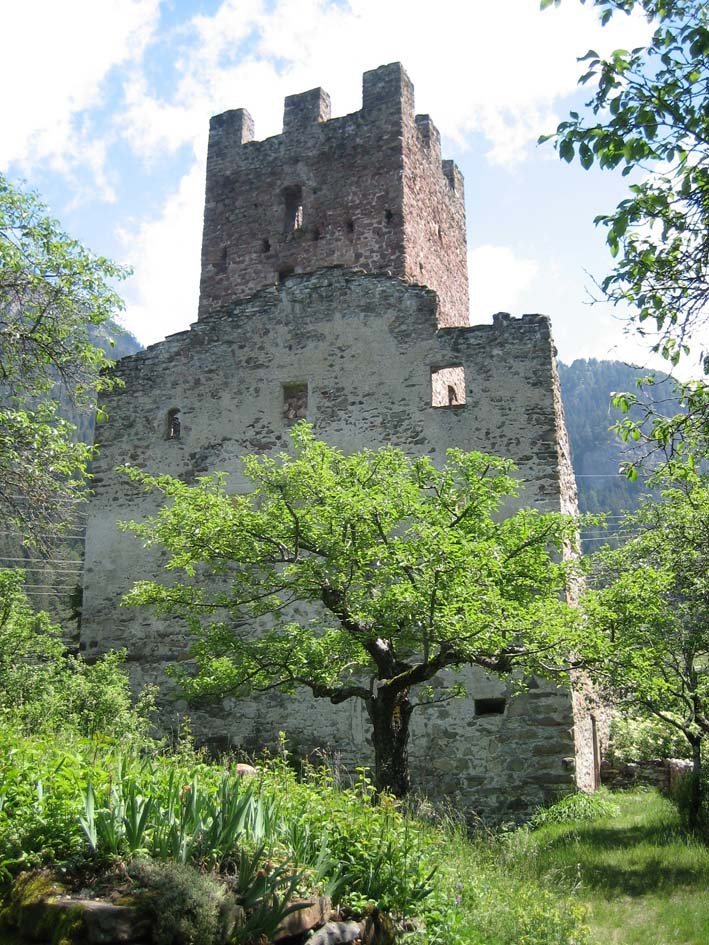
Tagstein Castle occupies a spur at an elevation of 845 metres and is now a private estate with agricultural outbuildings. Its walls are built of rubble stone, with some masonry finished so the stone faces remain visible and the mortar joints lie flush. Foundation walls survive in the lowest storeys, and the original tower developed over time into a substantial residence.
Castle residence
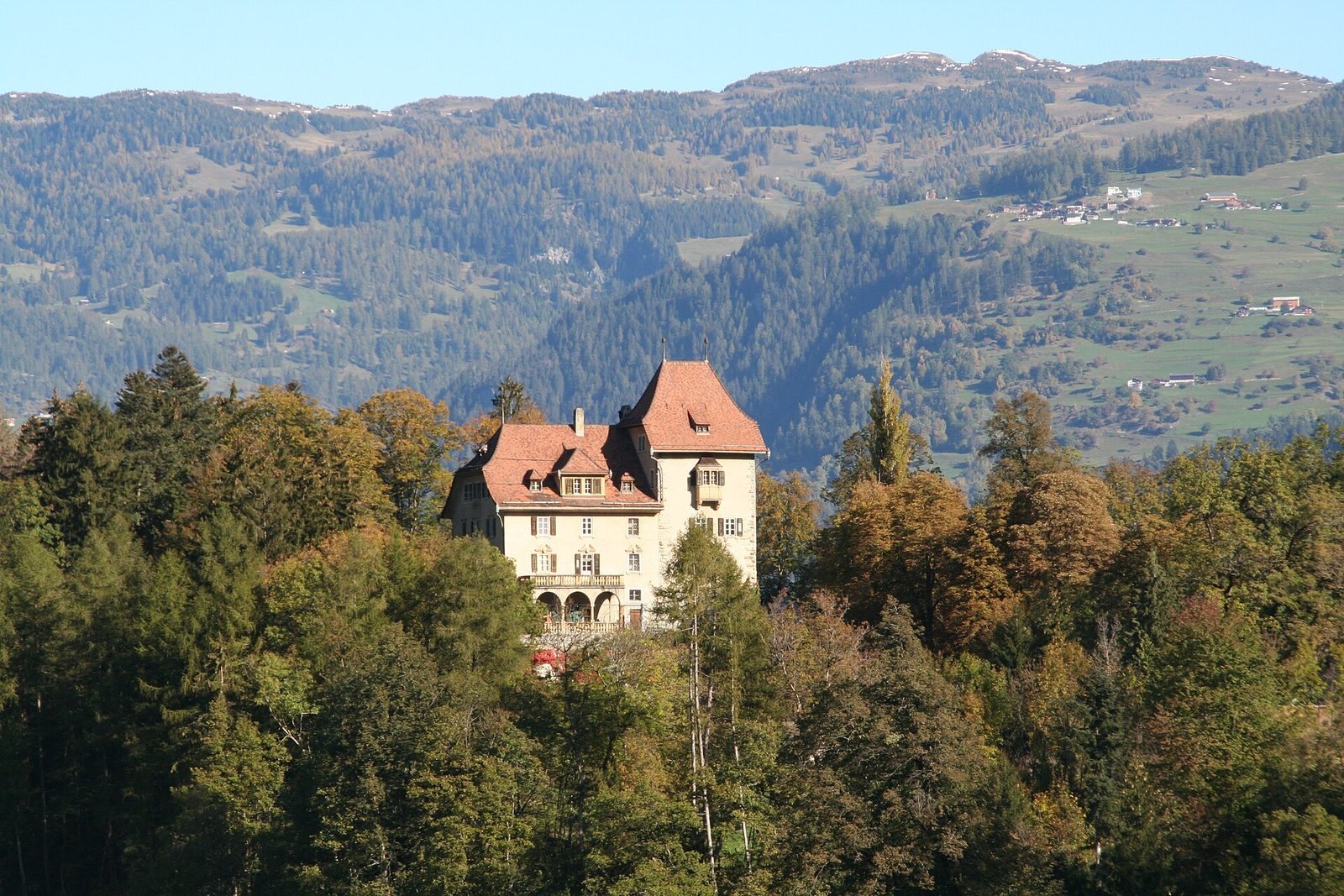
The castle’s present form chiefly reflects the rebuilding after the 1899 fire. It includes a roof with partly sloping ends and a raised section of tower; most of the interior fittings also date to this reconstruction.
Garden and entrance
A garden with small towers at its corners dates to 1706. Above the entrance gate, a stone bearing the Capol-Schorsch coat of arms is set into the west front.