Tabarka Fort: A Genoese Fortress and Colonial Settlement in Tunisia


Site at a Glance
- Rating
- 4.3
- Popularity
- Low
- Country
- Tunisia
- Primary era
- Early Modern
- Eras represented
- Early Modern
- Civilizations
- Genoese, Ottoman
- Site type
- Military
- Remains
- Fort
On this page7 sections
History
Tabarka Fort is a Genoese fortress and colonial settlement in Tunisia, located on Tabarka Island off the coast of the present-day city of Tabarka. It belonged to the overseas possessions of the Republic of Genoa from 1542 to 1741 and served a colony built around coral fishing and trade along the North African coast.
Genoese Concession and Coral Trade
Genoa began negotiating with the Ottoman authorities in 1540 for the release of Turgut Reis, an Ottoman admiral held as a galley slave, meaning a person forced to labor aboard a rowing warship or transport vessel. Giannettino Doria, grandson of the prominent Genoese admiral Andrea Doria, played an important part in these negotiations. In 1542, Genoa secured a concession over Tabarka Island, bringing it into the republic’s overseas territories.
The Lomellini family operated the concession and was sometimes described as the lord of Tabarka. The Grimaldi family also took part on a smaller scale. Tabarka became a center for coral fishing and a prosperous coral trade. The colony maintained good relations with Arab neighbors on the mainland, while Italian or Ligurian and Arabic served as its main languages. Enslaved people from Spain and North Africa were brought to collect coral.
Overcrowding, Migration, and Destruction
By 1738, serious overcrowding on the island coincided with a degree of depletion in the coral reserves. Some colonists moved to Sardinia, founding Carloforte on San Pietro Island and Calasetta on Sant’Antioco Island. Carloforte was named for Charles Emmanuel III of Savoy, king of Piedmont-Sardinia. The inhabitants of both settlements became known as Tabarchini, a name for people from Tabarka.
Other colonists remained on the island, but relations with the Ottoman authorities grew increasingly hostile. In 1741, the Sultan of Tunis attacked Tabarka Fort. Houses and fishing vessels were destroyed, and the Genoese inhabitants were enslaved as galley slaves. Charles Emmanuel III of Sardinia and Charles III of Spain competed to ransom as many Genoese as possible, and the captives were eventually freed.
After their liberation, the colonists went partly to Carloforte and Calasetta. The king of Spain also brought hundreds of them to the uninhabited island of San Pablo near Alicante. The island was renamed Nueva Tabarca, or New Tabarka, and is now the Spanish town of Tabarca.
Remains
Fortress and Colonial Settlement
Fortress Position and Function
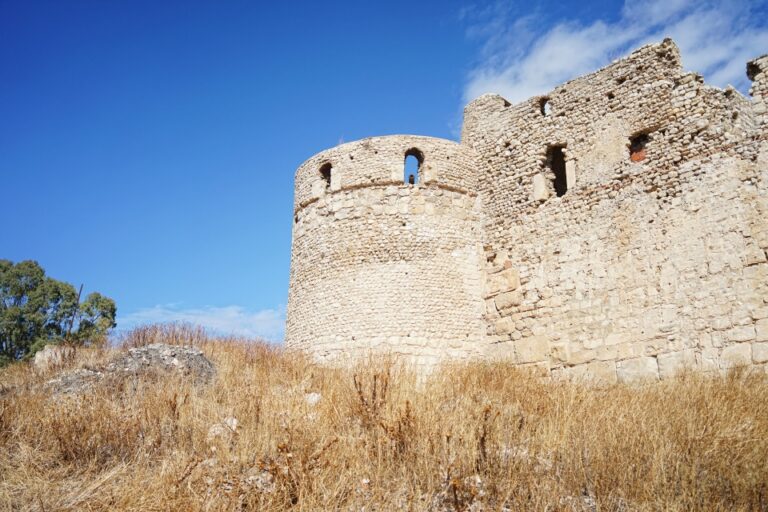
The fort occupied the highest point of Tabarka Island. It accommodated Genoese military personnel and administrative offices connected with Genoa, combining the defensive and governing functions required by the colonial concession.
Houses and Fishing Equipment
The settlement around the fort included houses and fishing vessels that supported the coral-fishing community. Both the houses and the vessels were destroyed during the attack of 1741, which ended the Genoese colony on the island.