Szigliget Castle: A Medieval and Frontier Fortress in Hungary


Site at a Glance
- Rating
- 4.8
- Popularity
- High
- Country
- Hungary
- Primary era
- Medieval
- External website
- Open
- Eras represented
- Medieval, Early Modern
- Civilizations
- Hungarian
- Site type
- Military
- Remains
- Castle
On this page7 sections
History
Szigliget Castle is a medieval stone fortress in Szigliget, Hungary, built by the Pannonhalma Benedictines between 1260 and 1262. King Béla IV granted the abbey an island in Lake Balaton for its construction after the Mongol invasion of 1241–1242, during a period when he supported extensive castle building in Hungary. The king later acquired the castle in exchange for estates in Nitra, Somogy, and Zala.
Royal Castle and Noble Ownership
After entering royal possession, Szigliget was administered by the Móriczhidai family of the Pok kindred. In 1441, King Ulászló I granted the castle to Némai Kolos Jeromos. By 1445, it belonged to the Újlaki family, which retained it until 1521. During the fifteenth and sixteenth centuries, the fortress also expanded beyond its original upper enclosure as a lower castle developed to the north.
Sixteenth-Century Siege and Frontier Defense
In 1531, Török Bálint, a Hungarian nobleman and military commander who supported the Habsburg King Ferdinand, received a royal grant of Szigliget. He ordered the military officer Martonfalvay Imre to besiege the castle with a large force. Martonfalvay placed siege guns on the rock opposite the upper castle, and the garrison surrendered immediately. He then rebuilt and enlarged the fortress. His diary, written between 1531 and 1540, preserves details of both the siege and the subsequent construction work.
As Ottoman conquests advanced around Lake Balaton, Szigliget became part of Hungary’s frontier-fortress system, a network of fortified strongholds defending the border against Ottoman expansion. Under the Lengyeltóti Lengyel family, the castle’s best-known captain was Magyar Bálint, whose office involved commanding the border stronghold. After his death, his brother-in-law Lengyel István became captain in 1573.
By the sixteenth century, Szigliget was regarded as outdated because it stood outside the principal routes of military campaigns and had not been modernized. Ottoman forces based on the Somogy shore repeatedly crossed Lake Balaton by boat to plunder Christian villages, but their raids against Szigliget itself were unsuccessful. The coastal Óvár also monitored these movements and served as a base for Hungarian war boats.
Fire, Demolition, and Later Conservation
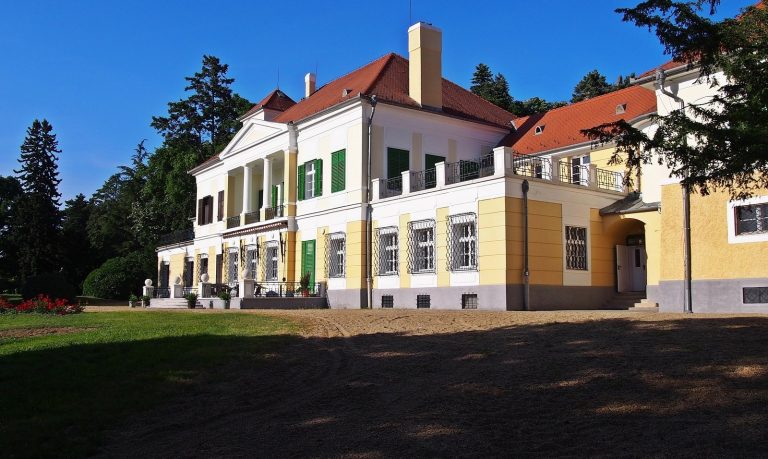
Around 1645, fire destroyed the castle, after which Lengyel Boldizsár rebuilt it. In 1697, lightning ignited gunpowder stored in one of the towers. The resulting fire destroyed the castle buildings. The impoverished Lengyel family did not restore the fortress and instead constructed a manor house in the village below.
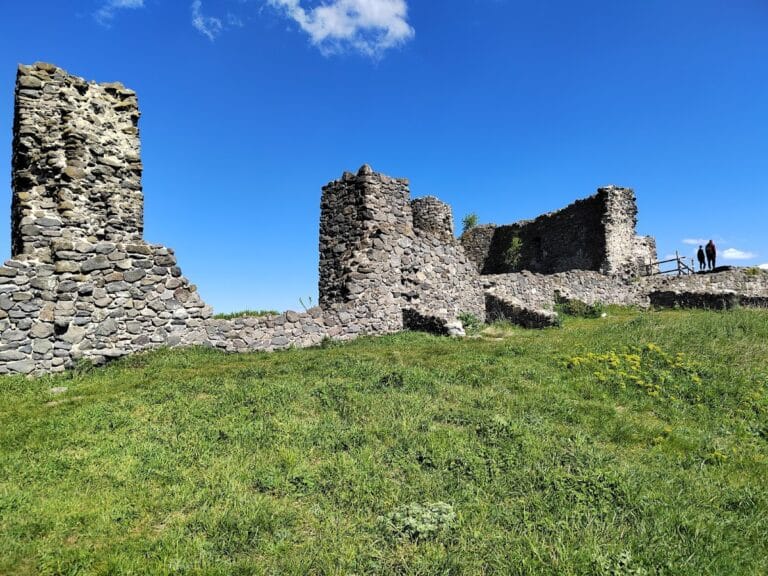
After Ottoman rule ended, Szigliget lost its military importance. In 1702, Emperor Leopold I ordered its demolition together with other castles. The fortress was already unusable during the Rákóczi War of Independence, an uprising against Habsburg rule that lasted from 1703 to 1711. Local inhabitants later dismantled its stones for building materials. Twentieth-century conservation work strengthened the surviving walls, including interventions in 1953 and 1965–1966. Szigliget is also included in the third phase of Hungary’s National Castle Programme.
Remains
Hilltop Setting and Double-Castle Layout
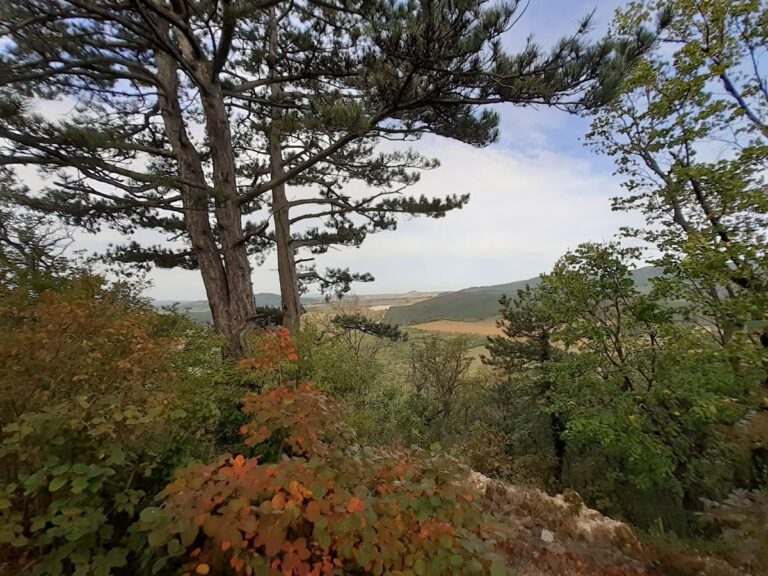
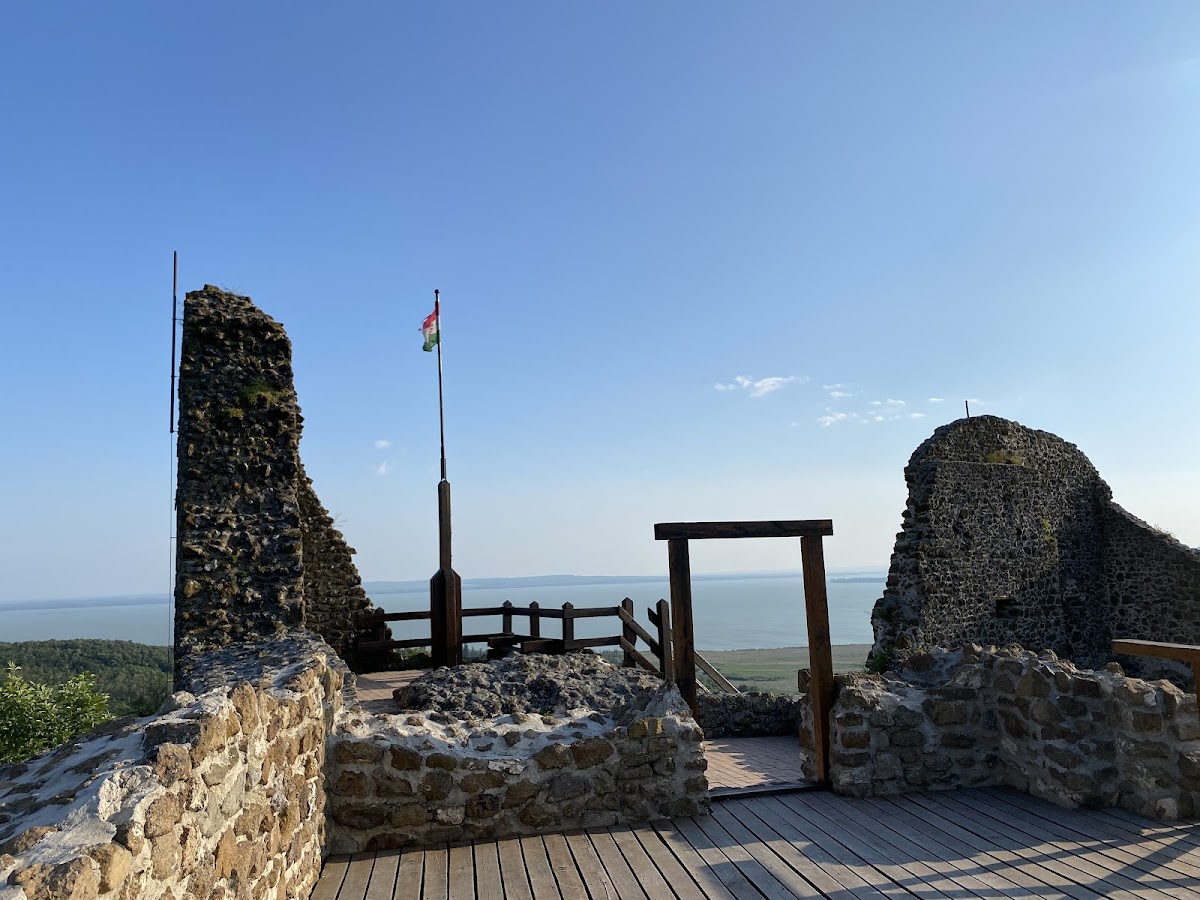
Szigliget Castle survives as a stone ruin on a volcanic hill beside Szigliget and Lake Balaton. The elevation rises approximately 230–234 metres above sea level and occupies ground that was once an island in the lake. When the castle was built, the island could be reached only by boat. Nineteenth-century water regulation later turned it into a peninsula surrounded by numerous volcanic hills.
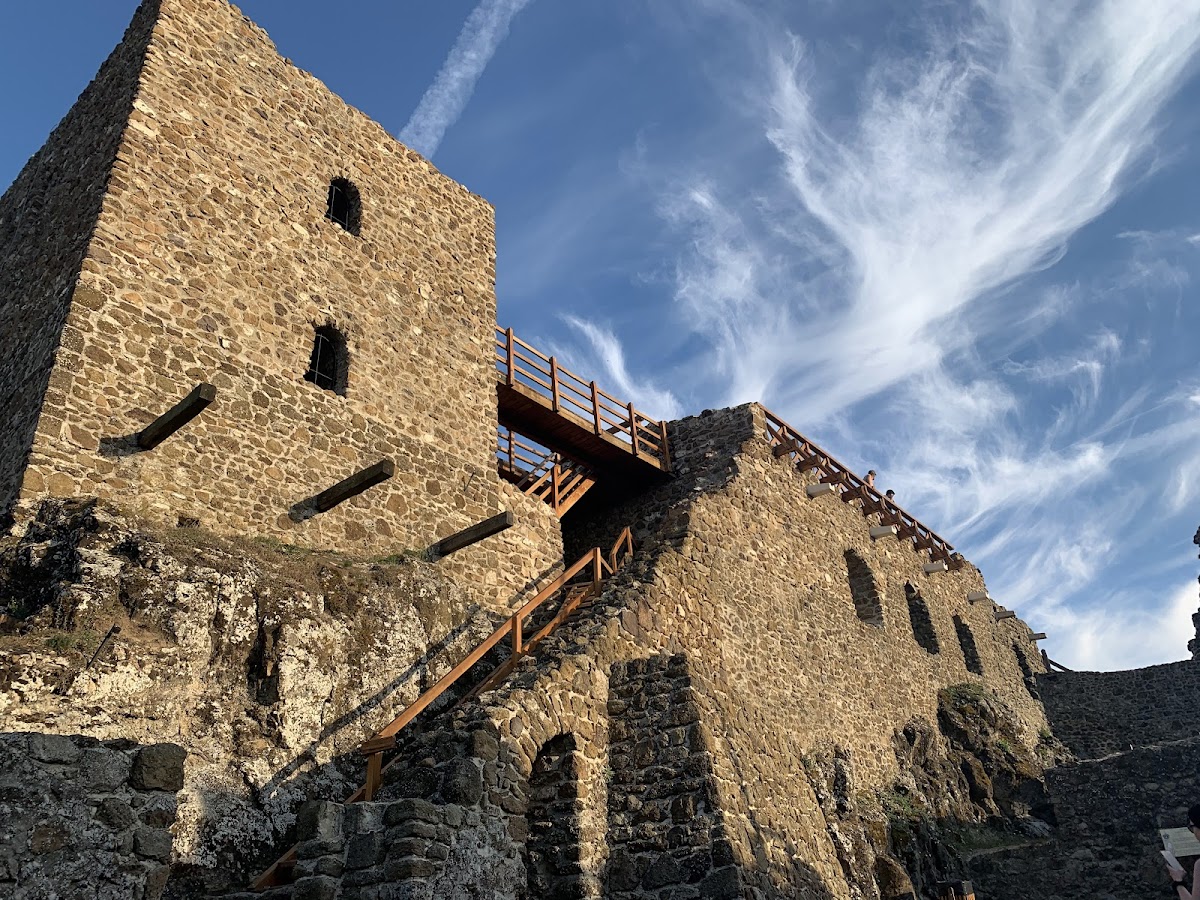
The fortress formed a double-castle complex consisting of an upper and a lower enclosure. The earliest recorded elements are a palace wing positioned between two towers and the stone walls surrounding them. The upper castle, formed by the palace and its two towers, measures approximately 75 by 20 metres. A lower castle was established to the north during the fifteenth and sixteenth centuries, measuring approximately 75 by 50 metres. Equipped with a rondel, a rounded or semicircular artillery fortification, the lower castle served as the principal defensive stronghold. Its surviving stone fabric remains ruined, while the walls have been reinforced by modern conservation work.
Óvár and Lake Balaton Defenses
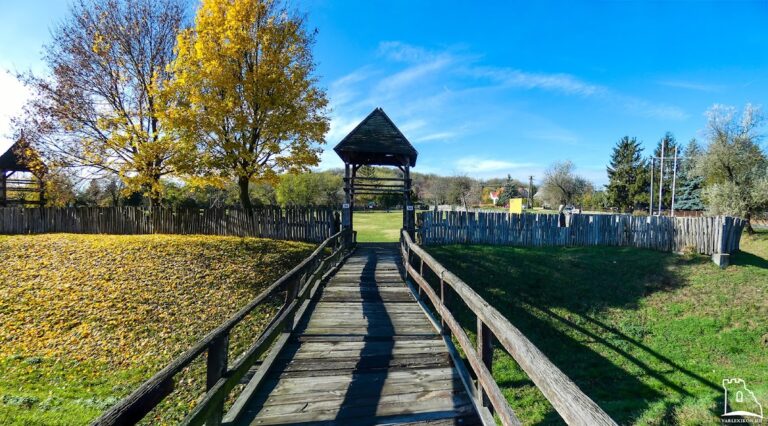
The coastal Óvár occupied an elevated position associated with the castle’s control of the lake. Its purpose was to monitor Ottoman boats crossing from the Somogy shore, while archaeological research identifies the site as a base for Hungarian war boats. This feature connected Szigliget’s hilltop fortress with the wider frontier defenses that operated across Lake Balaton during the Ottoman period.