Castle Csobánc: A Medieval Frontier Fortress in Hungary
Site at a Glance
- Rating
- 4.8
- Popularity
- Medium
- Country
- Hungary
- Primary era
- Medieval
- External website
- Open
- Eras represented
- Medieval, Early Modern
- Civilizations
- Hungarian
- Site type
- Military
- Remains
- Castle
On this page9 sections
History
Castle Csobánc is a medieval stone-built fortress in Hungary, located on Csobánc Hill above Gyulakeszi. First documented in 1272, it may have originated before 1255 and became a frontier stronghold during the long conflicts between the Ottoman Empire and the Kingdom of Hungary and its successor powers.
Origins and noble ownership
The name Csobánc derives from the diminutive form of Csobán, a Turkic-origin word meaning “shepherd.” The hill entered the historical record in 1221, when the Atyusz clan, a medieval Hungarian noble kindred, donated a vineyard there. During the first half of the thirteenth century, a dispute developed between royal stewards who held the hill and nobles from Diszel. Those nobles had planted vineyards and built a stone structure, which is often considered a predecessor of the castle, although no contemporary document describes it as a castle.
From the thirteenth century until the second half of the seventeenth century, Csobánc belonged to the Gyulaffy family, a branch of the Rátót noble clan associated with the site. The Diszel nobles involved in the earlier dispute are sometimes regarded as ancestors of the Gyulaffys and possible builders of the fortress. After its first mention in 1272, the castle does not appear again in the surviving record until 1420.
Fortification and Ottoman frontier warfare
Following the death of King Matthias in 1490, Csobánc may have faced danger from the incursions of Habsburg Maximilian, the Holy Roman emperor whose forces intervened in the succession struggles after Matthias’s death. Kinizsi Pál, a celebrated Hungarian military commander, ordered the castle to be converted into a fortified stronghold. Command was given to Leányfalusi Ágoston, Kinizsi’s captain at Somló.
In 1491, the widowed wife of Rátóti Gyulafi László transferred the castle to her brother, Gersei Pető János. During the early sixteenth century it was held first by Gyulafi István and then by his son, Gyulafi László, who was both the owner and its noted captain. Csobánc later became important in the Ottoman–Hungarian frontier wars, a prolonged series of conflicts in which fortified border bases defended Hungarian territories against Ottoman expansion.
Ottoman forces unsuccessfully besieged Csobánc in 1554 and again in 1559. During the first attack, one of the castle walls collapsed from its foundations. In 1561, the Ottomans captured Hegyesd Castle, but forces operating from Csobánc successfully besieged and retook it in 1562. Further strengthening was ordered as the Ottoman threat continued, though the work achieved little beyond a small increase in the garrison. The castle consequently deteriorated, even as its defenses continued to withstand Ottoman sieges.
In 1664, Ottoman troops passed in front of Csobánc while marching to and returning from the Battle of Szentgotthárd. Evliya Çelebi, an Ottoman traveler and historian, recorded that the defenders fired fifty cannon shots as the army went past.
The Rákóczi uprising and destruction
The princely Esterházy family purchased Csobánc in 1669. Authorities in Vienna then decided that the castle should be demolished, but the outbreak of the Rákóczi War of Independence prevented the plan from being carried out at that time. Before the uprising, the later celebrated military leader Béri Balogh Ádám served at Csobánc as an infantry officer.
Imperial troops held the fortress until 1705, when Kuruc forces captured it under Domonkos Ferenc and Kisfaludy László. The Kuruc were anti-Habsburg soldiers and insurgents during the Hungarian uprisings of the seventeenth and early eighteenth centuries. On 25 February 1707, Imperial Field Marshal Jean Rabutin attacked Csobánc with an army of approximately 1,000 men. The garrison numbered about thirty soldiers under Kuruc sub-lieutenant Szász Márton, supported by thirty noble refugees, women, and children. The attacking force included Austrian, Serbian, pro-Imperial Hungarian, and Danish troops and lost nearly 400 men, including fifty-two officers.
In 1709, Csobánc returned to Imperial control, and its destruction by explosives began. By 1722 it was described only as a ruin. The former Gyulaffy manor house was mentioned separately in the village below.
Archaeology and literary memory
Flóris Rómer visited and surveyed the castle in 1861. Archaeological excavation and research began in 1953, followed by further surveying in 1984 and additional archaeological work between 2007 and 2011. In May 2003, a local group founded the Csobánc Castle Foundation to support the ruin’s preservation and restoration. The castle is included in the third phase of Hungary’s National Castle Program, a state heritage initiative for restoring and presenting historic castles and ruins.
Csobánc also entered nineteenth-century Hungarian literature. Sándor Kisfaludy wrote the verse epic Csobánc in 1807. János Kis recalled visits to the ruins of Csobánc and Hegyesd in his 1845 memoirs, while Sándor Vachott wrote admiringly of Csobánc, Tátika, and Rezi in his poem In the Balaton Region.
Remains
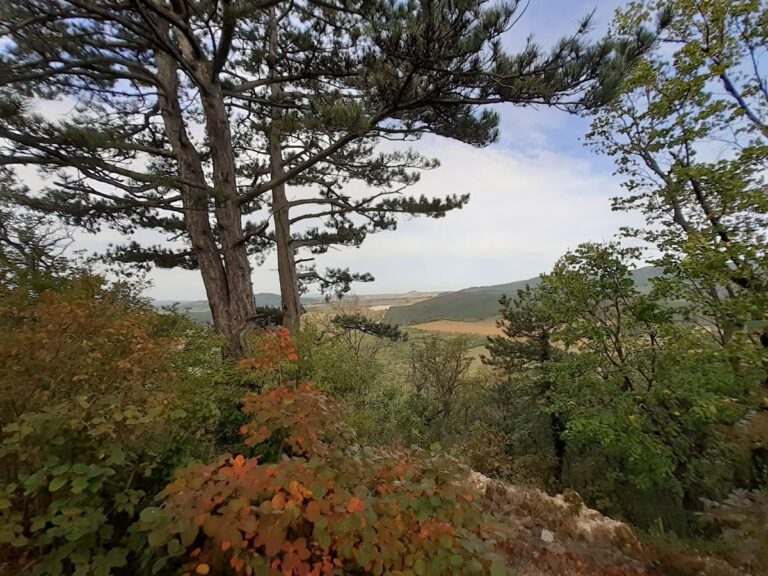
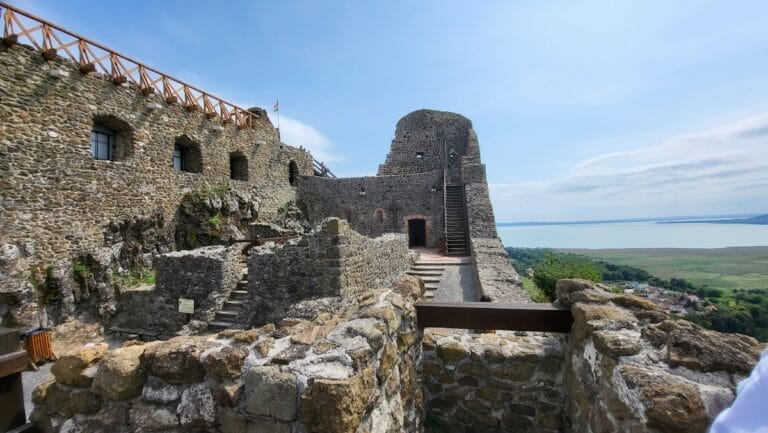
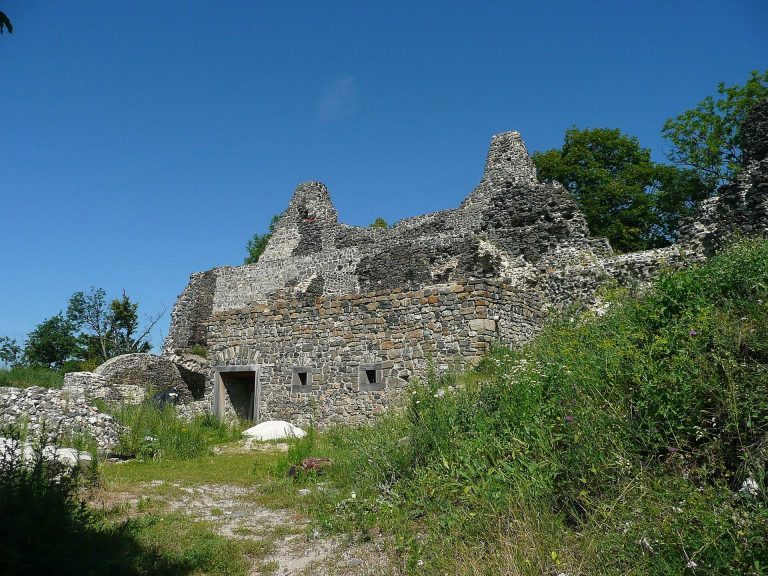
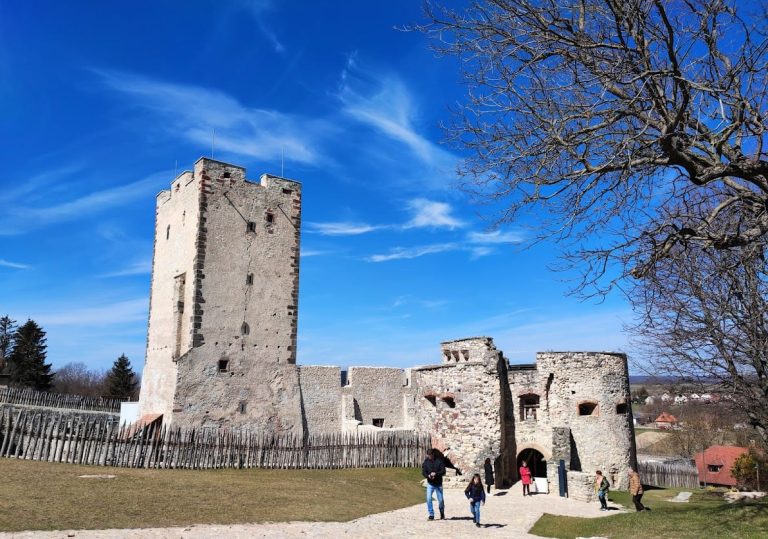
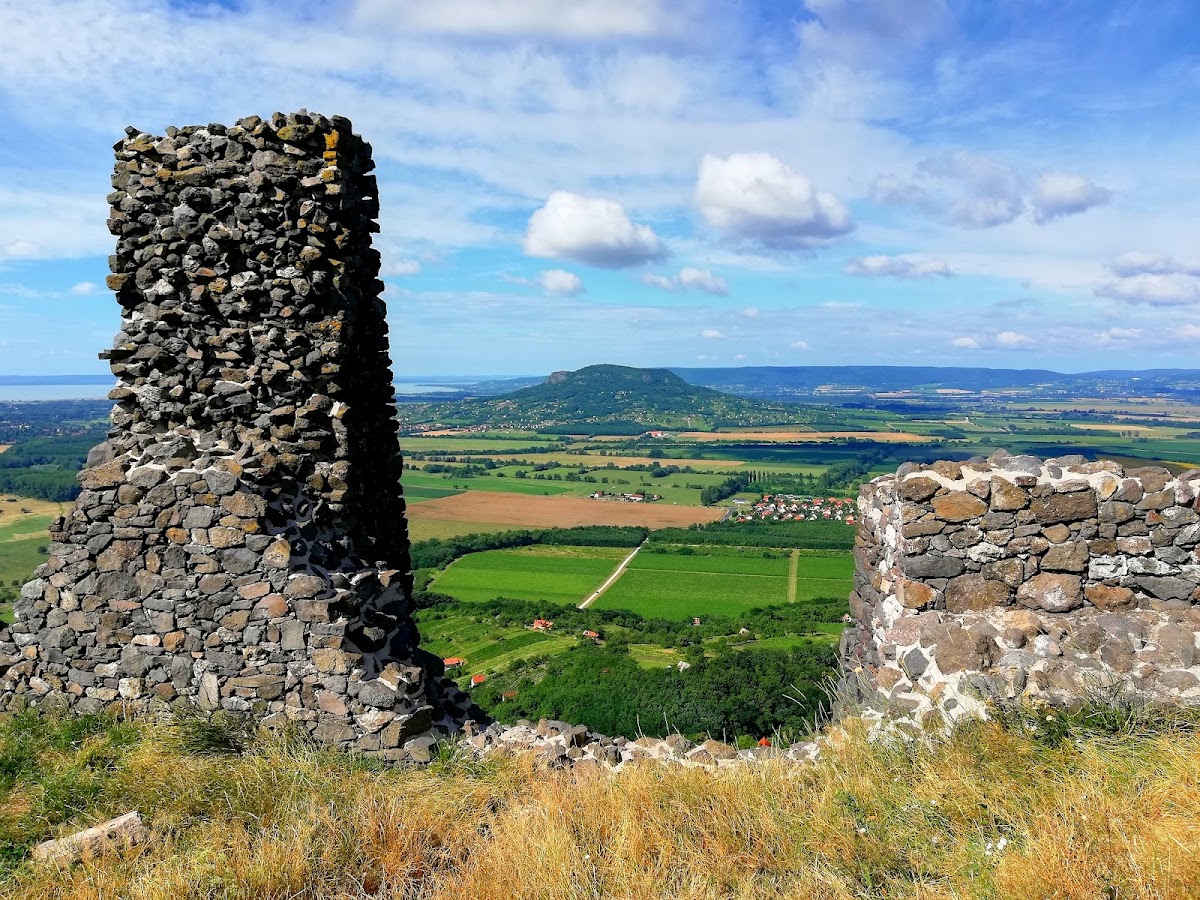
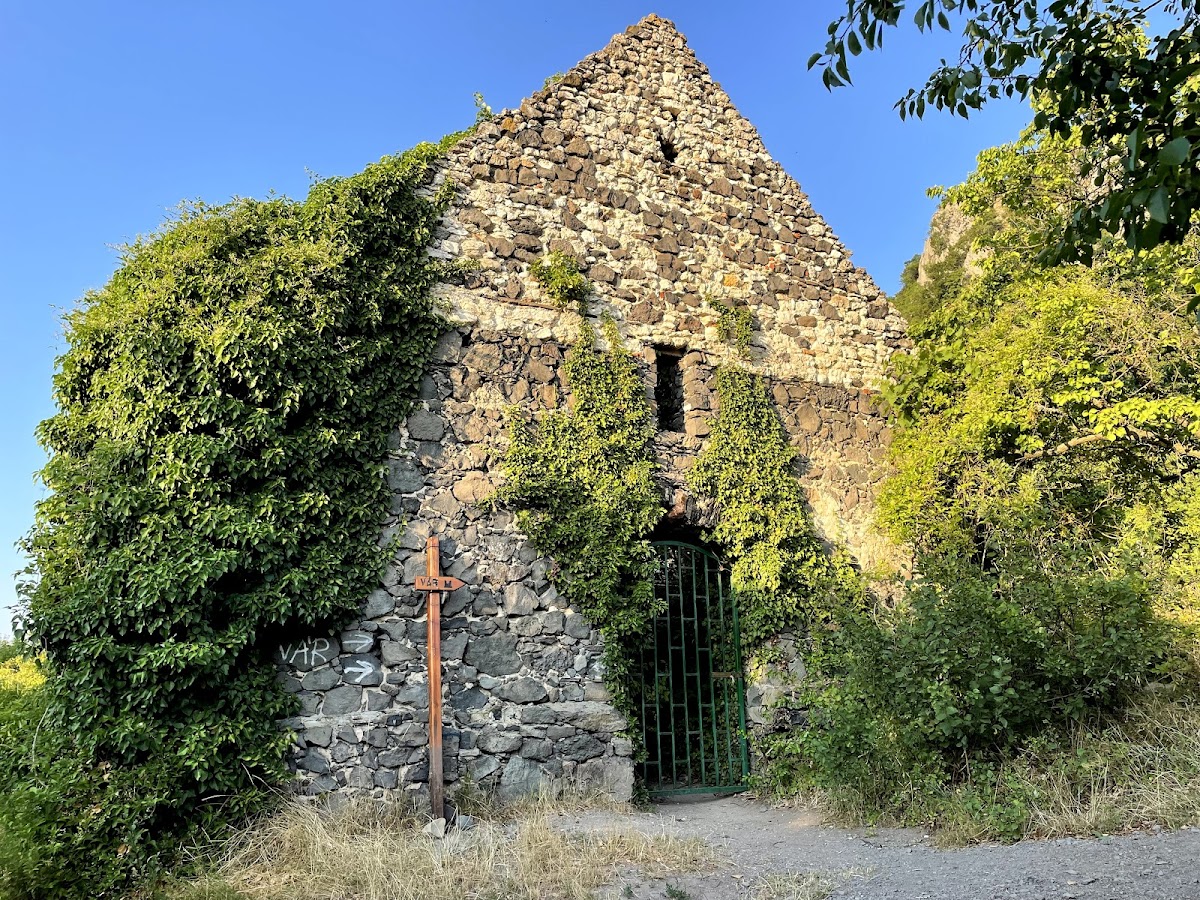
Castle Csobánc survives as a stone-built ruin on a flat summit or plateau of Csobánc Hill. The hill lies east of Gyulakeszi and south of Diszel, in the eastern part of the Tapolca Basin, at the northern edge of the Balaton watershed and the Balaton Uplands. The summit measures approximately 260 by 190 metres across. Its height is described as 376 metres, while the listed elevation of the site is 378 metres.
Summit layout and defensive earthworks
Inner castle
The inner castle occupied the southwestern part of the summit. A ditch and an earthwork rampart surrounded this area, creating a distinct enclosure from the rest of the plateau. The surrounding defensive works measure approximately 15 to 26 metres in diameter.
Outer castle
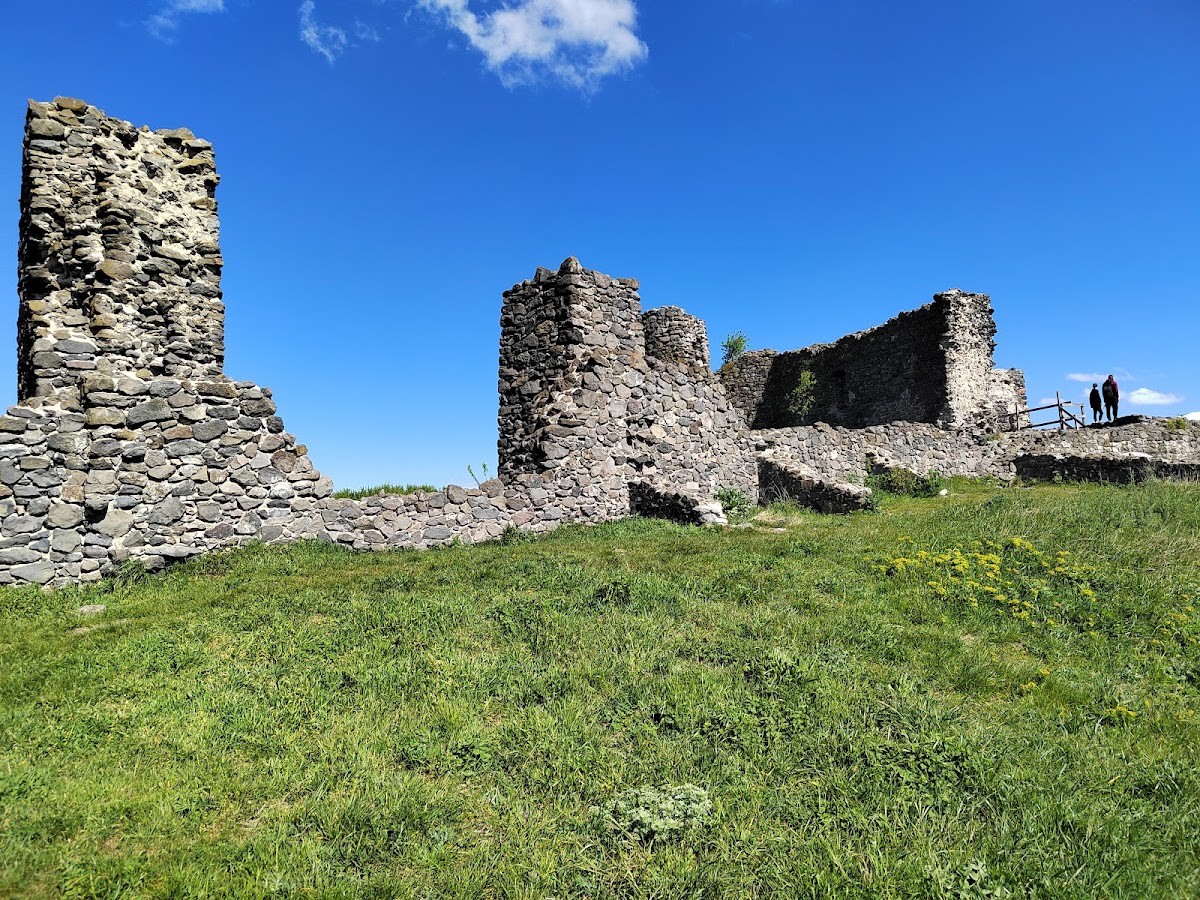
The outer castle extended across essentially the entire mountaintop. Slight wall remains survive across the summit, together with pits of various shapes visible on the surface. The site remains a ruin, and archaeological exploration is continuing.