Strkovice Castle: A Historic Manor House in Czechia
Site at a Glance
- Rating
- 4.4
- Popularity
- Very Low
- Country
- Czechia
- Primary era
- Early Modern
- Eras represented
- Early Modern, Modern
- Civilizations
- Austrian Empire, Habsburg, Holy Roman Empire, Kingdom of Bohemia
- Site type
- Domestic
- Remains
- Manor House
On this page8 sections
History
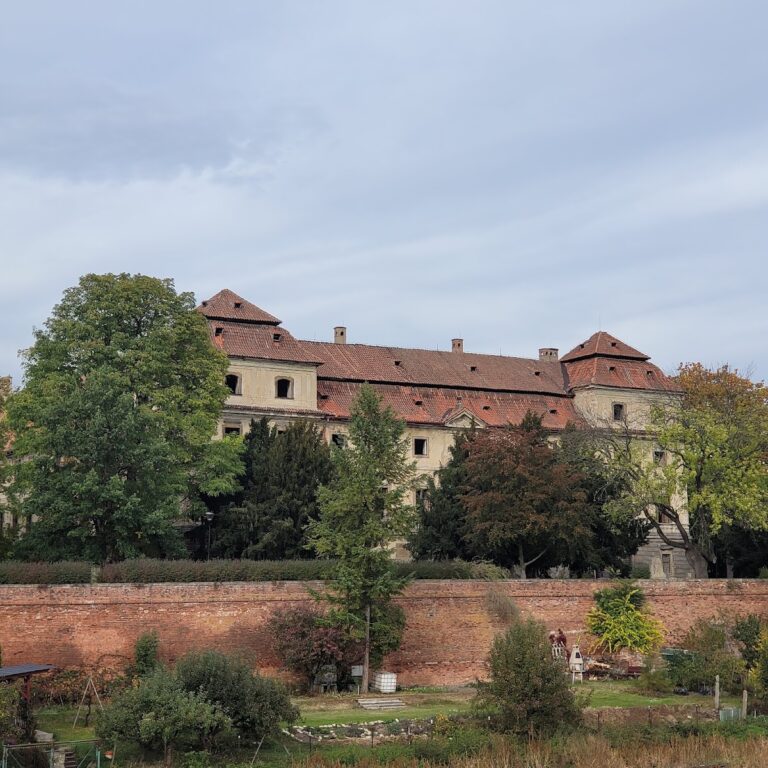
Strkovice Castle is a historic manor house in Strkovice, Czechia, near Postoloprty. Its construction is traditionally placed around 1602, although that date remains uncertain. A later heritage catalogue placed the building’s origin no later than 1634, during the Thirty Years’ War, the European conflict of 1618 to 1648 that brought extensive destruction to Central European villages and estates.
Origins and the Jindra estate
The possible early builder was Václav Jindra, known as Sládek, a patrician of Žatec, meaning a member of the town’s propertied urban elite. Jindra acquired the Strkovice estate from the Royal Chamber in 1596, after the property had been confiscated from Jiří Popel of Lobkovic. The Royal Chamber administered property and revenues belonging to the Bohemian crown and could transfer or sell confiscated estates.
Jindra served on the Žatec municipal council from 1590 to 1598 and acted as the town’s royal reeve, a local official representing royal authority, from 1598 to 1606. He died in 1610. If the castle was built during the first decade of the seventeenth century, its construction may have taken place during his ownership, but the precise origin of the building is not established.
War and changing ownership
After Jindra’s son Karel took part in the uprising of the Bohemian Estates, the Strkovice property was confiscated again by the Royal Chamber. It was briefly acquired by the imperial general Martin de Hoeff-Huerta. Strkovice village was devastated during the Thirty Years’ War, and the estate changed hands after de Hoeff-Huerta’s death in 1644.
Ownership then passed to Magdalena Pachonhayová and, from 1663, to her heir František Norbert Fleissner. Fleissner’s descendants retained the property until 1805. Records concerning purchases and confiscations before 1650 described Strkovice as a manorial farm. The castle’s development into a residential seat may therefore have been associated with the Fleissner family rather than with the estate’s earlier owners.
Nineteenth and twentieth centuries
Several owners held Strkovice during the nineteenth century, beginning with the Žatec burgher Antonín Brumer. In 1902, the Žatec hop merchant Jakob Lang purchased the castle and its land. Lang also owned an agricultural estate that included a small chateau at Mradice.
The building later contained apartments. Restitution in 1992 returned it to the owners who had possessed it in 1948, after which they reconstructed the castle. Strkovice Castle has been protected as a cultural monument since 1964.
Remains
Building and courtyard
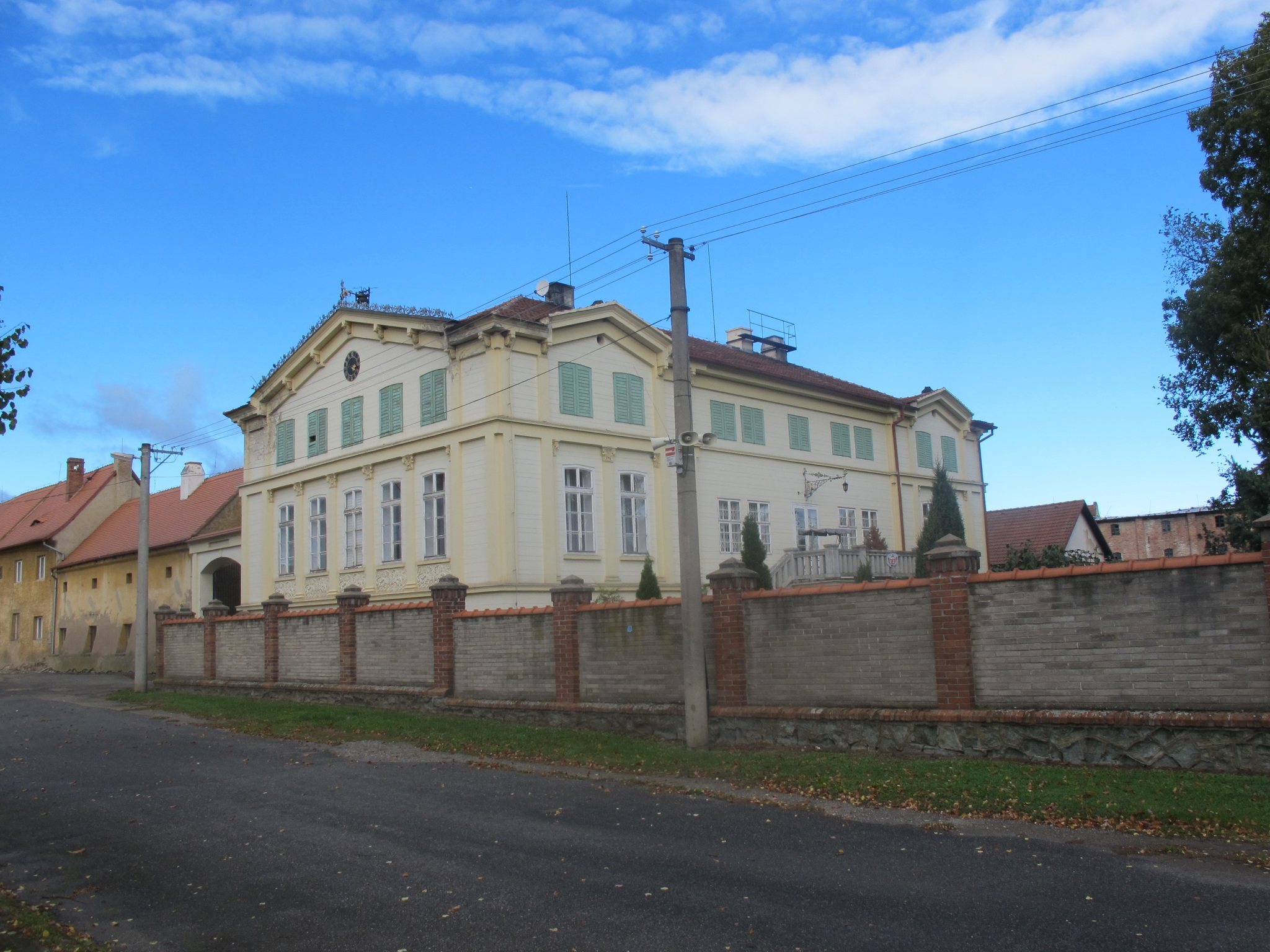
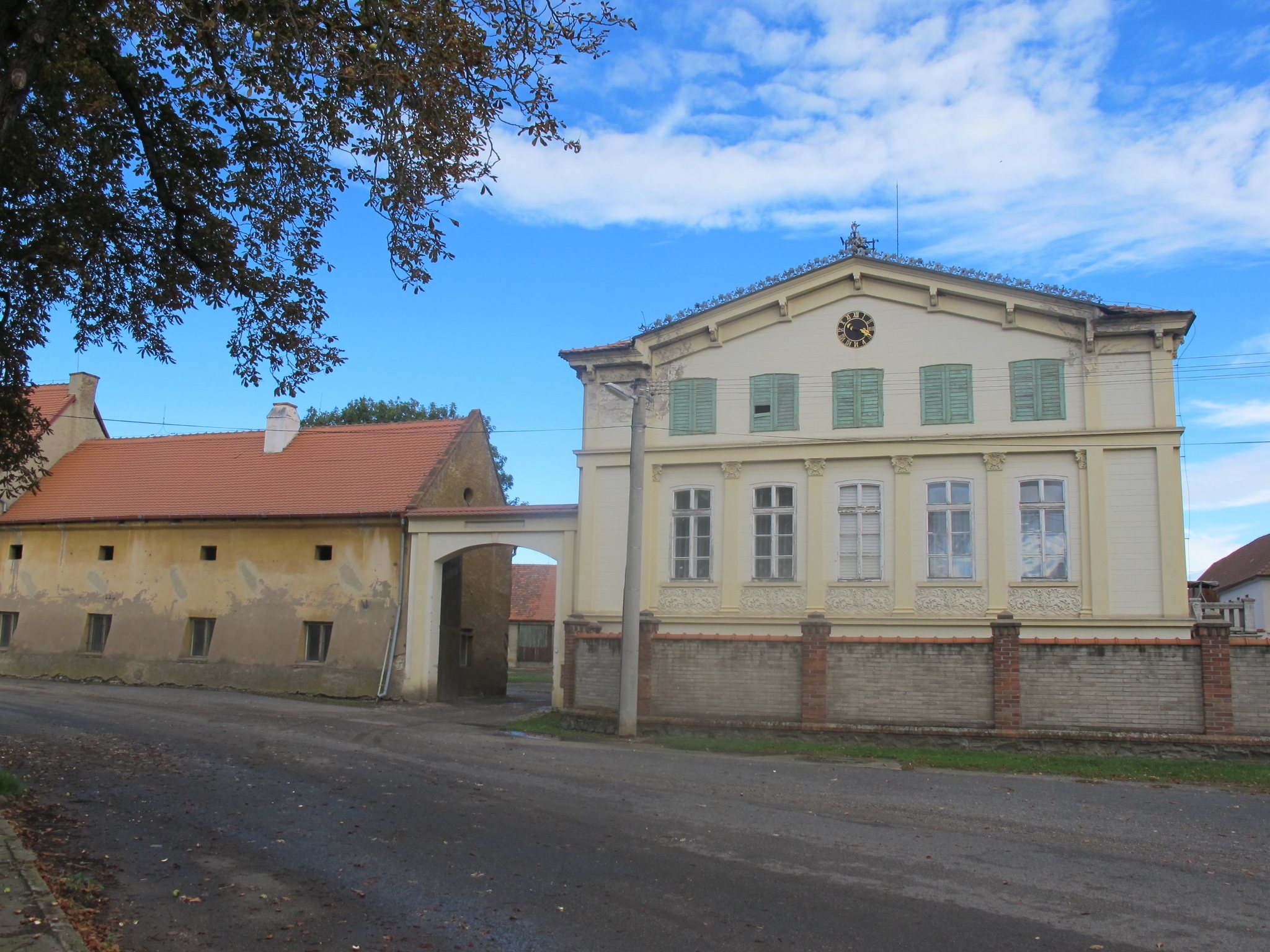
Strkovice Castle stands on the western side of the village square, opposite the Baroque Chapel of Saint Anne. The two-storey rectangular building forms the eastern side of a farm courtyard. Its courtyard facade has two shallow projections, while pilasters, which are shallow wall-attached projections resembling columns, and cornices, projecting horizontal architectural bands, divide and shape the elevation.
Restorations and architectural character
Inscriptions on the facade record restoration work in 1747 and 1848. During the 1848 alteration, carried out under the pomologist Klemens Rott, a specialist in the cultivation and study of fruit trees, the second floor was added. The building probably acquired its present Neoclassical appearance at that time. Neoclassical architecture draws on the forms and proportions associated with ancient Greek and Roman architecture.
Park
By 1902, a small English-style park extended around the castle. The park formed part of the estate associated with the building and its agricultural setting.