Burg Betzenstein: A High-Medieval Hilltop Castle in Germany


Site at a Glance
- Rating
- 3.7
- Popularity
- Very Low
- Country
- Germany
- Primary era
- Early Modern
- Eras represented
- Medieval, Early Modern, Modern
- Civilizations
- Holy Roman Empire
- Site type
- Military
- Remains
- Castle
On this page8 sections
History
Burg Betzenstein is a high-medieval hilltop castle in Germany, probably built around 1187 on the 512-metre Schlossberg in Betzenstein, Bavaria. It served as the seat of Friedrich von Betzenstein, a medieval ministerial, meaning an administrative or military officeholder serving a territorial lord. The castle later became involved in the competing claims of the Prince-Bishopric of Bamberg, the Leuchtenberg landgraves, the Crown of Bohemia, and other regional rulers.
Medieval Origins and Rival Claims
The castle first appears in a record dated 11 August 1311. On that date, Bamberg’s prince-bishop Wulfing of Stubenberg enfeoffed Konrad von Schlüsselberg with Betzenstein, explicitly referring to the Schlüsselberg family’s services to the Prince-Bishopric of Bamberg. This lordship was both an ecclesiastical and secular territory ruled by the prince-bishops of Bamberg, who could hold castles and grant them as fiefs.
During the feud between Bamberg bishop Werntho Schenk von Reicheneck and Ulrich of Leuchtenberg, Bamberg probably lost control of part of the castle. On 30 May 1327, Landgrave Ulrich granted his portion as a fief to the Crown of Bohemia. The complex may then have consisted of two castle sections on separate rocky summits, with an episcopal castle to the north and a Leuchtenberg castle to the south. This possible arrangement is also supported by the later reference to a castle section that was still known in the sixteenth century but had subsequently become deserted.
Transfers of Possession
An agreement reached in 1347 between the bishops of Würzburg and Bamberg and the burgraves of Nuremberg changed the ownership of Betzenstein. Burgraves were territorial lords or castle governors with administrative and military authority, and the burgraves of Nuremberg belonged to the Hohenzollern ruling house. Possession passed to them, and in 1359 they sold the castle to the Leuchtenberg landgraves, rulers of the Landgraviate of Leuchtenberg. The sale brought the entire complex under Leuchtenberg control.
Emperor Charles IV subsequently granted the Leuchtenberg rulers the right to fortify the market town of Betzenstein. Charles IV ruled the Holy Roman Empire from 1355 to 1378 and was also king of Bohemia, so his grant could confirm feudal rights and territorial privileges. King Rupert I occupied the castle in 1402. On 13 February 1418, Landgrave Leopold sold both the castle and the town to Count Palatine John of Neumarkt-Neunburg, a prince of the Palatinate.
Destruction and Rebuilding
The castle was destroyed soon afterward during the Bavarian War of 1420 to 1422. It was rebuilt in 1550, but another major fire struck on 20 May 1553 during the Second Margrave War, a sixteenth-century conflict in which Betzenstein Castle was burned. Rebuilding and renovation continued from 1555 into the eighteenth century.
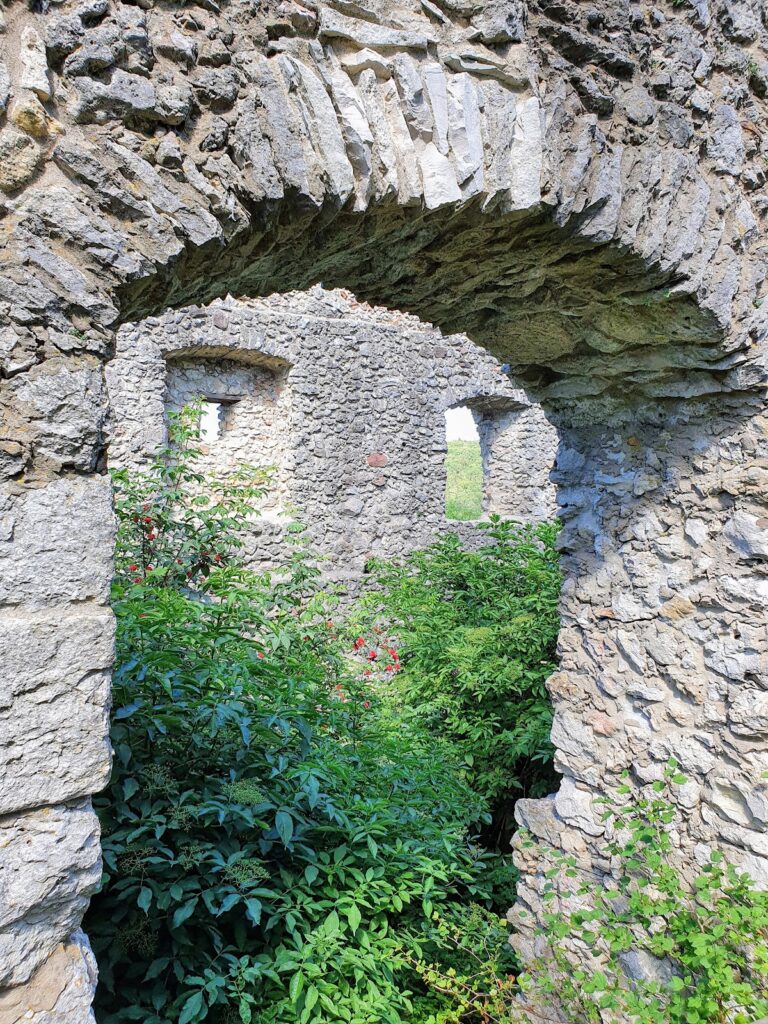
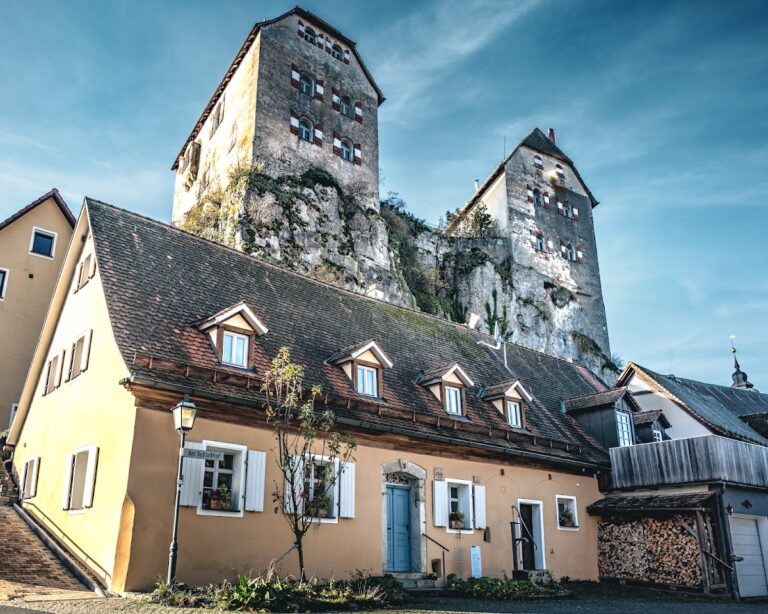
Parts of the complex were later lost. One section is said to have been demolished as early as the eighteenth century, and a tower in the northern upper castle was demolished in 1709. Burg Betzenstein is now a partially ruined castle that remains privately inhabited. Its surviving fabric and archaeological evidence from the medieval and early modern periods are protected under Bavarian monument law, with the northern and southern sections listed separately as architectural monuments and the wider archaeological remains registered as an archaeological monument.
Remains
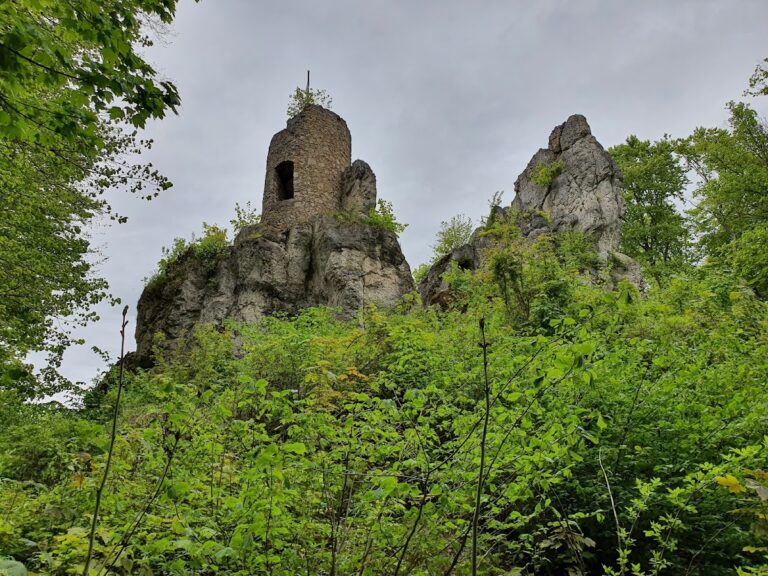
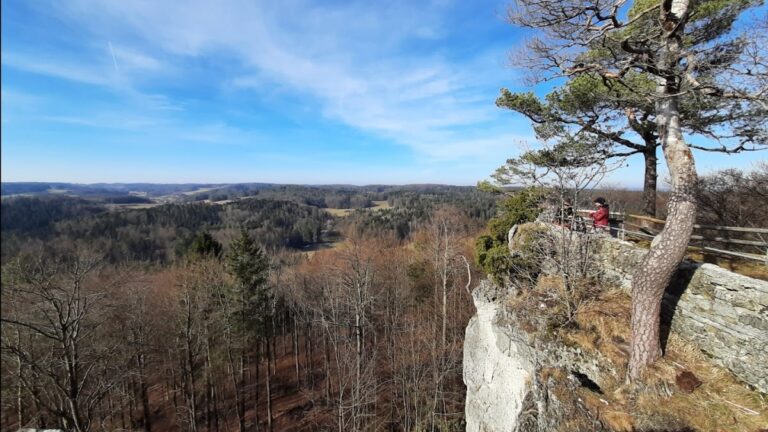
Burg Betzenstein occupies the summit of the Schlossberg at approximately 512 metres above sea level in an urban setting. The surviving complex is arranged in northern and southern sections associated with separate rocky summits. Major parts remain, although the castle is partly ruined. The interpretation of the two sections as an episcopal northern castle and a Leuchtenberg southern castle remains possible rather than certain.
Northern Castle Section
The northern section retains enclosing walls dating from the sixteenth century. Its core is dated in the monument description to the second half of the eleventh century, while the principal surviving building is a single-storey structure with a hipped roof, a roof sloping on all sides, from the sixteenth or seventeenth century. A separate single-storey building dated 1558 has a T-shaped plan, a high base, and a hipped roof. A wooden hipped-roof building adjoining the principal structure was added in 1929.
Southern Castle Section
The southern section contains enclosing-wall remains from the first half of the sixteenth century. Its surviving buildings include a two-storey house at the southern summit with a gabled roof, formed by two principal slopes ending in triangular gables, dating from the seventeenth or eighteenth century. An adjoining round tower is dated to around 1630 and has two storeys and a tent-shaped roof, a pyramidal roof carried by the tower. The section also contains a cistern dated to the sixteenth or eighteenth century.
Northeastern and Archaeological Remains
A two-storey building in the northeastern part of the complex dates from the seventeenth or eighteenth century and was substantially altered during the twentieth century. The archaeological monument extends across the area of the castle ruins and preserves evidence from both the medieval and early modern periods, adding archaeological context to the surviving walls, buildings, tower, and cistern.