Wildenfels Castle: A Late Medieval Noble Castle in Germany


Site at a Glance
- Rating
- 4.4
- Popularity
- Low
- Country
- Germany
- Primary era
- Medieval
- Eras represented
- Medieval
- Civilizations
- Holy Roman Empire
- Site type
- Military
- Remains
- Castle
On this page8 sections
History
Wildenfels Castle is a late medieval noble castle in Germany, above the village of Wildenfels in the municipality of Simmelsdorf, Bavaria. The Lords of Wildenstein built it between 1290 and 1300, possibly on the site of an earlier predecessor. Dietrich of Wildenstein of Wildenfels first incorporated the castle’s name into his designation in 1323.
From Family Possession to Imperial Fief
The castle was initially held as an allodial possession, meaning land owned privately rather than granted by a superior lord. In 1356, the Wildenstein family granted it as a fief to Charles IV, the fourteenth-century Holy Roman Emperor and King of Bohemia. The Lords of Wildenstein of Wildenfels retained the castle until the end of the fifteenth century, when inheritance transferred it to the Lords of Leutersheim, also known as Lentersheim.
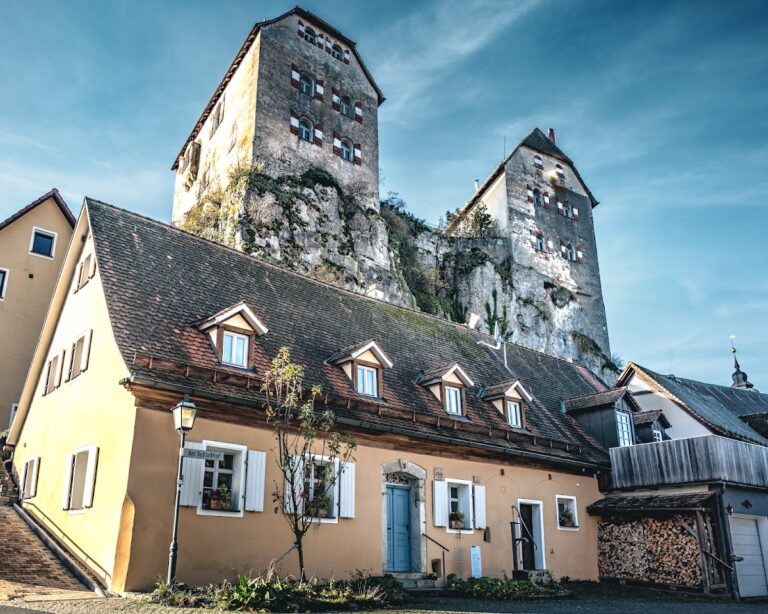
After the Landshut War of Succession, the surrounding territory came under the authority of Nuremberg, an Imperial City directly subject to the emperor rather than to a regional prince. In 1509, the Leutersheims sold the lordship and castle to the Nuremberg brothers Konrad and Friedrich Pelck. Nuremberg acquired the castle in 1511 for 1,300 gulden and established the Wildenfels administrative office there in 1518.
Destruction and Preservation
The German Peasants’ War, a major uprising of 1525 involving rural communities and other groups across parts of the Holy Roman Empire, brought the first destruction. Wildenfels Castle was completely destroyed during the conflict, but Nuremberg rebuilt it. In 1553, Margrave Albert Alcibiades destroyed the castle again during the Second Margrave War, a conflict involving the margrave’s campaign against neighboring territories. The castle was not rebuilt after this second destruction.
A lightning strike caused the western half of the largely preserved keep to collapse in 1827. Measures to secure the surviving fabric began in 1913, followed by comprehensive restoration in 2013 and 2014. The ruin is registered as a landscape-defining architectural monument and as an archaeological monument containing medieval and early modern features.
Remains
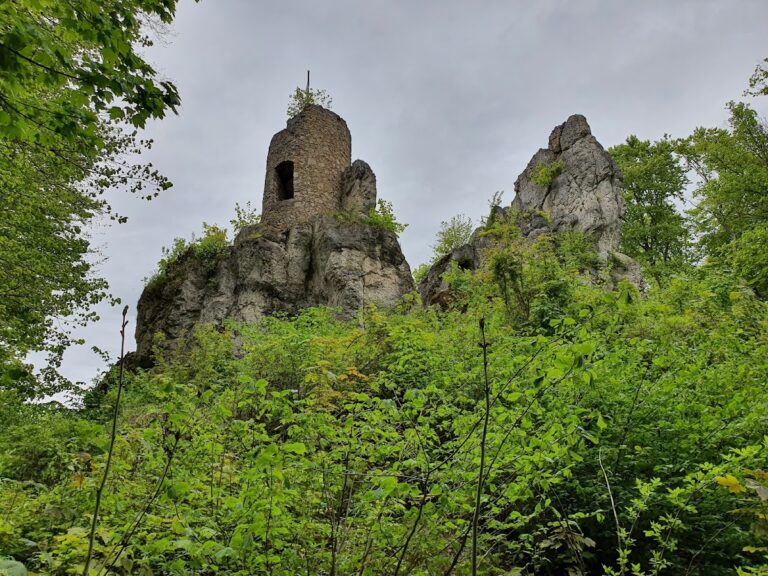
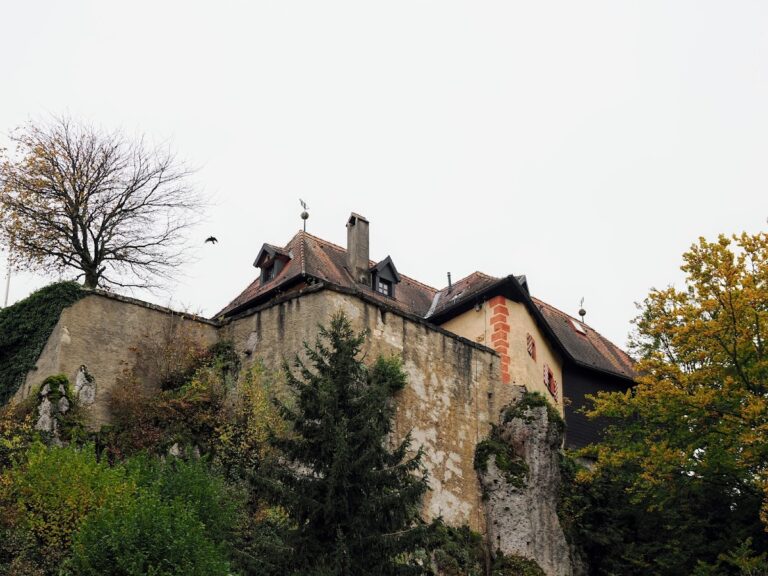
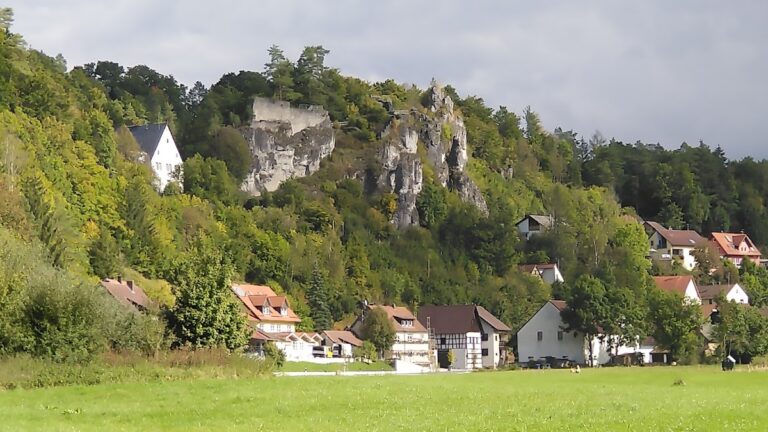
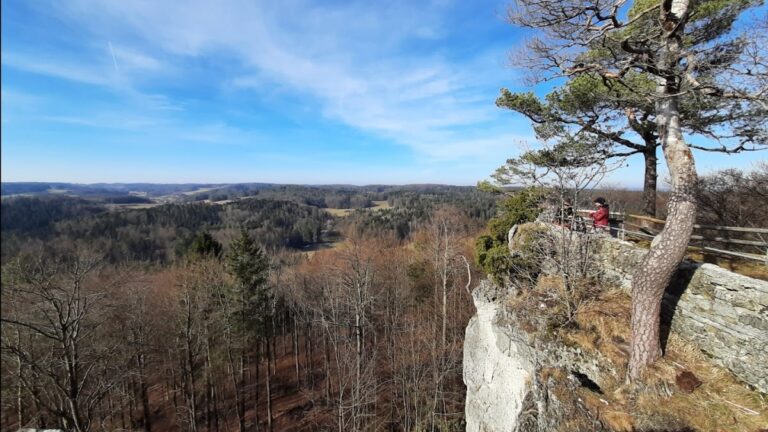
Wildenfels Castle is a summit castle on a conical, rocky peak approximately 586 metres high in the Wildenfels Forest, immediately north of Wildenfels. The restored ruin lies about 3.3 kilometres east of Hiltpoltstein within the Franconia Switzerland-Franconian Jura Nature Park. Its surviving fabric is built mainly of limestone rubble, with sections of limestone ashlar, or carefully cut stone. Parts of the keep, palas, adjoining buildings, and enclosing walls remain identifiable.
Surviving Castle Buildings
Keep
The keep, a fortified tower used mainly for defence rather than permanent residence, forms one of the principal surviving elements. Its eastern side retains a high entrance. The western half collapsed after the lightning strike of 1827, while the remaining structure forms part of the restored ruin.
Palas
The eastern half of the palas, the castle’s principal residential and representational building, survives as an identifiable ruin. The interior face of its north-eastern wall is also preserved. These remains stand among fragments of additional buildings and the enclosure walls.
Burghöhle
A small cave lies at the foot of the ruin. Known as the Burghöhle in Wildenfels and listed in the Franconian Jura cave register under cadastral number D 180, its entrance was probably used as a cellar.