Strahlegg Castle Ruin: Roman Watchtower and Medieval Fortress in Switzerland
Site at a Glance
- Rating
- 4.4
- Popularity
- Very Low
- Country
- Switzerland
- Primary era
- Medieval
- External website
- Open
- Eras represented
- Classical, Medieval
- Civilizations
- Habsburg, Holy Roman Empire, Roman
- Site type
- Military
- Remains
- Castle
On this page6 sections
History
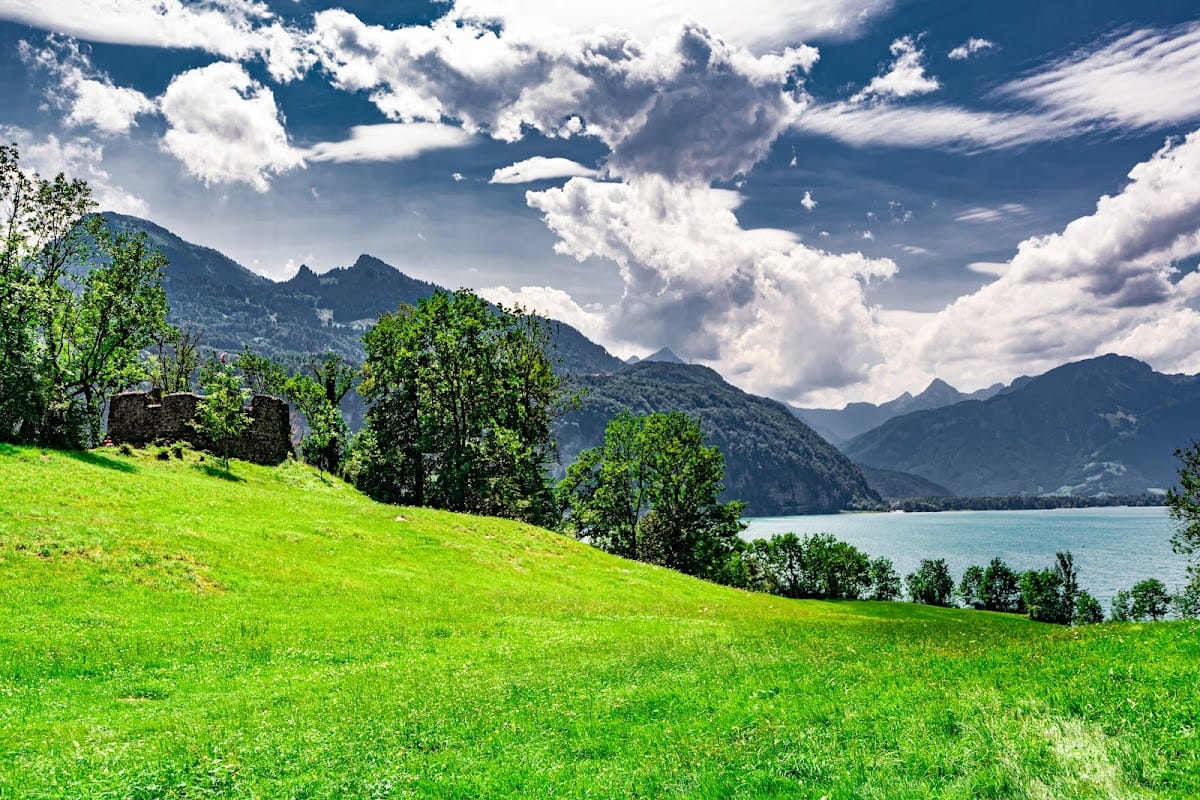
Strahlegg Castle Ruin is a fortified archaeological site in Switzerland, on the northern shore of Lake Walen in Hinterbetlis, within the municipality of Amden in the canton of St. Gallen. Its earliest identified structure was a Roman watchtower built in 15 BC under Augustus, the first Roman emperor, although the site’s earlier history cannot be dated with certainty.
Roman origins
The tower formed part of a system of small fortified observation posts used to monitor routes, territory, or movement and to communicate with other positions. It maintained visual contact with watchtowers at Vordemwald near Filzbach on the Kerenzerberg and at Biberlichopf near Ziegelbrücke.
Medieval rebuilding and destruction
After the Roman tower had deteriorated, it was rebuilt in the Middle Ages. The resulting castle was already in existence before 1388, when the Näfelser War brought forces associated with the Swiss Confederation into conflict with Habsburg interests in the region.
During that conflict, Strahlegg served as an Austrian-Habsburg outpost against the Swiss Confederates. Glarus forces captured and destroyed the castle. The ruin is now classified as a Swiss cultural property of national significance and receives Switzerland’s highest level of cultural-property protection.
Archaeological interpretation
Ferdinand Keller, a Swiss antiquarian and archaeologist, carried out the first excavation at Strahlegg in August 1861. He identified the remains as those of a medieval castle. Later sondages, which are limited archaeological test excavations, found Roman ceramic fragments, but the date of the complex as a whole remained uncertain at that stage.
A careful investigation in 1960 established that Strahlegg had originated as a Roman watchtower and also identified medieval masonry. The findings showed that the Roman structure had subsequently been rebuilt as a medieval castle.
Remains
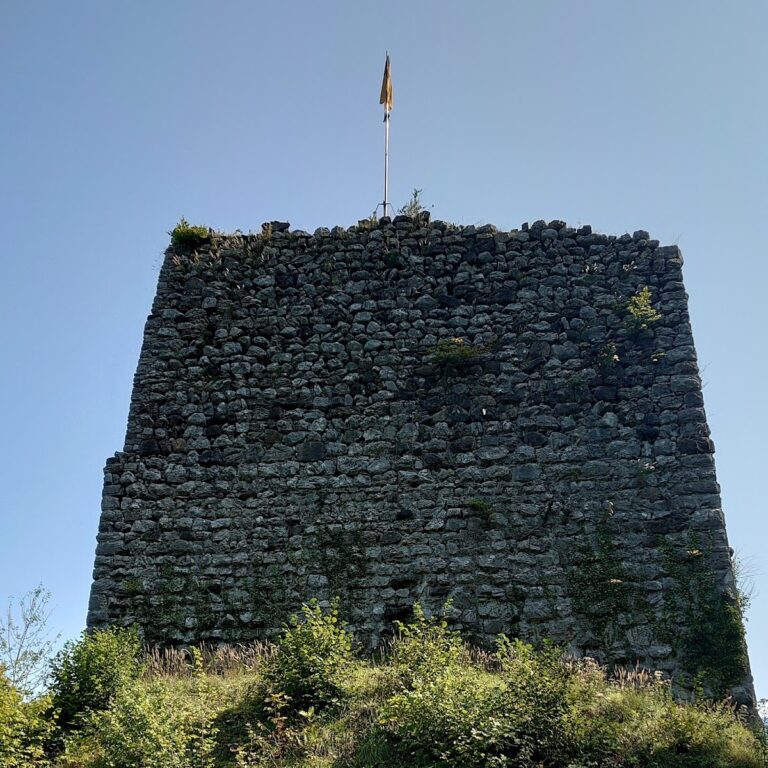
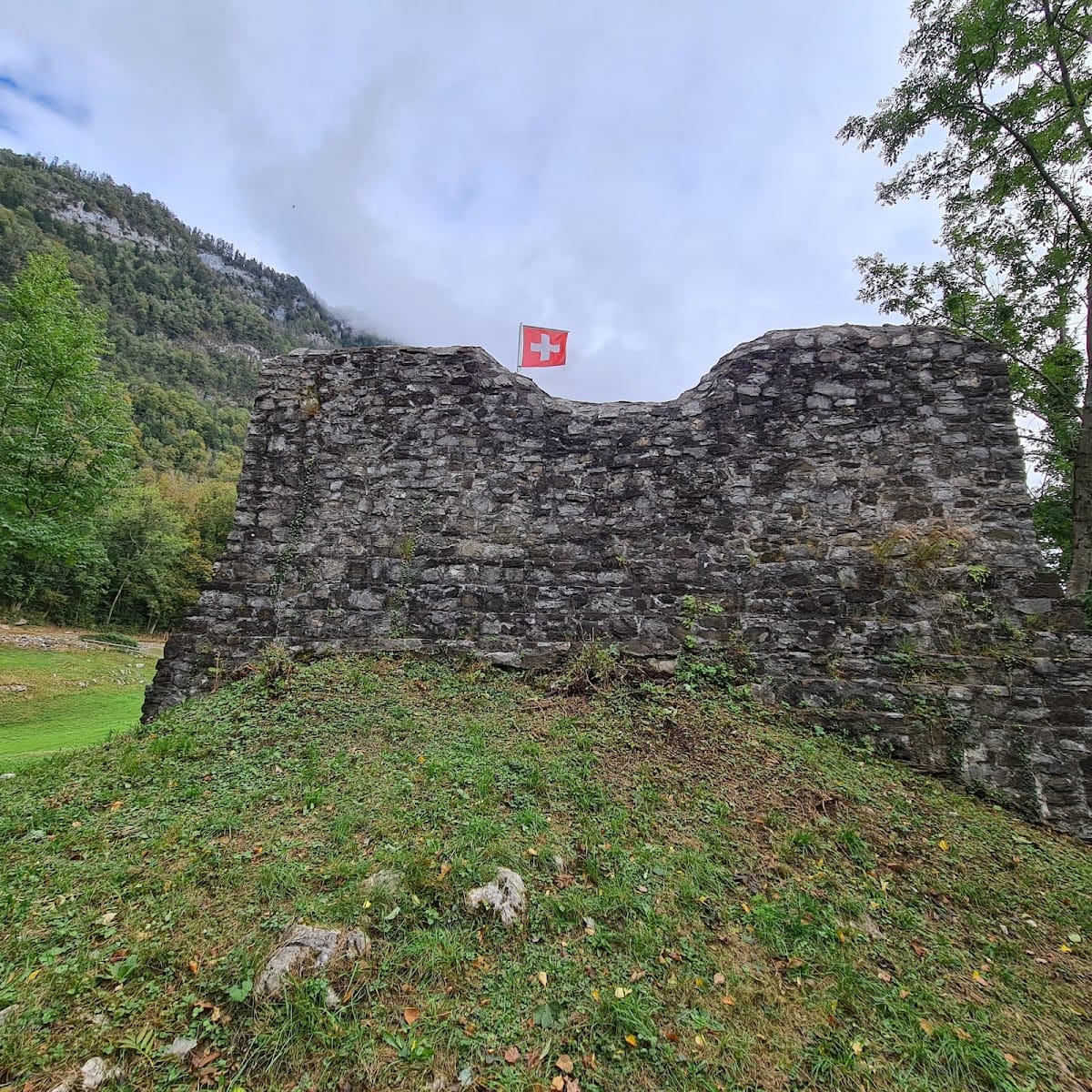
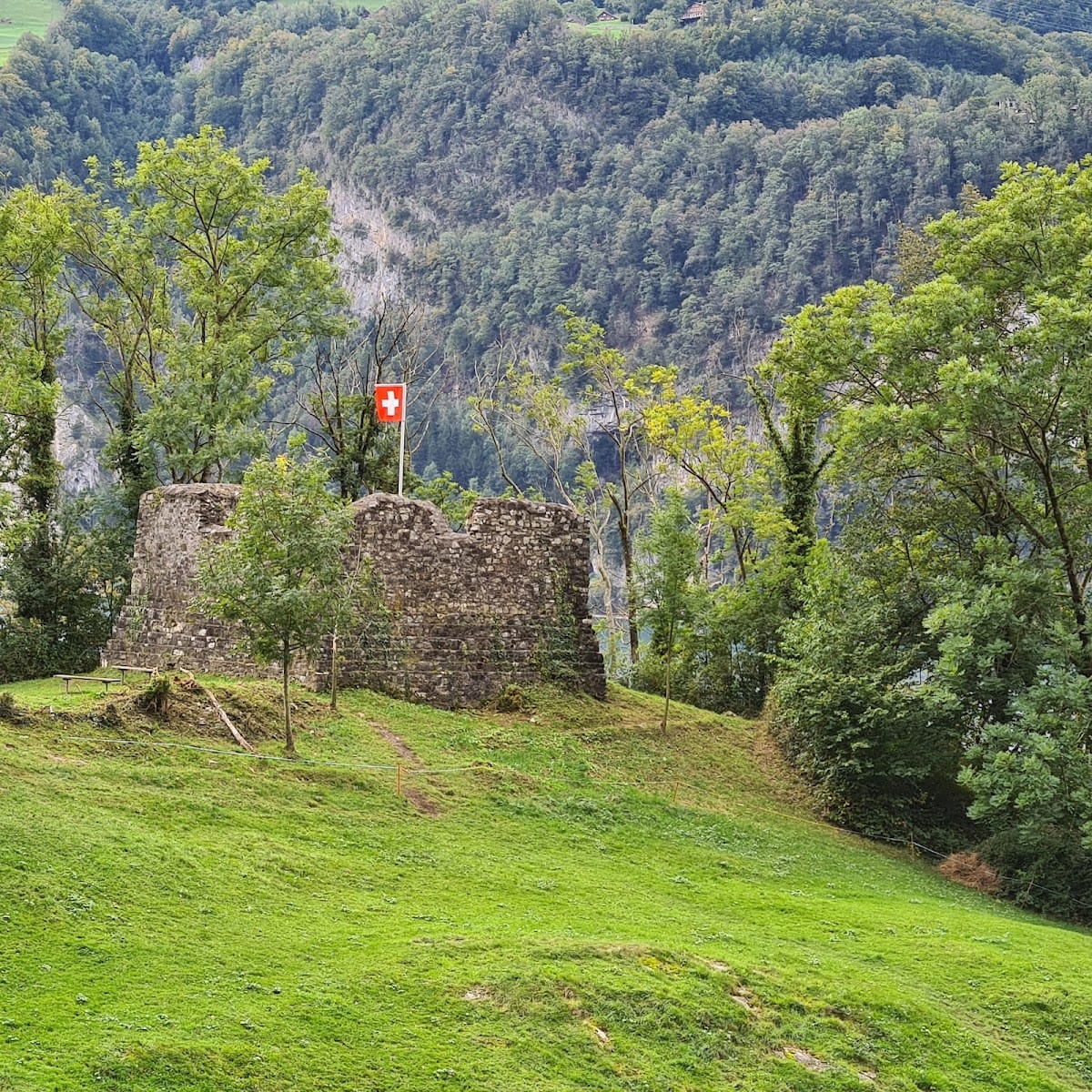
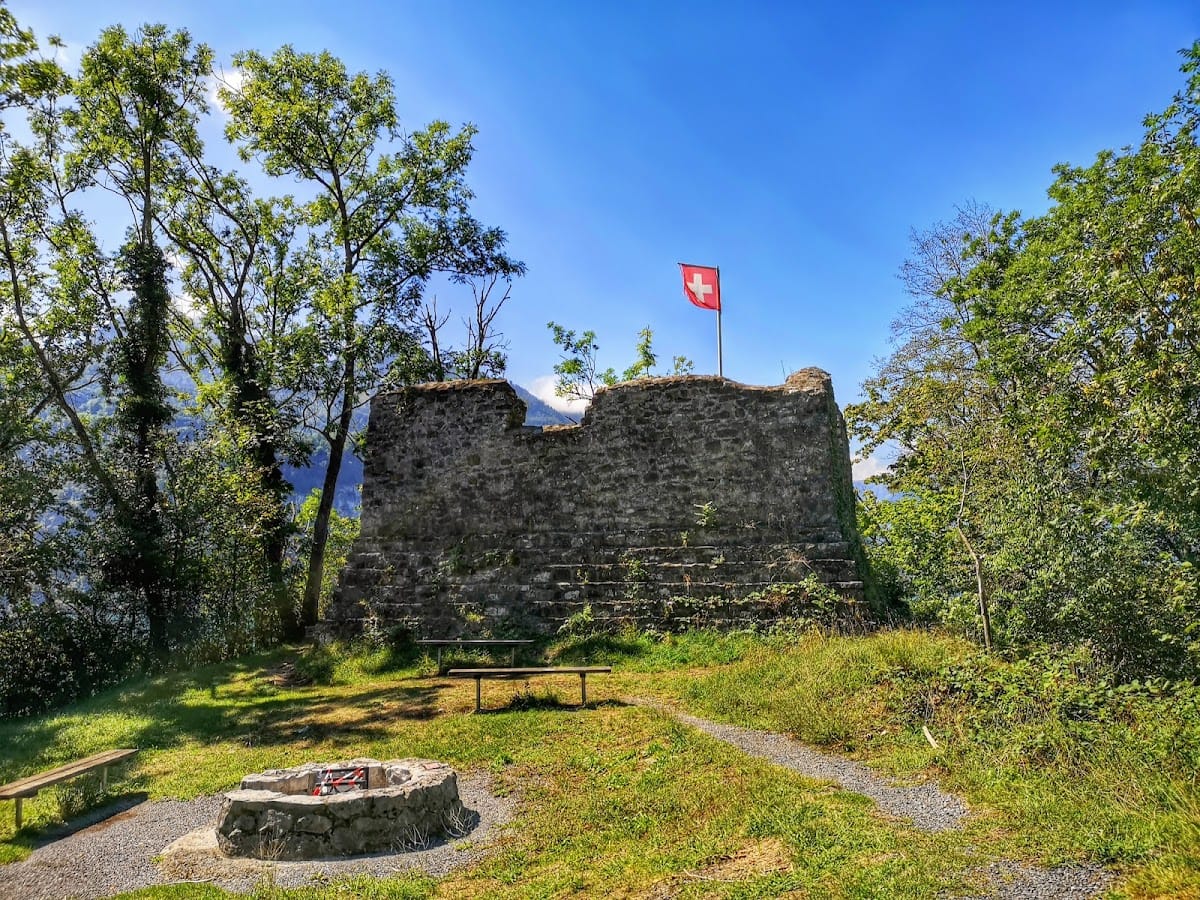
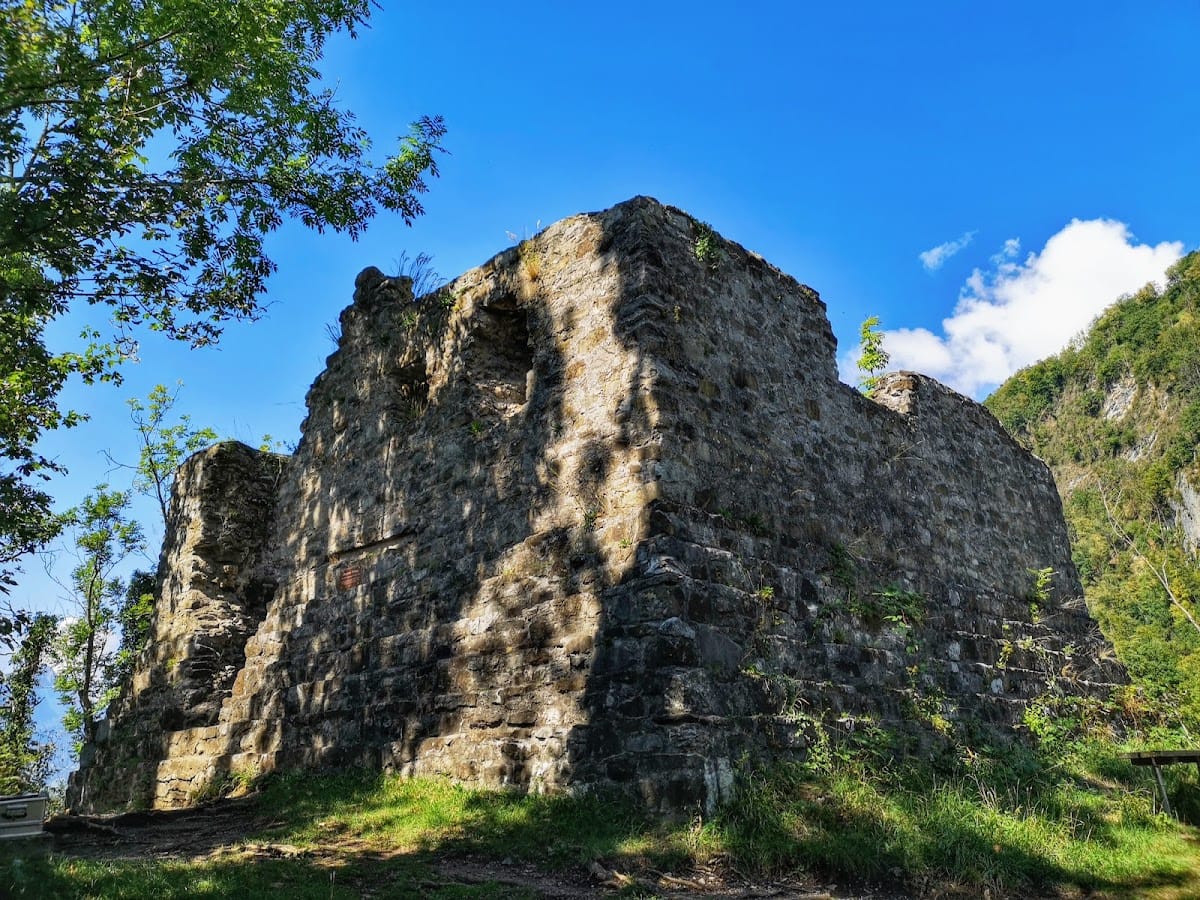
The ruin stands on a projecting spur about 30 metres above the surface of Lake Walen, at approximately 455 metres above sea level. Its surviving core is a square tower measuring about 10.4 by 10.4 metres, with roughly 6 metres of masonry still standing.
Tower structure
The walls consist of layered, roughly dressed limestone bonded with mortar. Medieval masonry survives in the uppermost part of the western wall, while the main structure preserves the fabric of the earlier tower.
Six carefully made offsets divide the foundation on both its inner and outer faces. The highest inner offset lies above the former beam floor. Beam holes occur in all four walls. Those in the northern and southern walls probably supported the floor, while the remaining holes appear to have supported an external defensive walkway.
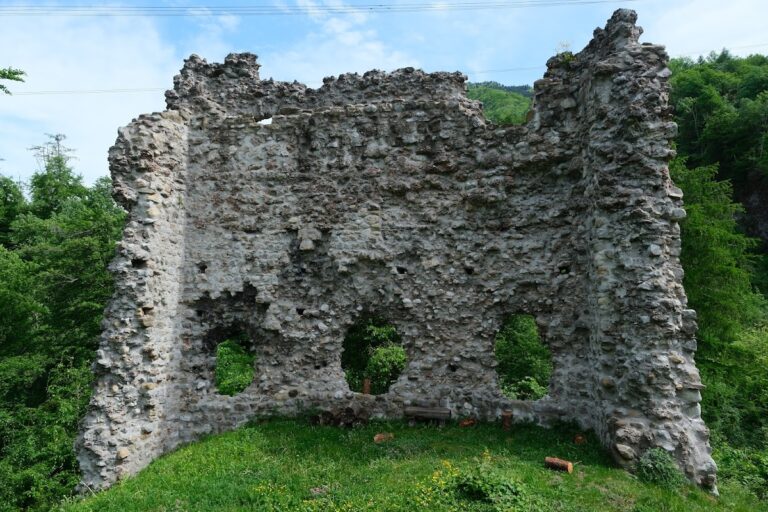
The entrance was on the southern side, where the wall has been broken through. Together, the tower’s square plan, layered limestone construction, surviving floor supports, and defensive walkway fittings preserve the basic form of the Roman watchtower and the later medieval rebuilding.
Nearby sites