Stephanskloster: A Benedictine Monastery on Michelsberg
Site at a Glance
- Popularity
- Medium
- Country
- Germany
- Primary era
- Medieval
- Eras represented
- Medieval
- Civilizations
- Holy Roman Empire
- Site type
- Religious
- Remains
- Monastery
On this page8 sections
History
Foundation and early growth
Stephanskloster was a Benedictine monastery on Michelsberg, a southern spur of Heiligenberg in Germany, founded around 1090 by Arnold, who had recently joined the Benedictine order, whose communal life followed the Rule of Saint Benedict. Arnold established a hermitage and chapel on the forward summit of Aberinsberg. The monastery became the second dependency of Lorsch Abbey, a medieval Benedictine abbey, and the second monastery on Heiligenberg after nearby Michaelskloster. Its church was built in the Gothic style, a medieval form associated with pointed arches and ribbed vaults.
In 1094, Zundebold, a senior administrative officer at Michaelskloster and an associate of Arnold, added monastery buildings with permission from Lorsch Abbey. Stephanskloster received its own district, giving it economic independence, and was dedicated to Saint Stephen, traditionally regarded in Christianity as its first martyr. A man from Handschuhsheim who joined a Crusade, a medieval religious military campaign, became its principal benefactor. His widow, Hazecha, left a quarter of her property to the monastery.
Premonstratensian community
As Benedictine observance weakened, Premonstratensians from Allerheiligen Abbey in the Black Forest took over from the mid-13th century. They belonged to a Catholic order of clergy who lived together under a shared rule. The last clear written reference to the monastery dates to 1198, and its later medieval history is largely uncertain. New community buildings were constructed in the late 14th or early 15th century.
Dissolution and changes to the summit
Stephanskloster was dissolved in the 16th century during the Reformation, a movement that reshaped Western Christianity and led to the closure of many monasteries. Its buildings fell into ruin. In 1589, Heidelberg University, as the monastery’s heir, allowed Heidelberg residents to quarry stone from the remains.
During the monastery’s period of use, much of the summit’s forest was cleared for building materials and fuel. The resulting open summit made it possible to observe movement in the Neckar Valley from a distance.
Remains
Monastic complex
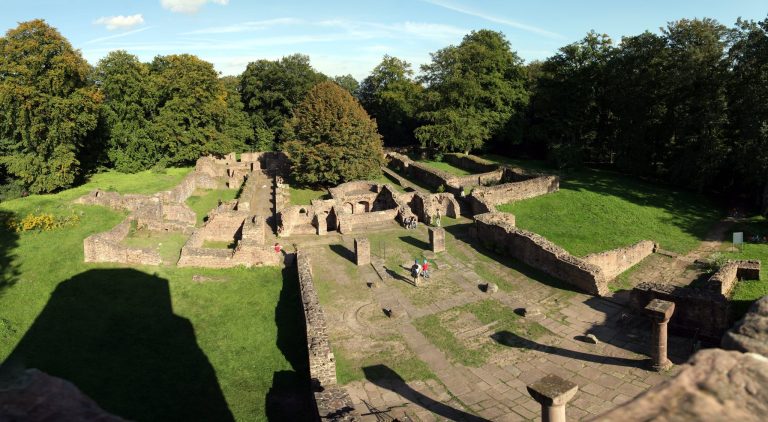
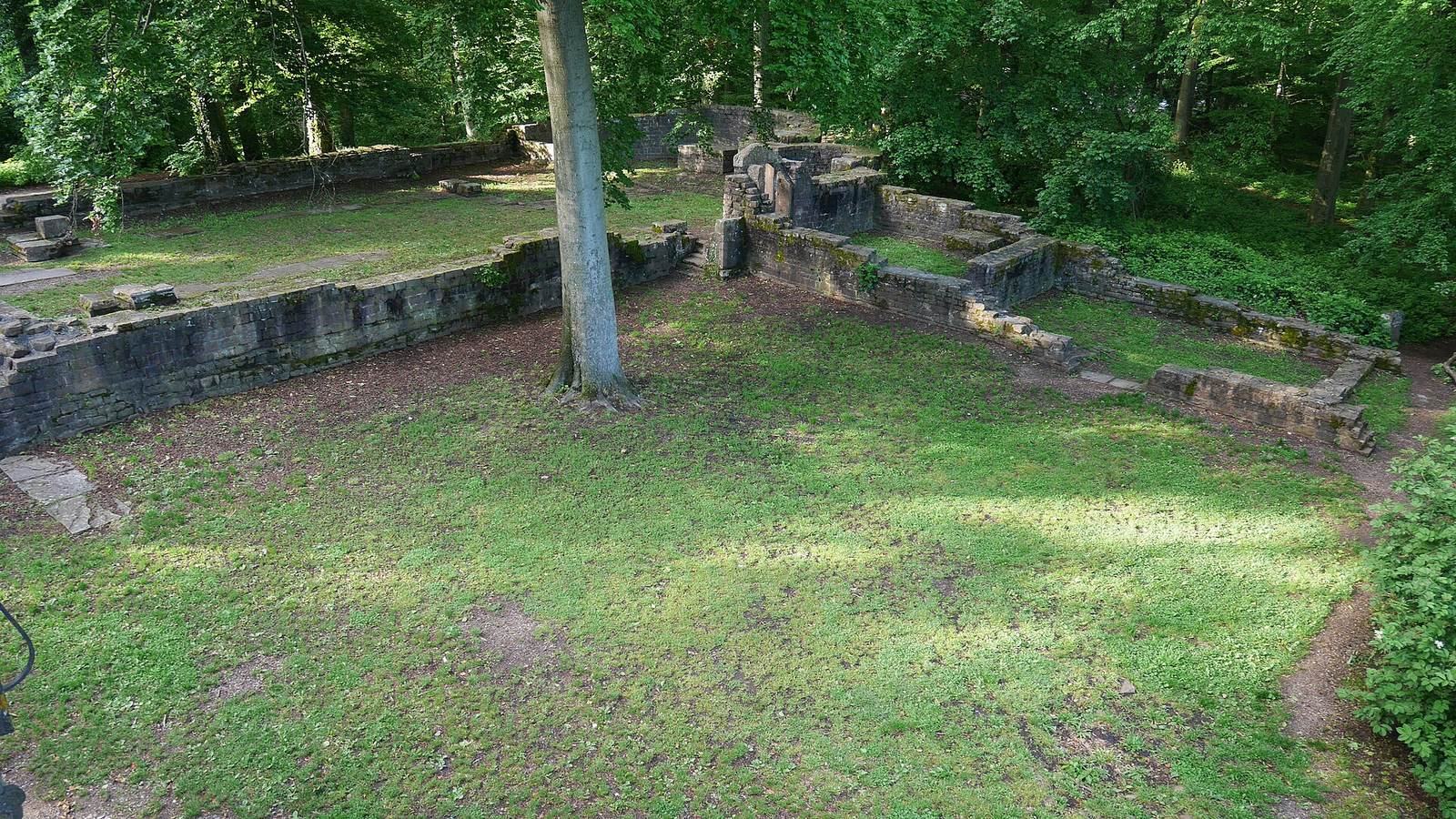
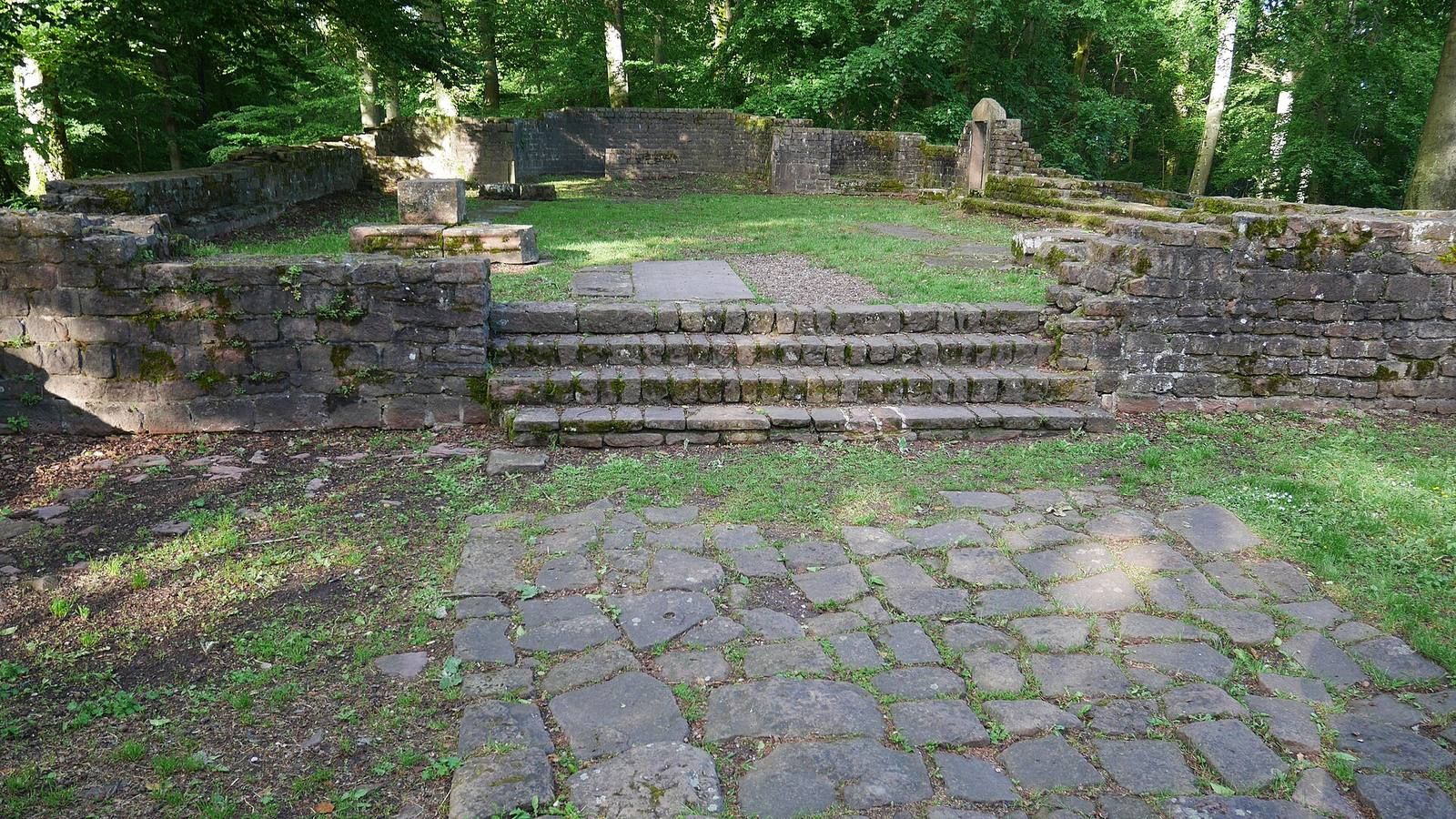
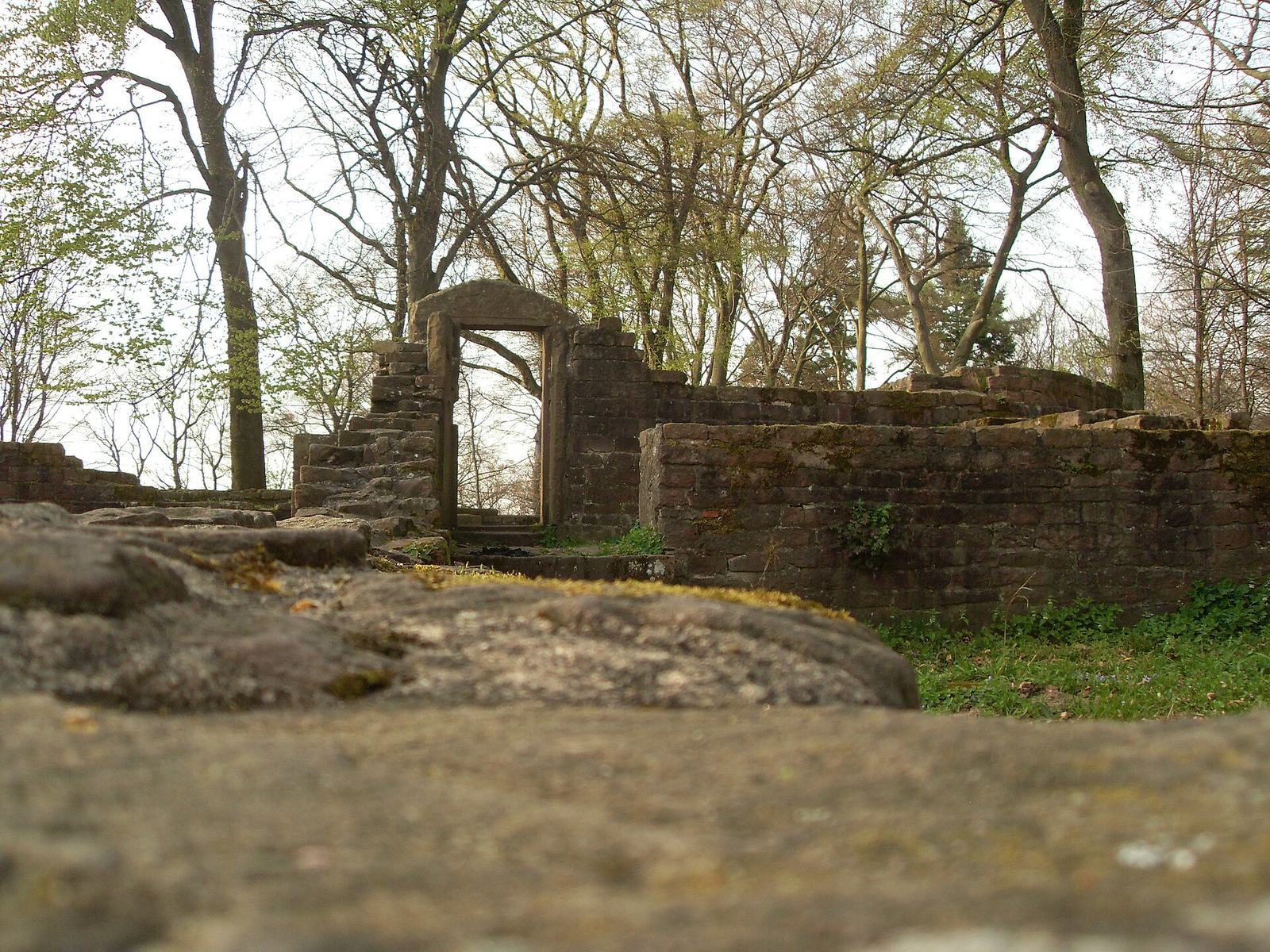
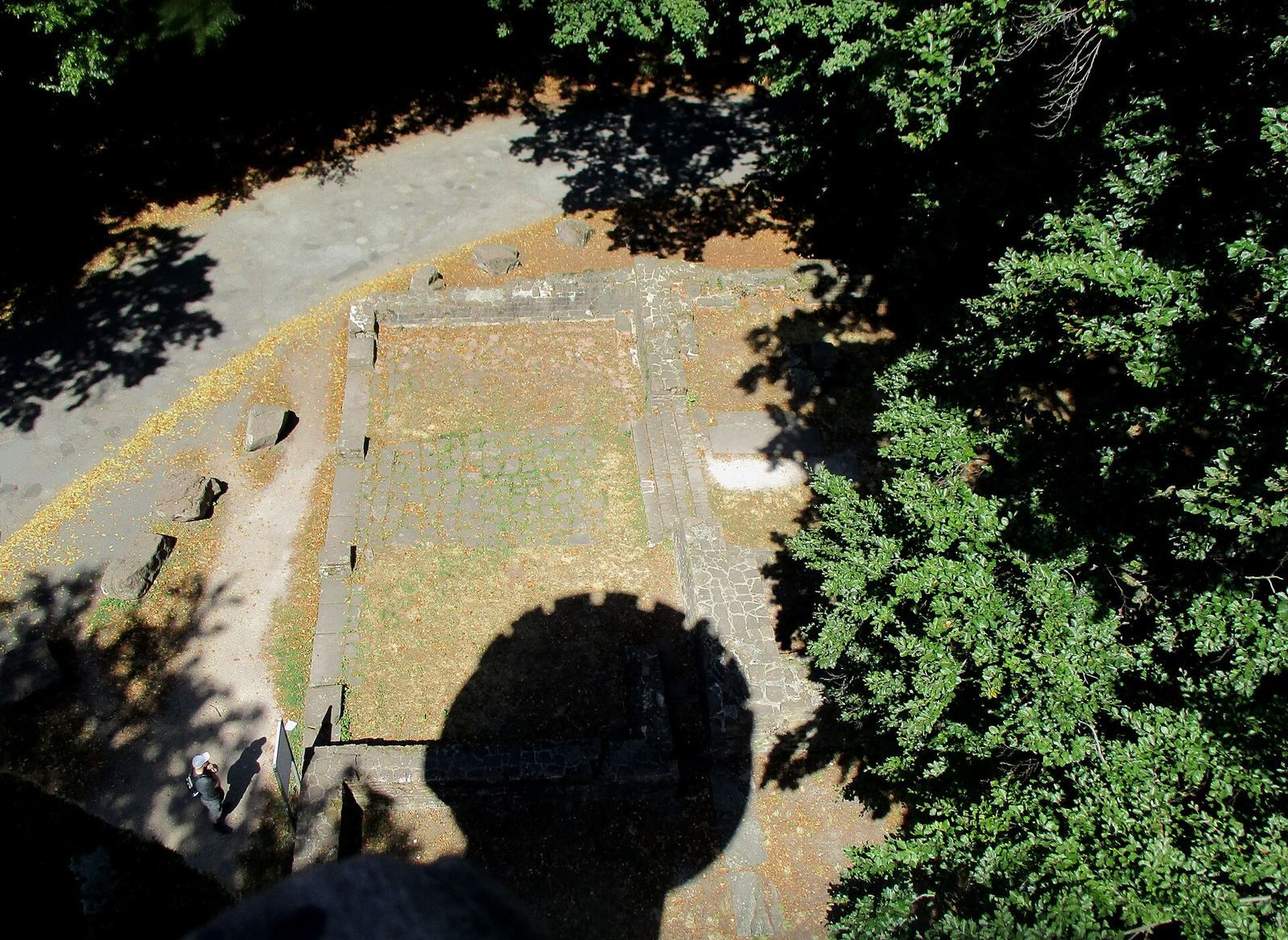
The monastery occupied the 375.5-metre-high Michelsberg. Its Gothic church stood north of the community buildings, which lay to its south. Foundations survive from the complex, including those of the church and the eastern wing of the cloister, the covered passage around the monastic courtyard.
Hazecha’s grave slab
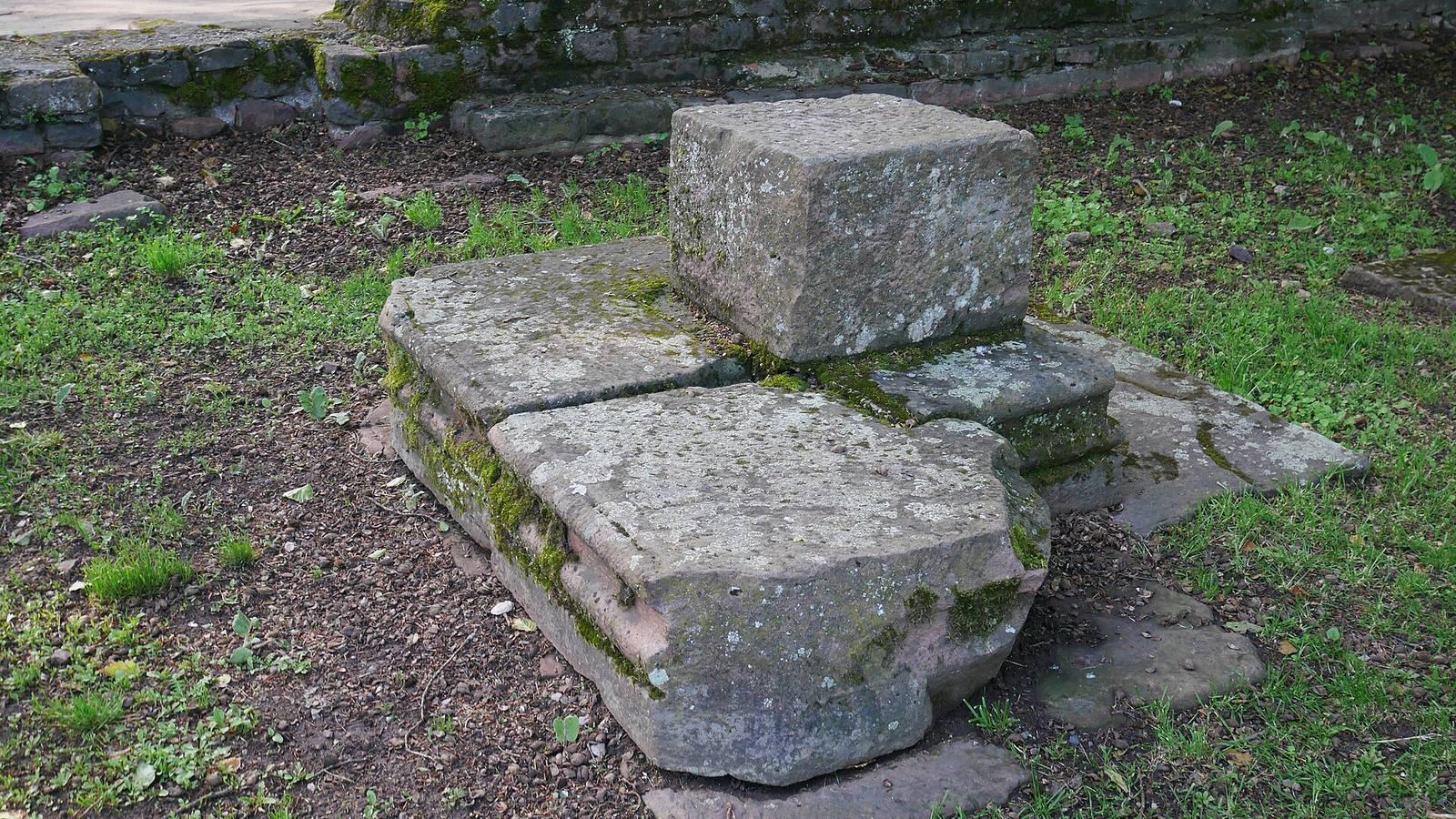
A copy of Hazecha’s grave slab bears a Latin inscription. It recalls her wish to be buried in the church and asks the community to remember her. The inscription gives 23 November as the date of her death; she is generally thought to have died in the early 12th century.
Viewing tower and cistern
A viewing tower built in 1885-1886 incorporates stones reused from the monastery. It overlooks Heidelberg Castle and the Neckar Valley. Nearby, the old Heidenloch cistern was restored around the same time.