Stenberga Castle: A Medieval Defensive Stronghold in Masku, Finland
Site at a Glance
- Popularity
- Medium
- Country
- Finland
- Primary era
- Medieval
- Eras represented
- Medieval
- Civilizations
- Swedish
- Site type
- Military
- Remains
- Castle
On this page4 sections
History
Proposed dates and strategic setting
Stenberga Castle, also known as Teinperi, was a small medieval defensive castle in Masku, Finland, positioned to control sea access to Nousiainen. Historians have proposed either a late-12th-century or a 14th-century date for its construction, and excavation at the site has not taken place since the early 20th century.
The earlier date has been linked to small defensive castles built in Sweden under King Canute, a medieval Swedish king. Danish, Swedish, and Russian forces appear to have directed particular military attention toward Finland in the 1190s, providing possible context for a castle of that period. The proposed dating has also been discussed alongside a claim by Ericus Olai, a Swedish historian active in the late 15th century, that Kol, Bishop of Linköping, had been Duke of Finland. Kol’s death is tentatively placed in 1196, but the claim remains unconfirmed.
The castle’s position gave it control over maritime access to Nousiainen, the presumed site of Finland’s earliest bishop’s see, the center of a bishop’s authority and diocese. That see had moved to Koroinen by the middle of the 13th century at the latest.
Estate, monastery and confiscation
The surrounding Stenberga estate is first mentioned in 1398, when it belonged to the bailiff of Turku Castle. A bailiff was an official who managed affairs for a ruler or institution. In the 1430s, the estate was given to a Bridgettine monastery at Naantali. The Bridgettines are a religious order associated with Bridget of Sweden.
The abandoned castle may soon afterward have been dismantled for building materials for the monastery, about 10 kilometres away. In 1556, during the Reformation, a 16th-century movement that brought major changes to Western Christianity and church property, the state confiscated the estate along with the monastery’s other possessions.
Remains
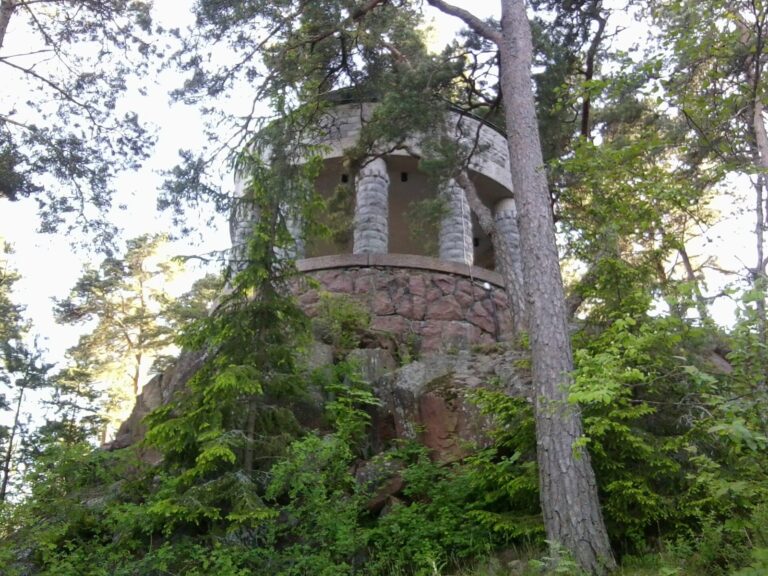
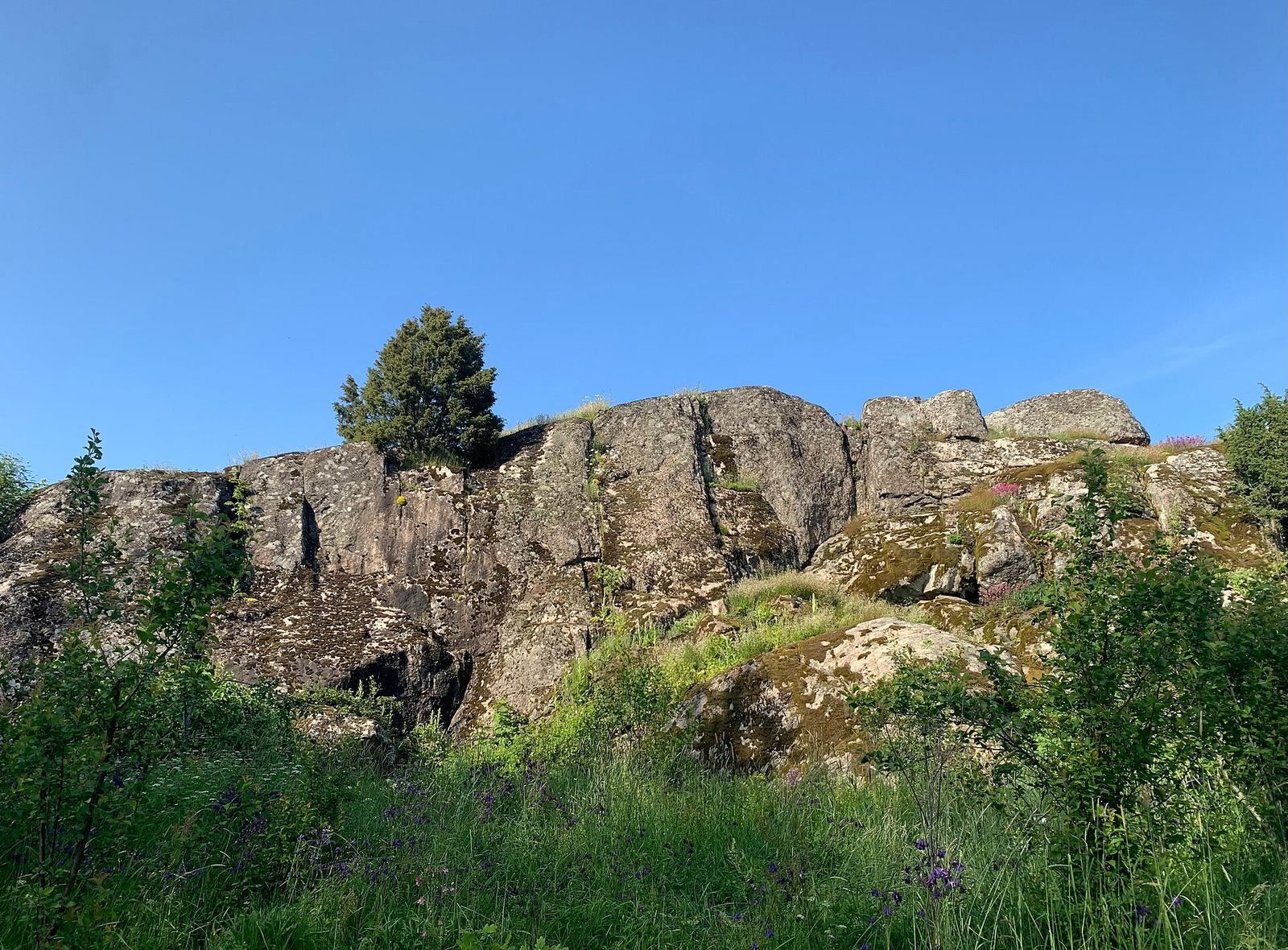
The castle stood on a steep rock beside the sea, near the mouth of the Hirvijoki River, which flows from Nousiainen. The rock may have been an island when the castle was built. The original structure used gray stone and had two towers. Their external dimensions were 13 by 13 metres and 9 by 7 metres, while the walls were two metres thick. A later construction phase also used brick.
Post-glacial rebound (the gradual rise of land after ancient glaciers melted) has left the site almost two kilometres from the present coastline. Very little of the castle survives, and the site has gone without maintenance for years.