Mietoinen Church: A 17th-Century Parish Church in Finland
Site at a Glance
- Popularity
- Low
- Country
- Finland
- Primary era
- Early Modern
- Eras represented
- Early Modern, Modern
- Civilizations
- Grand Duchy of Finland, Russian, Swedish
- Site type
- Religious
- Remains
- Church
On this page10 sections
History
Foundation and parish role
Mietoinen Church is a 17th-century Evangelical Lutheran stone church in Mietois village, Finland. Built between 1641 and 1643 in a medieval style, it became the main church of Mietois parish. The parish was established as a chapel parish under Mynämäki in 1641, and worship had first been centered at St James’s Chapel at Hietamäki.
Henrik Klaunpoika Fleming, owner of Lehtisten Manor and a member of a prominent Swedish-Finnish noble family, financed and initiated the new church. He also received patronage rights, privileges associated with founding or supporting a church. The building was consecrated in 1643. It replaced the Hietamäki chapel after that earlier church fell out of use during the 18th century.
Use and later changes
Burials beneath the church floor ended in 1799. Stoves were installed in 1896 after Vicar Lönnmark complained that the building was cold. Electric lighting followed in 1939, and central heating was installed in 1968.
The first organ was installed in 1860 and replaced in 1973. Ilmari Launis, a Finnish architect and church artist, renewed the interior in 1911; it was altered again in 1968. The church belongs to the Evangelical Lutheran Archdiocese of Turku. Following the 2007 municipal merger, it was owned by Virmo parish.
A 1993 inventory classified the church and its surroundings as a nationally significant cultural-historical environment. They were not included in the revised inventory published in 2009.
Remains
Church building and interior
Plan and construction
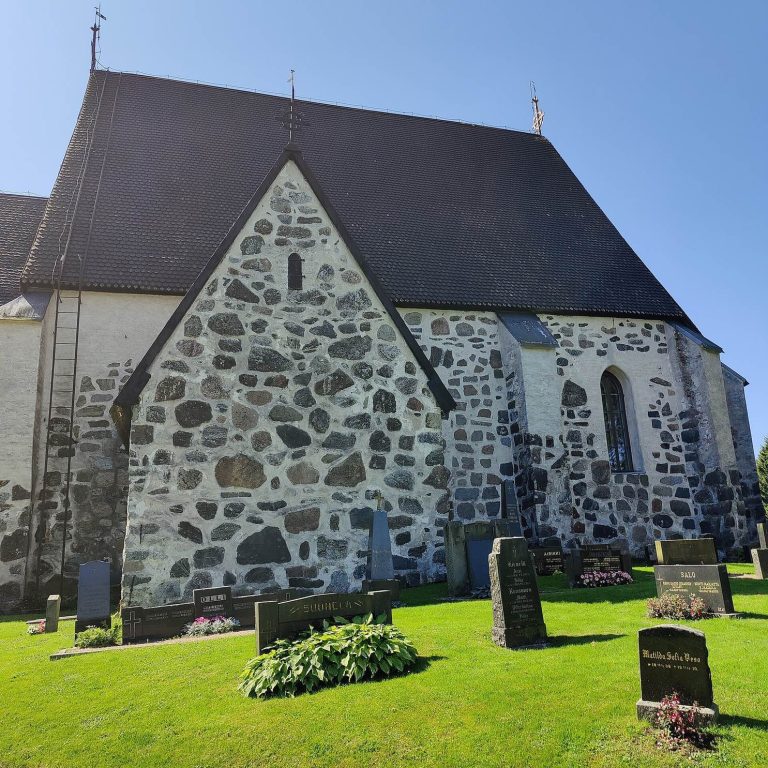
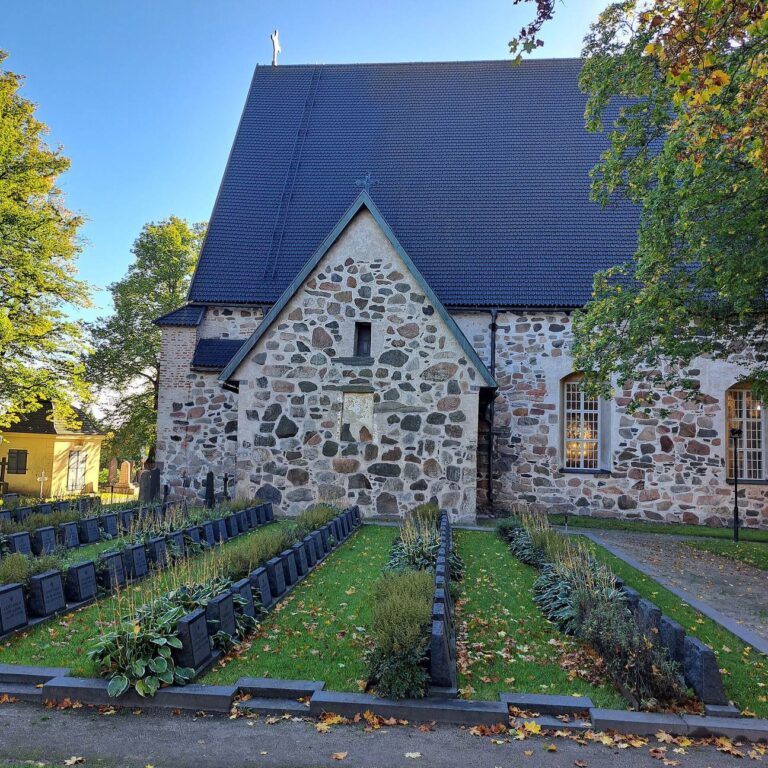
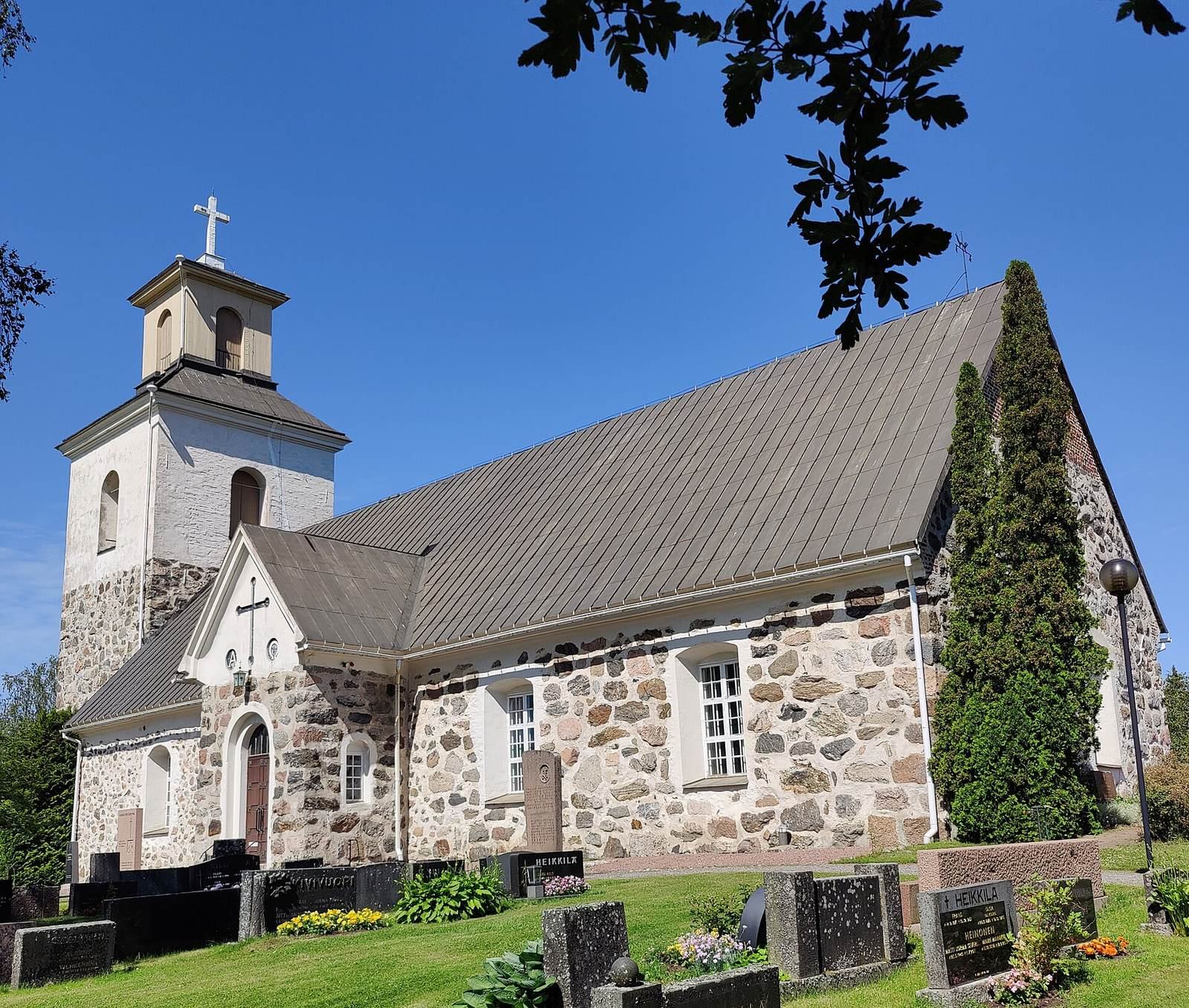
The church stands beside the Mynä River in Mietois village, a few kilometres from Lehtisten Manor. The Mietois vicarage is nearby on the river’s north bank. The grey-stone building is a long church, originally modest and rectangular in plan, with a single nave and a barrel-vaulted ceiling, a continuous tunnel-like arch. It accommodates 400 people. A sacristy and wooden vestibule were added in 1724, and the building was lengthened in 1829.
Interior design
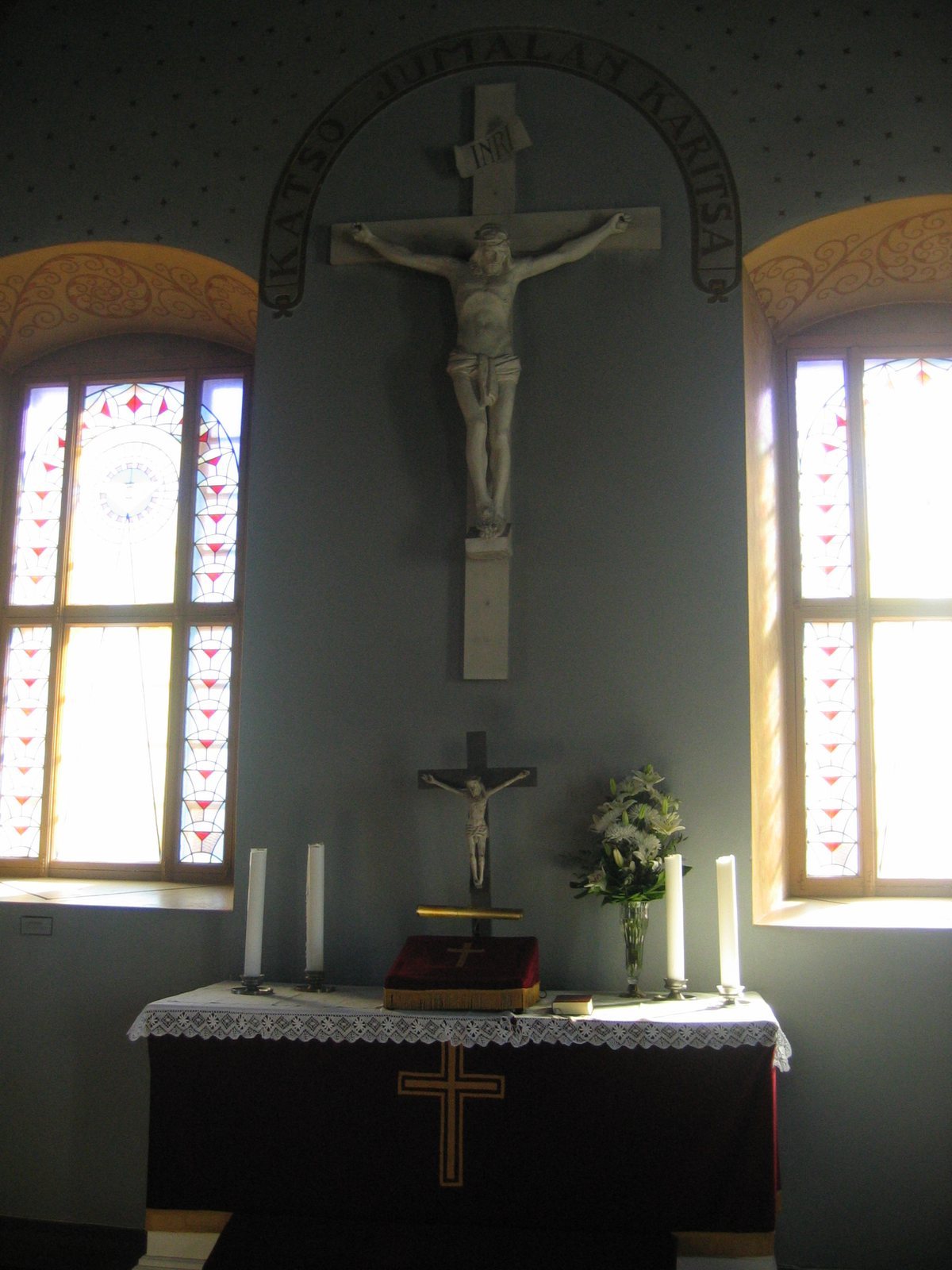
Launis’s interior design uses Jugend, the Finnish and Swedish term for Art Nouveau. The altar wall and its stained-glass windows retain his design. In the 1911 renewal, the pews and pulpit received a light oak-grain painted finish. The later colour scheme darkened the pews and hymn boards, turned the ceiling deep blue, and covered the pews’ decorative carvings.
Objects and textiles
Among the church’s oldest objects are a birch-wood crucifix from around the 16th century and a sandstone baptismal font from the 13th century. Both probably came from Hietamäki Chapel. A white Könni clock, a traditional Finnish mechanical clock associated with the Könni clockmaking family, dates to the mid-19th century. Crystal chandeliers hang from the ceiling; one four-armed example was donated in 1885 by J. Lythman, formerly of Kauppila farm at Kaukuri.
Objects kept in the tower include a poor box, an earlier crucifix, a shame stool, and stocks. Church textiles were made by members of the Finnish Martha organization, which focuses on household education and practical skills, and by people evacuated from Karelia after the Second World War. Women farmers in Mietois donated a wedding rug in 1961.
Bell towers
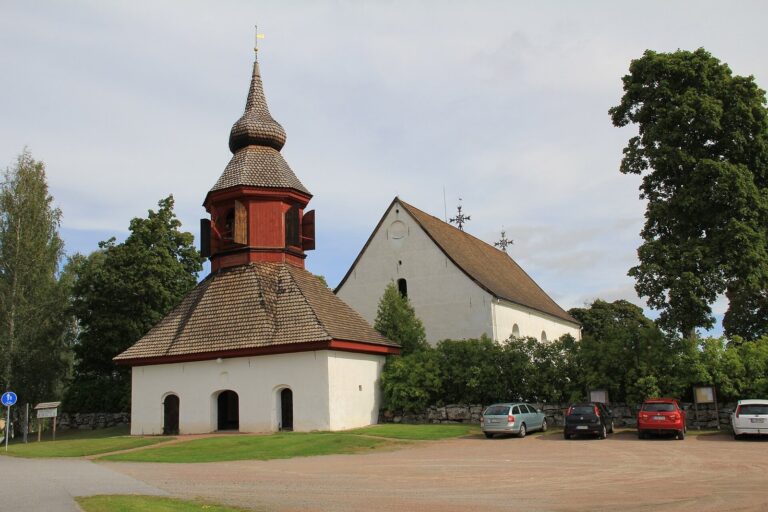
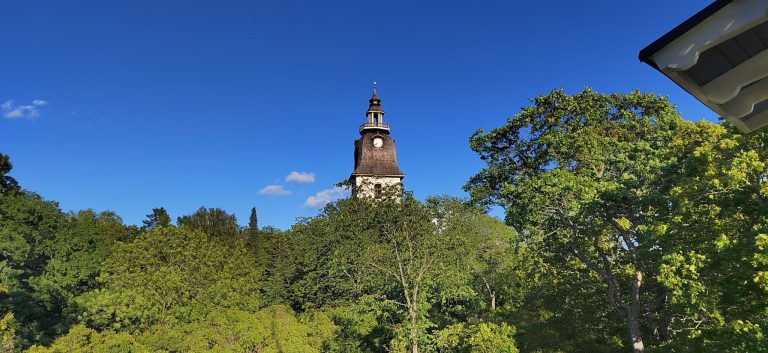
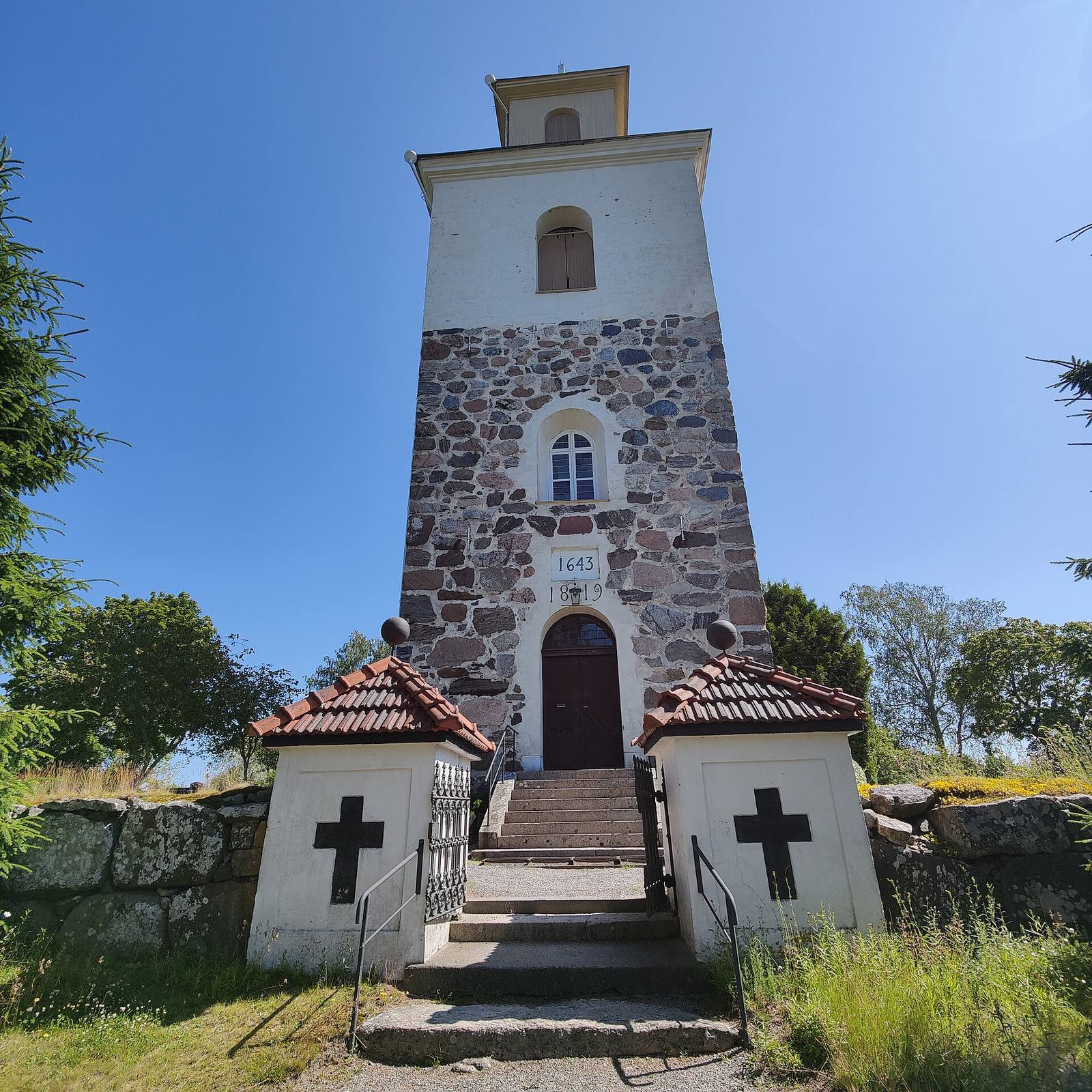
The church’s original bell tower stood apart from the stone building and was made of wood. It was clad in boards and painted red ochre in 1754. By the time the present tower was built in 1818–19, the wooden structure had deteriorated and was no longer needed. The replacement is in the Neoclassical style. Its stone joints were repointed with lime mortar in 2000 and 2002; in 2010, cement mortar was used because earlier repairs had not adhered to the walls.
Organ
The replacement organ has 12 stops, controls that produce different sound qualities, while the earlier organ’s Neo-Gothic front was retained.