Old Town Hall of Moravian Ostrava: Municipal Headquarters and Museum
Site at a Glance
- Rating
- 4.6
- Popularity
- Medium
- Country
- Czechia
- Primary era
- Modern
- Eras represented
- Medieval, Early Modern, Modern
- Civilizations
- Austria-Hungary, Austrian Empire, Habsburg, Habsburg Austria, Holy Roman Empire, Margraviate of Moravia
- Site type
- Civic
- Remains
- Town Hall
On this page9 sections
History
The Old Town Hall of Moravian Ostrava, known in Czech as Stará radnice, stands at the southwestern corner of Masaryk Square in Ostrava, Czechia, within the city’s historic central district. It is first mentioned in 1539, although its construction date is unknown. Archaeological evidence indicates that the early town hall had no tower, and that two tavern buildings had previously occupied the plot.
Early town hall and fire
A major fire in 1556 destroyed the town hall and municipal records. Rebuilding brought a masonry tower designed by B. Vlach, but work on it remained unfinished for many years.
Tower and nineteenth-century rebuilding
A gallery was added around the tower in the later seventeenth century. Its rebuilding in Baroque style, known for richly elaborate forms, began in 1737; completion came at an uncertain point in the eighteenth century.
After lightning struck the tower in 1829, its poor condition led to consideration of demolition. Instead, it was extensively repaired. Further rebuilding in Empire style, a formal neoclassical style associated with the early nineteenth century, took place from 1831 to 1837. The building gained a floor in 1837, and meat stalls were moved from the covered arcades to the rear. A second floor followed in 1859. The exterior was remodeled in Neo-Renaissance style, which revived forms associated with Renaissance buildings, in 1874–75. In 1885, a new building was added at the rear on the former site of the meat stalls.
Municipal headquarters and museum
The town hall remained Moravian Ostrava’s municipal headquarters until 1930, when the New Town Hall took over that role. From 1931, the old building housed the Ostrava Museum and also served as a tourist information center. Since 1958, the town hall, a rear corner building on Pivovarská Street, and their connecting wing have been protected together as a historic monument. Reconstruction in 2004–06 included an archaeological excavation.
Remains
Buildings and tower
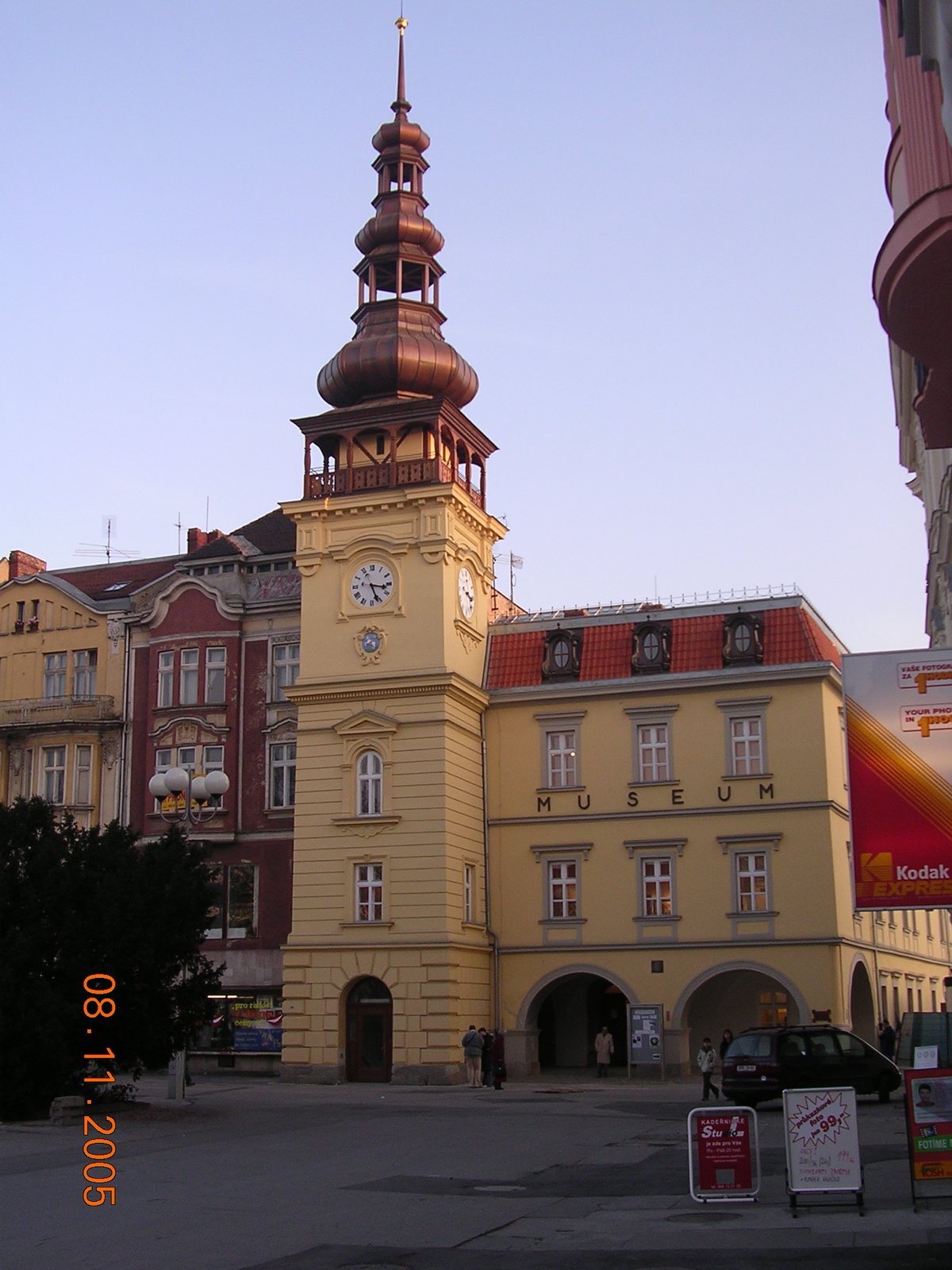
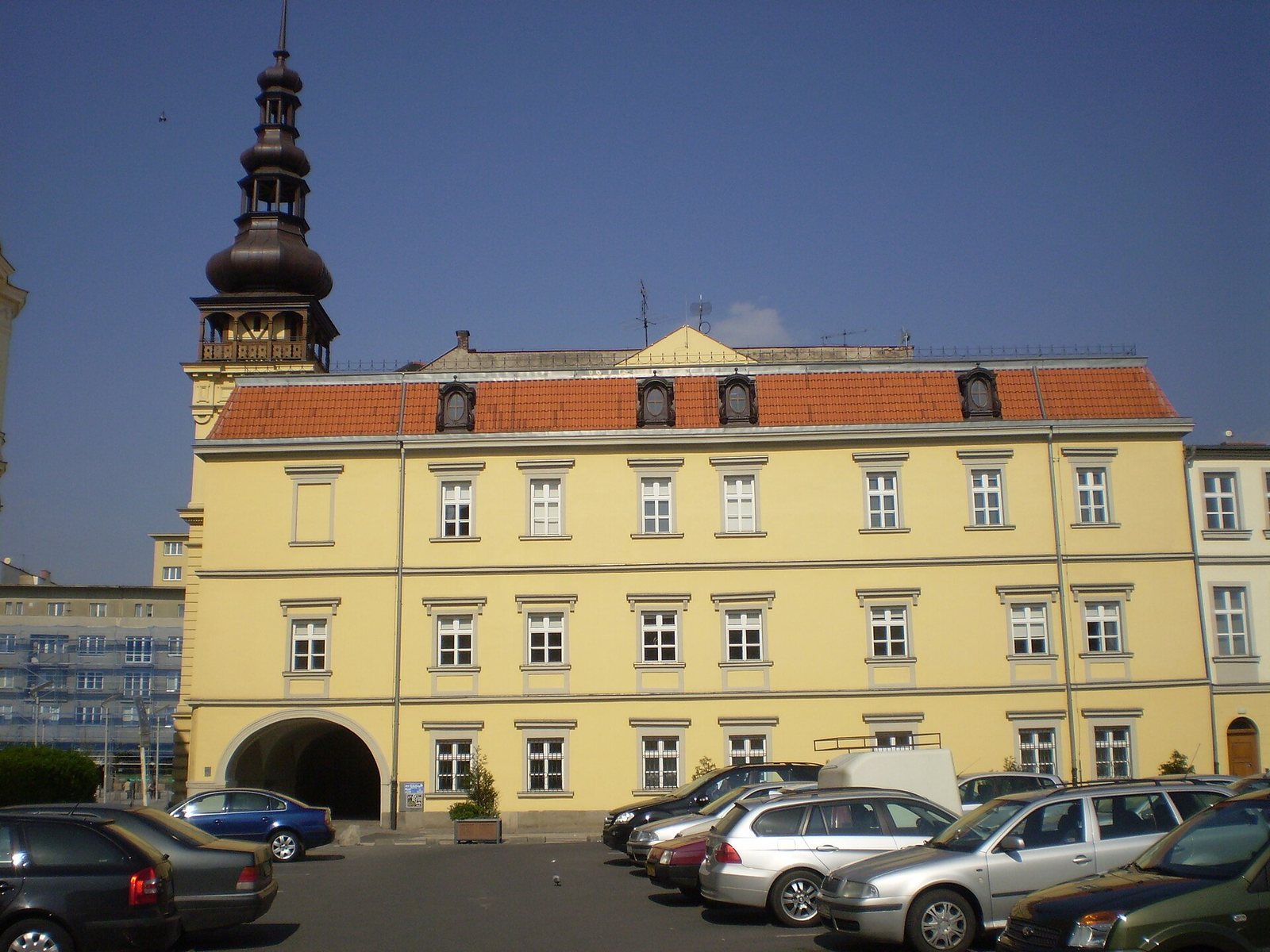
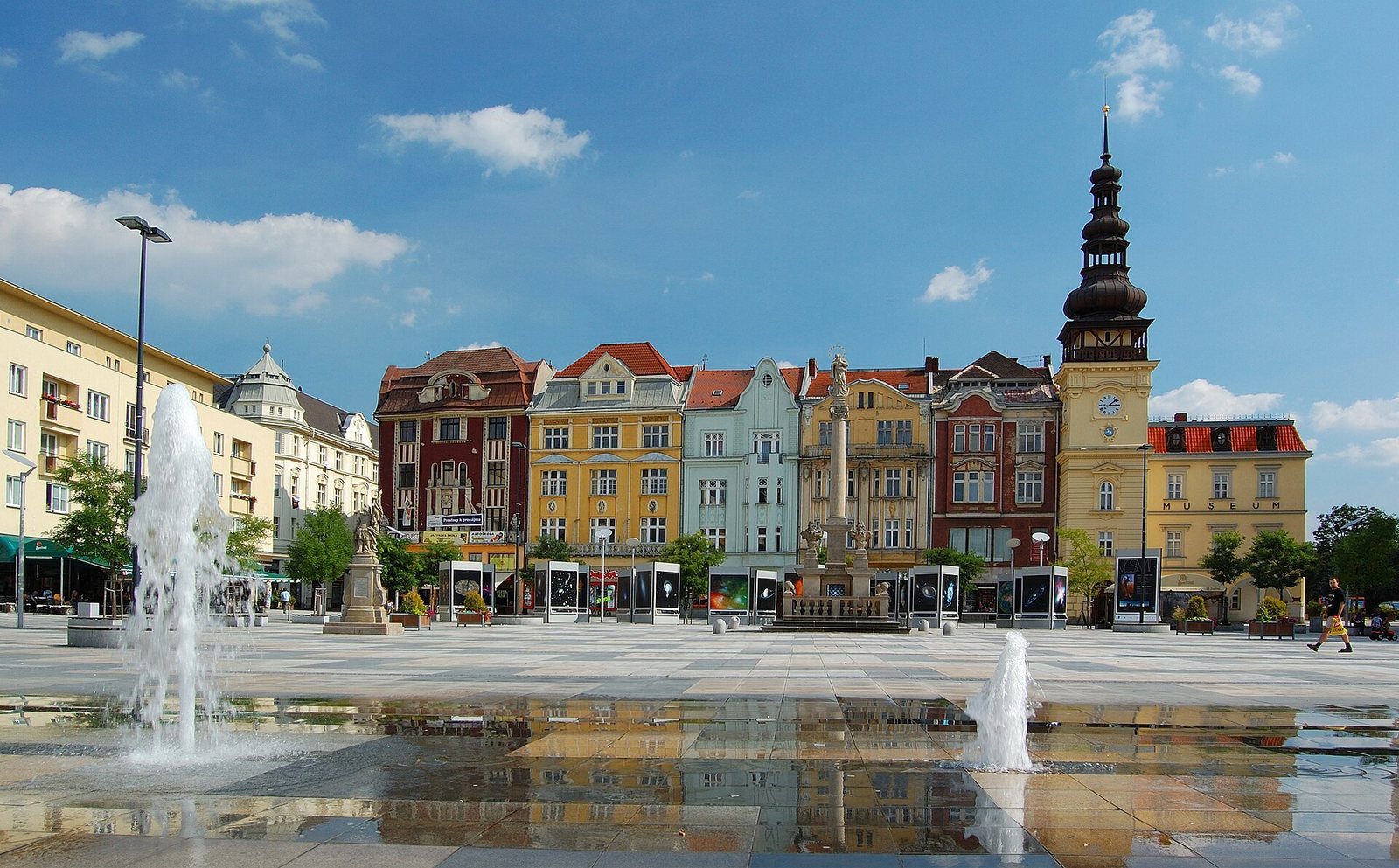
The complex includes a three-storey town hall, a rear building, a corner building on Pivovarská Street, and a connecting wing. Its architectural character reflects Baroque, Empire, and Neo-Renaissance phases. The tower has a square plan and a clock at its top. Its roof has an onion-shaped profile and two lanterns, small raised roof structures. A wooden gallery with a railing surrounds the tower, while its gilded dome bears the town arms.
Archaeological evidence
House walls and finds
Stone walls from houses probably dating to the fourteenth century are visible through a glass floor on the museum’s ground level. Excavation also yielded pottery, fragments of glass goblets, and a Prague groschen, a Bohemian silver coin from the reign of John of Luxembourg, King of Bohemia from 1310 to 1346.
Flood mark
A mark on a building pillar, about 1.7 metres above ground, commemorates the 1880 flood. It is uncertain whether floodwater in the square actually reached that height.