St. Stephan (Obergriesbach): Catholic Parish Church in Bavaria
Site at a Glance
- Rating
- 4.2
- Popularity
- Very Low
- Country
- Germany
- Primary era
- Modern
- External website
- Open
- Eras represented
- Medieval, Early Modern, Modern
- Civilizations
- Duchy of Bavaria, Electorate of Bavaria, German, Holy Roman Empire
- Site type
- Religious
- Remains
- Church
On this page14 sections
History
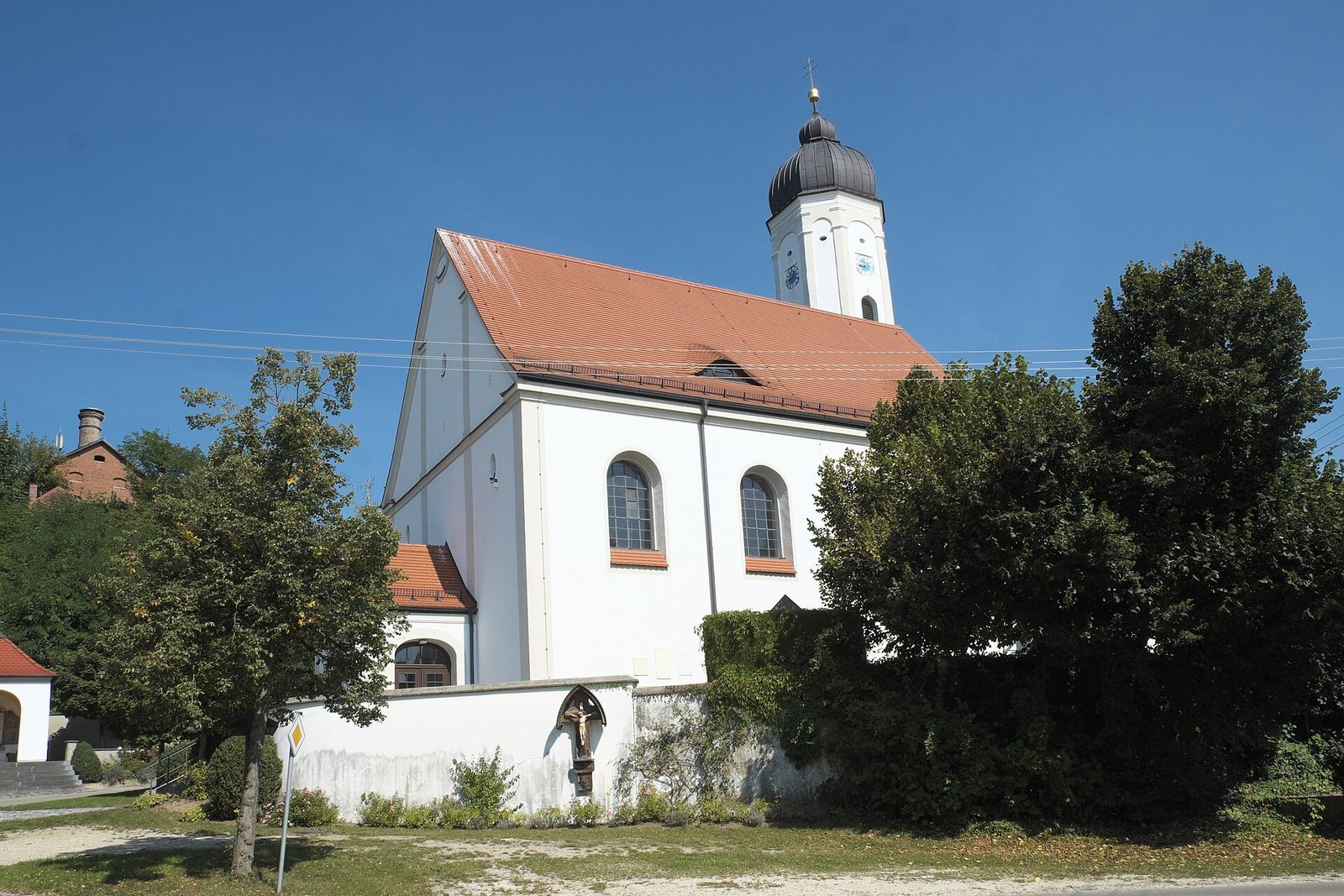
St. Stephan is a Catholic parish church in Obergriesbach, Germany, with late-medieval origins and an eighteenth-century rebuilding that gave the church much of its historic character. Dedicated to Saint Stephen, traditionally regarded in Christianity as the first deacon and first Christian martyr, it stands below the Hofmark castle and is protected as a listed architectural monument in Bavaria.
Late-Medieval Church and Eighteenth-Century Rebuilding
The earlier church was a late-medieval building represented in a 1701 engraving by the Bavarian engraver and topographer Michael Wening. A new church, measuring 25 metres in length and 10 metres in width, was constructed on the same site between 1749 and 1751. The lower storeys of the medieval tower were retained and heightened with an octagonal upper section during this rebuilding.
Ignaz Baldauf frescoed the nave vault in 1763. Despite the completion of the new building and its decoration, the church was not consecrated until 1794. The ceremony was performed by Johann Nepomuk August Ungelter von Deissenhausen, auxiliary bishop of Augsburg, an assistant to the diocesan bishop.
Reconstruction in the Twentieth Century
Structural damage led to the demolition of the church in 1906. Karl Bauer prepared the rebuilding plans, and Gottlieb Schmid directed the work. The old tower was incorporated into the new church, while the foundation stone for the reconstruction was laid in 1907. The rebuilt church was consecrated in 1908 by Maximilian von Lingg, bishop of Augsburg.
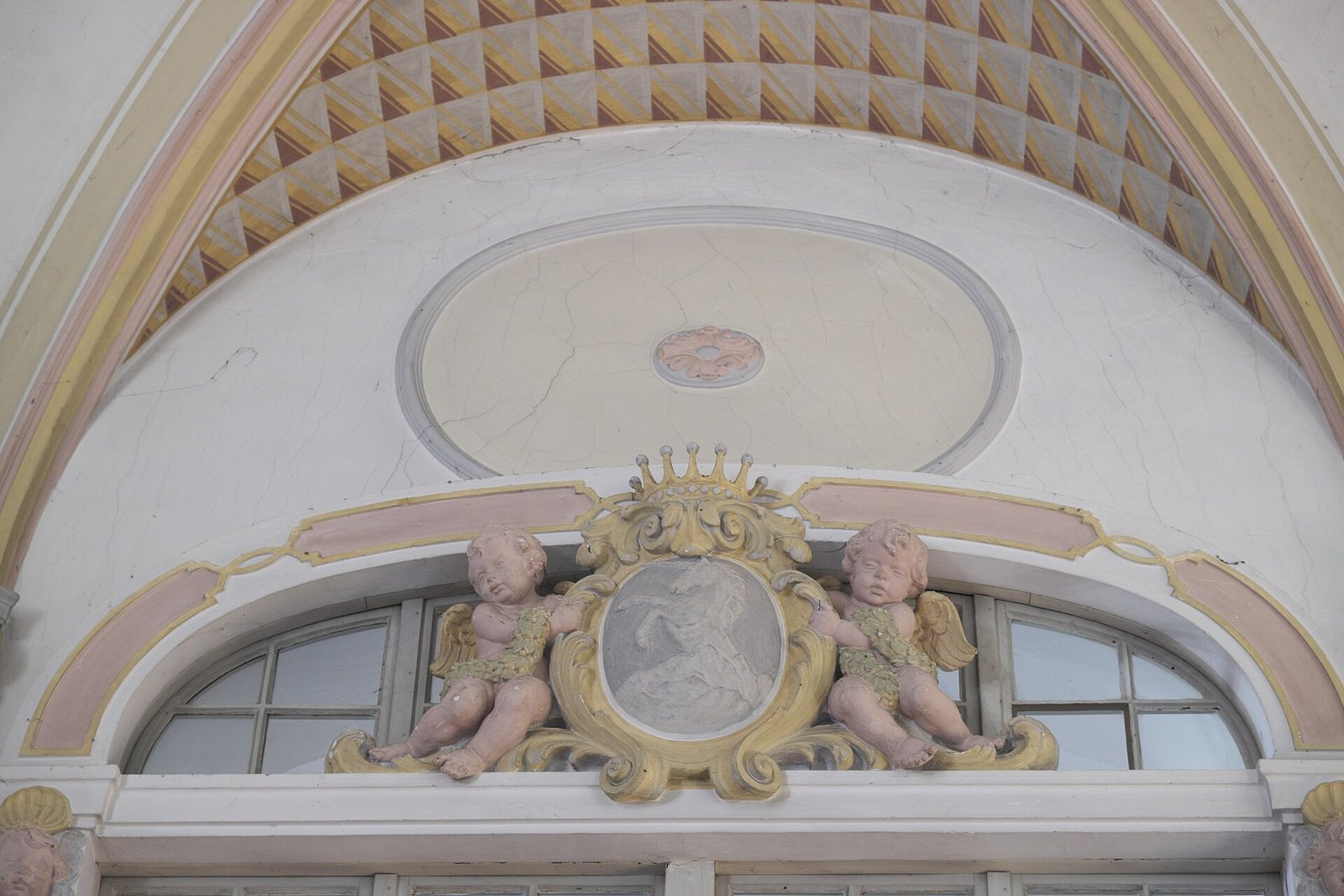
The Nowak company of Munich created the church’s neo-Baroque stucco decoration in 1907 and 1908. The choir oratory contains the coat of arms of the barons von Gravenreuth, who acquired possession of the Hofmark in 1831. The church also preserves wall-mounted epitaphs, commemorative monuments for deceased members of the local noble family associated with the Hofmark. They commemorate Christoph von Weichs, who died in 1499; Wolfgang II von Weichs, who died in 1538; Euphrosina von Weichs, who died in 1559; Wiguläus von Weichs; and Ursula von Weichs, née Wernberg, who died in 1572.
Remains
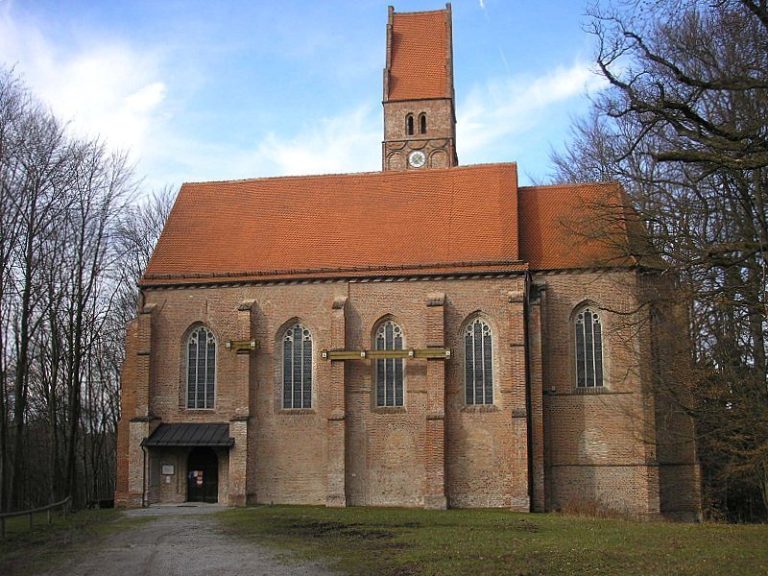
St. Stephan is arranged as a single-nave hall with a narrower choir. The surviving medieval tower occupies the northern angle of the choir, while the west entrance is set within a porch. Inside, shallow barrel vaults with lunettes cover the nave and choir, a large oratory adjoins the choir on the south, and a gallery closes the nave at the west.
Exterior and Tower
Medieval Bell Tower
The bell tower preserves lower storeys from the medieval church. Their recessed blind panels are architectural panels without openings, and the upper panels carry battlement friezes. Above them rises the octagonal structure added during the mid-eighteenth-century rebuilding. Corner pilasters articulate this upper section, which is crowned by an onion dome.
West Entrance
The entrance portal is integrated into a porch on the west facade. Flat pilasters divide the facade, which is pierced by small oval window openings.
Interior Arrangement and Furnishings
Choir and Gallery
The interior has rounded eastern corners in the nave and a narrower choir ending in a semicircle. A large oratory extends from the south side of the choir. On the west gallery stands the organ made by Julius Schwarzbauer.
High Altar
The high altar dates from around 1770 to 1780. Its altarpiece by Ignaz Baldauf portrays the stoning of Saint Stephen. Saint Lawrence and Saint Vitus stand beside the painting, while the upper structure represents the Trinity.
Side Altars
The side altars date from the early eighteenth century. The altar on the left depicts the Education of the Virgin Mary, while the altar on the right contains a Pietà, a representation of the dead Christ supported by the Virgin Mary.
Rococo Pulpit
The Rococo pulpit dates from around 1760 to 1765. Its pulpit basket carries images of the four Evangelists, the traditional authors associated with the canonical Gospels: Luke with the ox, John with the eagle, Matthew with the winged human figure, and Mark with the lion. Palmettes and a Rocaille cartouche, an asymmetrical shell-like ornamental frame, decorate the sounding board. Its underside bears a dove representing the Holy Spirit, and an inscription on the rear wall reads, “Whoever is of God hears the word of God.”
Confessionals and Older Sculpture
The confessionals were made around 1780 to 1790 and are decorated with paintings of the Apostle Peter and Saint Mary Magdalene. The oldest furnishing is a late-fifteenth-century figure of the Salvator mundi, or “Saviour of the World,” showing Christ blessing and holding a globe topped by a cross.
Painted Decoration
The church’s frescoes were executed in 1943 by Sebastian Hausinger from designs by Richard Holzner. Johann Bosshardt of Augsburg painted the decorative designs in the lunettes, on the choir arch, and on the gallery parapet. These works form part of the church’s later painted interior, alongside the earlier vault fresco by Ignaz Baldauf.