St. Paraskevi Church, Radruż: A Historic Wooden Church in Poland
Site at a Glance
- Popularity
- High
- Country
- Poland
- Primary era
- Early Modern
- Eras represented
- Early Modern, Modern
- Civilizations
- Austrian Empire, Habsburg, Polish–Lithuanian Commonwealth
- Site type
- Religious
- Remains
- Fortified Church
On this page11 sections
History
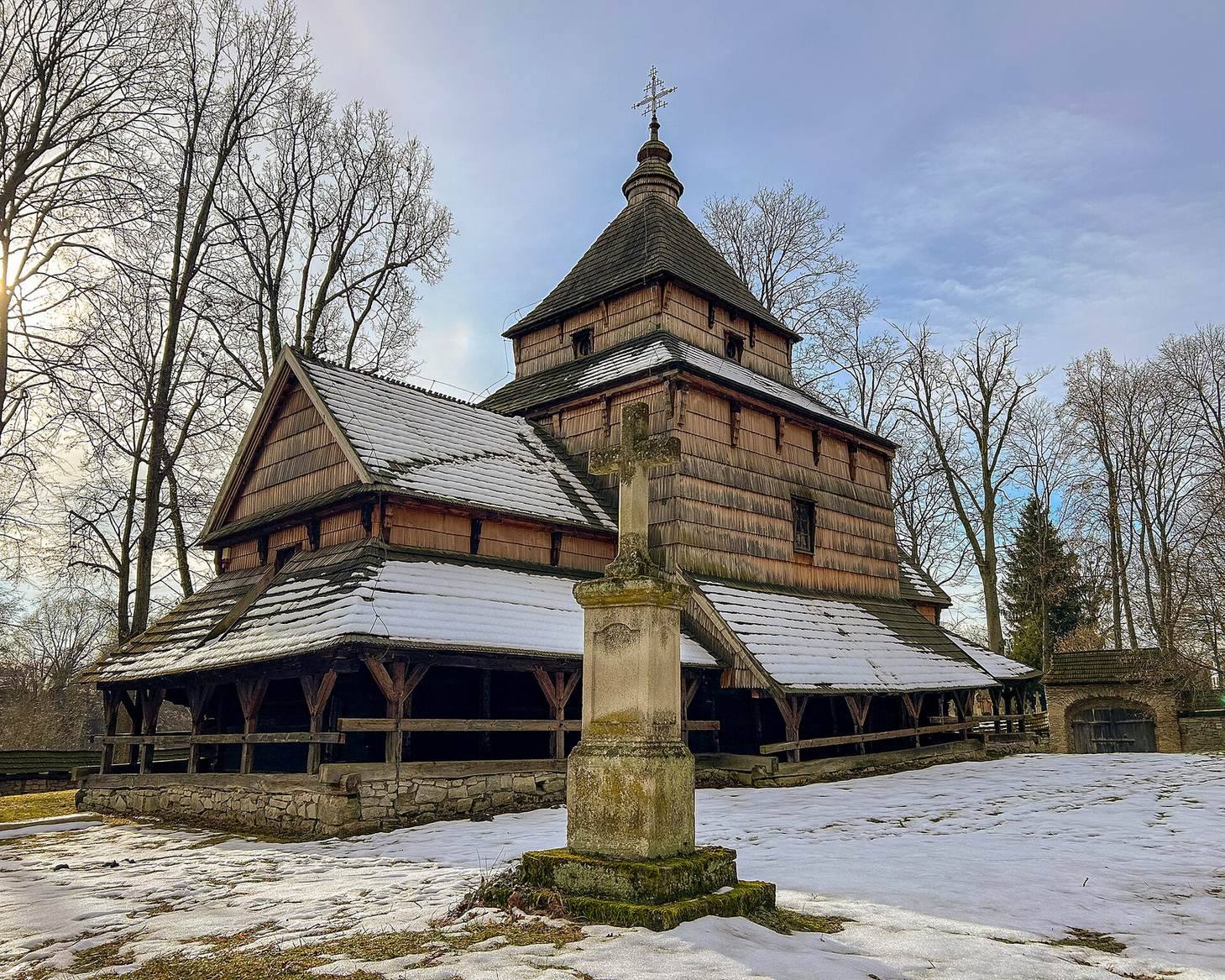
St. Paraskevi Church is a wooden church in Radruż, Poland, built in the late 16th century in the early Galician tradition, a regional style of timber church architecture. It is regarded as one of Poland’s oldest and best-preserved wooden churches. Dedicated to St. Paraskevi of Iconium, a Christian martyr of the 3rd century, it began as an Orthodox church and later became Greek Catholic, an Eastern Christian tradition in communion with the Roman Catholic Church.
Foundation and defensive use
Jan Płaza, who died in 1599, was probably the church’s founder. He served as a regional administrator of Lubaczów and sat in the Sejm, the lower house of Poland’s parliament.
During the 17th century, the church grounds also offered refuge from Tatar incursions. Local residents could shelter within the church and its enclosure during these attacks.
Postwar change and conservation
After the Second World War and the territorial changes between Poland and Ukraine, the church lost its congregation. It became state property and stopped serving as a place of worship. Since 2010, the complex has operated as a branch of the Museum of the Borderlands in Lubaczów.
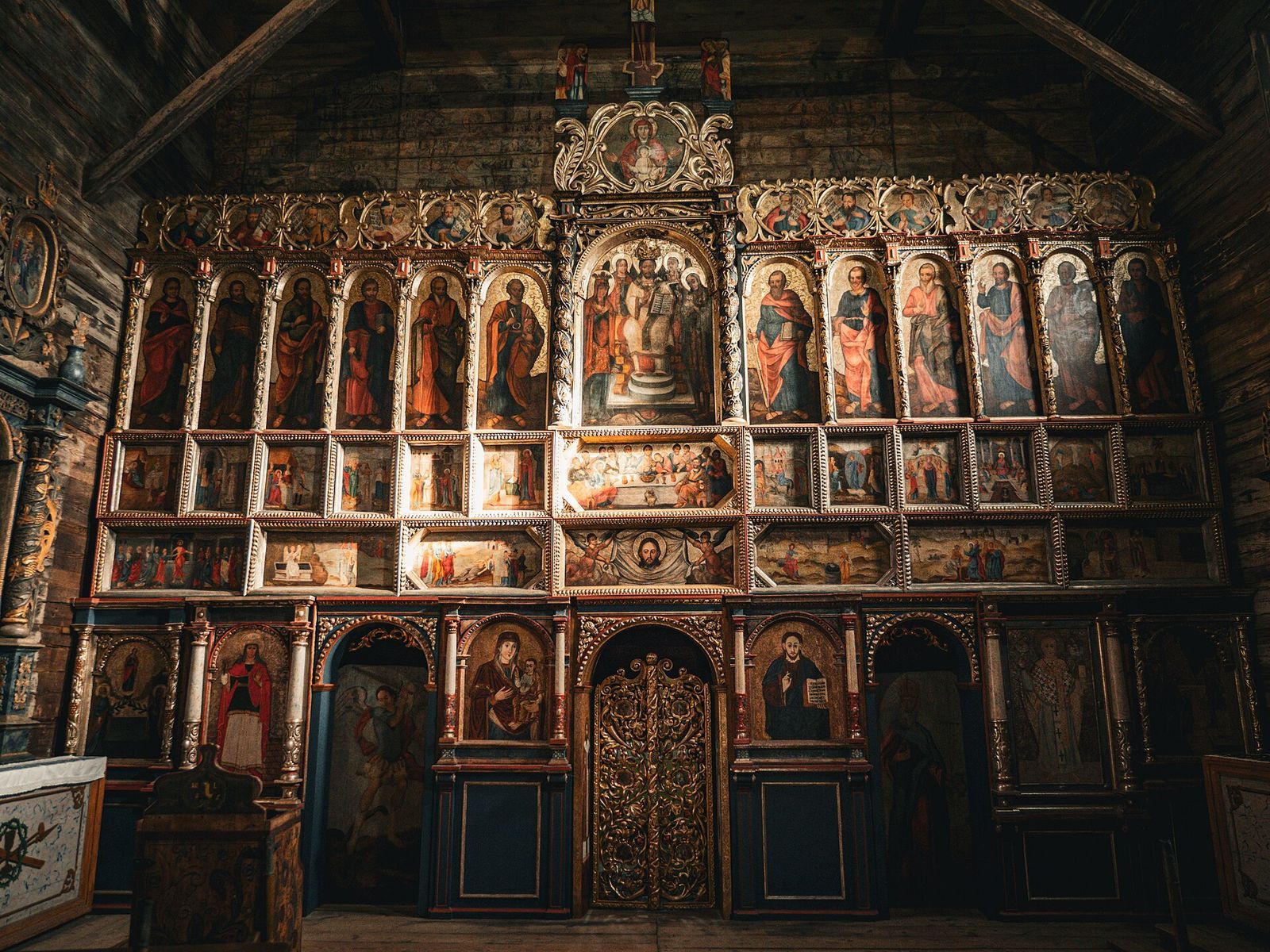
Local craftspeople restored the church from 1963 to 1965 under conservation supervision from Kraków. Conserved parts of the iconostasis, the screen of icons between the sanctuary and worship space, returned from Łańcut in 2012. The church was protected in 1986 and 2010, appeared on the World Monuments Fund’s threatened-sites list in 2012, and joined the UNESCO World Heritage property Wooden Tserkvas of the Carpathian Region in Poland and Ukraine in 2013. UNESCO’s World Heritage List recognizes places of outstanding universal value. Poland designated the church a Historic Monument in 2017.
Remains
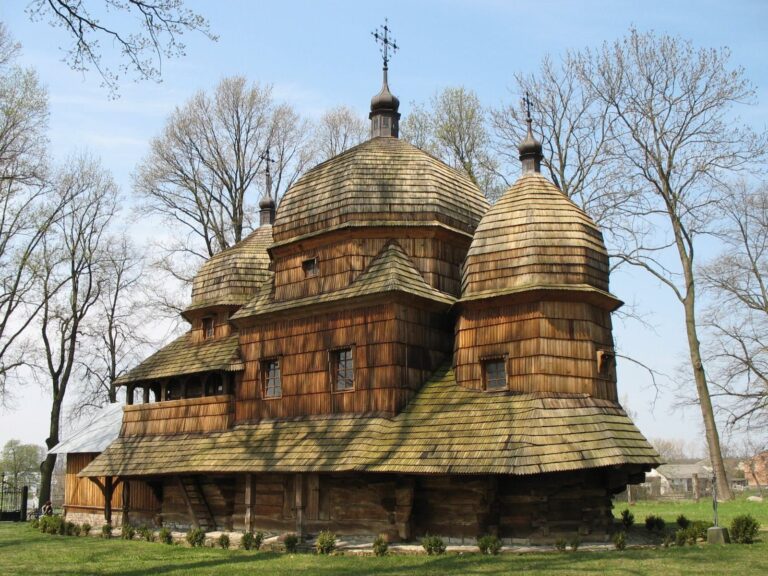
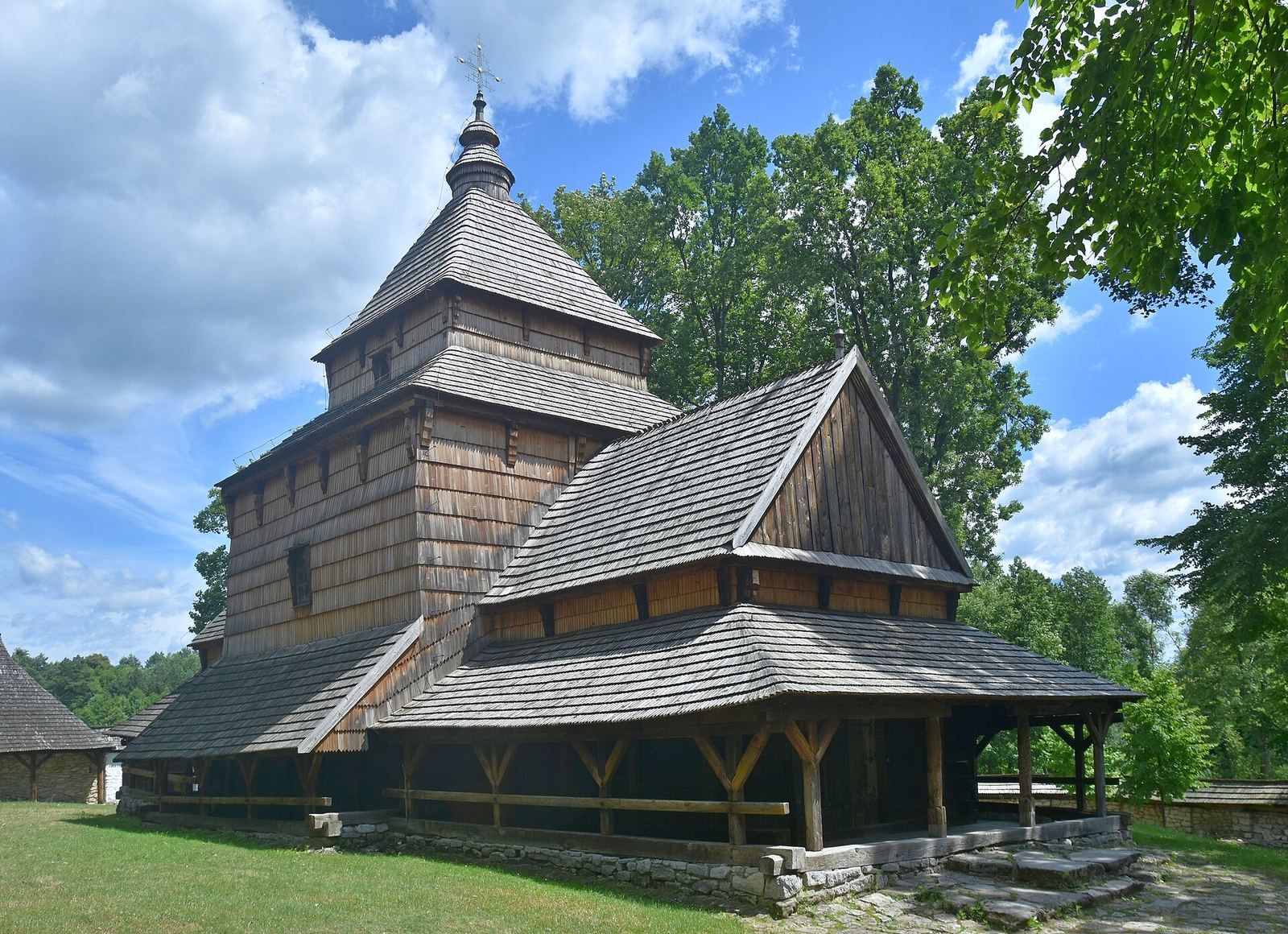
The complex stands on an oval hill above the Radrużka stream, about 500 metres southeast of the Ukrainian border. The church has three parts arranged as three consecutive squares and is built from oak and fir logs.
Church building
Exterior form
The nave is the church’s tallest and widest section. Its high, square timber walls support a four-sided, tent-shaped dome with a break in its slope and a small, shingled lantern at the top. The lower sanctuary and entrance vestibule have gabled roofs. Wooden shingles cover the walls and roofs, while a broad covered gallery runs around the building on posts and diagonal braces. Late Gothic features also appear in the church’s design.
Interior decoration and construction
Painted decoration survives on the iconostasis wall and in the sanctuary. Applied directly to the wood, it dates to 1648 and was probably produced by painters from Potylicz. The nave and entrance vestibule share forms, proportions, and building methods with the Church of the Holy Spirit in Potylicz. Their roof structures also use similar horizontal beams, vertical posts, and diagonal braces. The Radruż sanctuary has a gabled roof without a dome. A comparable altar-covering form is found at the Church of the Exaltation in Drohobych, and the original covering at Potylicz may have been similar.
Enclosure and associated structures
Wall and buildings
A stone wall surrounds the church and bell tower; its present form dates to 1825. The ensemble also includes a wooden bell tower and a stone deacon’s house, both from the 17th century, as well as a former pergola, an open structure supported by posts and overhead beams.
Cemeteries
The churchyard cemetery covers about 16 ares. Its wall encloses several stone crosses and the crypt of the Andruszewski family, former owners of Radruż. Two other nearby cemeteries, measuring about 42 and 14 ares, preserve historic Bruśnie tombstones.
Coins found beneath the church
During the 1963–1965 restoration, workers found eight Polish shilling coins beneath a corner of the foundation sill. Issued in 1665, during King John Casimir’s reign, the coins are now held at the museum in Lubaczów.