St Nicholas Church, Sölvesborg: A Medieval Gothic Parish Church
Site at a Glance
- Country
- Sweden
- Primary era
- Medieval
- Eras represented
- Medieval, Early Modern, Modern
- Civilizations
- Danish, Swedish
- Site type
- Religious
- Remains
- Church
On this page11 sections
History
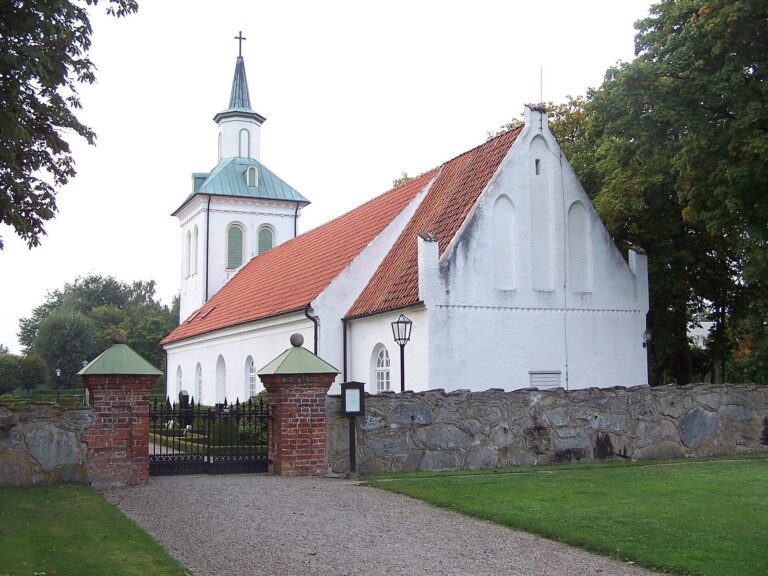
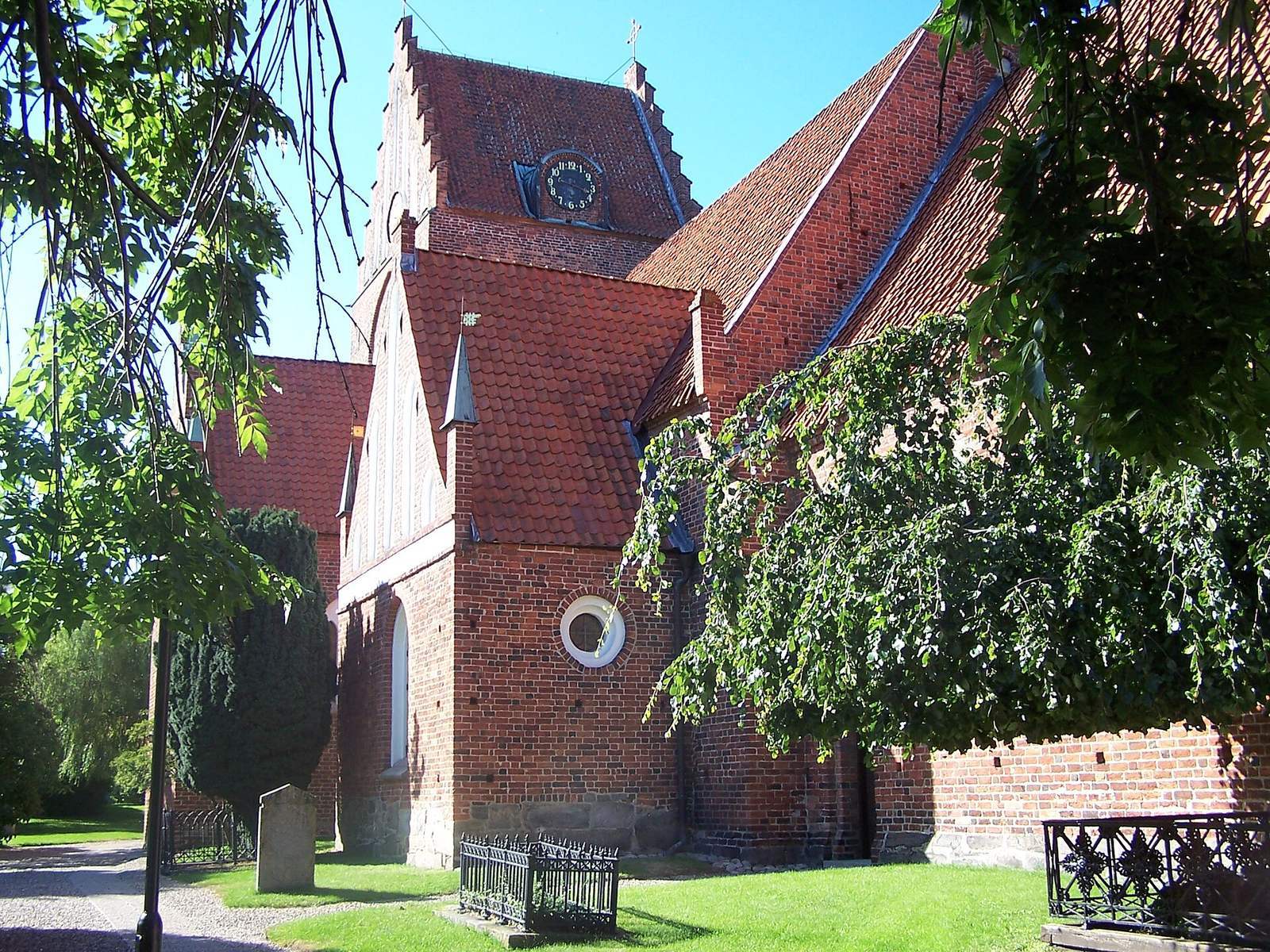
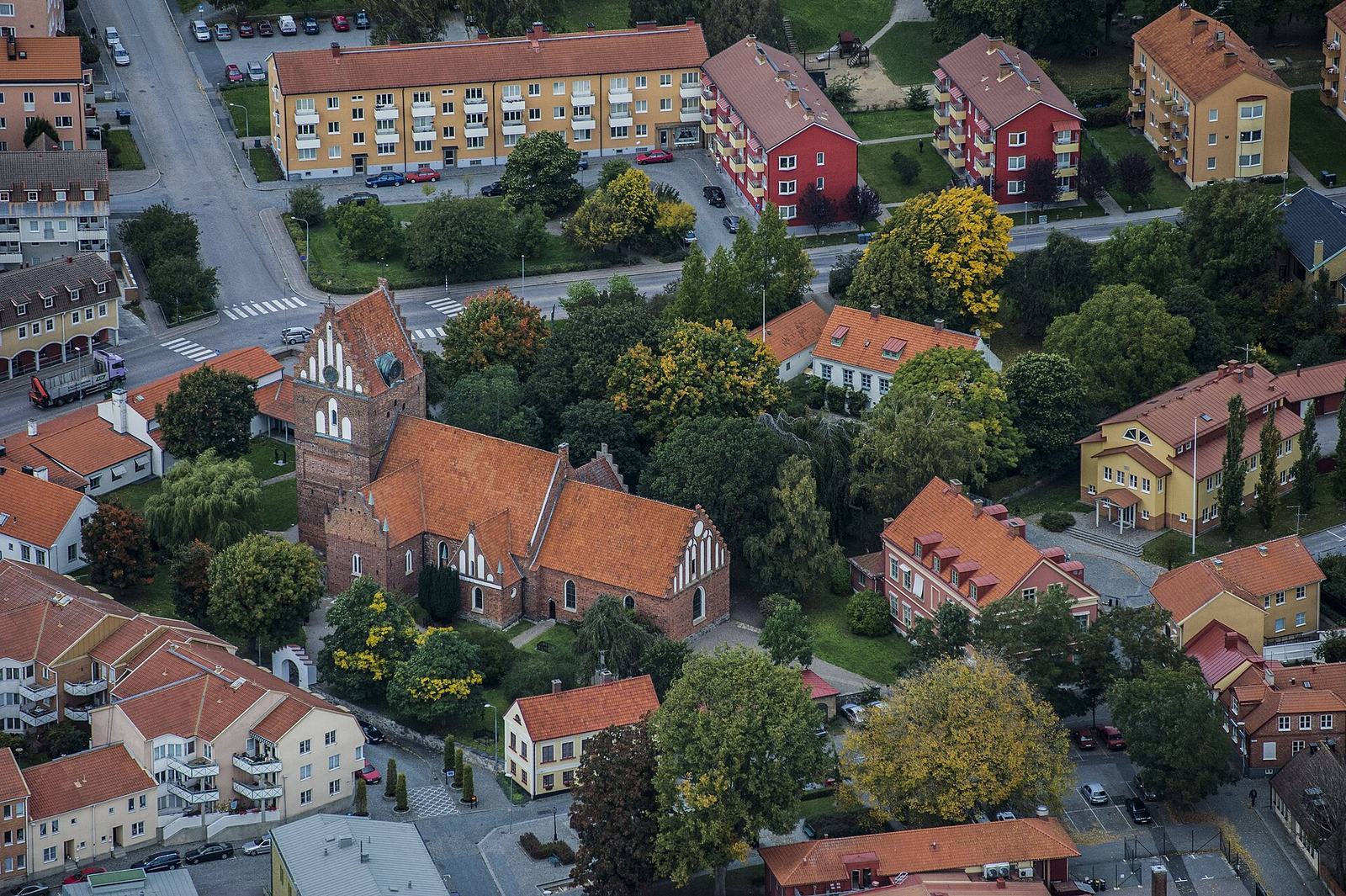
St Nicholas Church is a Gothic parish church in Sölvesborg, Sweden, built in the late 13th century. It belongs to Sölvesborg parish in the Diocese of Lund and the Church of Sweden. Named for Saint Nicholas, a Christian saint traditionally associated with sailors, it also served fishermen in Hanö Bay as a seamark.
A Carmelite monastery, belonging to a Catholic religious order, was established north of the church in 1486 by decision of Pope Innocent VIII. It was dissolved in 1536 after the Reformation in Denmark, the 16th-century religious transition that led to the monastery’s closure.
St Nicholas Church was the only medieval building in Sölvesborg to survive the great fire of 1801.
Remains
The surviving church combines a Gothic choir, nave and tower with a later porch and decorated interior. Its associated remains include medieval runestones, the site of a monastery and a 19th-century rectory.
Church and interior
Building and vaults
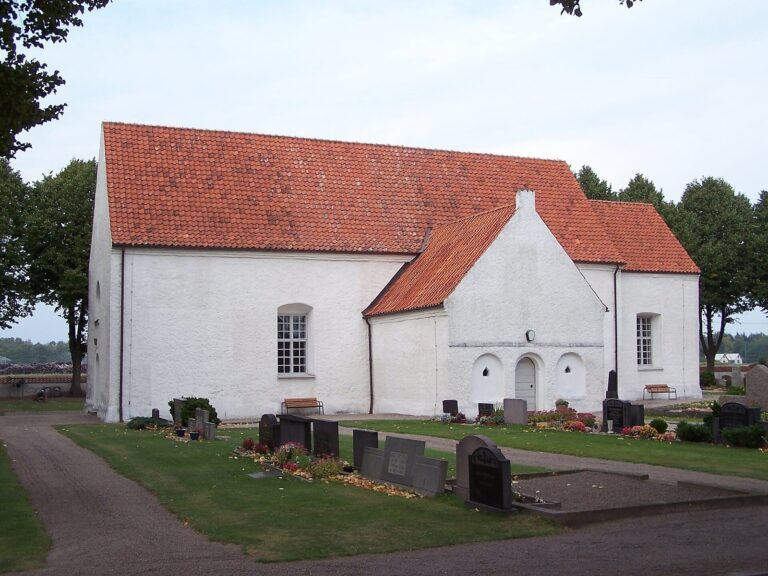
The choir, the oldest part of the church, dates to around 1300. The nave followed in the early 14th century, and the tower was built late in that century. A porch was added in the 15th century, then given a new gable in the Renaissance style in 1649. Inside, star vaults form ribbed ceilings whose ribs create star-like patterns.
Paintings and furnishings
Numerous 15th-century wall paintings decorate the interior. Those from the early part of the century show episodes from the lives of Jesus and Mary and are attributed to the Sölvesborg Master, an art-historical name for the painter credited with them. A crucifix from the same period also survives. The altarpiece and pulpit date to the 1620s. The pulpit bears the motto Regia Firmat Pietas, meaning “Piety strengthens the realm,” used by Christian IV, king of Denmark and Norway from 1588 to 1648. An oak poor box in the church dates to the Middle Ages.
Runestones and nearby remains
Runestones
Two runestones associated with the church date broadly to the 6th–8th centuries. The Stentoften Runestone, from the 6th century, stands inside the porch and carries the longest known inscription in Proto-Norse, an early North Germanic language. A second runestone stands beside the porch.
Monastery and rectory
Remains of the Carmelite monastery lie north of the church. A rectory dating to 1833 also stands to the north.
Organs
Gallery organ
Remains, including bellows, of an earlier gallery organ were present by 1773. Johan Petter Åberg of Vassmolösa built a 15-stop organ in 1834, with each stop controlling a set of pipes. Johannes Magnusson of Gothenburg made a 25-stop organ in 1905, followed by a 49-stop instrument built by Mårtenssons Organ Factory of Lund in 1946. The current gallery organ, built in 1967 by Jehmlich Orgelbau Dresden, is mechanically operated.
Choir organ
Mårtenssons built the choir organ in 1946 as a remote division, a set of pipes located apart from the main organ. It has electric action and an air-operated pipe chest, and received its own console in 1967. An earlier choir organ, built in 1964 by Einar Ströwik of Sölvesborg with 12 stops, was moved to Smedstorp Church in 1967.