St Nicholas Anapafsas Monastery: A Cliffside Monastery at Meteora
Site at a Glance
- Country
- Greece
- Primary era
- Early Modern
- Eras represented
- Early Modern
- Civilizations
- Ottoman
- Site type
- Religious
- Remains
- Monastery
On this page18 sections
History
The Meteora monastic tradition
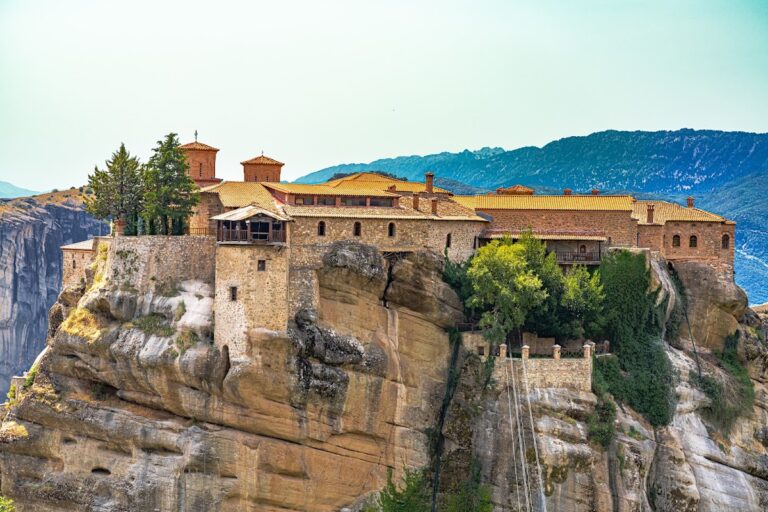
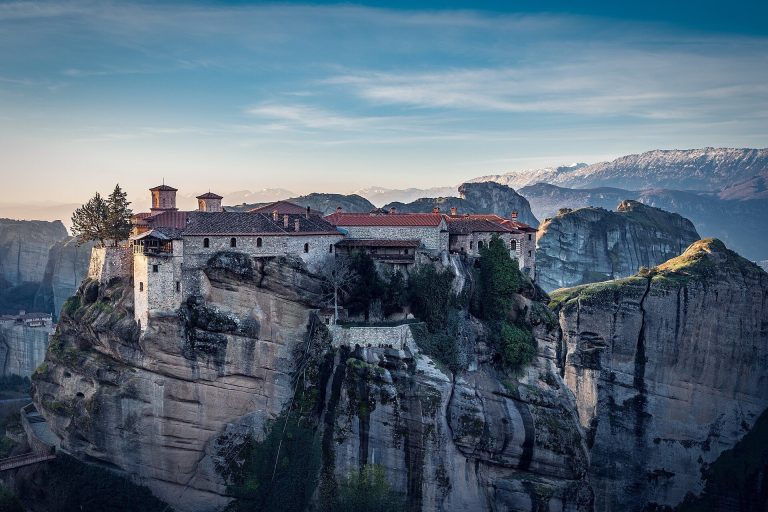
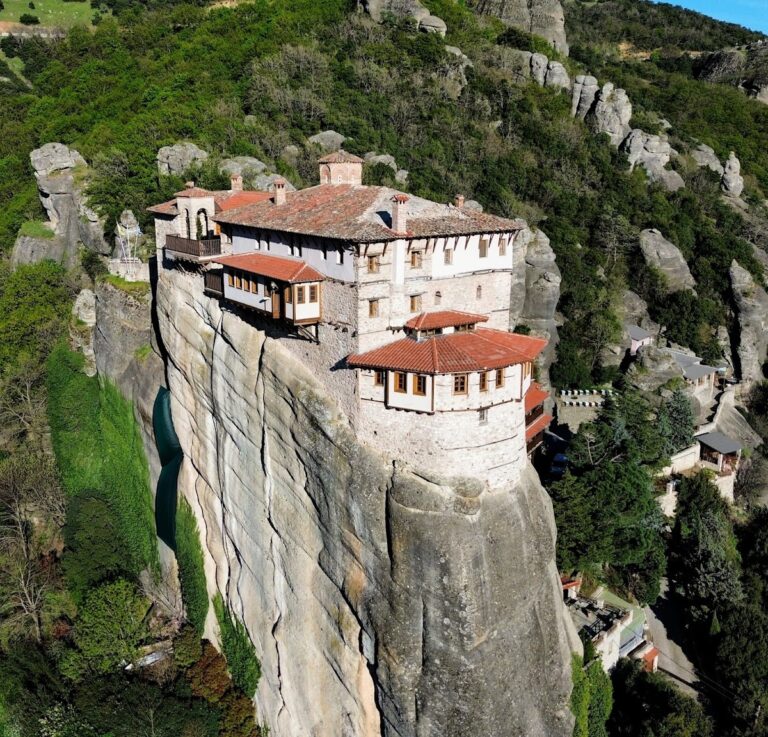
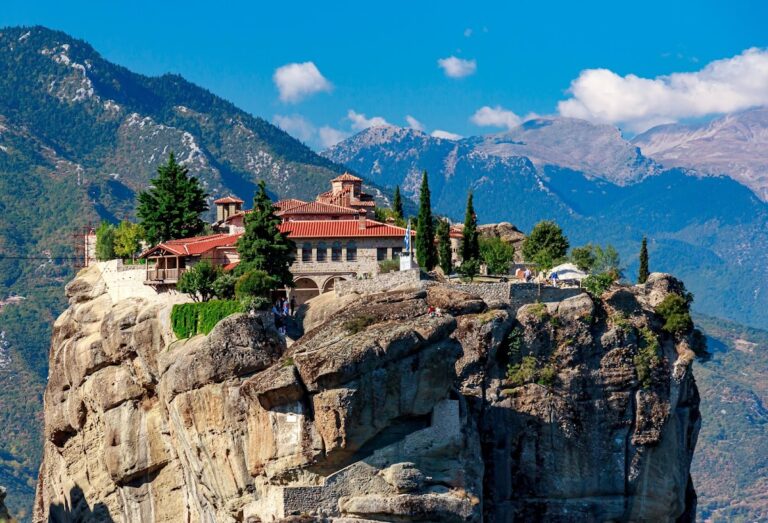
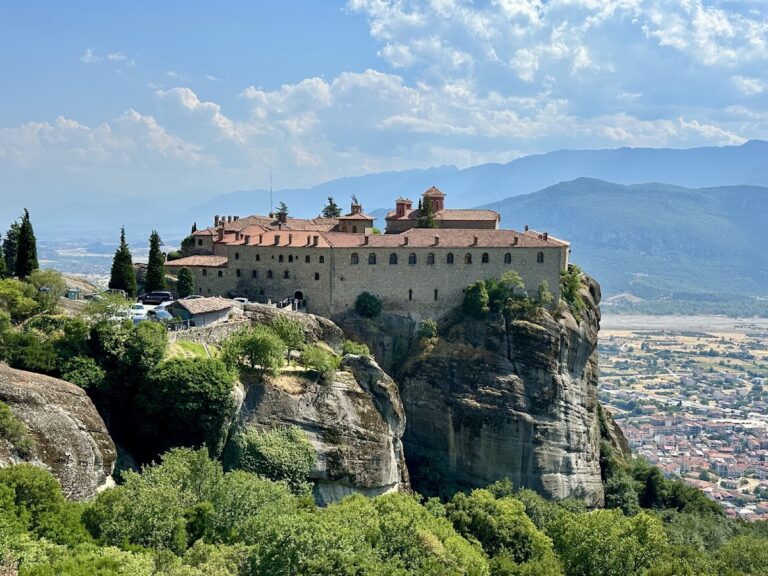
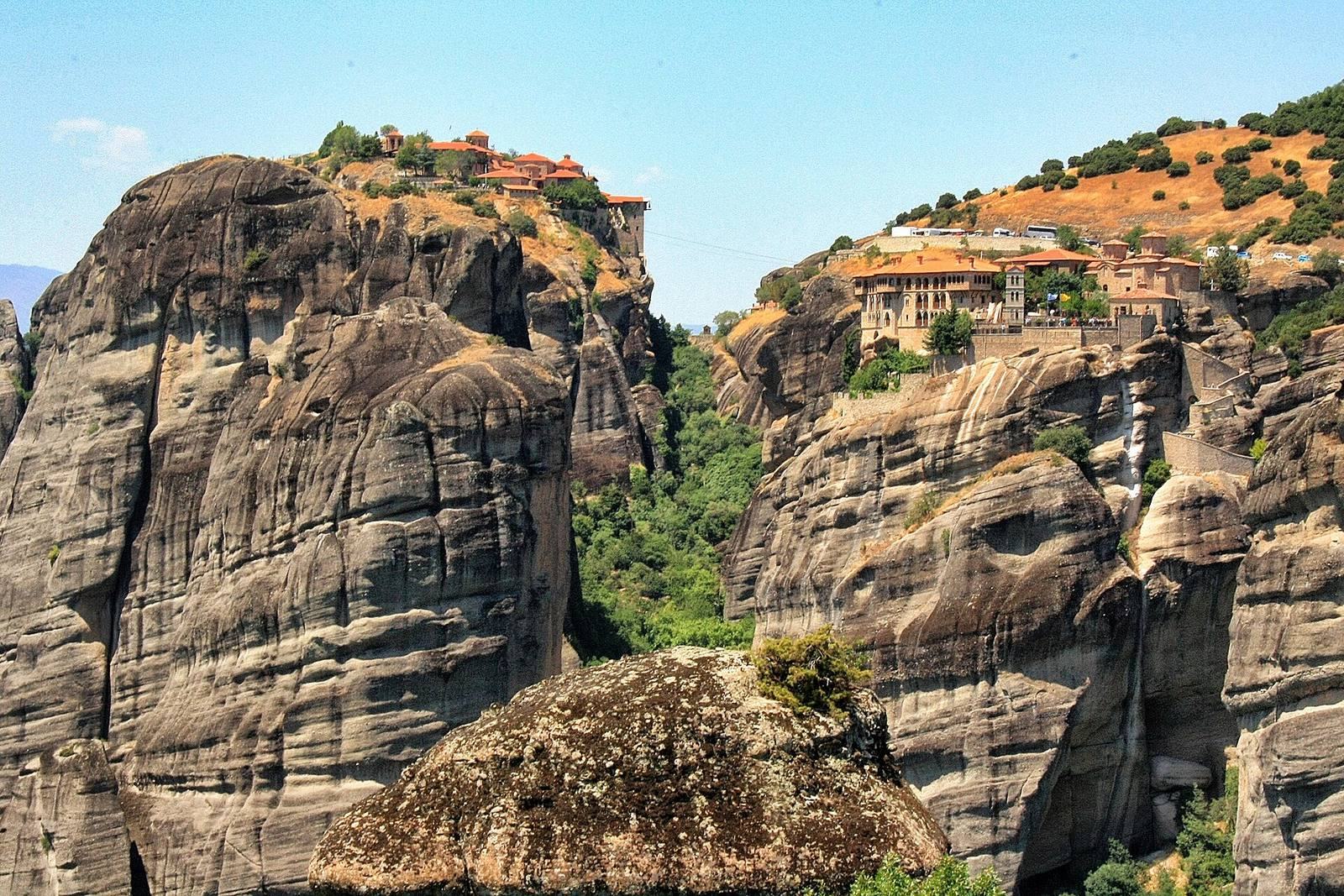
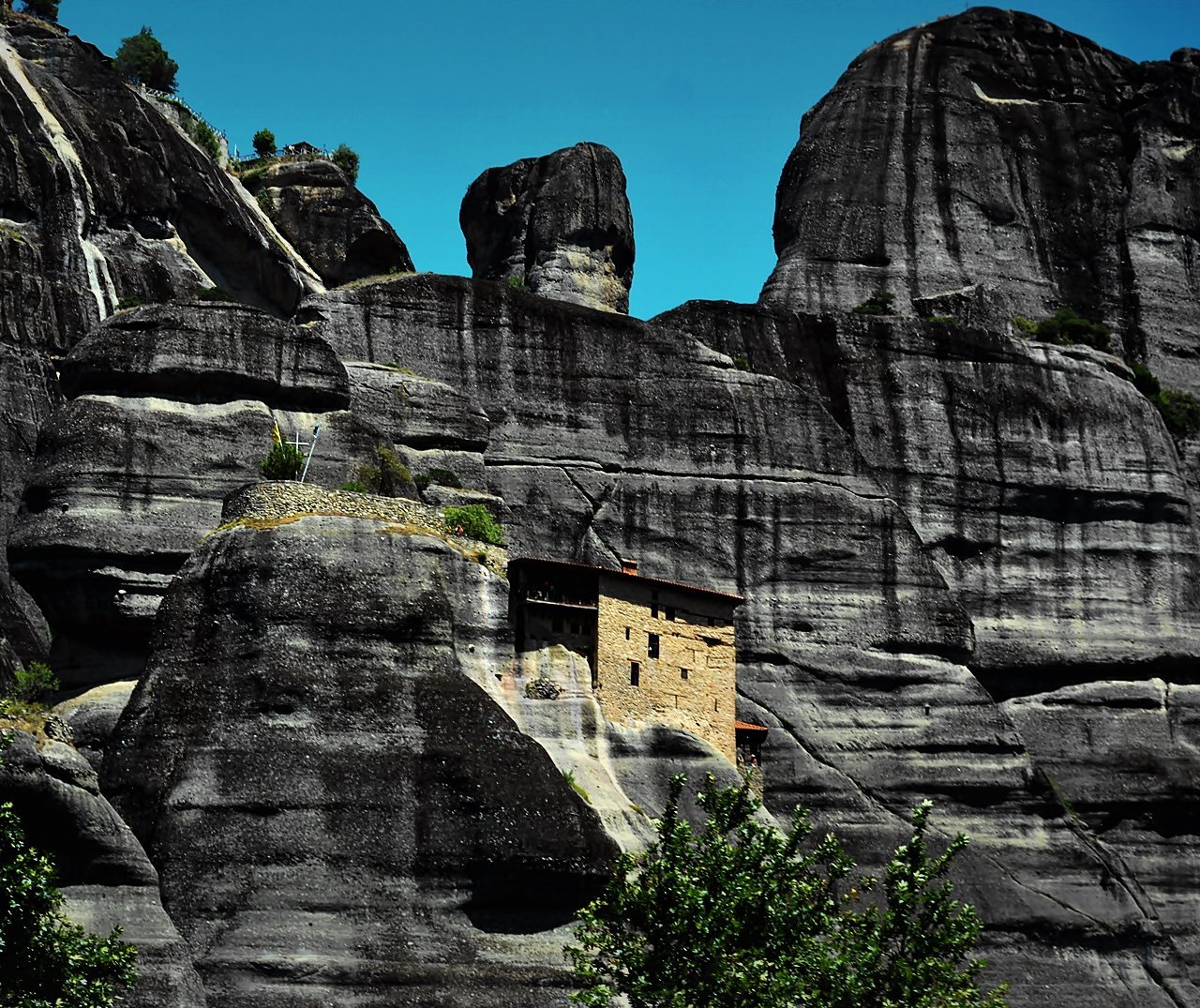
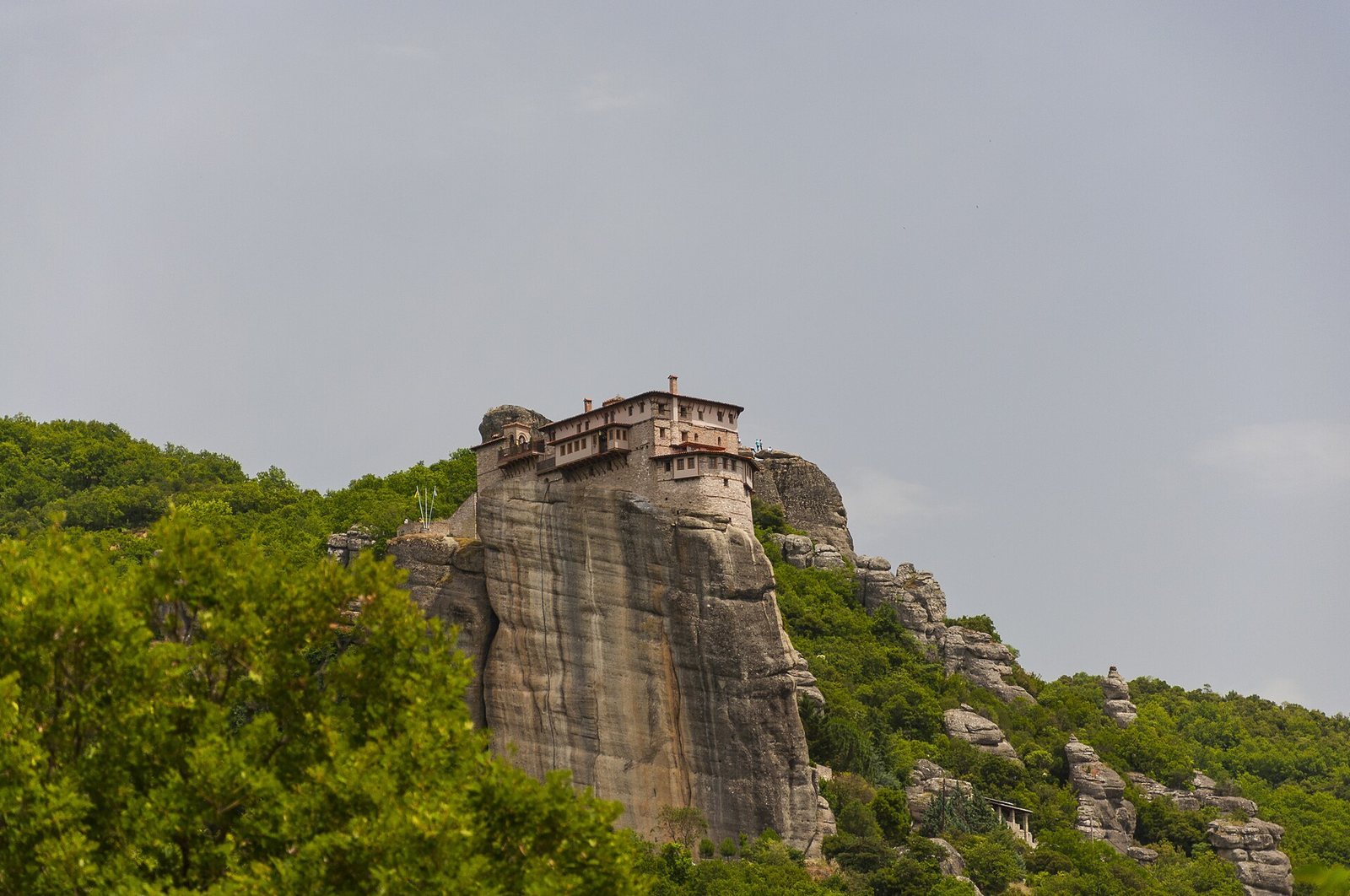
St Nicholas Anapafsas Monastery is a monastery on a rocky precipice at Kalabaka, Greece. Its Church of St Nicholas was built in the 16th century in Byzantine (Athonite) style. The monastery belongs to a group of 24 originally established at Meteora, of which six survive. These six were inscribed together as the Meteora UNESCO World Heritage Site in 1988.
Religious communities were established at the foot of Meteora’s cliffs in the 11th century, while monasteries on the cliffs were built mainly in the 14th and 15th centuries. Ascetics are thought to have settled on the smaller, relatively low rock where St Nicholas now stands during the 13th century. Nikanor Anapausas is traditionally regarded as the monastery’s founder. Its name may derive from a Greek word meaning “rest.”
During political upheavals in the 14th century, monks sought refuge on the cliffs. John Uroš, a late medieval ruler who held the title of emperor of the Serbs and Greeks, became a monk and moved to Meteora. There he endowed, rebuilt, and established monasteries, as cliff-top religious life expanded.
The Church of St Nicholas
The monastery’s church was erected through the efforts of Dionysius, metropolitan (senior bishop) of Larissa, hieromonk Nikanor (a monk ordained as a priest), exarch (ecclesiastical official) of Stagoi, and the monastic brotherhood. An inscription also names hierodeacon Cyprian (a monk ordained as a deacon) as the person who paid for the paintings. Theophanes the Cretan completed them on 12 October 1527.
The paintings were Theophanes’s first large-scale work. They are credited with helping lay the foundations of the Cretan School, an Orthodox religious-art tradition that developed during Ottoman rule.
Remains
The monastery’s vertical layout
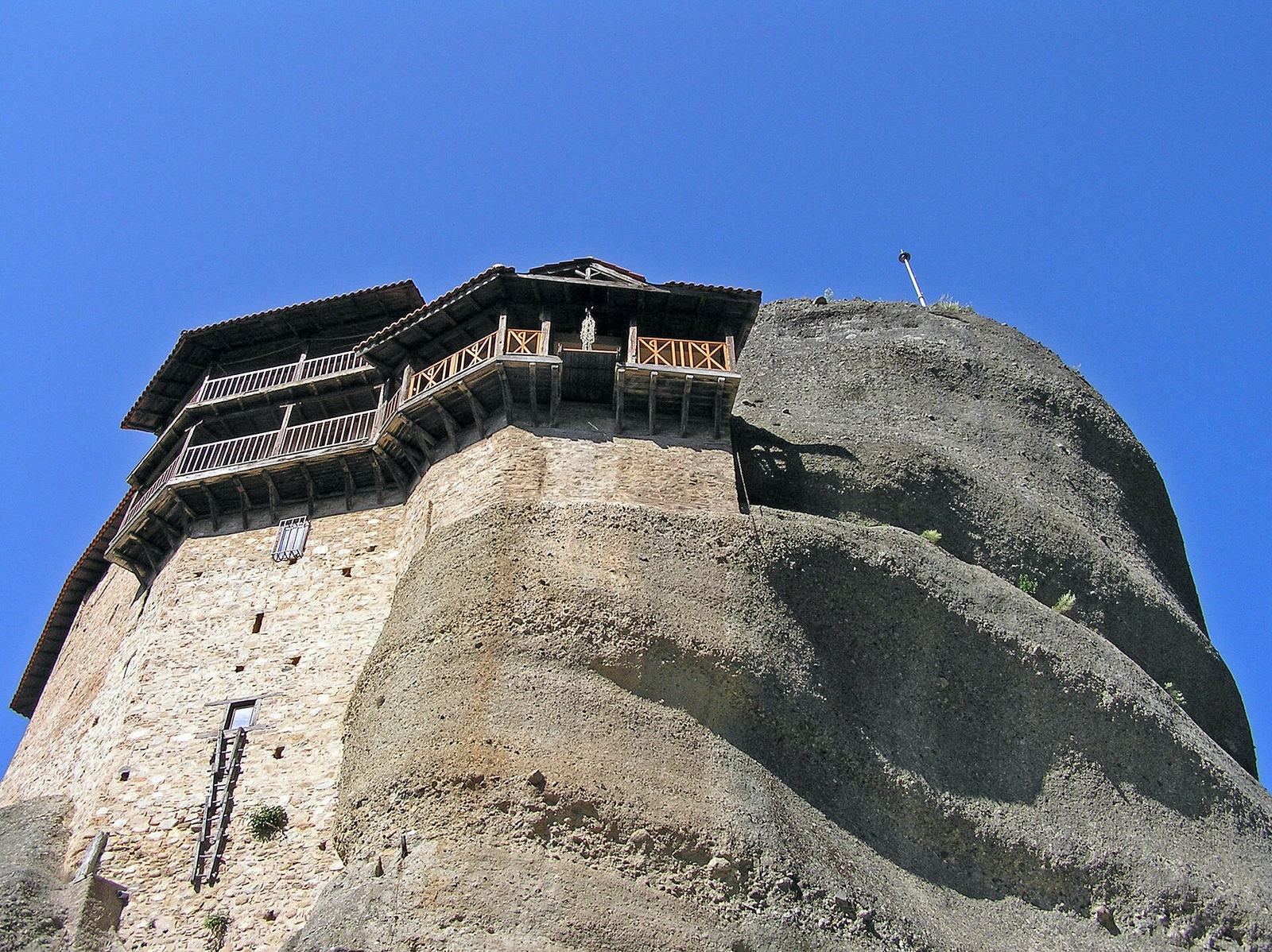
The monastery occupies the top of a rocky precipice more than 415 metres above the Pineios Valley floor. The rock is small and offers little level building space, so the complex is arranged across several levels. The Chapel of St Anthony is on the first level, the Church of St Nicholas on the second, and the monastic rooms and other facilities on the third.
Chapel of St Anthony
The chapel’s altar occupies about four square metres and is large enough for only one officiating cleric.
Upper-level rooms and chapels
The third level contains monastic cells, an old refectory (communal dining room), and a small church dedicated to St John the Baptist. Vaulted rooms were used to keep relics.
Church of St Nicholas
Plan and construction
The church’s irregular plan follows the limited area of the rock. Its four-sided nave (the main body of a church) leads into a compact, cross-shaped main church. Low, pointed supports carry the dome, while the altar area has an irregular outline and ends to the east beneath a low arched ceiling. An inscription is set on the nave’s east wall, above the niche opening into the main church.
Dome and altar-area paintings
Christ Pantokrator, an image of Christ as ruler of all, appears in the dome, encircled by a band representing the Heavenly Liturgy. At the dome’s summit, Moses, Habakkuk, Jeremiah, Micah, Isaiah, David, Solomon, Jonah, Elisha, and Elijah hold scrolls. The four Evangelists occupy pointed triangular spaces below them. Beneath the church’s arched ceiling, the Virgin of Blachernae, a devotional image of Mary, appears with Basil the Great and John Chrysostom in a semicircle. Jacob and Isaiah are nearby, with Stephen, regarded as the first Christian martyr, below them.
Other images in this part of the church include a prayer scene with Christ, Jonah inside the whale, and the Resurrection, Deposition (Christ being taken down from the cross), Pentecost, and Nativity.
East tower
The east tower’s arched ceiling shows the Nativity, Presentation, Crucifixion, and Deposition. Saints Nicholas and John the Baptist appear below, while the tower’s dome depicts the Annunciation, with three martyrs on either side.
South tower
The south tower’s ceiling depicts the Baptism, Mid-Pentecost (an Orthodox feast midway between Easter and Pentecost), and the Raising of Lazarus. St Nicholas the Younger and St Christopher appear below. The dome shows the Transfiguration, with James the Persian, Artemius, and Eustathius beneath it; an archangel surrounded by six martyrs occupies the foreground.
St Nicholas the Younger is shown as a soldier who came to Thessaly to suppress a revolt, but instead chose an ascetic life at the monastery of Vounainis. He was greatly venerated in Thessaly.
North tower
The north tower’s ceiling shows Pilate’s judgment, the Mocking of Christ, and the Scourging. Saints Nestor and Procopius appear below, while the dome depicts the Dormition, the Virgin Mary’s death, with Cosmas of Maiuma and John of Damascus beside it. On the lower wall are Saints Theodore Tyro, Theodore Stratelates, Demetrius, and George. An archangel with six martyrs appears in the foreground.
West tower and entrance
The west tower’s ceiling depicts Peter’s Denial, the Council of the High Priests, and the Last Supper. Constantine, Helen, and Mercurius appear below. The dome above the entrance shows the Prayer in Gethsemane and Judas’s Betrayal. On its lower band, the archangels Gabriel and Michael flank the entrance.
East and south walls of the nave
The nave’s east wall carries a large image of the Second Coming. On the south wall, the upper band includes a miracle scene, the Temptation of Christ, the Healing at Bethesda, and Jesus meeting the Samaritan woman. Monks Anthony, Euthymius, Sabbas, Theodosius the Cenobiarch, and Theophanes Graptus appear below. Saints Alexius and John Calybite are painted inside the south-wall window.
West wall and adjoining ceiling
The upper, wave-shaped part of the west wall depicts the Dormition of St Nicholas and the Healing of the Blind. Below it are the Virgin and Child. Prophets Jeremiah, Gideon, Jacob, Moses, Aaron, and Ezekiel appear in the foreground of the arched ceiling, with Athanasius of Meteora, regarded as the founder of Meteora’s monastic tradition, to the left. The founders Dionysius of Larissa and Nikanor are shown on either side of the Virgin and St Nicholas, with Simeon Stylites beside Nikanor. On the adjoining north side of the ceiling are the Three Children, Daniel in the lions’ den, St Pachomius, and an angel.
North wall and exterior
The north side of the nave depicts the Dormition of St Ephrem the Syrian and Adam naming the animals, an episode from Genesis. Near the entrance on the south-facing side of the painted north wall is St John Climacus. At the west corner, the Healing of a Man with Dropsy appears above St Euphrosynus. Outside, on the nave wall to the left of the entrance, are the Expulsion from Paradise and a lamentation scene.
Painted program
The church’s many subjects fill a restricted space, making its painted program unusually extensive for a church of this size. It also includes subjects not found in the larger churches at Meteora. Adam naming the animals is an uncommon theme in monumental decoration; comparable scenes appear in 12th-century Byzantine manuscript miniatures, whose techniques Theophanes adapted for large painted surfaces. The images are arranged in ordered compositions, with balanced scenes, doctrinal emphasis, and carefully rendered figures.