St. Mary’s Church, New Ross: A Medieval Church in Ireland
Site at a Glance
- Popularity
- Medium
- Country
- Ireland
- Primary era
- Medieval
- Eras represented
- Medieval
- Civilizations
- Norman
- Site type
- Religious
- Remains
- Church
On this page6 sections
History
Early foundations and construction
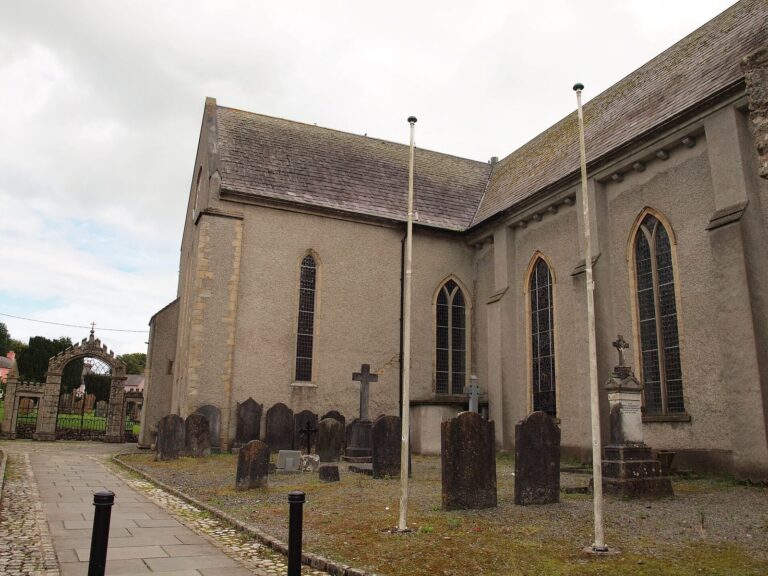
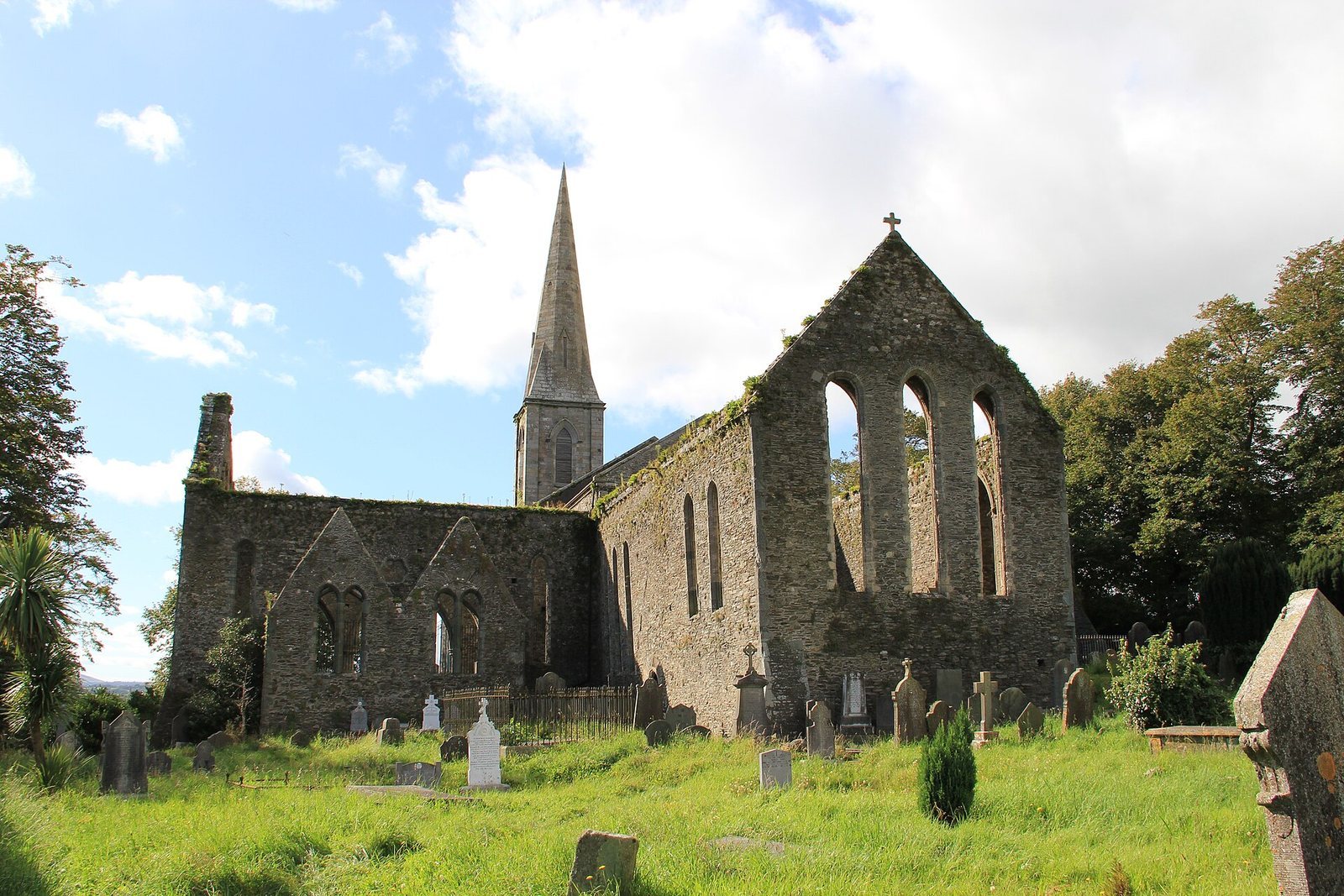
St. Mary’s Church, New Ross, is a medieval church on Mary Street, on the east bank of the River Barrow in Ireland. Completed in 1210, it was built in Norman architecture, associated with the Romanesque tradition, and Gothic architecture, characterized by pointed arches and related forms. Its foundation is attributed either to William Marshal, the first Earl of Pembroke and an Anglo-Norman magnate and military figure, or to his wife Isabel de Clare, daughter of Richard de Clare, known as Strongbow. A monastery established in the New Ross area in the sixth century by Abbán, an early Irish saint, may have stood on the later church site.
Later history
The church was Catholic before the Reformation and is now part of the Anglican Church of Ireland. It falls within the Diocese of Ferns, a bishop’s area of jurisdiction, in the Province of Dublin, a grouping of dioceses. During the Irish Confederate Wars, conflicts in Ireland during the 1640s and early 1650s, Lieutenant Colonel Beale stole the church bells in 1654.
Divine service continued in the old church until 1811 or 1812, when its west aisle was demolished to make way for a modern church. Local stories tell of a soldier who entered the “Black Hole” beneath an archway with his dog, after which only the dog returned. Another tale says a man who tried to remove the cross from the old chancel was killed, his brains dashed out. St. Mary’s is designated a National Monument of Ireland.
Remains
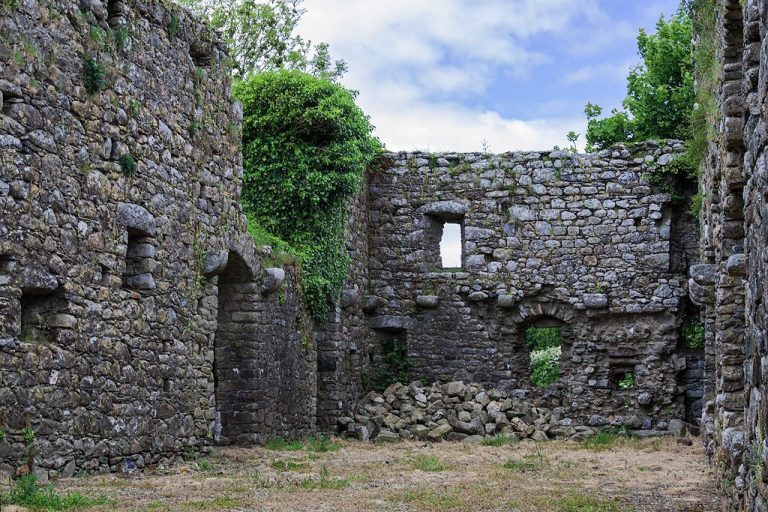
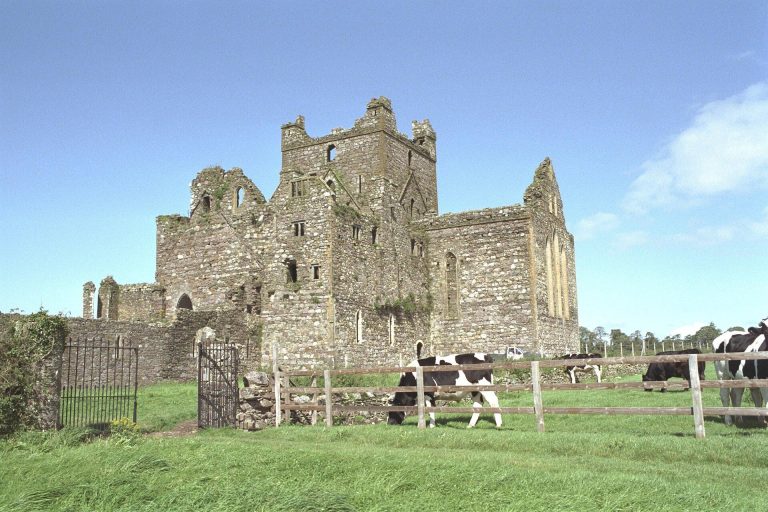
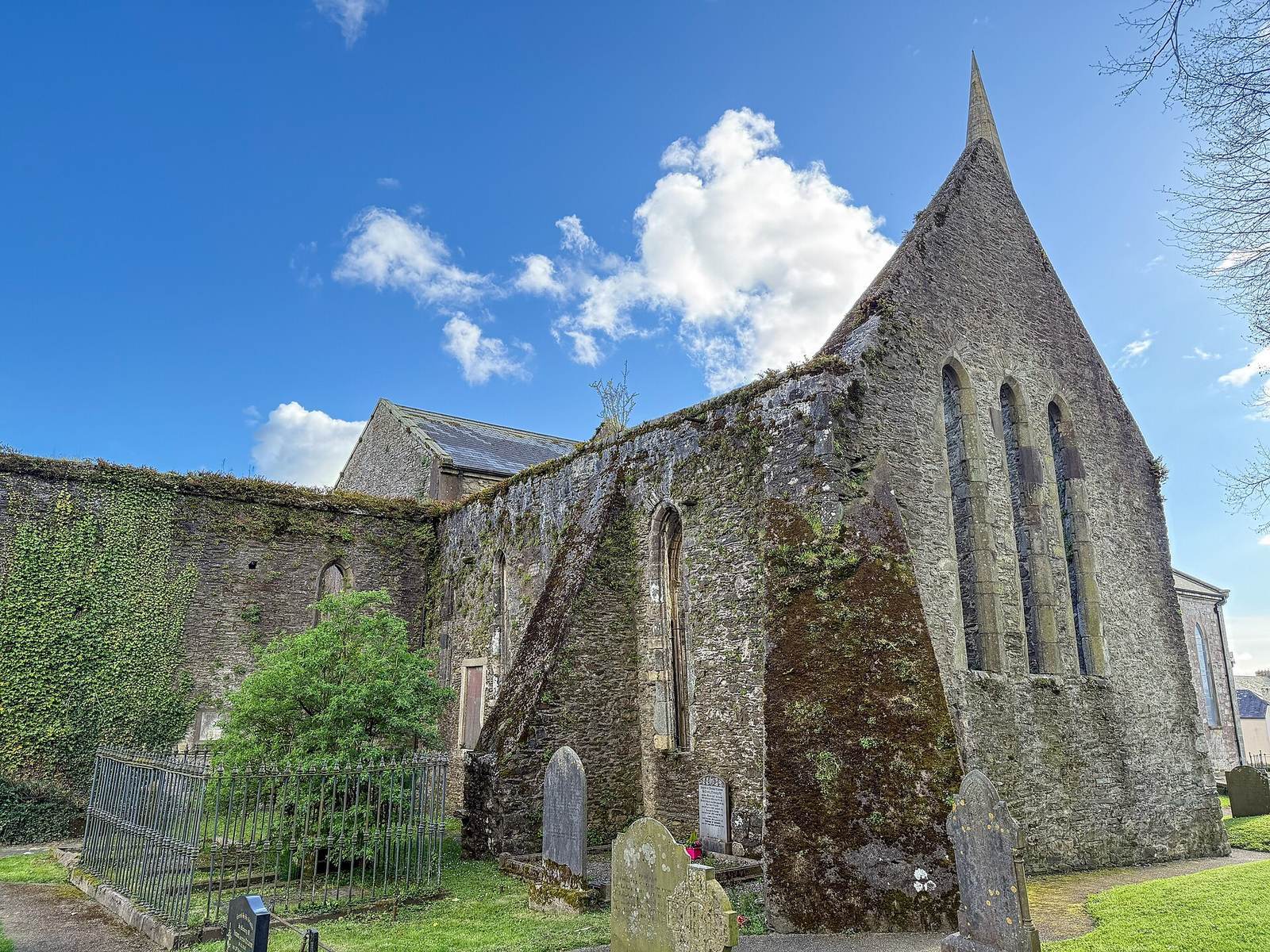
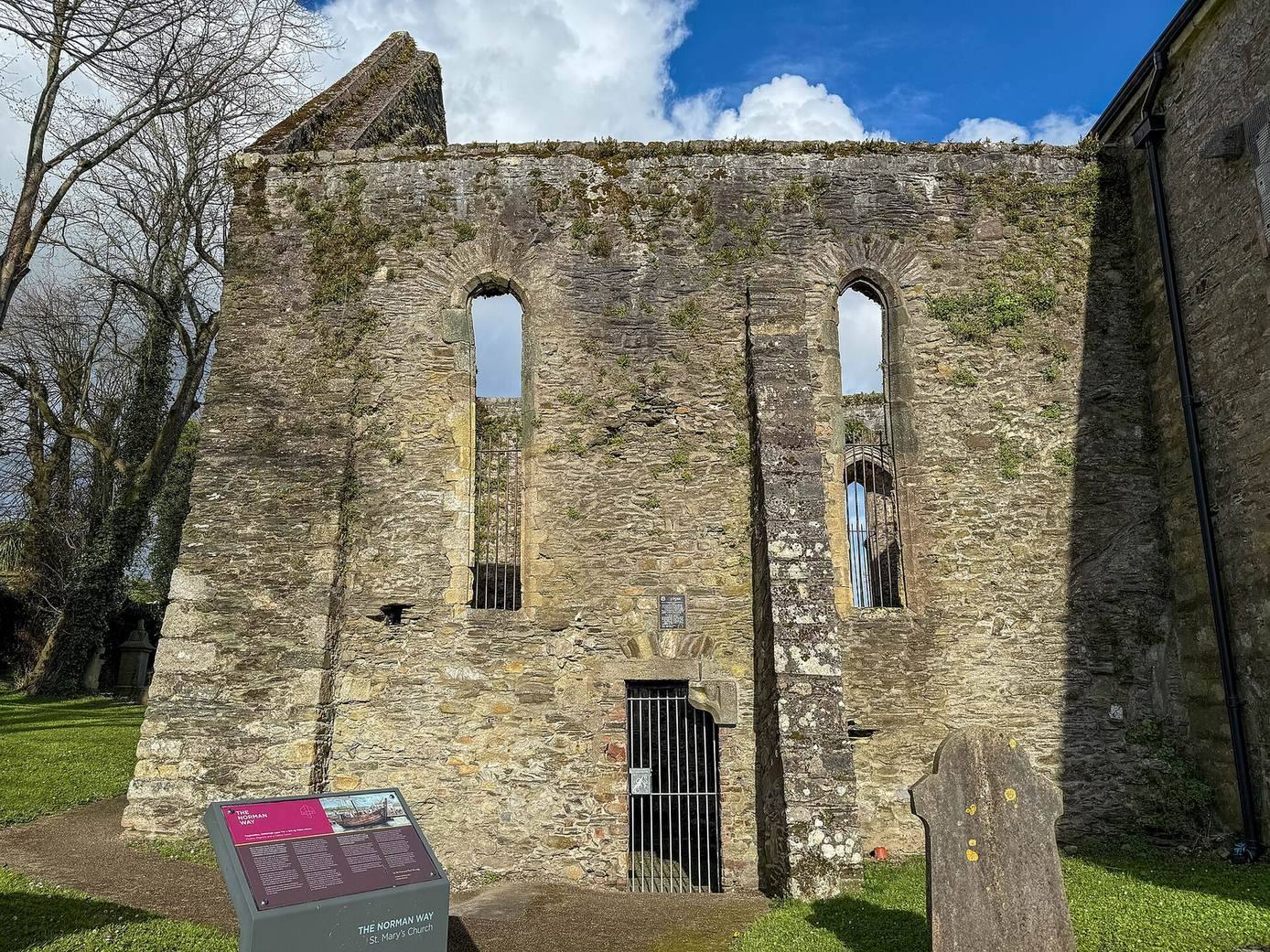
The former church’s plan is represented by its surviving chancel and north and south transepts. The present Church of Ireland building occupies the site of the former nave, the main body of the church. Sandstone and Dundry stone were used in the church’s construction.
The chancel and transepts
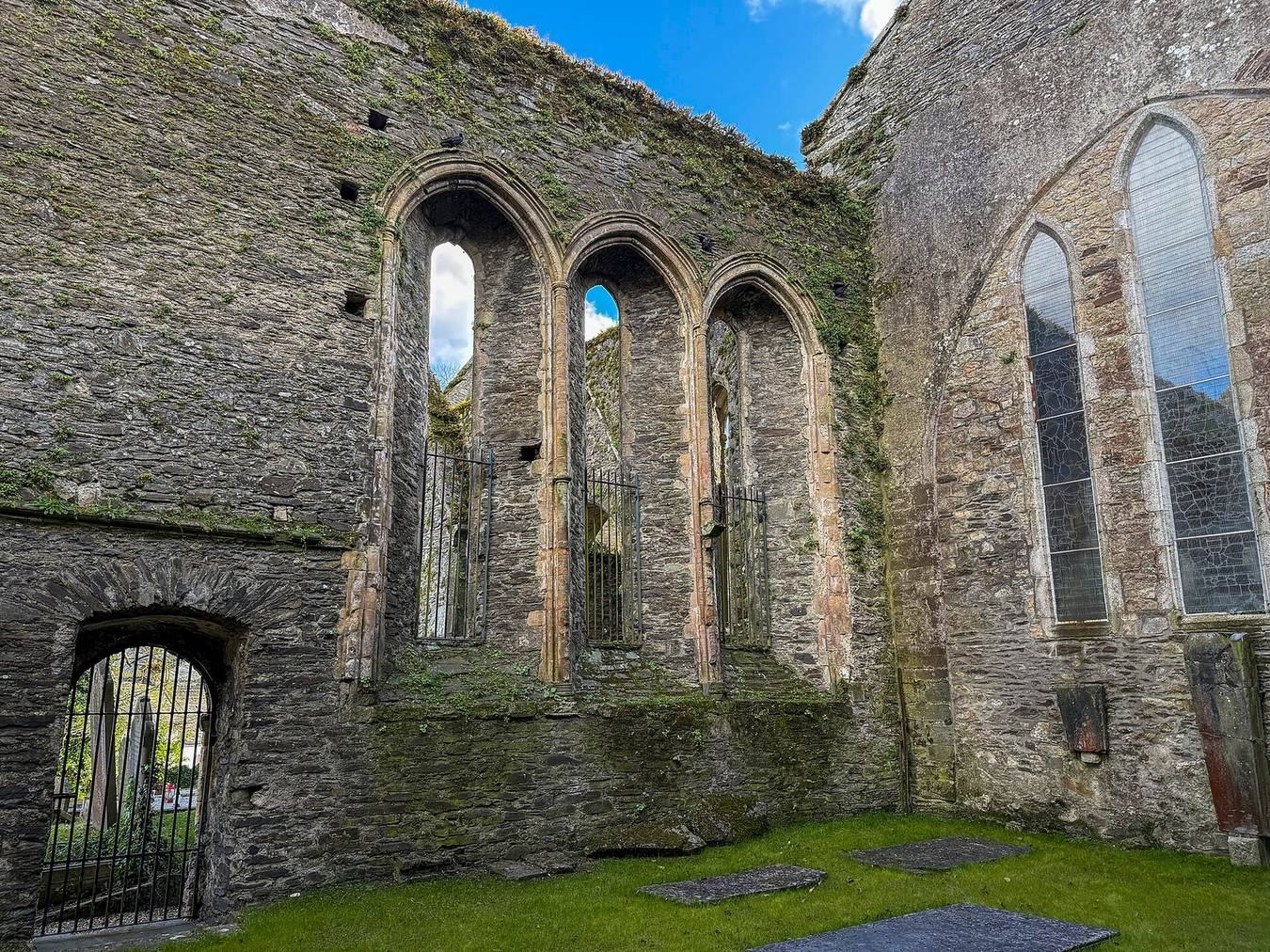
The chancel, the area around the altar, contains an aumbry, a wall recess for sacred vessels; sedilia, seats for clergy; a piscina, a basin with a drain for washing sacred vessels; and a tomb canopy, an architectural cover over a tomb. Its two doorways are of different forms: one is transitional, combining features of successive styles, and the other is Gothic. Three lancet windows, tall, narrow windows with pointed arches, are set in the east gable.
Medieval funerary monuments
The old chancel and the north and south transepts contain one of Ireland’s largest collections of medieval funerary monuments, markers or structures commemorating the dead. One bears a cross with the Lamb of God, a Christian image of Jesus as a sacrificial lamb associated with the Knights Templar, a medieval Catholic religious and military order. Another commemorates a woman buried beside both her husbands, an arrangement described as rare in the Middle Ages.