Church of St Joseph the Worker in Lubiechów Górny: A Medieval Catholic Church
Site at a Glance
- Popularity
- Very Low
- Country
- Poland
- Primary era
- Medieval
- Eras represented
- Medieval, Modern
- Civilizations
- German, Holy Roman Empire, Kingdom of Prussia
- Site type
- Religious
- Remains
- Church
On this page9 sections
History
Medieval origins and later remodelling
The Church of St Joseph the Worker in Lubiechów Górny is a Roman Catholic branch church in Poland, built in the thirteenth century. Dedicated to St Joseph the Worker, it belongs to the parish of Our Lady of Częstochowa in Czachów. The title Our Lady of Częstochowa refers to the Virgin Mary in the Polish Catholic tradition.
In the late Middle Ages, builders raised the nave. Around 1880, the church was remodelled in the Neo-Renaissance style, a revival drawing on Renaissance architecture.
Postwar Catholic use
After the Second World War, the church was reconsecrated for Catholic worship at the end of 1946.
Remains
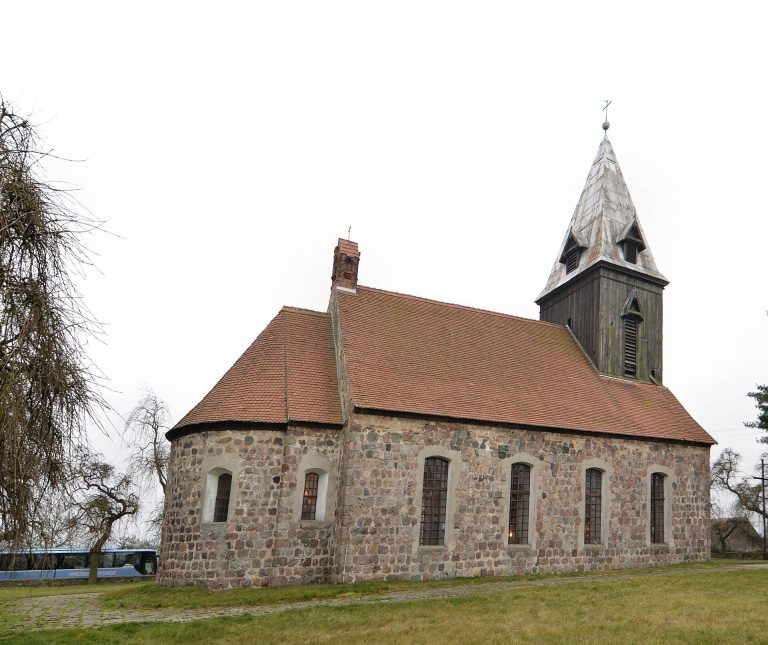
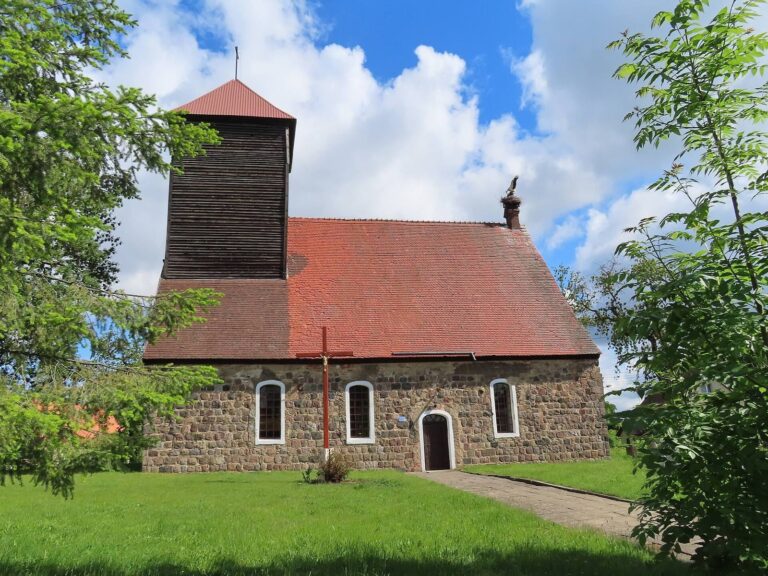
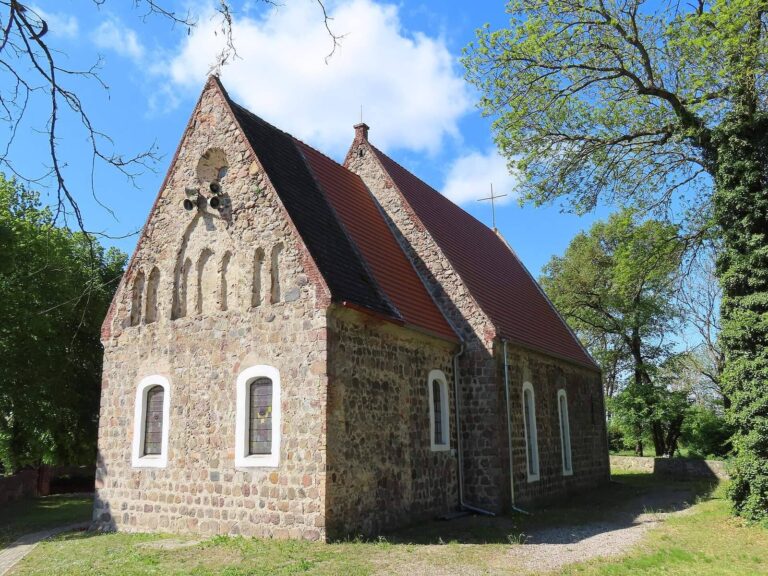
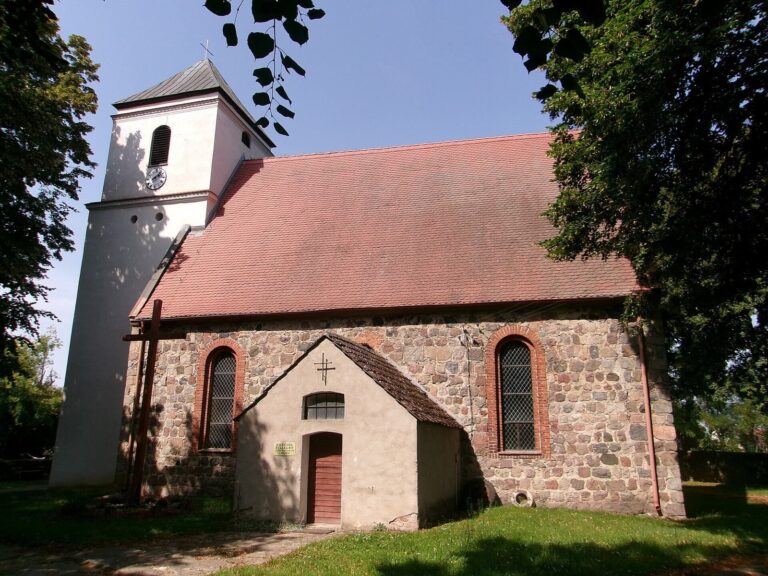
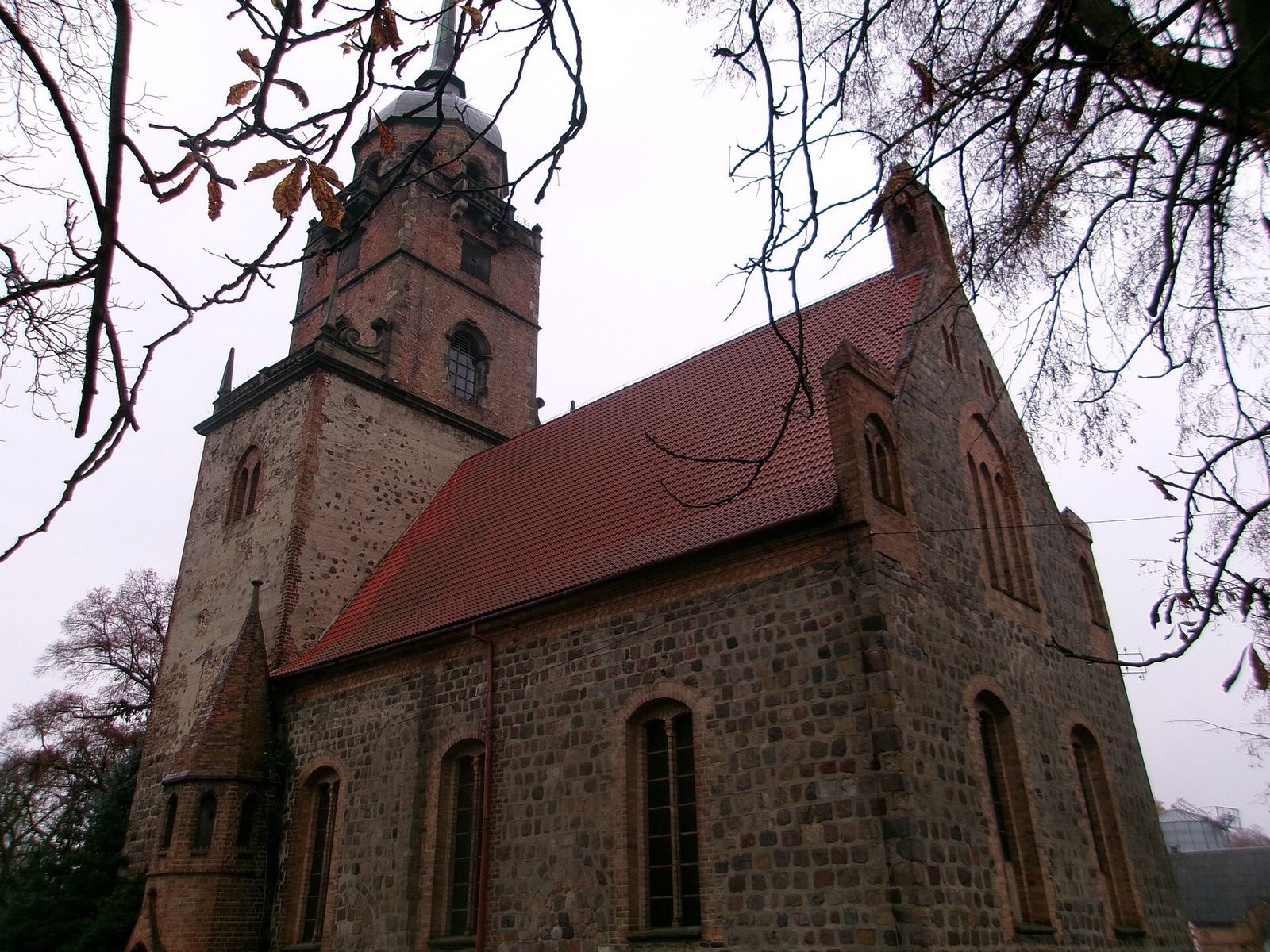
The church is a rectangular, single-nave building, with one main worship space and no side aisles. It measures 16.7 by 9.95 metres and is built of granite blocks cut into regular faces. A gabled roof covers the building.
Exterior features
West tower
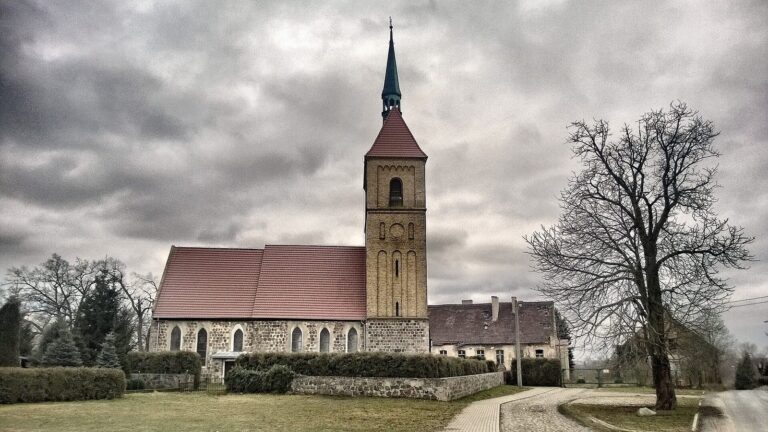
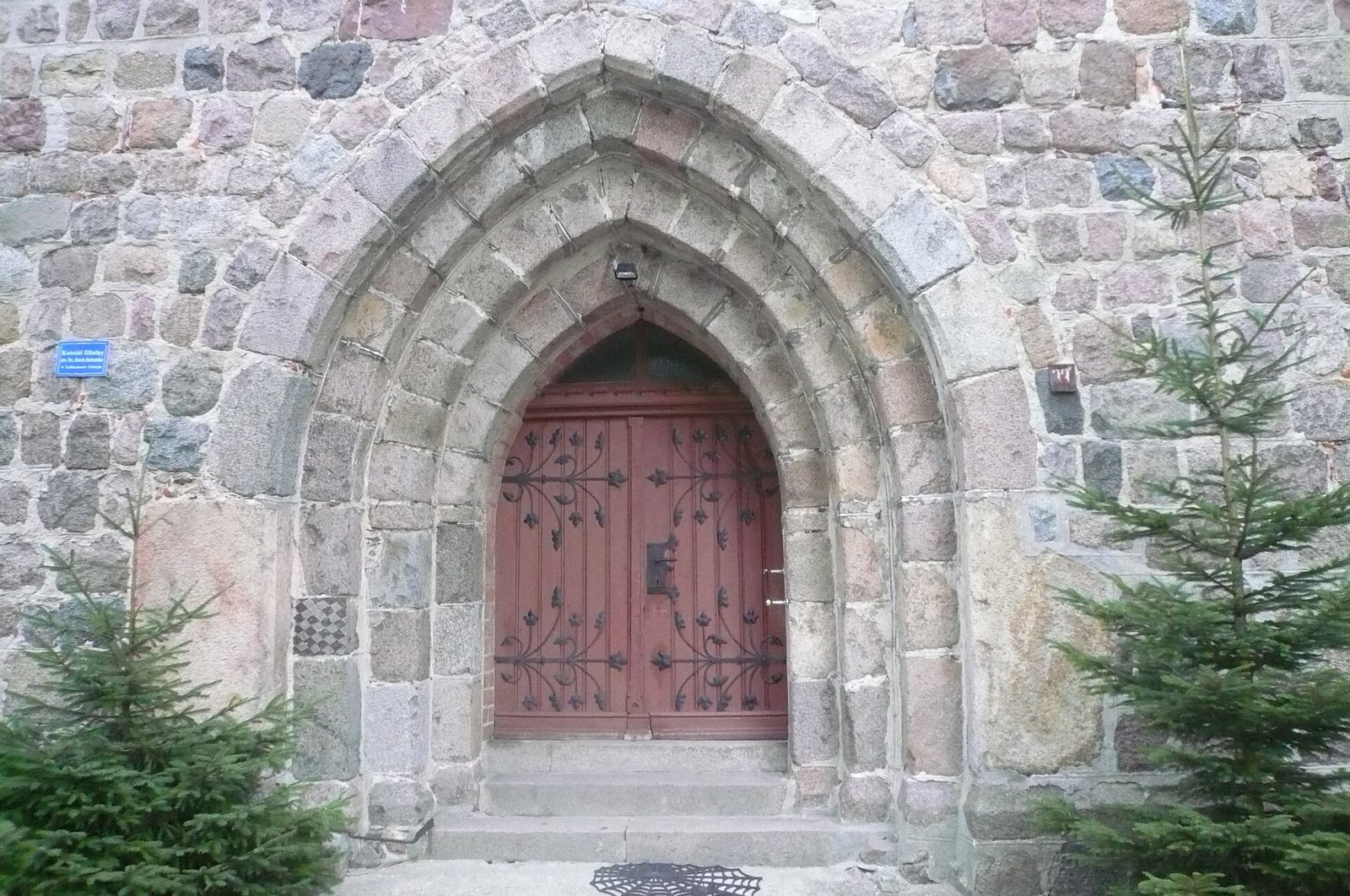
A tower adjoins the church on its west side. Built of stone and brick, it contains an internal staircase. At ground level, its entrance doorway has four stepped recesses, with a diamond-patterned checkerboard mason’s mark on the left side.
Doorways and windows
Two blocked pointed-arch doorways remain in the south wall, and three blocked window openings are visible in the east wall. The present windows were widened and constructed during the nineteenth-century Neo-Renaissance remodelling.
Interior
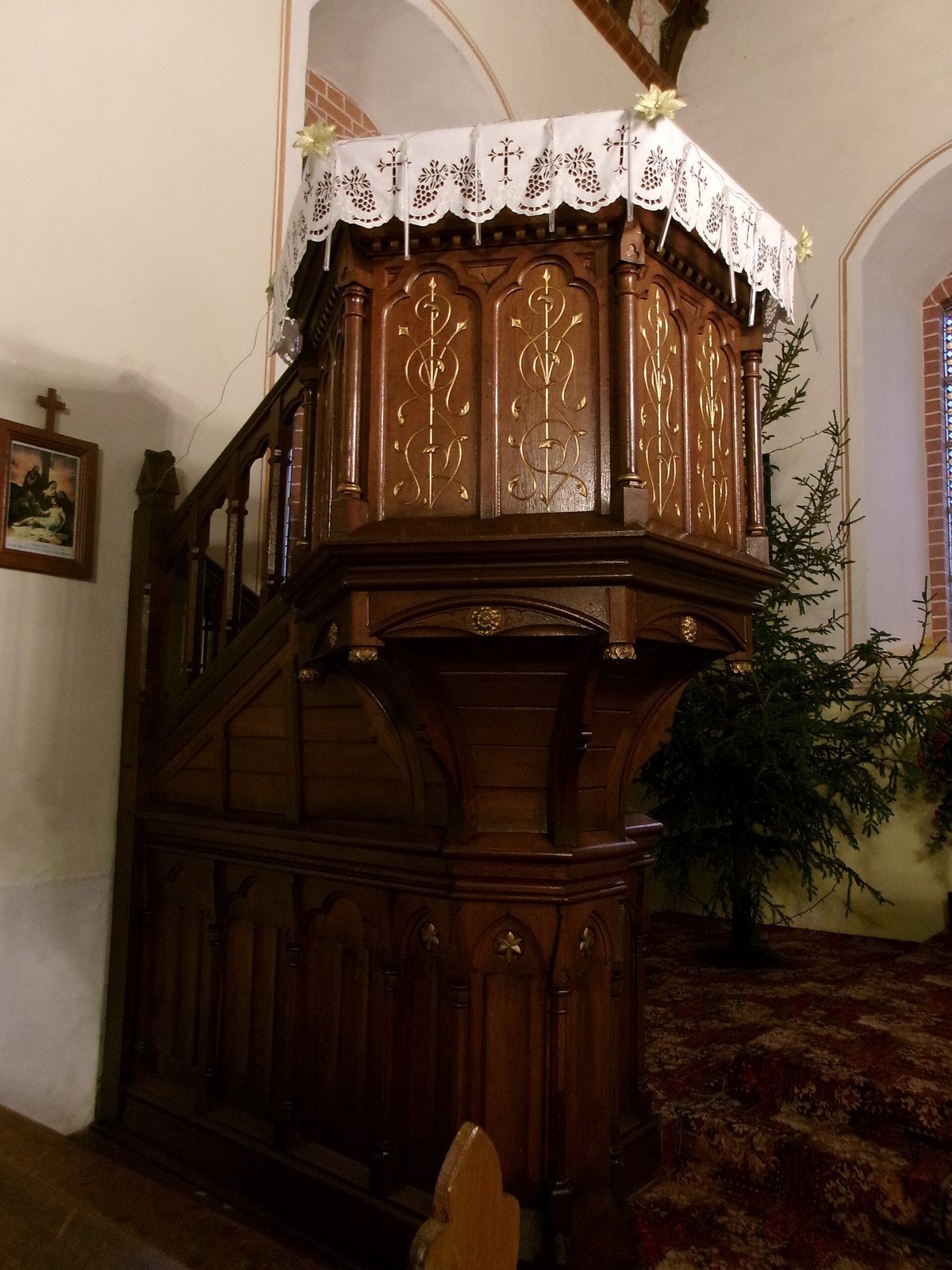
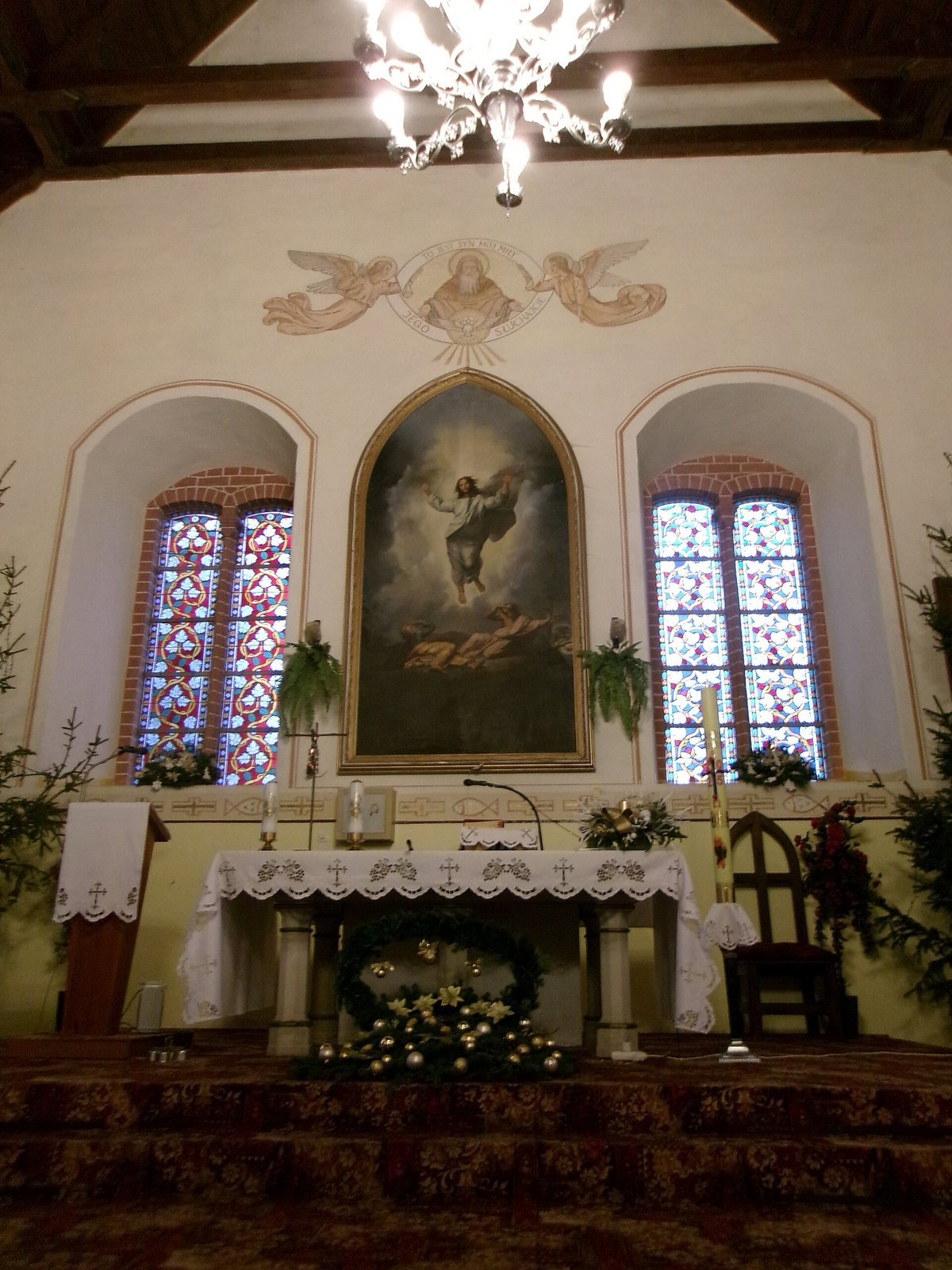
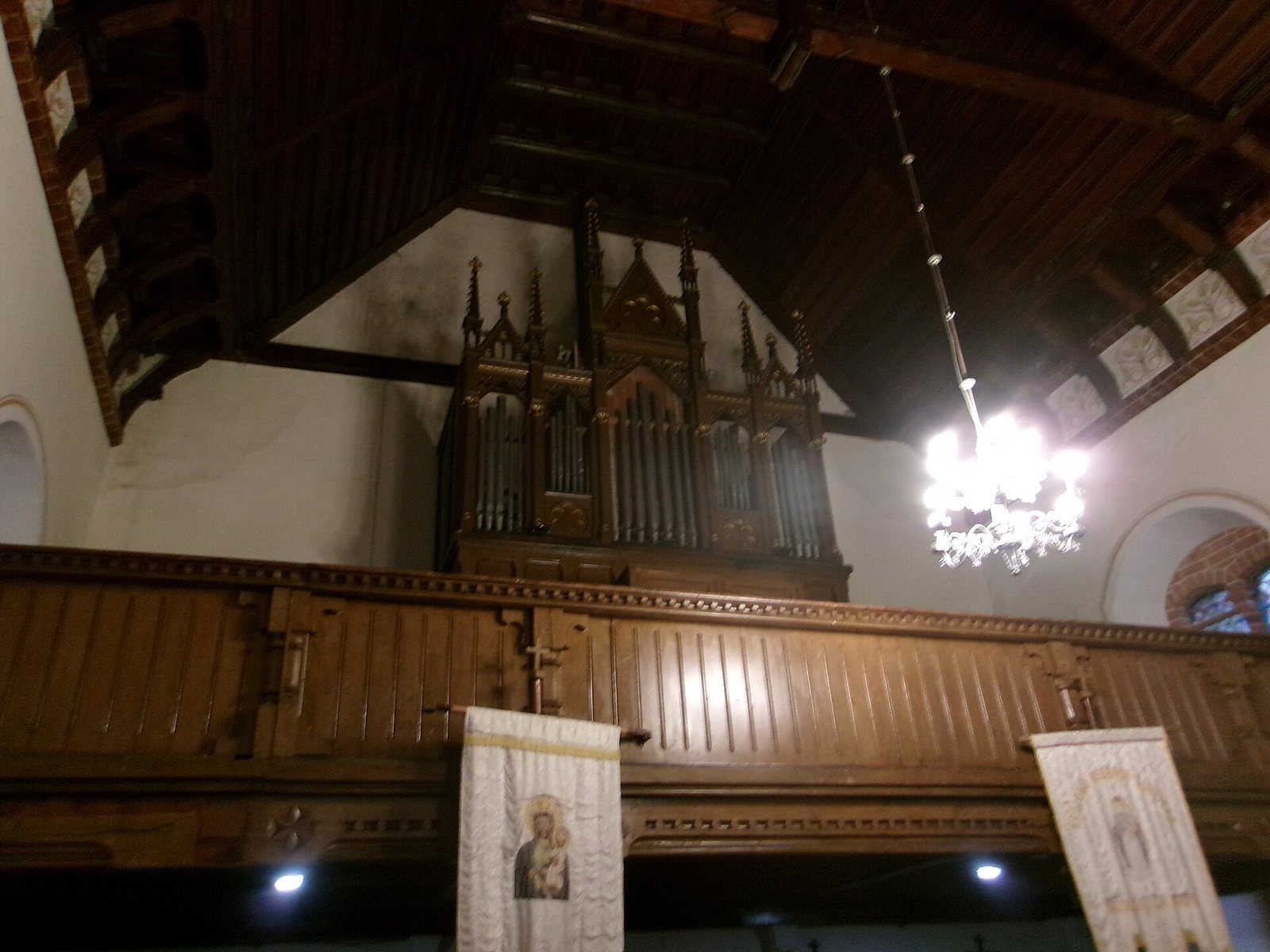
A wooden ceiling covers the interior. Historic furnishings include a pulpit in the Neo-Gothic style, a revival drawing on Gothic architecture, a nineteenth-century organ case, a baptismal font, and benches. The windows contain stained glass.
Adjoining cemetery
A historic cemetery beside the church is enclosed by a stone wall with a gate. It retains crosses commemorating those who fell in the First World War.