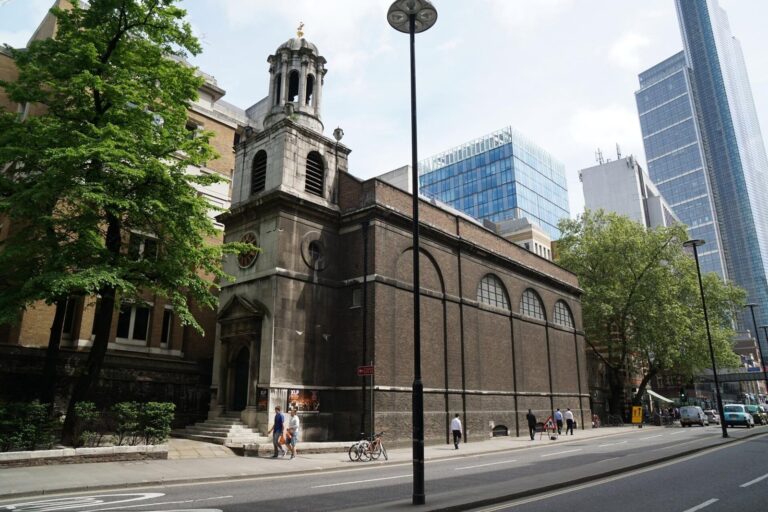
St Leonard’s Church, Shoreditch: The Historic Parish and Actors’ Church
Site at a Glance
- Rating
- 4.4
- Popularity
- Medium
- Country
- United Kingdom
- Primary era
- Early Modern
- Eras represented
- Early Modern, Modern
- Civilizations
- British
- Site type
- Religious
- Remains
- Church
On this page17 sections
History
St Leonard’s Church is the historic parish church of Shoreditch in East London, United Kingdom; its present building was rebuilt by George Dance the Elder from 1736 to 1740 in Palladian style, inspired by Andrea Palladio’s Renaissance classical forms and proportions. It belongs to the Church of England’s Diocese of London, the church district overseen by the Bishop of London, and is dedicated to St Leonard of Noblac, a Christian saint associated with the early medieval Frankish world. The church is also known as the Actors’ Church for its connections with Shoreditch’s Elizabethan theatres.
Origins and medieval church
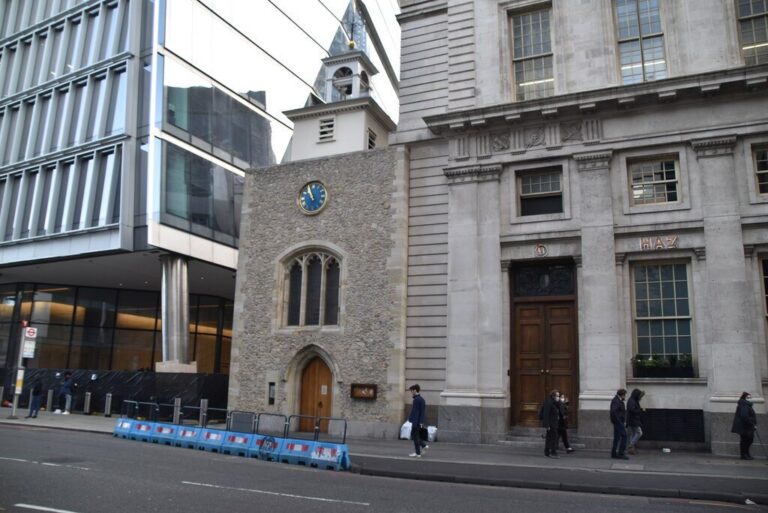
An Anglo-Saxon church, from the period of early medieval England before the Norman Conquest, is believed to have stood on the site before it was replaced by a Norman church, associated with the conquest and rule of England beginning in 1066. St Leonard’s is first mentioned in the 12th century, and the earliest priest named for the Norman church was serving in 1185. The medieval church grew over the following centuries.
Its tower partly collapsed in 1716. Repeated flooding from the Walbrook contributed to a further partial collapse in 1736, prompting the rebuilding of the church.
Elizabethan theatres and Shoreditch families
The church stood close to The Theatre, built in 1576, and the Curtain Theatre, built in 1577. Shakespeare lived in the neighbourhood after arriving in London in the late 1580s. Romeo and Juliet was probably first performed at The Theatre, which James Burbage co-owned. On the night of 28 December 1598, James’s sons Richard and Cuthbert and other members of the Lord Chamberlain’s Men, the acting company associated with Shakespeare and the Burbages, dismantled the building. They carried its timbers across the Thames for use in building the Globe.
St Leonard’s became a burial place for people of the theatre, including comedian Richard Tarlton and actor Gabriel Spenser, who was killed in a duel by playwright Ben Jonson. James Burbage, founder of The Theatre, and his sons Cuthbert and Richard were also buried at the church. The Bassano family had a different court connection: five brothers emigrated from Venice to England in the 1530s to join Henry VIII’s court as musicians and instrument makers. Their descendants served at court for more than a century, while family members were baptized, married, or buried at St Leonard’s.
Rebuilding and parish life
Dance’s rebuilding replaced the damaged medieval church between 1736 and 1740. Its Palladian design was criticized for departing from the English Baroque style associated with Nicholas Hawksmoor. Some critics called the new church “feminine” and “ugly.” Gas lighting, installed in 1817, made St Leonard’s the first church in London to use it, although the innovation was also condemned as profane.
In 1774, Shoreditch Vestry, the local body responsible for parish affairs, levied a special poor rate to establish a workhouse, reflecting poverty in the area. The church also became the setting for an annual sermon funded by a bequest from gardener and horticultural writer Thomas Fairchild. From 1729 the Royal Society organized the discourse, which Fairchild had endowed with £25. He wished to be buried in the churchyard area reserved for the poor. Sir Hans Sloane, Charles Cavendish, Alexander Stuart, and others enlarged the fund from 1746.
The Fairchild sermon
The sermon was associated with Whitsun, the Christian festival of Pentecost observed seven weeks after Easter, and became locally known as the Vegetable Sermon. Its subjects included “The Wonderful World of God in the Creation” and “On the Certainty of the Resurrection of the Dead proved by Certain Change of the Animal and Vegetable Parts of the Creation.” In 1750, antiquary and clergyman William Stukeley attended with Royal Society president Martin Folkes and other members. Samuel Ayscough, deputy director of the British Museum, delivered the discourses from 1790 to 1804. Biologist Felix Eugen Fritsch gave one in May 1940.
In 1873 the Royal Society returned responsibility for arranging the sermon to the church’s trustees, judging administration of the fund to fall outside its remit; the Bishop of London then administered it. Doctrinal disagreements took the sermon to St Giles’ Cripplegate from 1969 to 1975. It returned to St Leonard’s in 1976, moved back to St Giles’ in 1981, and continued there. The tradition lasted into the 1990s.
Victorian alterations and restoration
In 1870, architect William Butterfield undertook major alterations intended to turn the Georgian preaching church, where sermons received particular emphasis, into a sacramental church focused on rites including the Eucharist. The changes damaged the structure, and the Second World War brought further harm. After serious structural problems were identified, the church closed for two years from 1990 for repairs and restoration directed toward Dance’s original design. St Leonard’s is a Grade I listed building, the highest category in England’s listed-building system, reserved for buildings of exceptional interest.
Remains
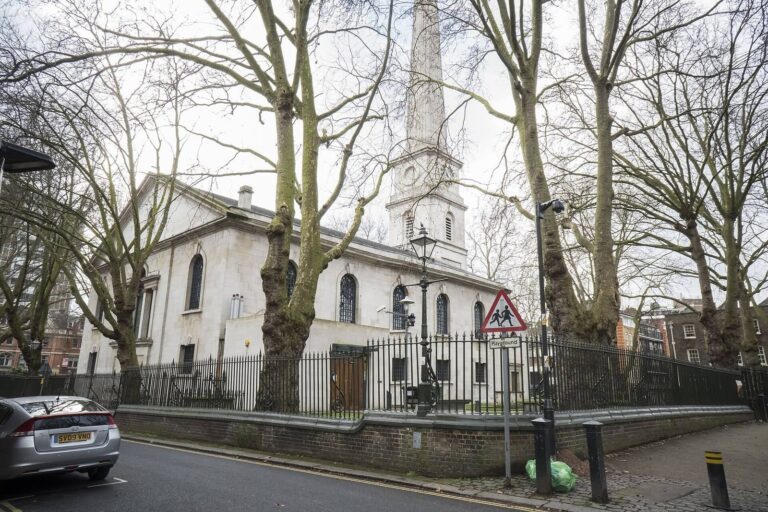
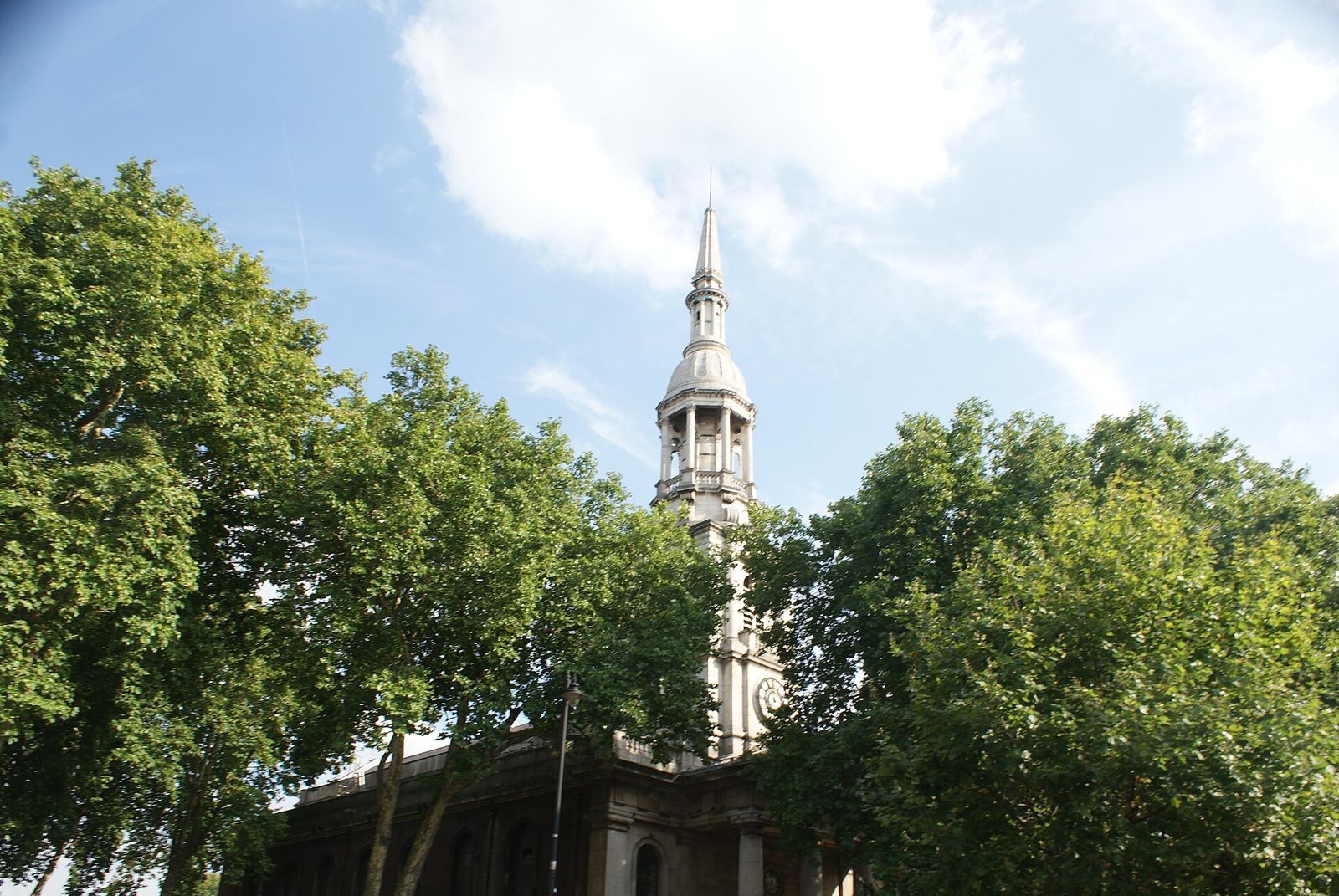
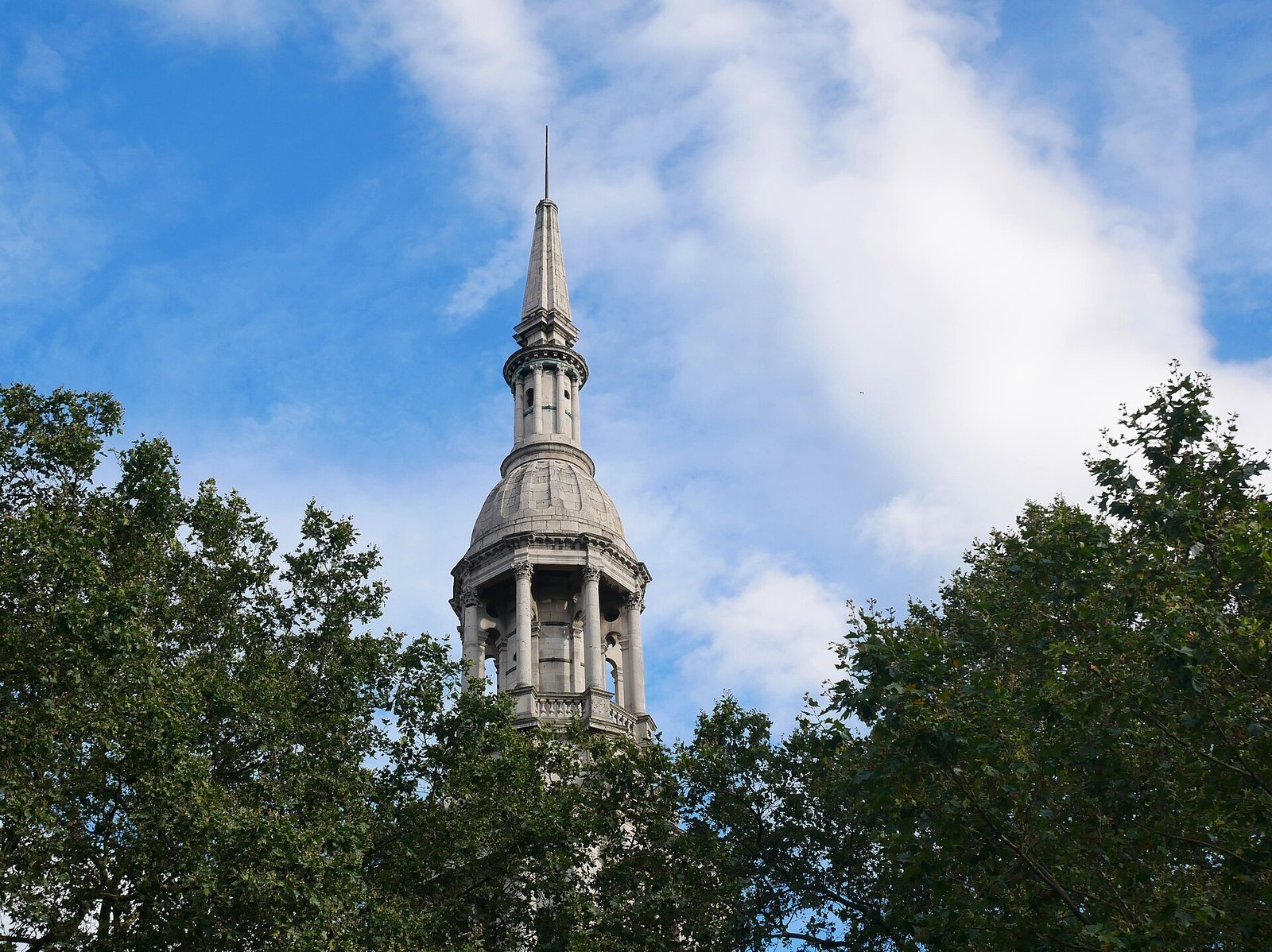
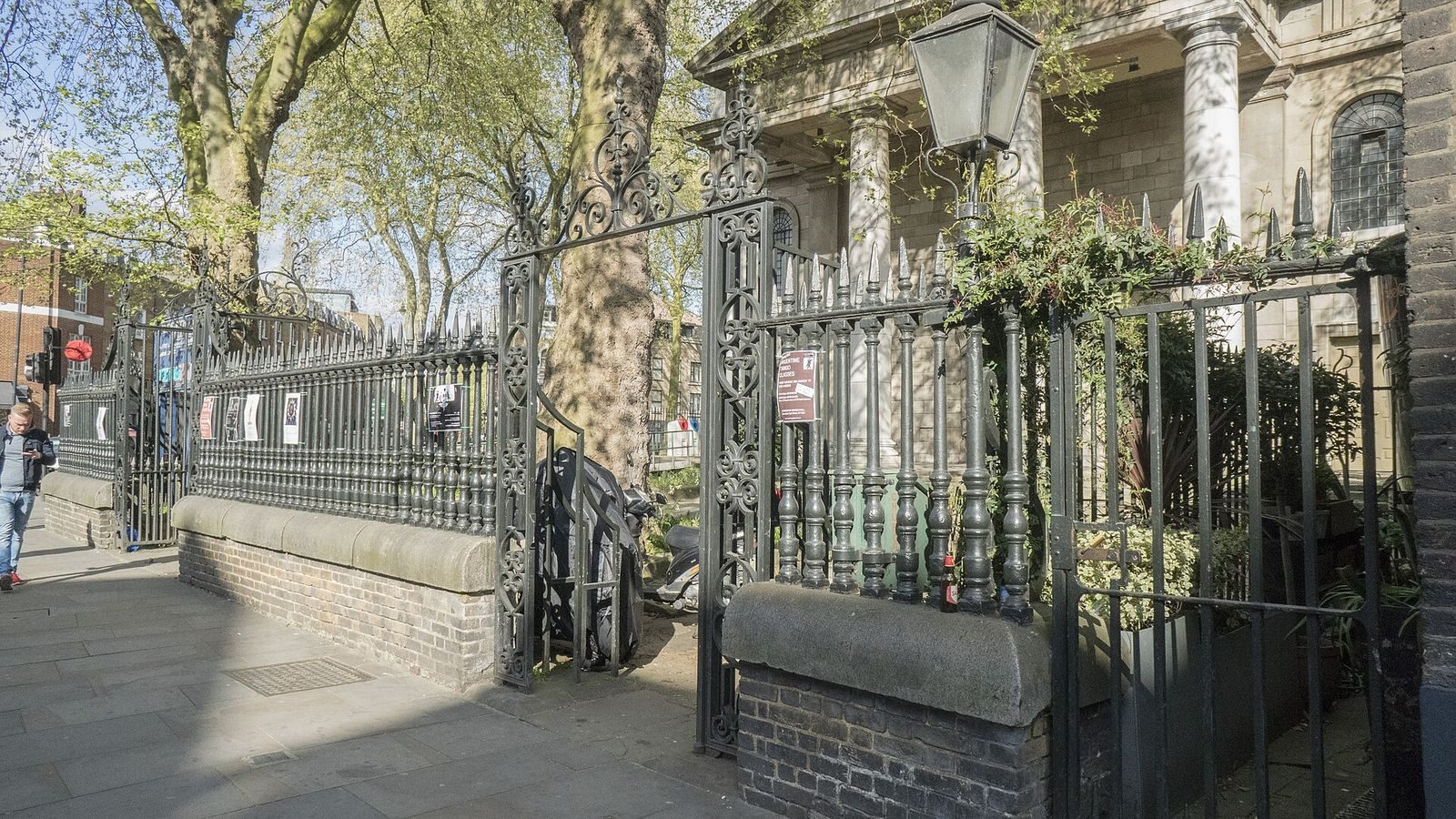
At the junction of Shoreditch High Street and Hackney Road, the present church combines a columned entrance, a 192-foot steeple, and a columned interior in Dance’s Palladian design.
Church building
Steeple and portico
The 192-foot steeple was modeled on Christopher Wren’s steeple at St Mary-le-Bow. The main entrance has a broad portico, or roofed porch, with four Tuscan columns, a comparatively plain classical form, and a pediment, the triangular section above the columns.
Interior and memorials
Large Doric columns, a simple classical type, support the entablature, the horizontal structure carried by the columns. Many 18th-century fittings remain, including the font for baptism, pulpit for preaching, communion table for the Eucharist, clock, organ case, bread cupboards, and boards displaying the Ten Commandments. Stone tablets commemorate physician James Parkinson and pump pioneer John George Appold. A classical memorial erected inside the church in 1913 by the London Shakespeare League commemorates theatrical figures associated with Shoreditch.
Organs and bells
Organs
Richard Bridge built the church’s organ in the mid-1750s, and it was the last instrument he made. Its original wooden pipes survive. It is one of the few surviving tracker organs without pedals; a tracker organ connects its keys to the pipes through mechanical linkages. The instrument has been described as needing restoration. A modern electric organ is also used for services, worship, concerts, and recordings.
Bells
The original eight bells were increased by two in 1765 and two more in 1807. The present ring dates from 1994 and comprises twelve bells, with an additional sharp second that allows a lighter eight-bell combination. John Taylor & Co. cast the bells for change ringing, in which bells sound in changing sequences. St Leonard’s bells are associated with the nursery rhyme “Oranges and Lemons,” and the bells shown in the coat of arms of the London Borough of Hackney represent the church’s set.
Crypt, churchyard, and parish features
Crypt burials
The crypt, a burial chamber beneath a church, contains a tomb shaped like a bread oven for a baker and his wife, as well as monumental graves for Johannes and Elizabeth, children of Hungarian alchemist and metallurgist Johannes Banfi Hunyades. The Burbage family, including founder of The Theatre James and his sons Cuthbert and Richard, was also buried in the crypt.
Churchyard burials
The churchyard contains the grave of physician James Parkinson and an unmarked plot where Samuel Annesley, a prominent minister and father of Susanna Wesley, was buried. Another grave bears the inscription “the last and best bedchamber of Dr. J. Gardner.” Other people buried at the church include Elizabethan churchman William Lewin, Tudor diplomat Thomas Legh, and Katherine Stafford, wife of Ralph Neville, 4th Earl of Westmorland.
Porch and parish grounds
The porch holds the parish stocks and whipping post. The Shoreditch parish pump stands in the churchyard.