St. Mary Battery: An Eighteenth-Century Coastal Fortification on Comino
Site at a Glance
- Country
- Malta
- Primary era
- Early Modern
- Eras represented
- Early Modern
- Civilizations
- Crusader, Knights Hospitaller
- Site type
- Military
- Remains
- Fort
On this page7 sections
History
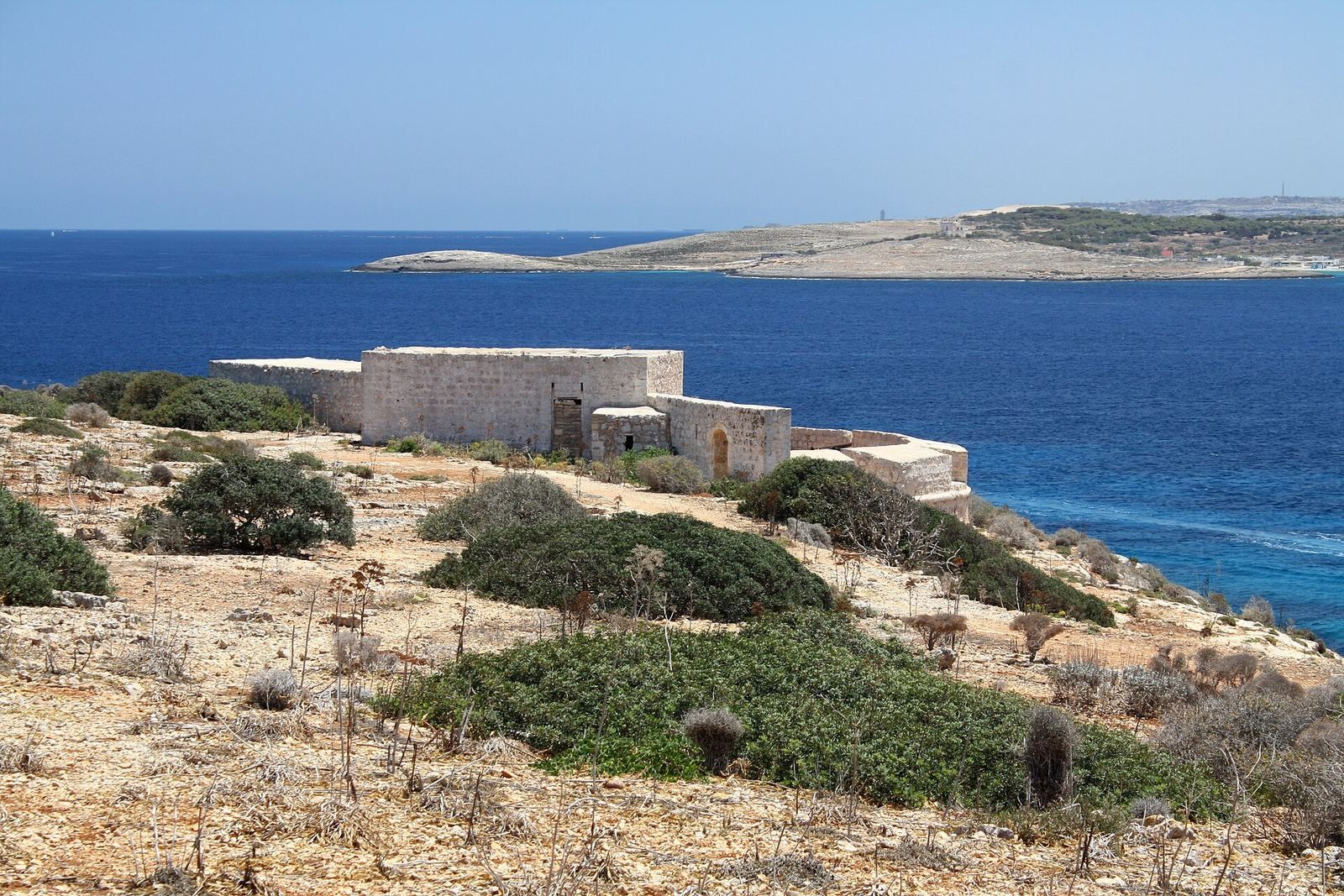
St. Mary Battery is a coastal battery, or fortified gun position, on Comino, Malta, built by the Order of Saint John in 1715–1716. The Order was a Catholic religious and military organization that governed Malta. The battery was intended to defend the South Comino Channel together with Wied Musa Battery on Malta.
Expansion of the coastal defenses
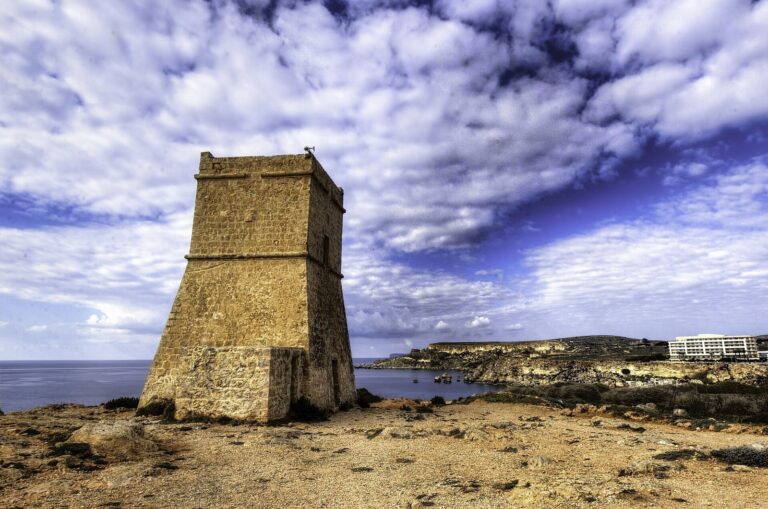
During the seventeenth century, the Order established watchtowers around Malta, Gozo, and Comino to spot approaching ships. In the early eighteenth century it added gun positions and other fortifications, since the lightly armed towers could not effectively engage ships or forces making landings. Towers watching the Gozo Channel included St. Mary’s Tower on southwest Comino, Aħrax and St. Agatha’s towers on Malta, and Mġarr ix-Xini Tower on Gozo.
Plans for the coastal batteries and other defenses were drawn up in 1714 by Jacques de Camus d’Arginy, Bernard de Fontet, and François Bachelieu. Philippe de Vendôme, the Order’s French Grand Prior, a senior official, strongly supported the work and personally contributed 40,000 scudi. The battery itself cost 1,018 scudi, a currency used in Malta under the Order.
Abandonment and later care
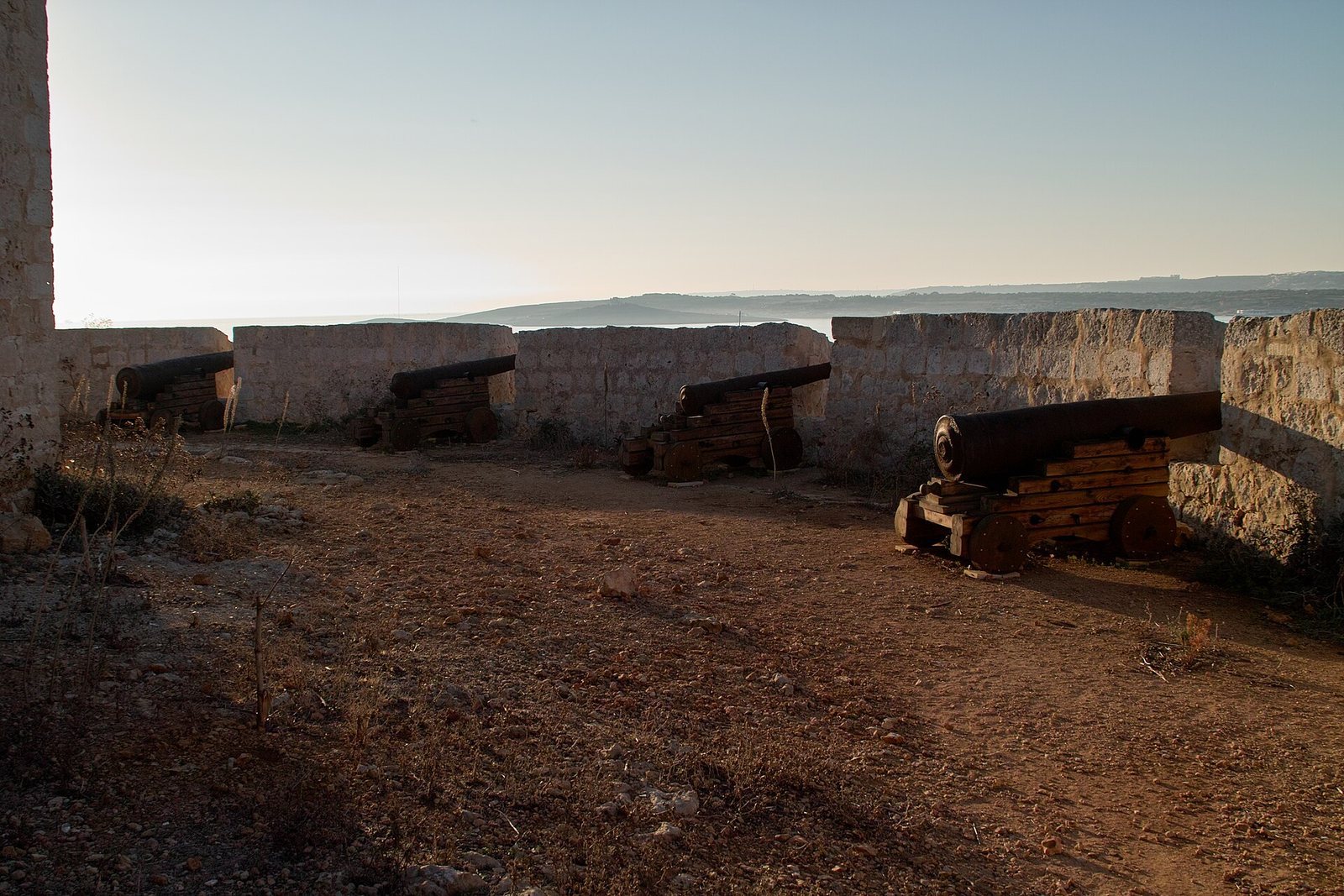
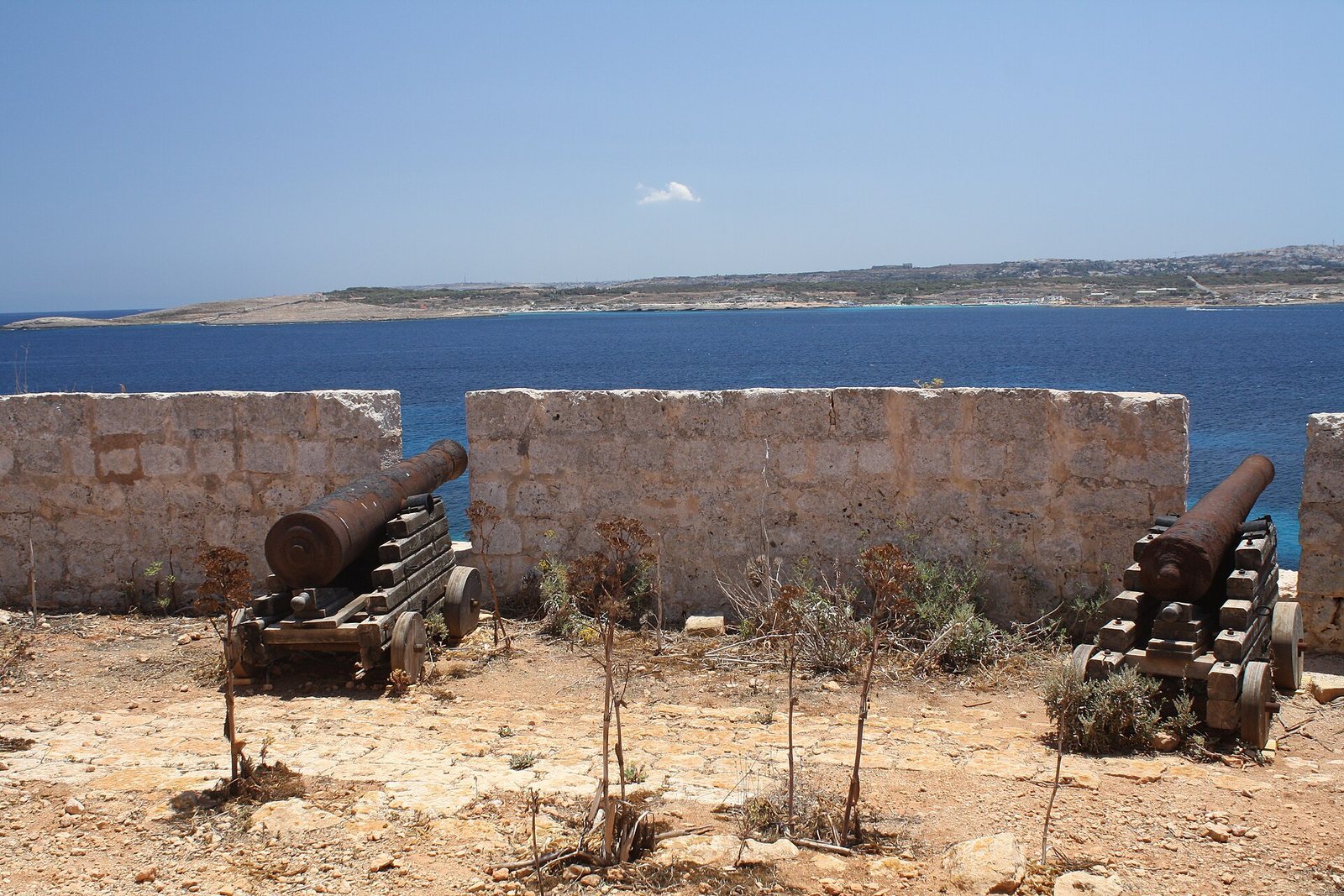
St. Mary Battery had been abandoned by 1770. Before the Second World War, a family from Gozo lived in it; after the war it stood deserted and deteriorated. Some cannons were dragged into the gorge below in an attempt to take them to a foundry for smelting. On 21 August 1997, the Armed Forces of Malta and the Royal Navy retrieved cannons from the gorge and returned them to the battery. A helicopter from HMS Illustrious, a Royal Navy aircraft carrier, took part, and four guns were remounted that year.
Din l-Art Ħelwa, a Maltese heritage organization, later carried out two restoration campaigns. The battery has been listed in Malta’s National Inventory of Cultural Property since 1995.
Remains
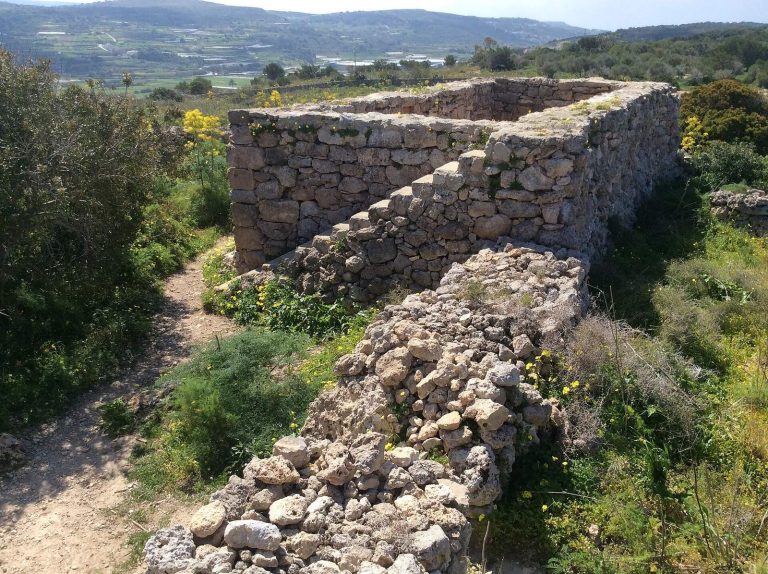
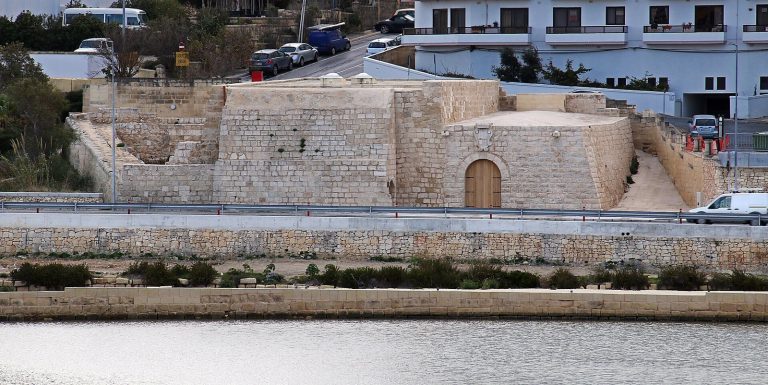
Built of limestone, the battery is organized around a semicircular gun platform facing the sea, with buildings and defensive features along the landward side.
Seaward gun platform
The platform’s protective wall has eight embrasures, openings through which guns can fire. The battery was originally equipped with six iron cannons: two 24-pounders and four 6-pounders. These designations refer to the weight of the cannonballs they fired. The two 24-pounders remained inside because they were too heavy to transport. Four guns returned from the gorge were placed on replica carriages.
Landward buildings and defenses
Buildings at the rear provided living and storage space. A small fortified building, or blockhouse, stood diagonally along the landward front and stored ammunition. Its two outer walls formed a redan, a projecting fortification with two faces. A wall or the rear buildings enclosed the landward side, whose walls also contained loopholes, small openings for muskets.
Repairs and present condition
After the battery was abandoned, a fig tree grew over its main entrance. During Din l-Art Ħelwa’s 1996–1997 restoration, workers repaired the entrance, replaced eroded stone around the embrasures, laid stone slabs in the rooms, repaired the roofs, fitted an iron gate at the entrance, and added wire grilles to the gun openings. In 2003–2004, the blockhouse roof was repaired because it was at risk of collapse. The battery remains in fair condition, aided by its remote location.