Dilmun Burial Mounds: A Bronze Age Burial Complex in Bahrain
Site at a Glance
- Country
- Bahrain
- Primary era
- Bronze Age
- Eras represented
- Bronze Age
- Civilizations
- Dilmun, Umm an-Nar
- Site type
- Burial
- Remains
- Necropolis
On this page12 sections
History
The Dilmun Burial Mounds are a burial complex at A’ali, Bahrain, whose principal construction dates to 2050–1750 BCE. They are associated with Dilmun, an ancient Gulf trading polity, and the Umm al-Nar Bronze Age culture. Their construction coincided with Bahrain’s development as a commercial crossroads, and the graves reflect a complex burial tradition practiced across the population.
Early second millennium BCE
The royal cemetery at A’ali was founded by an Amorite dynasty. The Amorites were an ancient West Semitic people whose dynasties ruled parts of Mesopotamia and Syria. The mounds belong to different periods, and their varied forms reflect a burial landscape that developed over time.
An island-wide estimate suggests that local communities may have built about 350,000 burial mounds across Bahrain over several millennia. This estimate refers to the island as a whole, not just the Dilmun Burial Mounds complex.
Excavation and research
An initial excavation campaign took place toward the end of the eighteenth century. British officer Edward Law Durand excavated at A’ali in the late nineteenth century. In February 1889, British explorer J. Theodore Bent and his wife, Mabel Bent, excavated some of the mounds.
In the 1950s, a Danish archaeological team led by Geoffrey Bibby opened burial mounds while working at Qal’at al-Bahrain, the site of the island’s Bronze Age capital. Artifacts recovered during this work were attributed to the same culture and dated to about 4100–3700 BP. In archaeological dating, BP means before present and counts backward from 1950. Research under the auspices of the Bahrain National Museum, with the Bahrain Historical and Archaeological Society involved, continues to refine the graves’ chronology and investigate the societies that built them.
Preservation and recognition
Preserving the burial grounds has faced opposition from people who regard the graves as un-Islamic and have advocated using the land for housing. During a parliamentary debate on 17 July 2005, Sheikh Adel Mouwda, then a leader of the al-Asalah party, argued against preserving the graves.
In 2019, at its 43rd session, UNESCO inscribed the Dilmun Burial Mounds on the World Heritage List. The inscription cited the number and density of the graves and their architectural characteristics. The complex became Bahrain’s third archaeological site on the list.
Remains
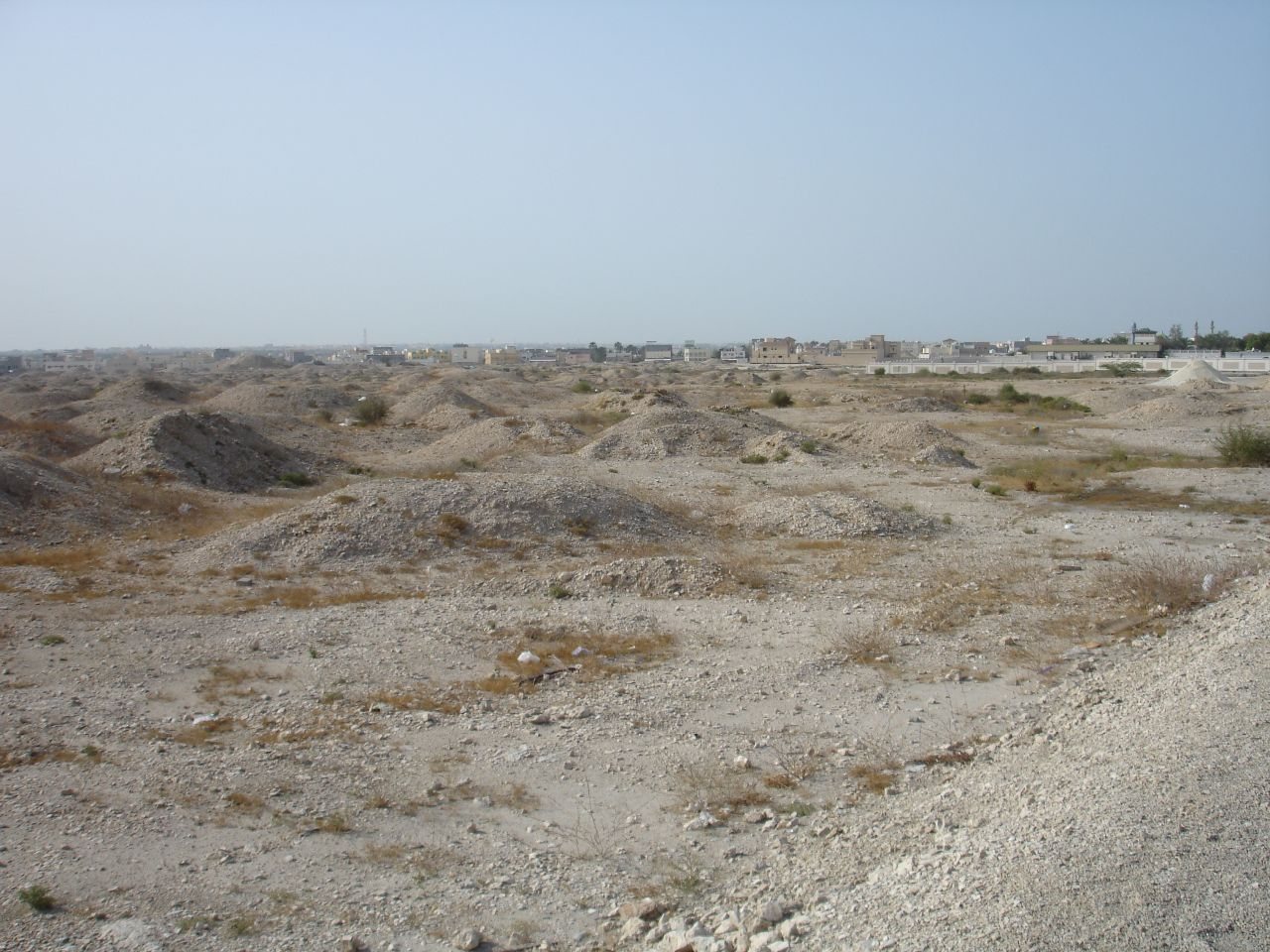
The complex is spread across 21 areas extending for about 20 kilometres on Bahrain’s main island. Its low burial mounds and groups of royal tombs lie mainly in the north, on hard, rocky ground slightly above cultivable land. The island’s south is predominantly sandy and desert-like. The complex includes mound fields at Madinat Hamad and eastern and western A’ali. Six areas are necropolises, or large cemeteries, containing from a few dozen to several thousand mounds and a total of 11,774 tombs. The other 15 archaeological areas contain 17 royal tombs.
Mound forms and burial chambers
Mound construction
The mounds vary in size and form, and belong to more than one period. When built, they generally appeared as low cylindrical towers. Most measure about 4.5 by 9 metres across and stand 1–2 metres high. Early examples are compact stone structures with bases about 2.5 metres across and heights generally no greater than 1.5 metres. Later mounds are larger and covered with rubble.
Chambers and burial practices
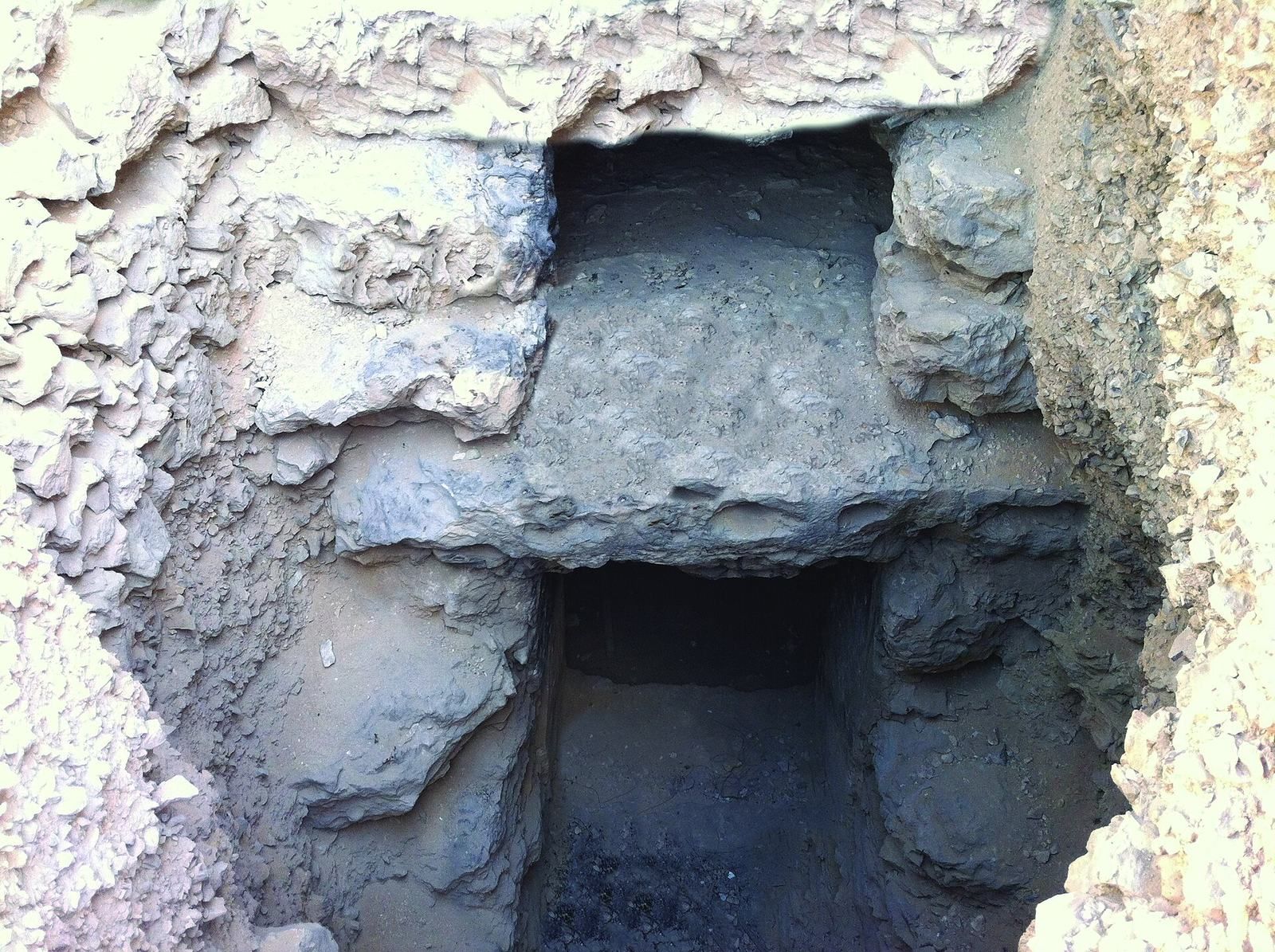
A typical mound has a central stone burial chamber enclosed by a low ring wall and covered with earth and gravel. Smaller mounds usually have one chamber. The chambers are generally rectangular, with one or two alcoves at the northeast end; larger ones sometimes have a further pair of alcoves along the middle.
Most chambers contain one burial, though some hold several people. The dead were generally placed on their right sides, with their heads toward the alcoves. Infants were usually buried at or outside the ring wall. Human remains represent both sexes; estimates put average life expectancy at about 40 years and the average number of children per family at 1.6.
Royal tombs and excavated finds
Royal tombs
The royal tombs are two-storey funerary towers located in 15 archaeological areas beyond the six large cemetery areas.
Grave goods
Excavated finds include locally made and imported pottery; copper and bronze objects and weapons; seals made from shell and stone; vessels of steatite and chlorite; ivory objects; bitumen-coated baskets; beads; and shell artifacts. Animal and human remains were also recovered. Mabel Bent’s diary records that she and J. Theodore Bent found pieces of ivory, charcoal, and ostrich eggshell. These objects are now in the British Museum in London.
Inscriptions at A’ali
Three cuneiform inscriptions, written in an ancient system of wedge-shaped signs, were found in A’ali Mound 8. They are variants of a text naming the palace of Yaglī-’el, son of Ri’mum, servant of Inzak of Akarum. Inzak was a deity associated with Dilmun, and brackets in the inscription’s restored reading indicate portions supplied to complete the text. An inscription with the same wording was also found on the surface at Qal’at al-Bahrain.