Santa Verna: A Prehistoric Megalithic Temple in Malta
Site at a Glance
- Rating
- 4.3
- Popularity
- Very Low
- Country
- Malta
- Primary era
- Stone Age
- Eras represented
- Stone Age
- Civilizations
- Maltese Temple Culture
- Site type
- Religious
- Remains
- Temple
On this page7 sections
History
Santa Verna is a prehistoric megalithic site at Xagħra on Gozo, Malta, where a Neolithic settlement was followed by the construction of a limestone temple around 3400 BC during the Ġgantija phase. This period is associated with the building of large megalithic temples by communities in the Maltese islands. In its prime, Santa Verna was probably one of the major temples of the islands, comparable in importance with Ġgantija, Tarxien, and Ħaġar Qim.
Settlement and temple
The earliest pottery from Santa Verna belongs to the Għar Dalam phase, Malta’s earliest Neolithic cultural phase, associated with the first farming communities and their pottery. It dates to around 5000 BC. During the following centuries, the settlement developed into a megalithic temple complex during the Ġgantija phase.
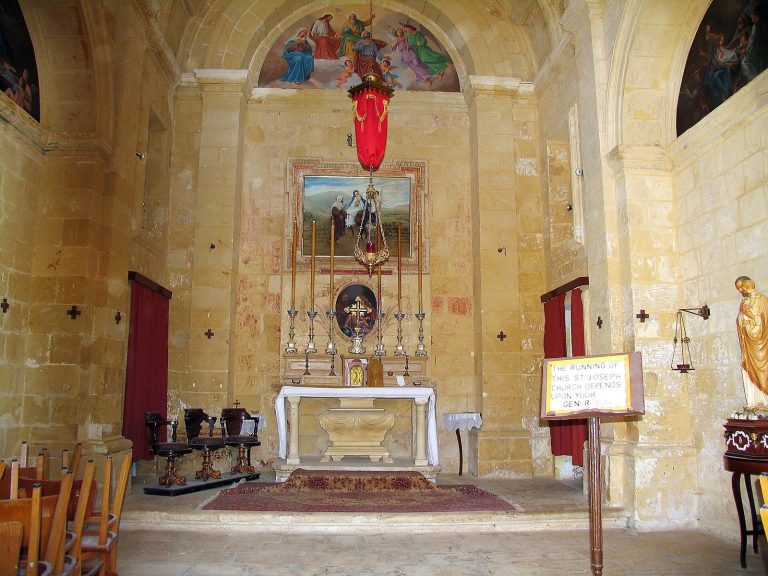
The site’s name comes from a chapel dedicated to Saint Venera, a Christian saint, which once stood near the prehistoric temple. Santa Verna is now included within the Megalithic Temples of Malta, a group of prehistoric monumental stone temples built by Neolithic communities across the Maltese islands.
Discovery and excavation
The megalithic remains were discovered by Nikola Said, a worker in Malta’s Public Works Department, and were noted in the early twentieth century by the archaeologist Manuel Magri. T. Eric Peet excavated the site in 1908, followed by Thomas Ashby and R. N. Bradley in 1911. Their work recovered two complete skeletons, several incomplete skeletons including that of a child, and many small artifacts.
Santa Verna was entered on Malta’s Antiquities List in 1925, an official register of protected antiquities and archaeological remains. Further excavation by David H. Trump in 1961 identified the village that preceded the temple. More extensive work in 2015 revealed additional evidence of this earlier settlement, clarified the temple’s five-apsed plan, and recovered ancient animal bones together with plant remains, including wheat, barley, and legume seeds.
Remains
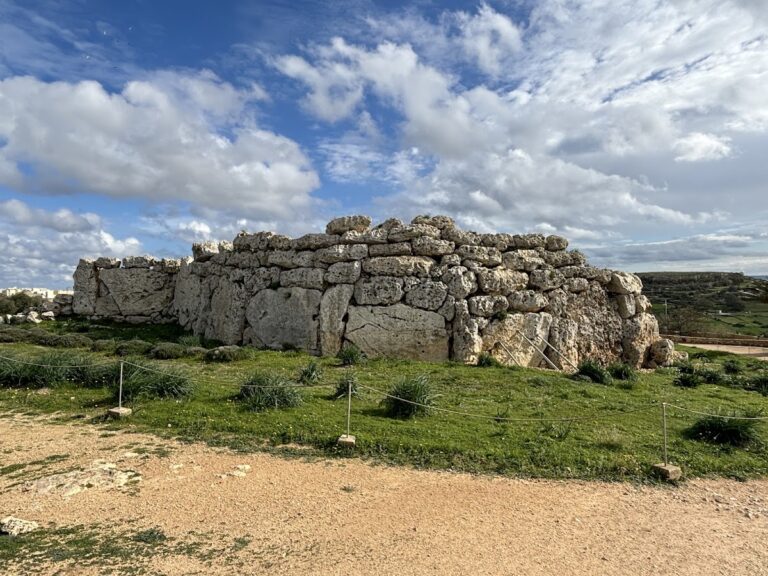
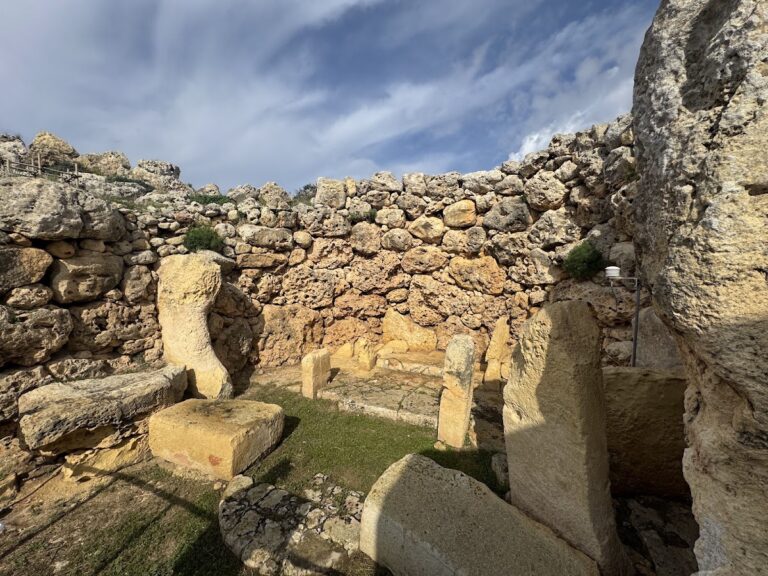
Santa Verna consists of the remains of an earlier prehistoric settlement and a limestone megalithic temple. The temple followed a trefoil plan, a layout formed by three rounded chambers branching from a central space. Excavation in 2015 showed that the building had five apses, or curved-ended chambers or recesses, during the Ġgantija phase.
Settlement and temple remains
Prehistoric settlement
The settlement beneath and around the temple represents the earlier occupation of Santa Verna. Excavations produced human remains, including two complete skeletons, several incomplete skeletons, and a child skeleton. Small artifacts, animal bones, wheat, barley, and legume seeds provide material evidence of the people, animals, and cultivated plants associated with the site.
Megalithic temple
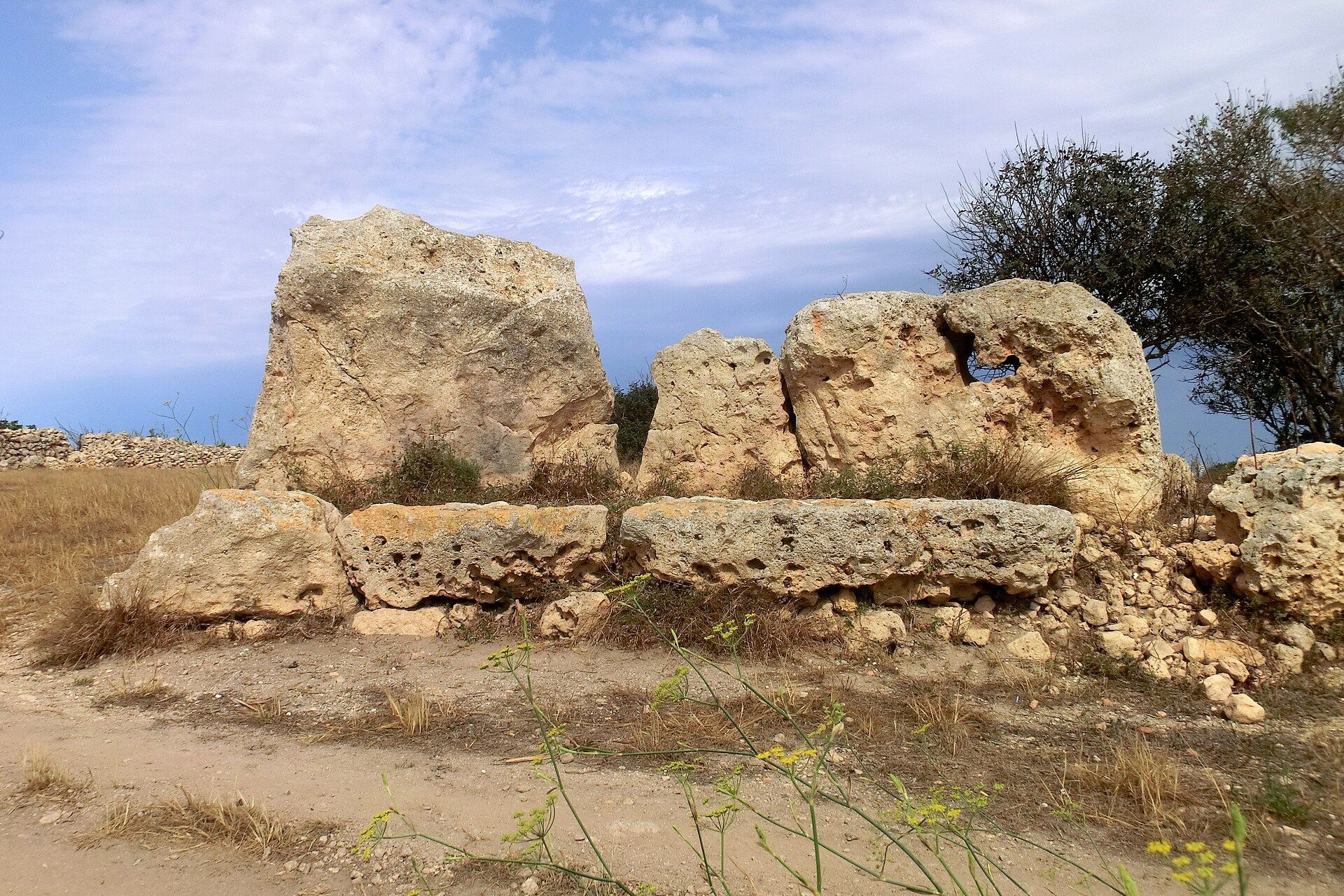
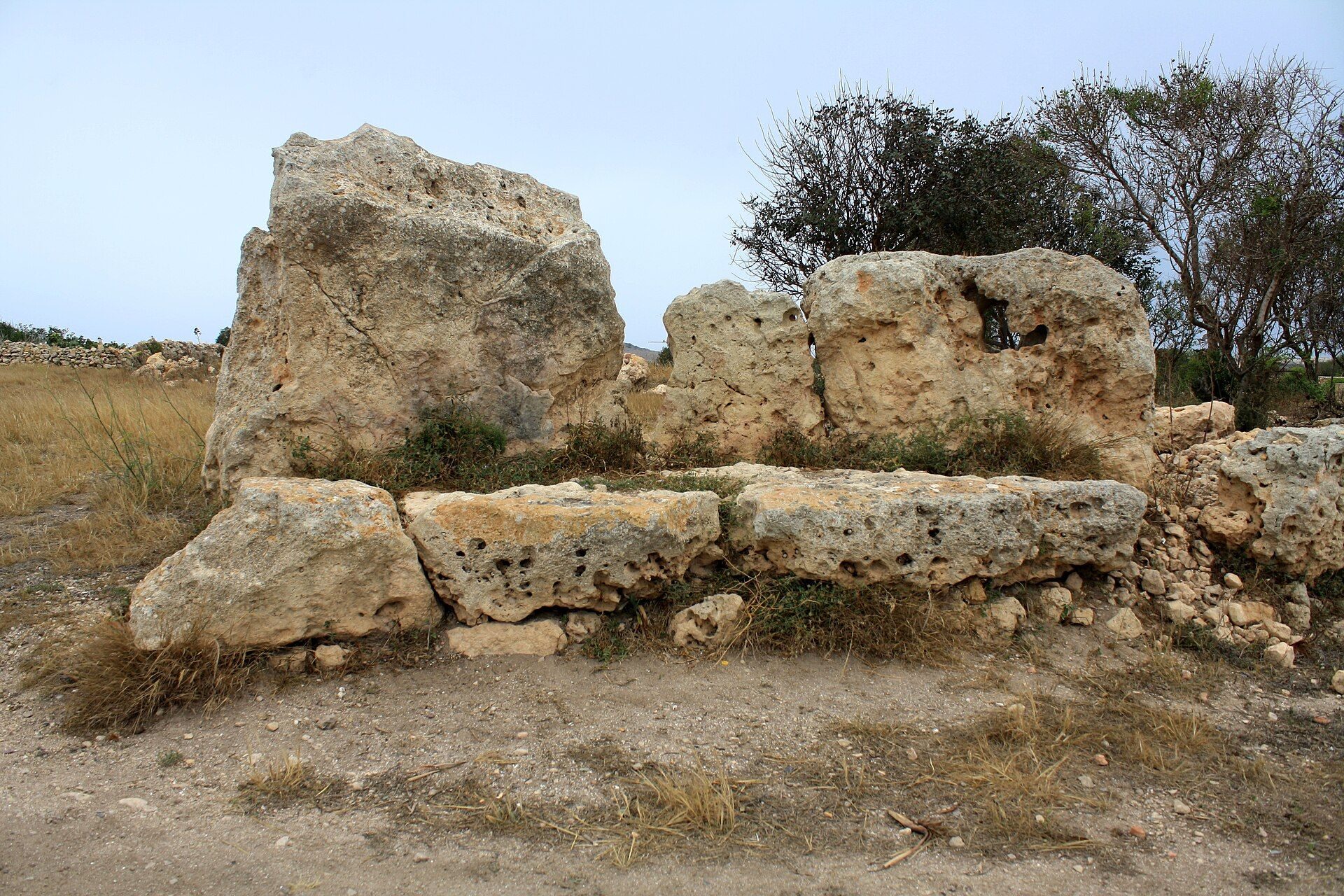
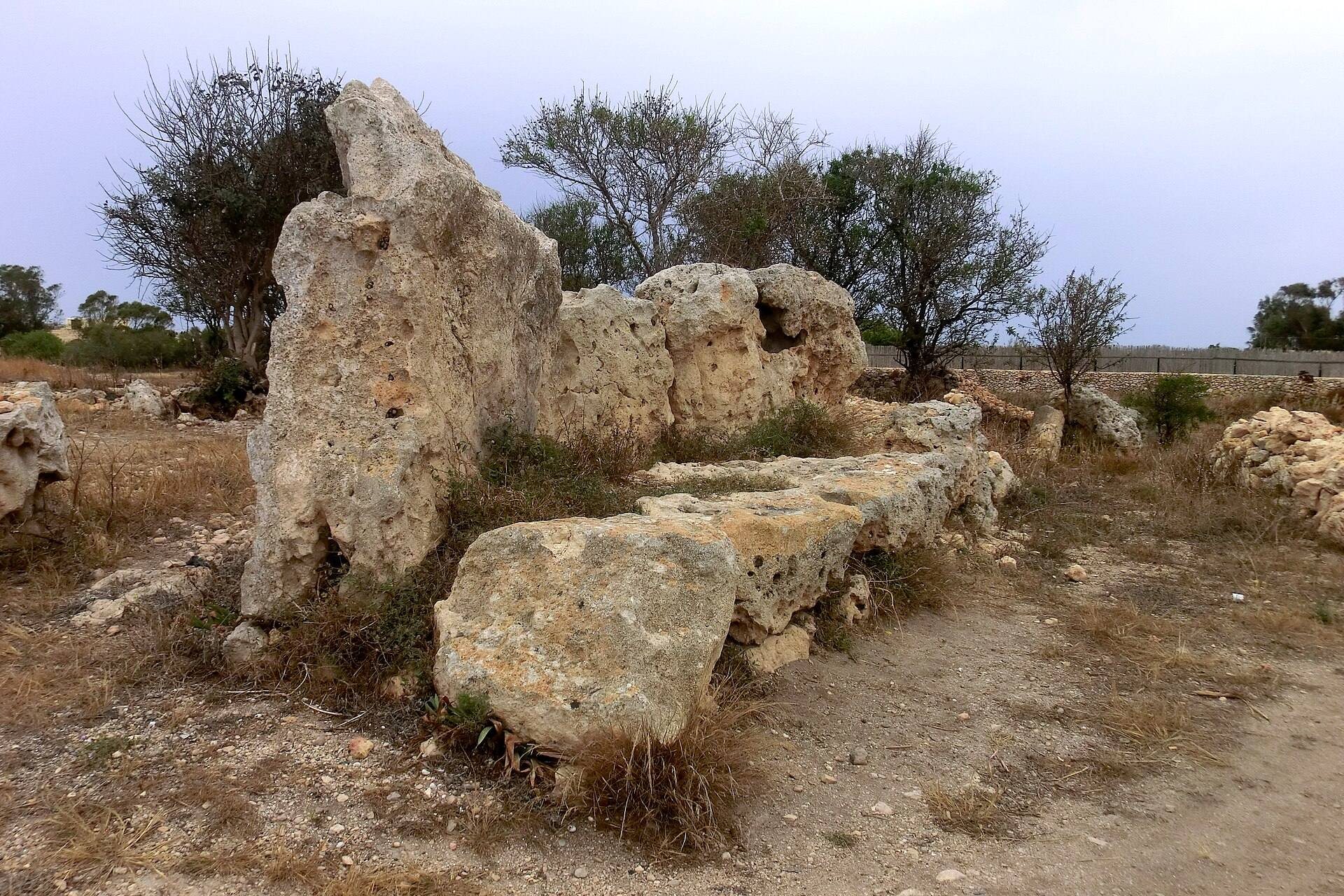
The surviving temple fabric comprises three upright megaliths, three horizontal blocks arranged to their east, and the original earth floor. Together, these elements make the former outline of the building visible. The temple was constructed from large limestone blocks and embodied the rounded chamber arrangement characteristic of its period. Its remains are poorly preserved and continue to deteriorate.