St. Andreas: A Roman Catholic Branch Church in Geibenstetten, Germany
Site at a Glance
- Popularity
- Very Low
- Country
- Germany
- Primary era
- Medieval
- External website
- Open
- Eras represented
- Medieval, Early Modern, Modern
- Civilizations
- Duchy of Bavaria, Electorate of Bavaria, German, Holy Roman Empire, Kingdom of Bavaria
- Site type
- Religious
- Remains
- Church
On this page17 sections
History
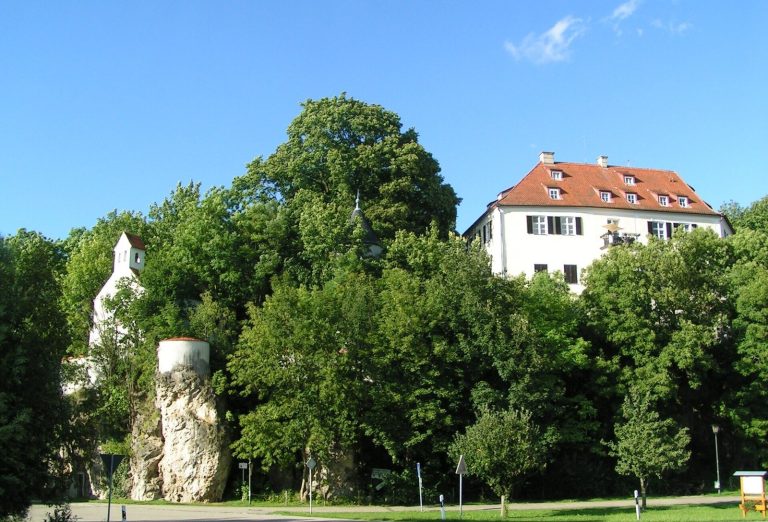
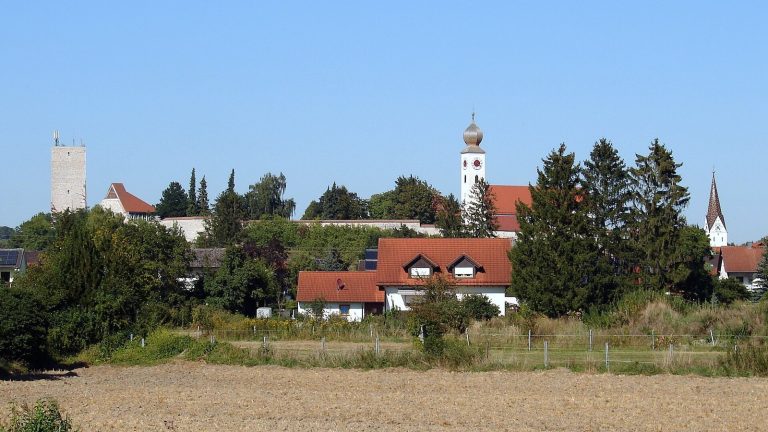
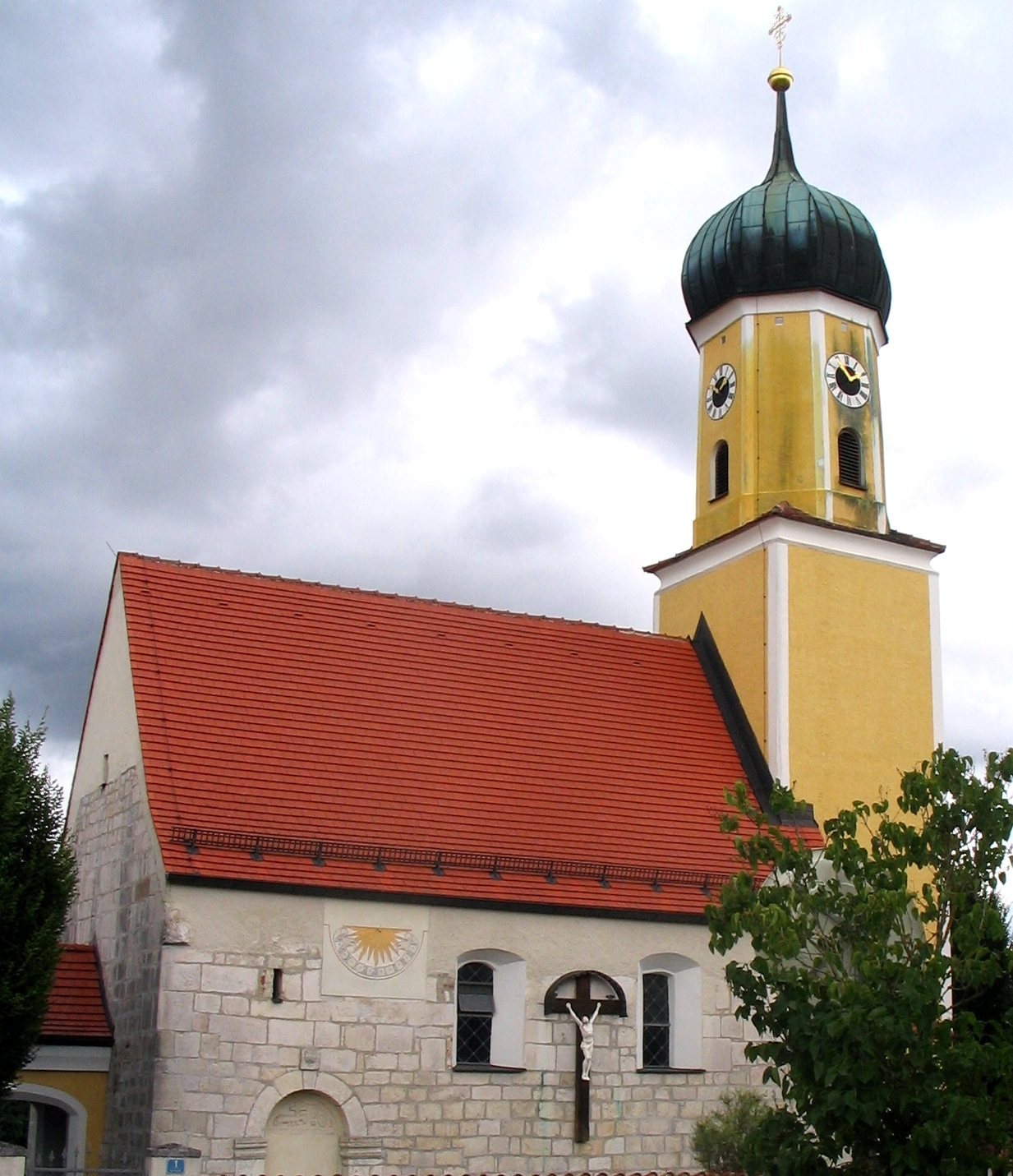
St. Andreas is a Roman Catholic branch church in Geibenstetten, a district of Neustadt an der Donau in Bavaria, Germany. It originated as a small 12th-century Romanesque hall church, reflecting a medieval European architectural tradition. The church belongs to the Kelheim deanery in the Diocese of Regensburg.
Medieval Origins and Early Changes
A sacristy was added in the 16th or 17th century. The church’s flat ceiling was renewed in 1673.
Baroque and Later Alterations
During the 18th century, the church was remodeled in the Baroque period, a broad European artistic and architectural era. Its chancel tower was raised in 1787. In 1843, the former south entrance was closed, and a west entrance with a porch was created.
Twentieth-Century Changes
In 1948, a bell was transferred to Geibenstetten from the parish church of St. Vitus in Mühlhausen. The sacristy was completely renewed in 1966, and Hermann Kloss built an organ for the church in 1976.
Remains
The church has a limestone nave, the main body of the building, with a projecting sanctuary space, or apse, at its eastern end. Its Romanesque structure is accompanied by later changes and a rich collection of furnishings.
Building and Exterior
Nave, Apse, and Tower
The nave is built from cut limestone blocks and measures 9.70 metres long by 6.10 metres wide. At the east end, the apse extends 2.85 metres from the arch opening into the sanctuary. A tower with a square plan rises above it. The tower’s upper stage is octagonal and carries an onion dome with a bulb-shaped outline.
Entrances, Windows, and Sacristy
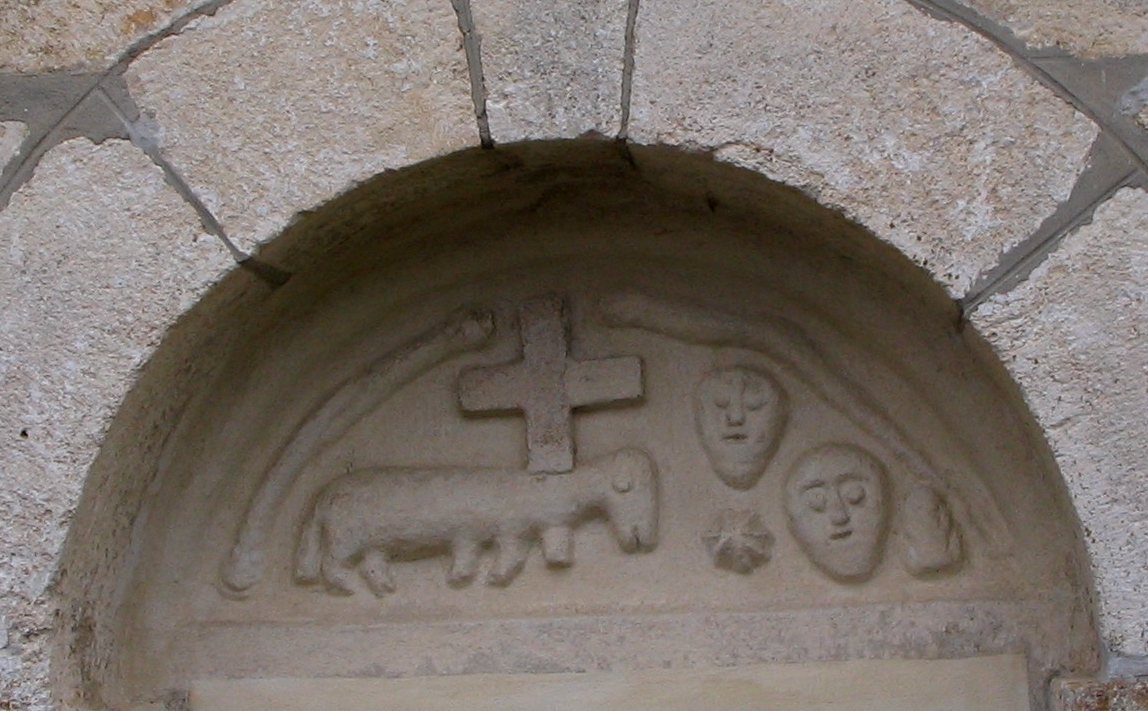
The former south portal is blocked, but its carved panel above the doorway survives. It shows the walking Lamb of God bearing a cross, with two heads and a star before it. A small slit window from the original construction remains above the portal, near the level of the west gallery. Other windows were altered in the Baroque period. The present entrance is on the west side beneath a porch. On the north wall, the sacristy is attached to the nave beneath a sloping roof.
Altars and Carved Figures
High Altar
Made in 1624, the high altar has a round-arched niche framed by two gilded columns. A crowned statue of Mary, the mother of Jesus, stands before a radiant halo, holding the infant Jesus on her left arm and a scepter in her right hand. Angels appear in the lower part of the niche, offering fruit to Mary and the child, while a shallow carving of God the Father occupies the upper section. Figures of St. Andrew and St. Wolfgang stand on supports at the altar’s sides. Andrew holds the diagonal-beamed cross associated with his martyrdom; Wolfgang was a bishop of Regensburg.
Left Side Altar
The left side altar dates to about 1660–1670. Its large, shell-shaped niche, set between two columns, contains Mary with the infant Jesus. A figure of St. Leonhard stands beyond the left column, and one of St. Sebastian stands beyond the right. The Sebastian statue was probably made around 1500. A figure of St. Margaret occupies the upper part of the altar.
Right Side Altar
The right side altar is probably a little later than the left. Its sculptural group, thought to date from around 1500, shows Mary kneeling as God the Father and Jesus crown her, with the Holy Spirit represented by a dove above them. A figure of St. Paul occupies the upper section. A Romanesque baptismal font stands in front of the altar.
Interior Furnishings and Bells
Pulpit
The early Rococo pulpit, an ornate but lighter 18th-century style, was made in 1734 by Baltasar Schmittmann, a carpenter from Neustadt. Its projecting body has five faces from an octagonal form. Round-arched panels with gold frames were painted in 1744 by Christian Fröhlich, also from Neustadt. They depict Christ and the four Evangelists, the traditional authors of the canonical Gospels. A dove representing the Holy Spirit is fitted beneath the canopy, which is decorated with leaf-like scrolls.
Stations of the Cross
Fourteen paintings on metal hang along the front of the gallery. Made in the late 19th century in the Nazarene style, a religious art movement that looked to earlier Christian art, they depict the Passion of Jesus.
Organ
The organ has eight stops, controls for sets of pipes that produce different tones, along with one hand keyboard and a foot-operated pedal.
Bells
The two bells sound C-sharp and F-sharp. The older bell was cast in 1580 by Caspar Dietrich of Ingolstadt. Its inscription, O Rex gloriae veni cum pace, means O King of Glory, come in peace. Karl Hamm of Regensburg cast the newer bell in 1932. It is dedicated to Blessed Brother Konrad, a Bavarian Capuchin lay brother who was later canonized as a saint.