Sovinec Castle: A Historic Fortress in the Czech Republic
Visitor Information
Google Rating: 4.6
Popularity: Medium
Official Website: www.hradsovinec.cz
Country: Czechia
Civilization: Early Modern, Medieval European, Modern
Site type: Military
Remains: Castle
History
Sovinec Castle is located in the municipality of Jiříkov-Břidličná in the present-day Czech Republic. It was built in the early 14th century by members of the Moravian Hrutovic family, brothers Vok and Pavel, who later took the title Lords of Sovinec. Constructed between 1329 and 1332, the castle was established on a rocky promontory to serve as a border fortress during disputes with the bishops of Olomouc. The Hrutovic family ranked among the oldest and most privileged noble families in Moravia and played important roles in regional affairs, including involvement in the Hussite movement and support for King George of Poděbrady in the 15th century.
Throughout the 15th and 16th centuries, Sovinec became the center of a large estate consisting of one town and eighteen villages. During this period, the castle prospered under various owners, such as the Pňovský family and Kryštov of Boskovice, especially benefiting from mining activities in the region. Ownership changed several times, and in 1623 Sovinec was sold to Karl I, Prince of Liechtenstein, who subsequently transferred it to the Teutonic Order, a Catholic military order with long-standing influence in Central Europe.
The castle’s strategic position led to its involvement in the Thirty Years’ War (1618–1648). In 1626, Danish forces captured Sovinec, and in 1643 Swedish troops laid siege to it, eventually taking the stronghold after its fortifications had been significantly reinforced. After the war, the Teutonic Order retained control of Sovinec, maintaining it as a military and administrative center until its defensive importance declined in the late 17th century.
In the 18th and 19th centuries, Sovinec endured periods of fire damage, notably in 1784, after which partial restorations were made. The castle was adapted for varied uses over time, including functioning as a boys’ seminary and later as a forestry school. In the early 20th century, the Teutonic Order used Sovinec as a summer residence and established a museum and a large library within its walls.
During the Nazi occupation from 1939 to 1945, the castle was confiscated and repurposed as a prison for French prisoners of war and political opponents. A special SS unit supervised the facility. In early May 1945, as the war was coming to an end, Sovinec was engulfed in fire under unclear circumstances, resulting in significant destruction.
Restoration efforts began in 1951, progressing intermittently through the 20th century. By the 1990s, extensive repairs were completed, including restoration of the church, watchtower, and several courtyards. Since the 1980s, the castle has been used to host cultural events, such as exhibitions and performances, contributing to its preservation and continued presence in the region’s heritage.
Remains
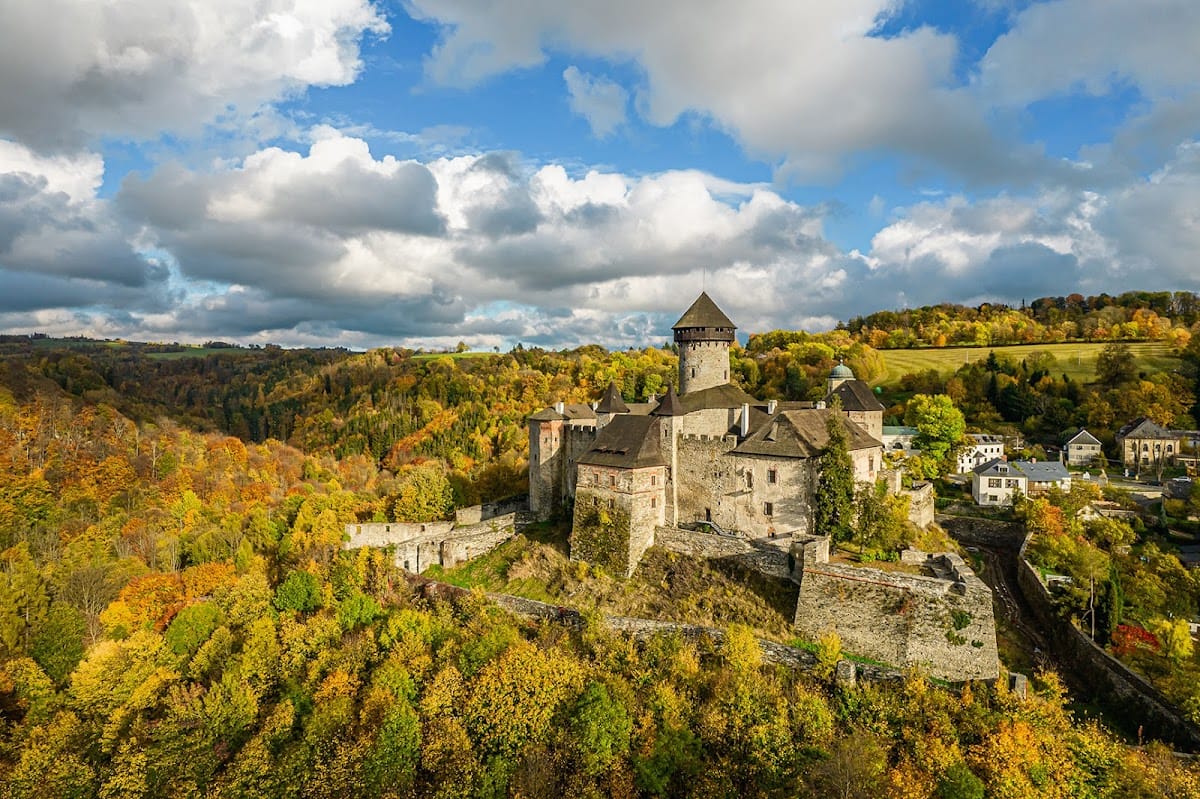
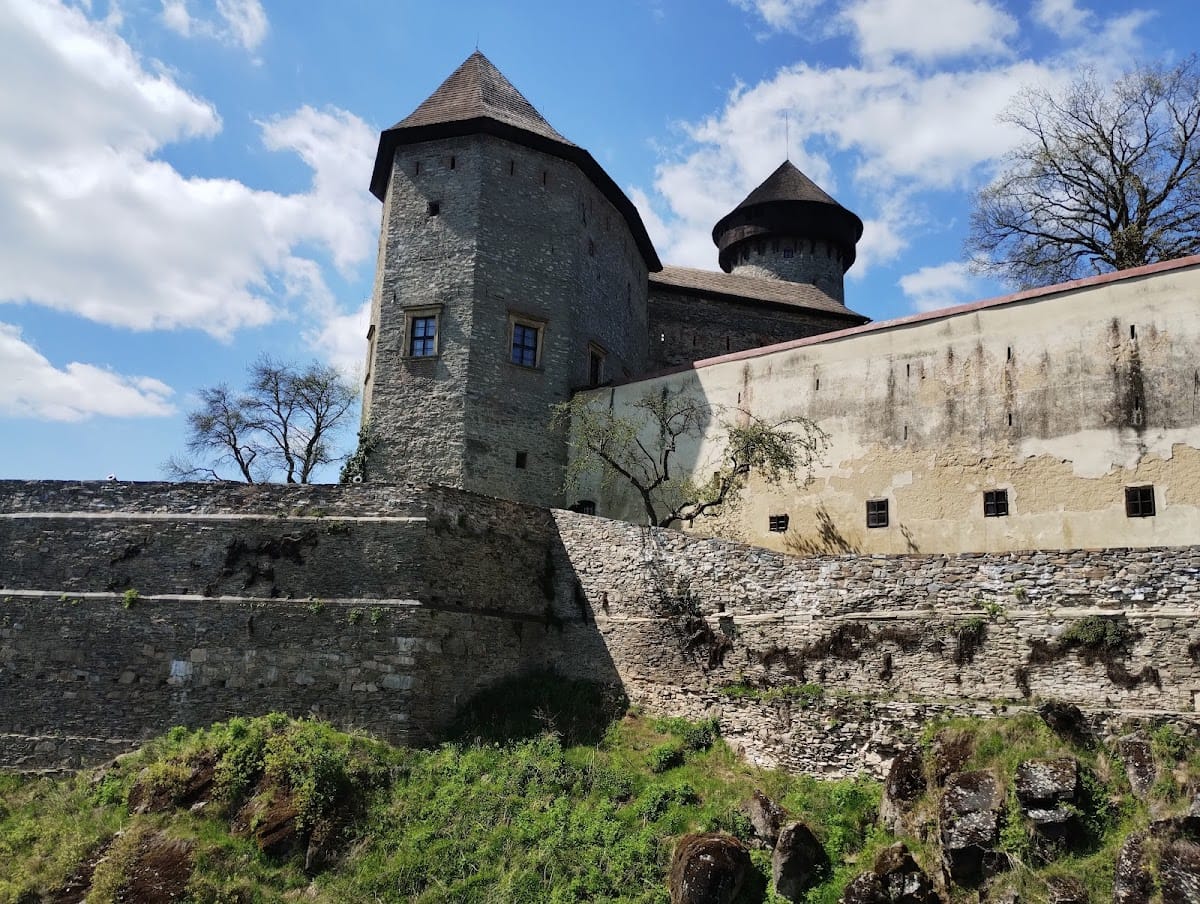
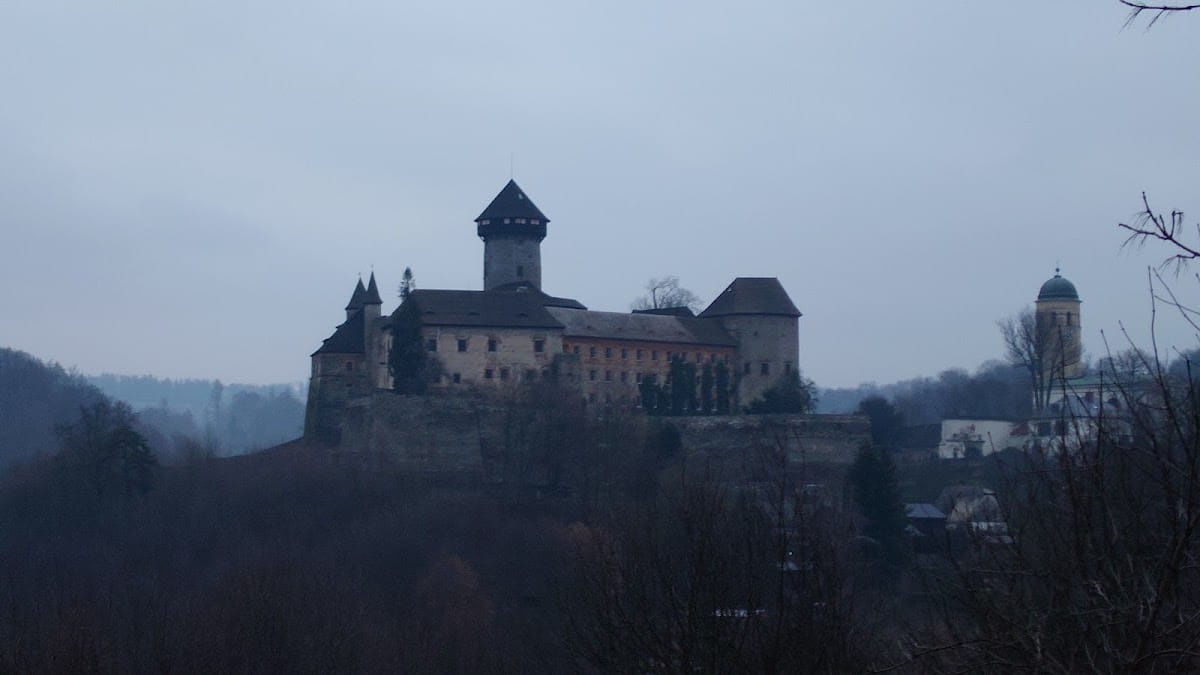
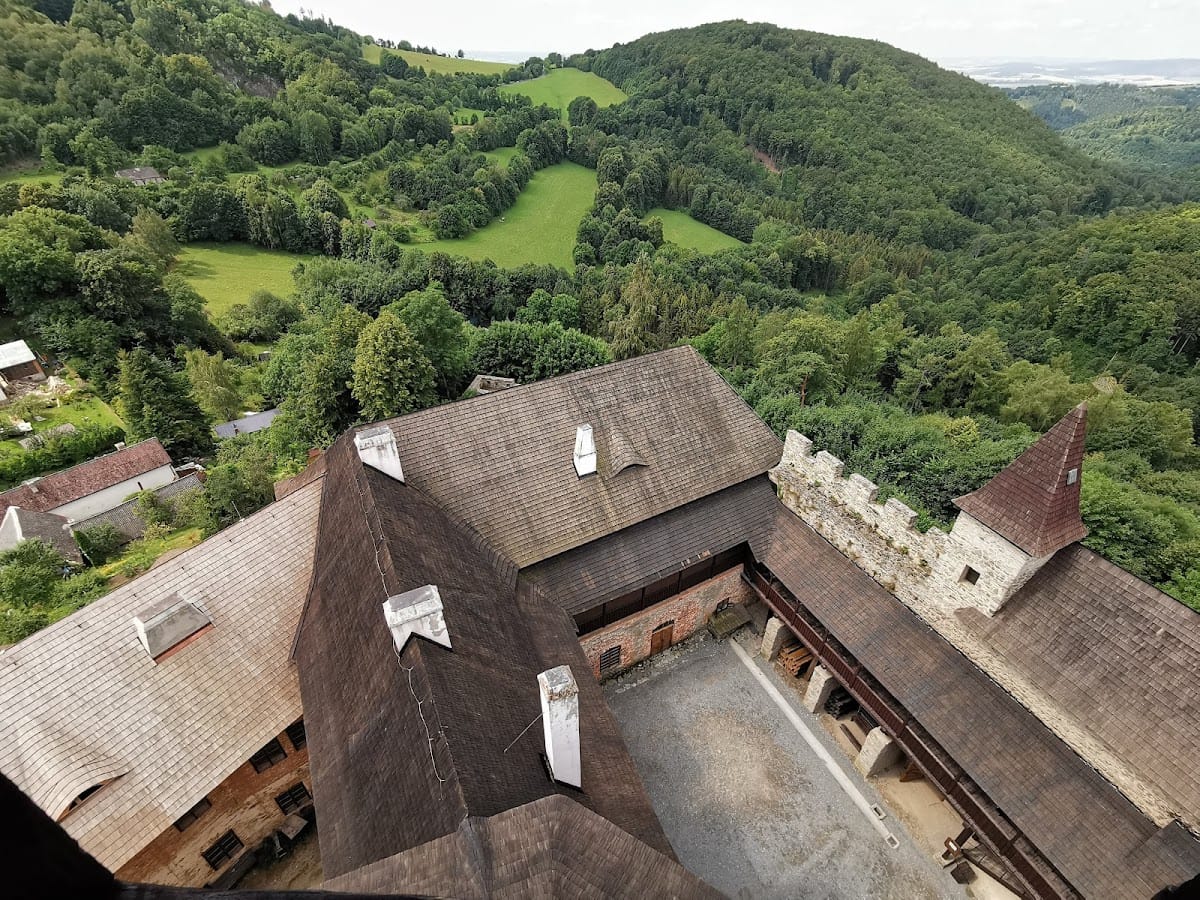
Sovinec Castle occupies a rocky outcrop with steep slopes, originally designed as a fortified complex featuring a high cylindrical bergfried, or main tower, measuring about 9.1 meters in diameter with walls nearly four meters thick. This massive tower, a typical medieval defensive structure, was severely damaged by a fire in 1784 and subsequently reduced in height. Its remains stand today as a prominent feature of the castle’s silhouette.
In the late 15th and early 16th centuries, the castle underwent considerable expansion. Notable additions include late Gothic gate wings and a Gothic gate that leads into the inner courtyard known as the fifth courtyard. Several surrounding buildings from this era bear marks associated with owners Ješek and Jan Pňovský. The architectural style from this period demonstrates the transition typical in Moravian castles as military needs and residential comforts were integrated.
Renaissance features appear in the southern and eastern sections of the castle, especially visible in the portal of the so-called Boskovický Hall. Within the southern palace, originally built as a two-story structure, the ground floor housed a weapons hall that later was converted into a chapel, while the upper floors contained residential chambers called “prince’s halls.” These elements reflect a shift toward more comfortable noble dwellings while maintaining defensive capabilities.
The castle’s layout centers around a large rectangular courtyard, which was once enclosed by a wooden gallery on the first floor. Sixteenth-century economic buildings flank this space and include two decorative gates carved from Maletín sandstone, indicating the importance of craftsmanship and status during this period.
Major enhancements to the fortifications were added during the Thirty Years’ War between 1632 and 1643. The once broad courtyards were subdivided into smaller ones to strengthen defense. Outer walls received palisades for additional protection, and a robust iron-plated gate was installed. Moreover, a large eastern tower with projecting bastions was constructed. A round stone tower known as “Lichteinsteinka,” named after the Liechtenstein family, was connected to the main structure via an underground passage. These improvements rank among the most extensive preserved fortifications from that era in the Czech lands.
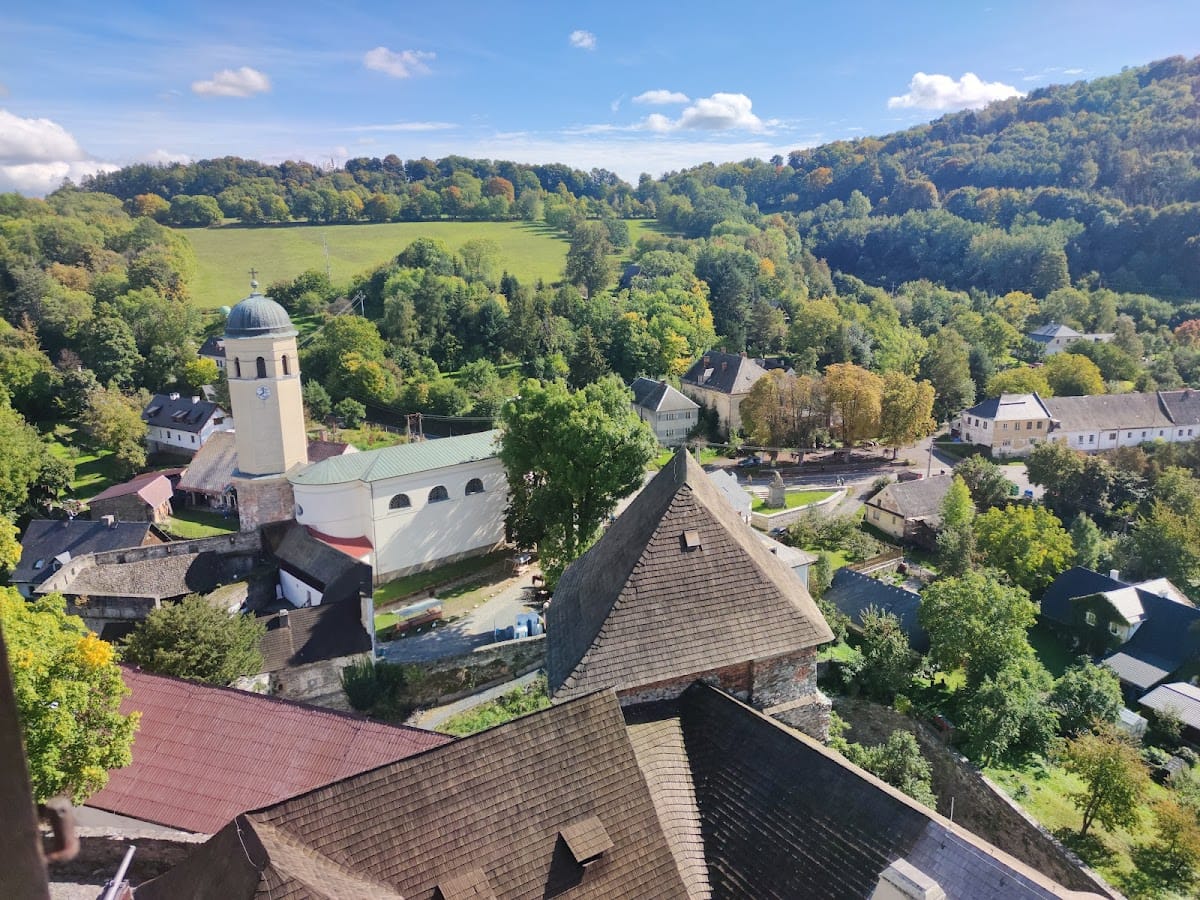
In the mid-19th century, part of the castle was demolished to allow the construction of the Church of St. Augustine, built in the late Empire architectural style. A Thirty Years’ War-era octagonal tower was repurposed as the church tower, which is considered one of the finest examples of Empire-style architecture in Moravia. This adaptation exemplifies how older defensive elements were integrated into newer religious structures.
The castle’s physical fabric has endured episodes of destruction by fire, notably the event in 1784 and again in 1945 during the final days of World War II, when much of the structure was damaged. Restoration works have addressed key components such as the church, watchtower, and the front sections of entrance gates, along with several courtyards. Interior renovations continue, including plans to convert former armory spaces into a library and to restore buildings that once housed a forestry school.
Sovinec stands today as a complex layered with centuries of architectural evolution, reflecting its changing roles from medieval fortress to noble residence, religious site, military stronghold, and educational center.
Nearby sites