Sorø Academy: A Historic Educational Institution in Denmark
Site at a Glance
- Popularity
- High
- Country
- Denmark
- Primary era
- Early Modern
- Eras represented
- Medieval, Early Modern, Modern
- Civilizations
- Danish
- Site type
- Civic
- Remains
- University
On this page17 sections
History
Sorø Academy is a historic school in Sorø, Denmark, whose origins lie in a Cistercian monastery founded by Absalon in the mid-twelfth century. The monastery, established by members of a Catholic monastic order in wooded countryside beside Lake Sorø on Zealand, became one of Denmark’s prominent and wealthy religious houses.
From monastery to school
In 1536, during the Reformation, the sixteenth-century movement that established Protestant churches across much of northern Europe, the Crown took control of the monastery’s property. The former abbey was then used to train Protestant preachers. The monks could remain for the rest of their lives, and the last died in 1580.
In 1586, King Frederick II established a Latin school, an older type of school centered on Latin and classical learning, alongside a boarding school on the former monastic estate. It was intended for 30 noble boys and 30 commoner boys, with its costs supported by income from the abbey lands.
The first academy
In 1623, Christian IV, who had studied at the school, turned it into an academy for young men of the aristocracy. The change followed a proposal by the Danish nobleman and scholar Holger Rosenkrantz. The academy aimed to offer advanced study in Denmark rather than require students to travel abroad for their education. Academic subjects were taught alongside riding, fencing, music, drawing, and dancing.
The academy’s three-year course included law, with particular attention to Roman law, as well as ethics, history, politics, and rhetoric. Its history professor was also to act as royal historiographer, a historian appointed by the monarch to oversee accounts of the kingdom’s past, and teach political science. Theology, medicine, physics, and the study of language and literature were also part of the curriculum.
On 10 May 1643, the academy received university status, enabling students to complete their studies at Sorø instead of continuing to the University of Copenhagen. It had its own jurisdiction and was led by a senior official answerable only to the king and the Council of the Realm, a body of leading nobles and officials.
The academy closed in 1665 as hereditary absolutism took hold and the nobility’s political influence weakened under the King’s Law, Denmark’s constitution establishing hereditary absolute monarchy. The school continued to operate on the estate until 1737.
Reopening in the Enlightenment
From around 1740, architect Lauritz de Thurah oversaw renovation and new building on the estate. On 7 July 1747, Frederick V ordered the academy to reopen for noblemen, largely under rules modeled on the earlier institution. The renewed academy promoted Enlightenment learning, an eighteenth-century movement that emphasized reason and systematic inquiry.
The writer and intellectual Ludvig Holberg, who had no heirs, backed the revival with a substantial bequest. Under the agreement, he received an exemption from taxes on income from his lands and was made a baron. He also advised on the academy’s organization and the choice of professors. Following his recommendation, Jens Schielderup Sneedorff became professor of political science in 1751.
Teaching covered law and rhetoric, sciences and languages, riding, fencing, music, dance, arts, crafts, government office practice, and foreign policy. The town preacher taught theology, while the head of the academy chose the other professors. Paying outsiders could attend lectures, but exercises for noble students were restricted to them. Noble students were expected to study for three years before making their required tour abroad, and to practise German, French, and Danish alongside Latin.
This second academy operated from 1747 to 1793. It struggled to compete with the University of Copenhagen: its founding rules were designed to prevent the academy from disadvantaging the university, and degrees could be granted only in Copenhagen.
Reconstruction and the continuing school
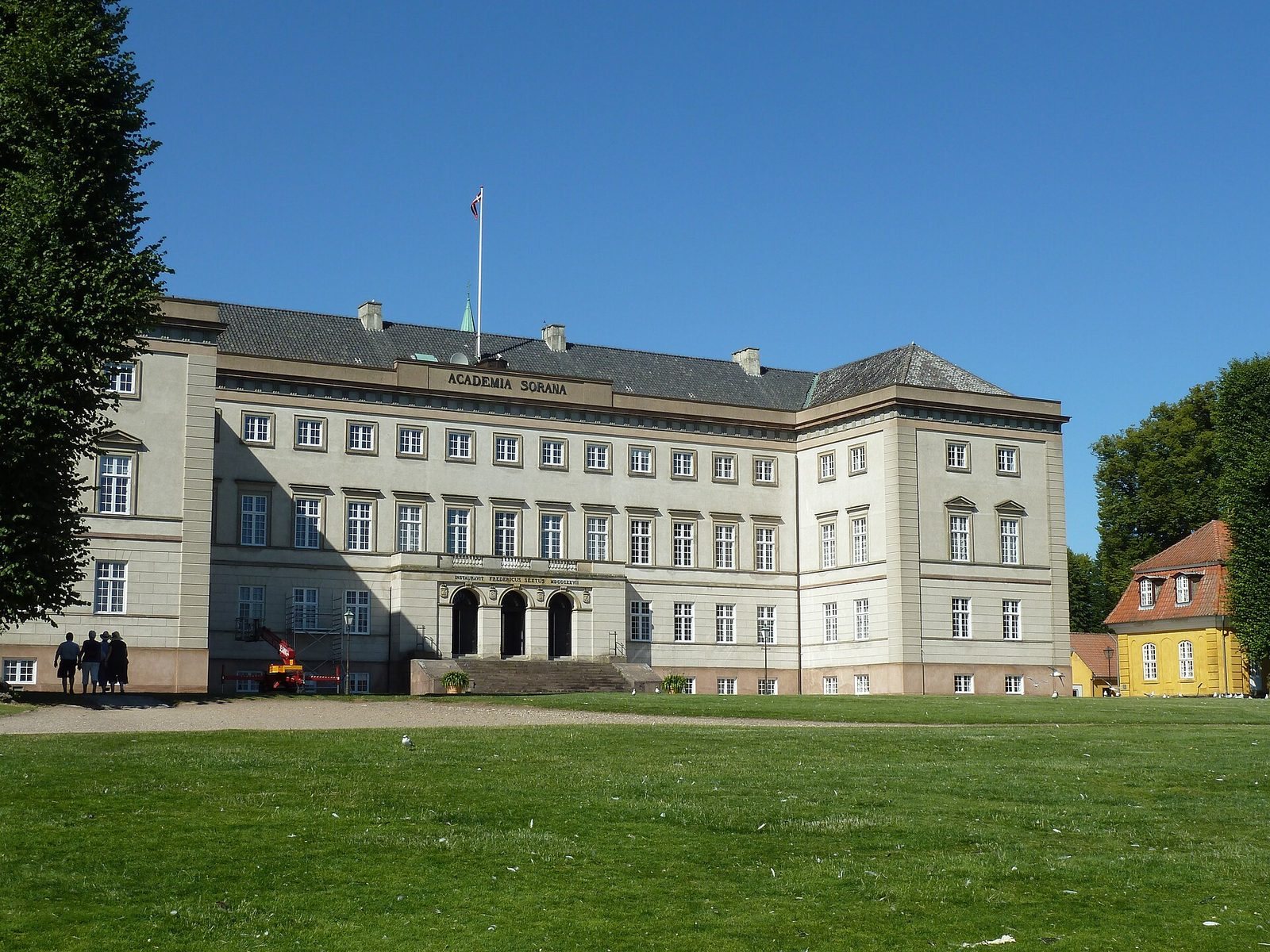
A major fire in 1813 destroyed the academy’s main wing and most of the medieval monastery buildings. The main wing was rebuilt to Peder Malling’s design between 1822 and 1827, and the academy reopened in 1825 before that work was finished.
During the nineteenth century, Sorø became a center of Denmark’s Romantic and Golden Age culture, a period of major cultural achievement in the first half of the century. Poet and novelist Bernhard Severin Ingemann joined the teaching staff in 1822 and led the academy from 1846 to 1849. N. F. S. Grundtvig, Hans Christian Andersen, and Bertel Thorvaldsen visited during this period. This third academy closed in 1849, but the school continued, admitting girls from 1910.
Sorø Academy remains a public boarding school and gymnasium, the Danish term for an upper-secondary school. The Sorø Academy Foundation owns about 6,000 hectares of land, mostly forest, as well as properties in Sorø, including the monastery church.
Remains
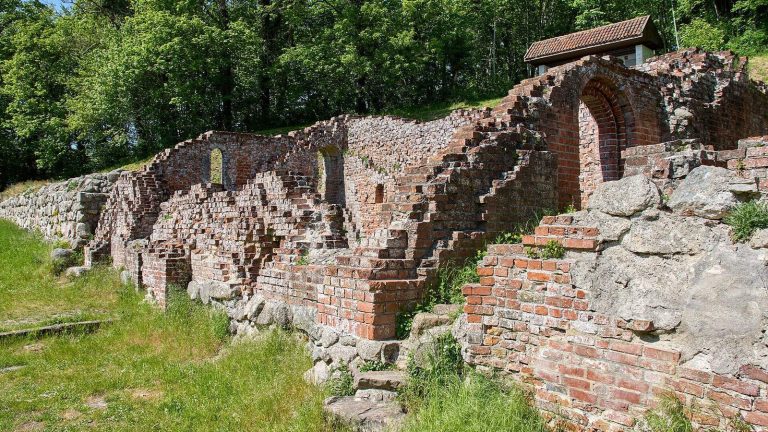
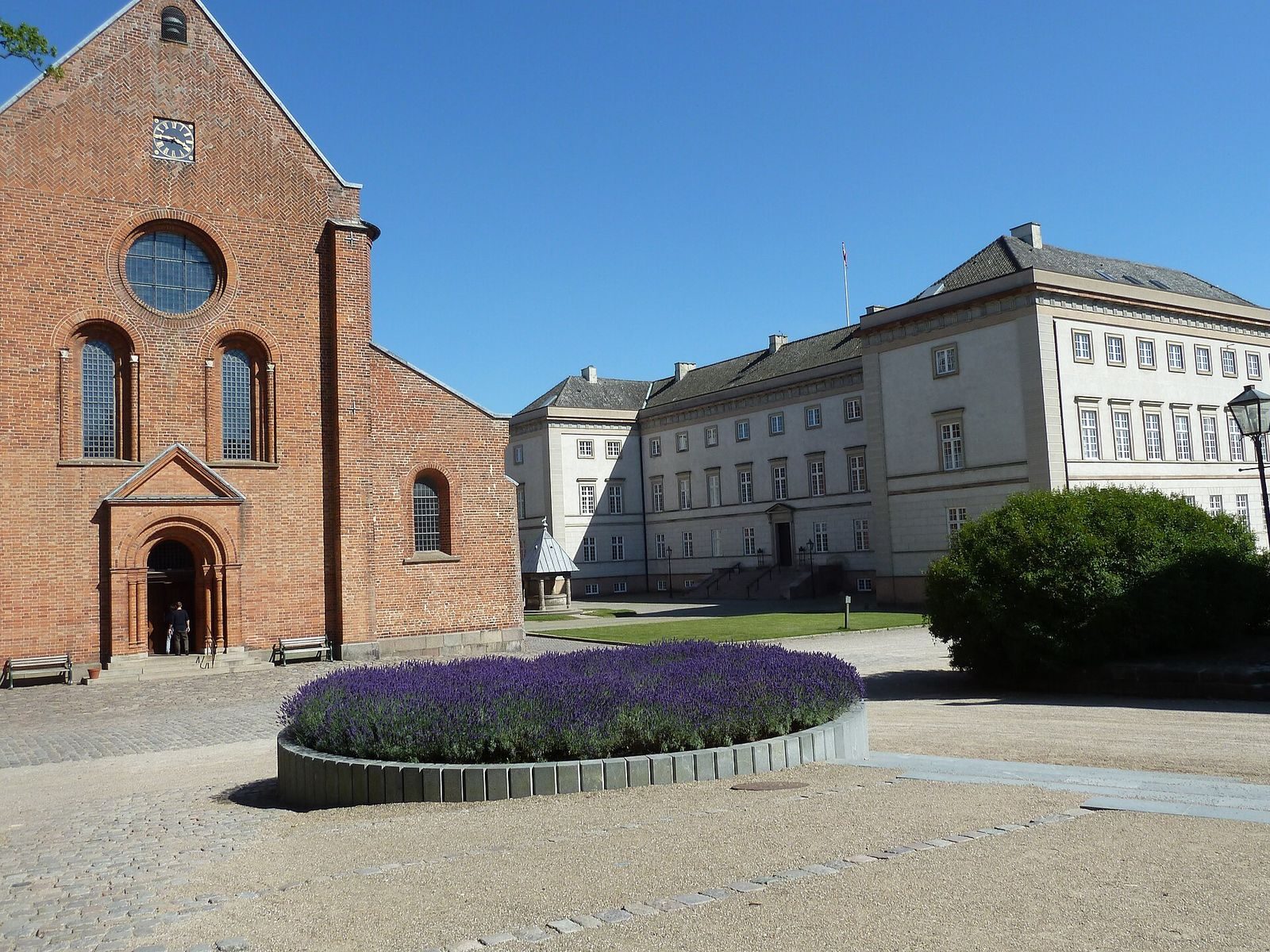
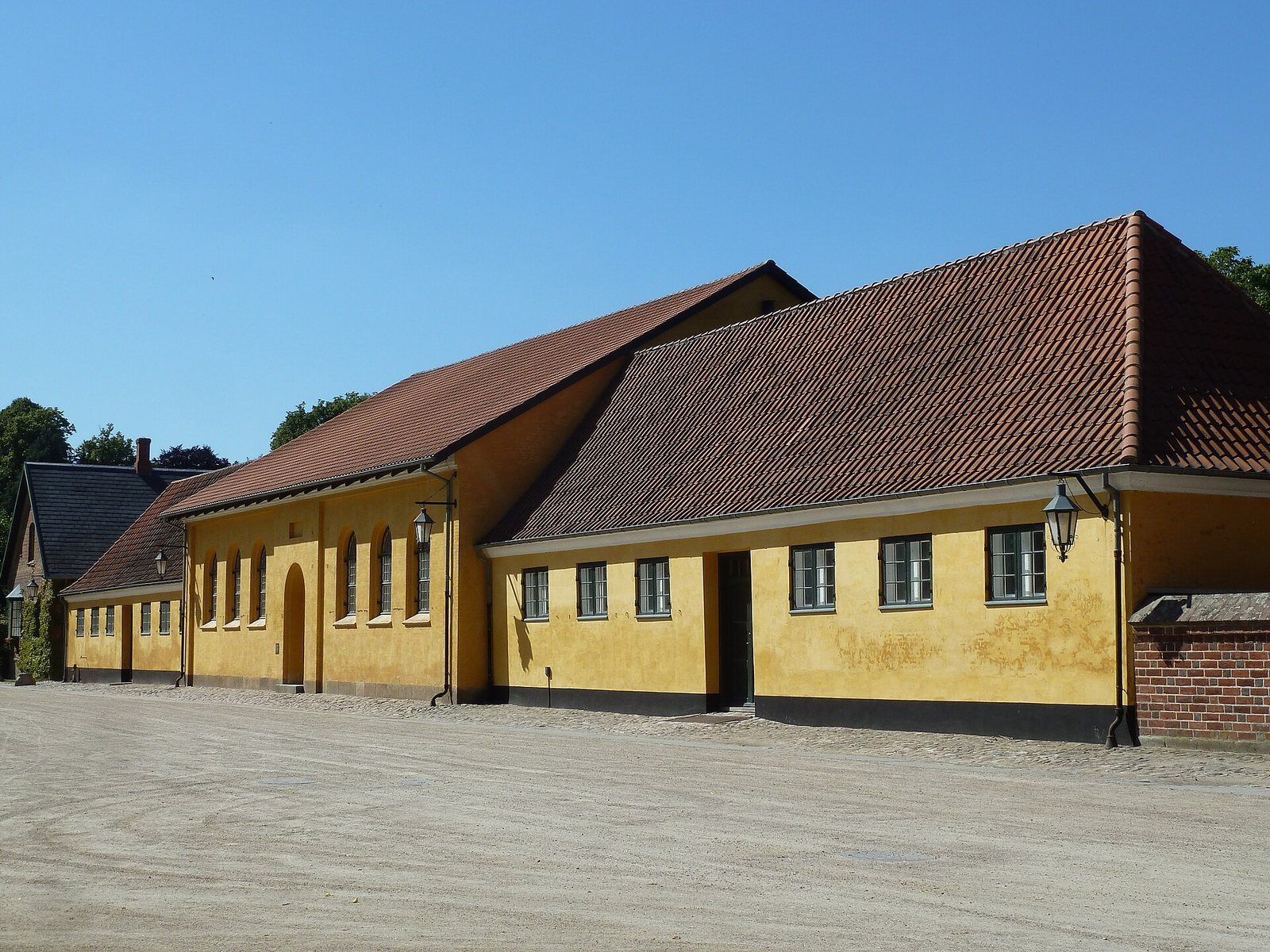
The surviving grounds bring together the medieval monastery church and gatehouse with later school buildings, including the rebuilt main wing and structures from the academy’s eighteenth-century phase. An English-style park, the Academy Garden, surrounds the academy.
Monastic buildings
Abbey church
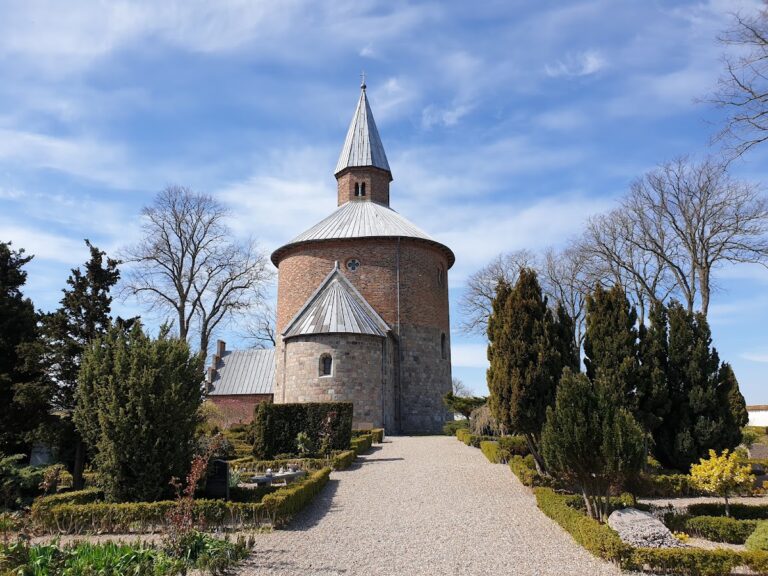
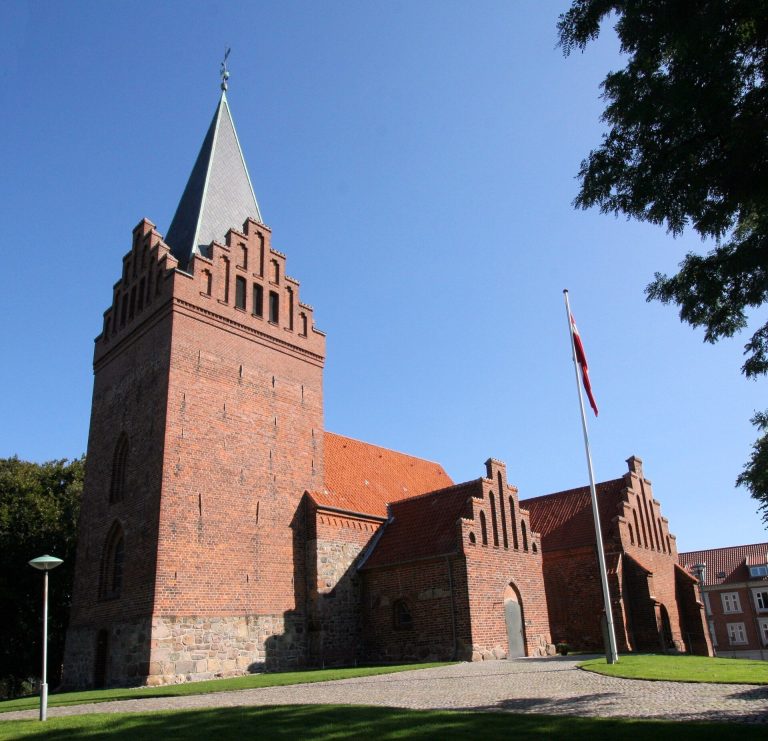
The monastery church is a major surviving part of the medieval complex. It displays Cistercian craftsmanship and is among the earliest Danish churches built of brick; it is also the third-longest church in Denmark. Medieval wall paintings lie beneath the whitewash applied during the Reformation, and some have been restored.
The church contains the graves of Ludvig Holberg, King Valdemar Atterdag, who ruled from 1340 to 1375, and his father, King Christopher II, who lived from 1276 to 1332. A monument to Holberg, made by sculptor Johannes Wiedewelt, also stands inside.
Gatehouse
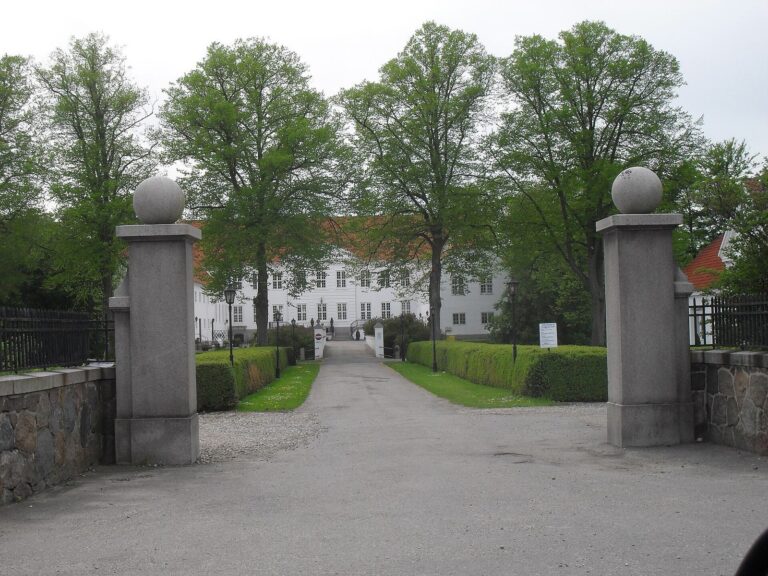
The gatehouse is among Denmark’s oldest inhabited houses. It is identified as the place where the medieval historian Saxo Grammaticus wrote Gesta Danorum, a historical work recounting early Christian history in Scandinavia.
Well and wellhouse
The old well dates from the original abbey. Architect Martin Nyrop designed a wellhouse to cover it in 1915.
Academy buildings
Main wing
The present main wing, rebuilt to Peder Malling’s design after the 1813 fire, is Neoclassical, an architectural style based on ancient Greek and Roman forms, with a stronger Greek than Roman influence. Painter and decorator Georg Hilker created its interior decoration.
Professors’ houses
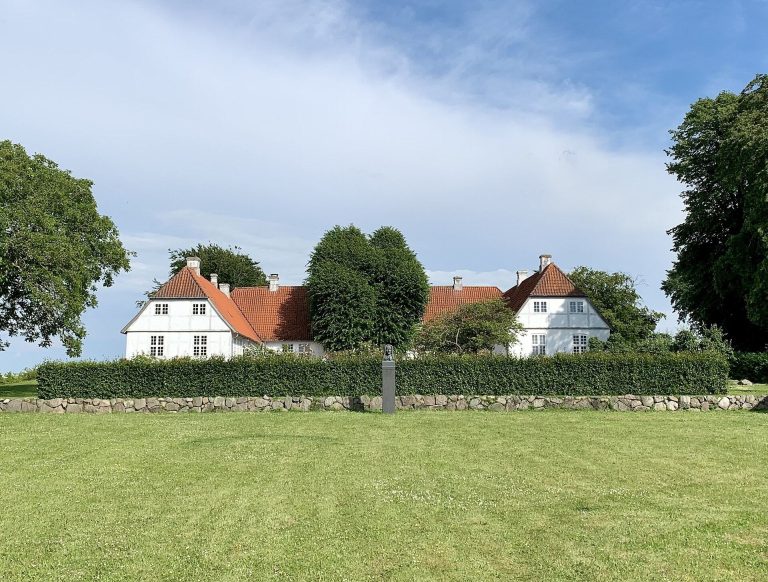
Molbech’s House and Ingemann’s House, two former professors’ residences, survived the 1813 fire. Both date from the rebuilding of the academy led by Lauritz de Thurah around 1740.
Ballhouse and library
The former ballhouse, a building designed for indoor ball games, also survived the fire. It now serves as the library, which holds a large collection of old and rare books.
Other school buildings
Other academy buildings include the Rector’s House and Alumnatet, a residential establishment for students.
Park and scientific collection
Academy Garden and Physical Cabinet
The academy is surrounded by the English-style Academy Garden. In the park, the Vænget building houses Adam Wilhelm Hauch’s Physical Cabinet, a collection of scientific instruments described as one of Europe’s largest.