St John’s House Museum, Warwick: A Former Hospital and Historic House
Site at a Glance
- Popularity
- Medium
- Country
- United Kingdom
- Primary era
- Early Modern
- Eras represented
- Early Modern
- Civilizations
- English
- Site type
- Domestic
- Remains
- House
On this page9 sections
History
St John’s House Museum, Warwick, is a historic house in the United Kingdom whose origins lie in a hospital established in the mid-12th century during the reign of Henry II, king of England from 1154 to 1189. The present house is dated to around 1666. Over time, the site served as a hospital, family residence, school, military office and museum.
The medieval hospital
After land was granted for the Hospital of St. John the Baptist, William de Beaumont, a medieval nobleman and Earl of Warwick, established the institution. It cared for local people who were poor or sick and offered food and overnight shelter to impoverished travellers, including pilgrims. Warwick also had St. Michael’s Leper Hospital, which served people with leprosy.
In 1337, the hospital’s brethren and their attorneys received protection while seeking charitable donations at churches. At that time, renovation of some hospital buildings was considered necessary.
The Stoughton family residence
During the Dissolution of the Monasteries, Henry VIII’s 16th-century dismantling of England’s monastic institutions and transfer of their property, the site was granted to Anthony Stoughton in recognition of his service to the king. It passed by inheritance to his eldest son, William, and then to William’s son, Anthony Stoughton the younger, who built a house there. The house is dated to around 1666. Anthony and William did not live on the property, which they leased to tenants. The Stoughton family retained it until 1960.
School use
In 1791, the Earl of Warwick first rented the building for public use, with the intention of establishing a school. William T. Fowler founded St John’s Academy for “Young Gentlemen.” In 1845, Fowler’s son-in-law, Benjamin Townsend, was in charge. After Townsend died in 1857, his daughters Susanna, Elizabeth and Sarah managed the school. By at least 1861, it was a girls’ school.
Military use and museum
Following a brief private tenancy in the early 20th century, the house became property of the War Department, the British government body responsible for the army. It was used to administer the Home Counties and East Anglian Brigades, military formations.
In 1959, Lord Warwick announced the sale of the Warwick Castle Estates, which included St John’s House. The house became a museum, while some premises were leased to the Royal Warwickshire Regiment. Field Marshal Bernard Montgomery, a prominent Allied commander in the Second World War, officially opened the museum in 1960. The house received Grade I listing in 1973, a category for buildings of exceptional interest in England. Its entrance gateway and flanking boundary walls are Grade II*, a category for particularly important buildings of more than special interest.
The house ceased admitting the general public in 2016 and is now home to Warwickshire Heritage Learning. Heritage and Culture Warwickshire, part of Warwickshire County Council, operates it for education, events and weddings. The Royal Warwickshire Fusiliers museum occupied the second floor until 2021, when it moved to Pageant House in Warwick.
Remains
House and entrance
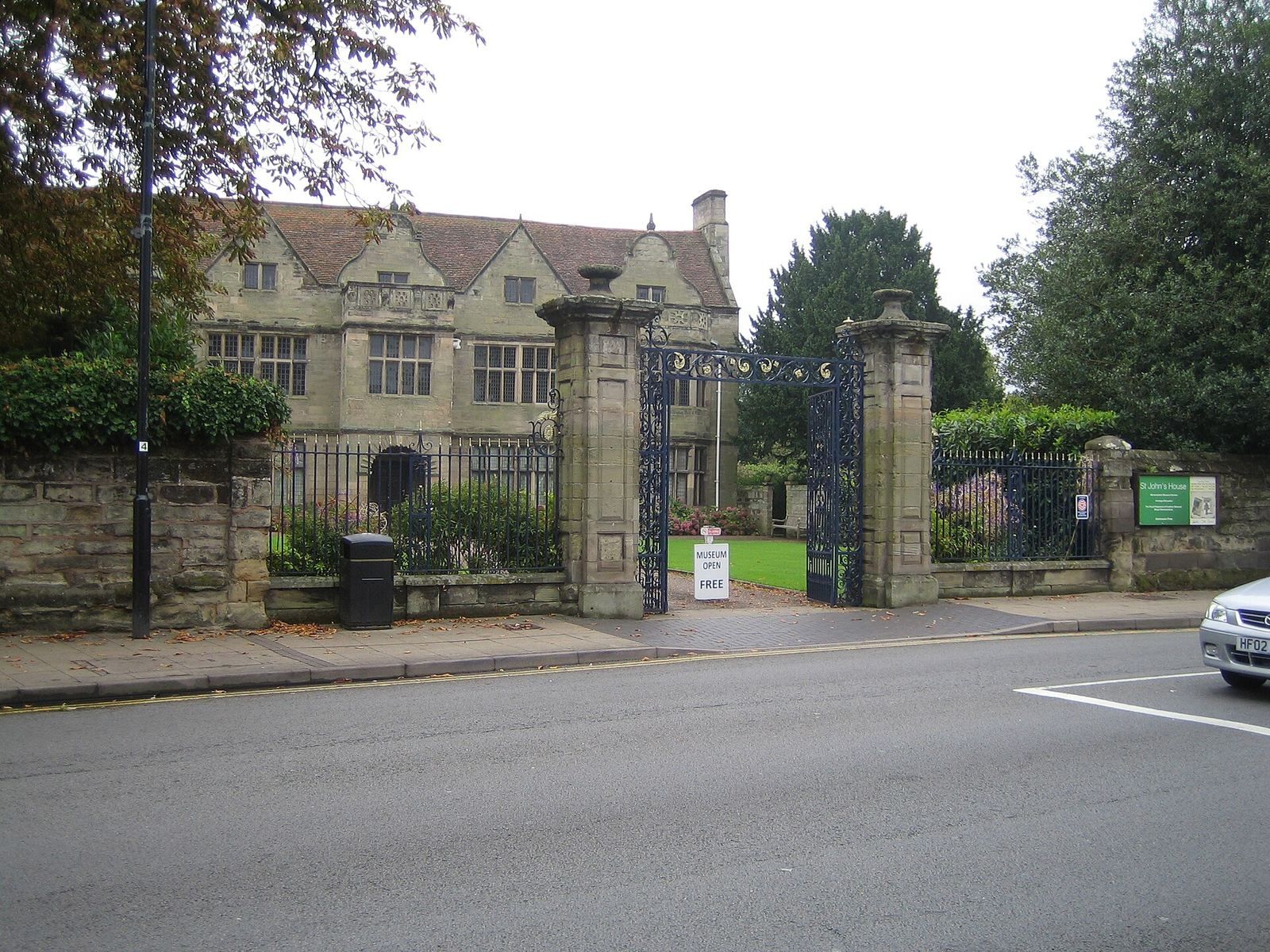
St John’s House stands just east of Warwick’s town centre, with a small garden beside it and St Nicholas’ Park behind. The present house is dated to around 1666. A lintel in its east wing carries the date 1626 and the initials “A.S.” The entrance gateway and the boundary walls flanking it are also features of the site.
Earlier hospital site
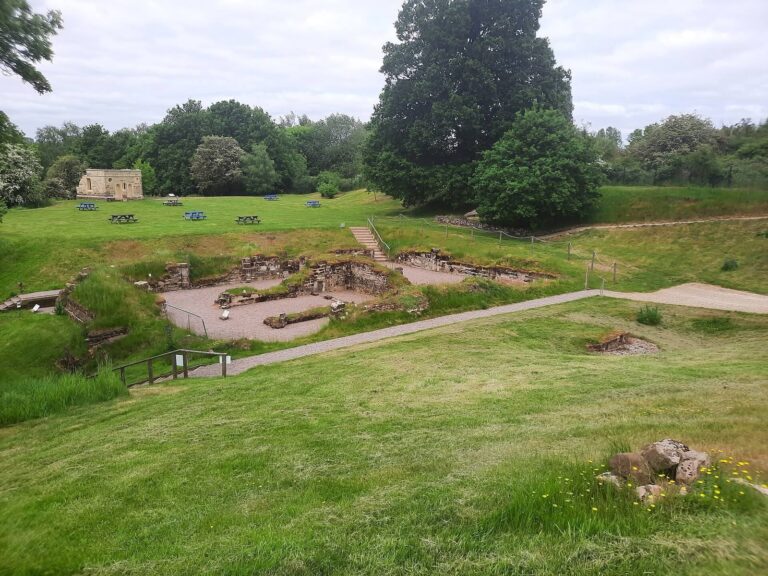
In 1610, four buildings stood on the site, including a gatehouse topped with crenellations, alternating raised sections and openings along a wall top. The largest of the other three buildings had crosses at the roof apex and may have been the hospital chapel. The hospital cemetery formed part of the grounds and was disturbed during later refurbishment and remodelling. Human remains were found during work in the kitchen garden in the 1830s; in 1987, two workmen uncovered two skulls while digging at the Coten End frontage of St John’s Court flats. A 1291 assessment valued a dovecote at two shillings and a carucate, a variable land measure based on a plough team’s capacity, at 10 shillings a year.
Museum displays and Brook Gardens
The museum included a full-scale replica of a Victorian classroom (from Queen Victoria’s reign, 1837 to 1901), furnished with benches and seating, charts, diagrams, abacuses and blackboards. School activities also drew on the display. St John’s Brook Gardens, created in 2011 between the house and St Nicholas’ Park, included woodcarving and information about natural history.